
KI-Erkenntnisse in konkrete Maßnahmen überführen

Trends
Categories
FAA to Mandate CF34 Engine Corrosion Inspections After Challenger Crash

FAA to Mandate Corrosion Inspections for CF34 Engines Following Challenger Crash
The Federal Aviation Administration (FAA) has announced a proposed rule requiring mandatory inspections for corrosion in GE Aerospace CF34 turbofan engines. This regulatory action follows an investigation into a dual-engine failure that resulted in a fatal crash involving a Bombardier Challenger 600 business jet. The rule, published on April 30, targets all 1,152 CF34-3 engines installed on U.S.-registered aircraft, including those used in Mitsubishi Heavy Industries Regional Jet (MHIRJ) CRJ200 regional jets and Challenger 600 business jets.
Background of the Incident and Investigation
The impetus for the FAA’s proposal stems from a 2024 accident near Naples Airport in Southwest Florida, where a Challenger 600 lost thrust in both CF34 engines during approach, ultimately crashing onto a highway and killing both pilots. The National Transportation Safety Board (NTSB) investigation identified extensive corrosion within the variable-geometry system of the engines’ airflow control mechanisms as the root cause. This system, responsible for adjusting stator vane positions to regulate airflow through the high-pressure compressors (HPCs), was compromised by corrosion, leading to near-simultaneous compressor stalls and a total loss of engine thrust.
While the FAA’s proposed rule does not explicitly mention the Challenger crash, it references a “dual-engine power loss event and consequent manufacturer investigation.” GE Aerospace’s inquiry uncovered corrosion in the HPC case, specifically affecting the variable-geometry system. The FAA explained that corrosion in the HPC case variable vane spindle bores can restrict the system’s range of motion, potentially causing compressor instability at or below idle speeds and resulting in loss of engine thrust control.
Details of the Proposed Rule and Industry Response
Under the proposed regulation, operators would be required to perform CF34 engine start tests and borescope inspections of the HPC case. Depending on the engine’s condition, these inspections must be completed either before further flight or within one to two years. Additionally, the rule mandates quarterly restart tests on certain turbofan engines to monitor performance and detect potential issues.
In response to the corrosion concerns, GE Aerospace has already issued a service bulletin dated October 30, 2025. This bulletin calls for inspections on engines exhibiting hung starts and includes updates to fault-isolation flowcharts. These proactive measures aim to identify corrosion early and prevent engine instability, thereby reducing the risk of similar incidents.
The FAA’s proposal highlights the critical safety implications of corrosion affecting over 1,100 CF34 engines operating on U.S. aircraft. By enforcing these inspections and tests, the agency seeks to mitigate corrosion-related risks and enhance overall fleet safety. GE Aerospace has not yet issued a public statement regarding the FAA’s proposed rule.
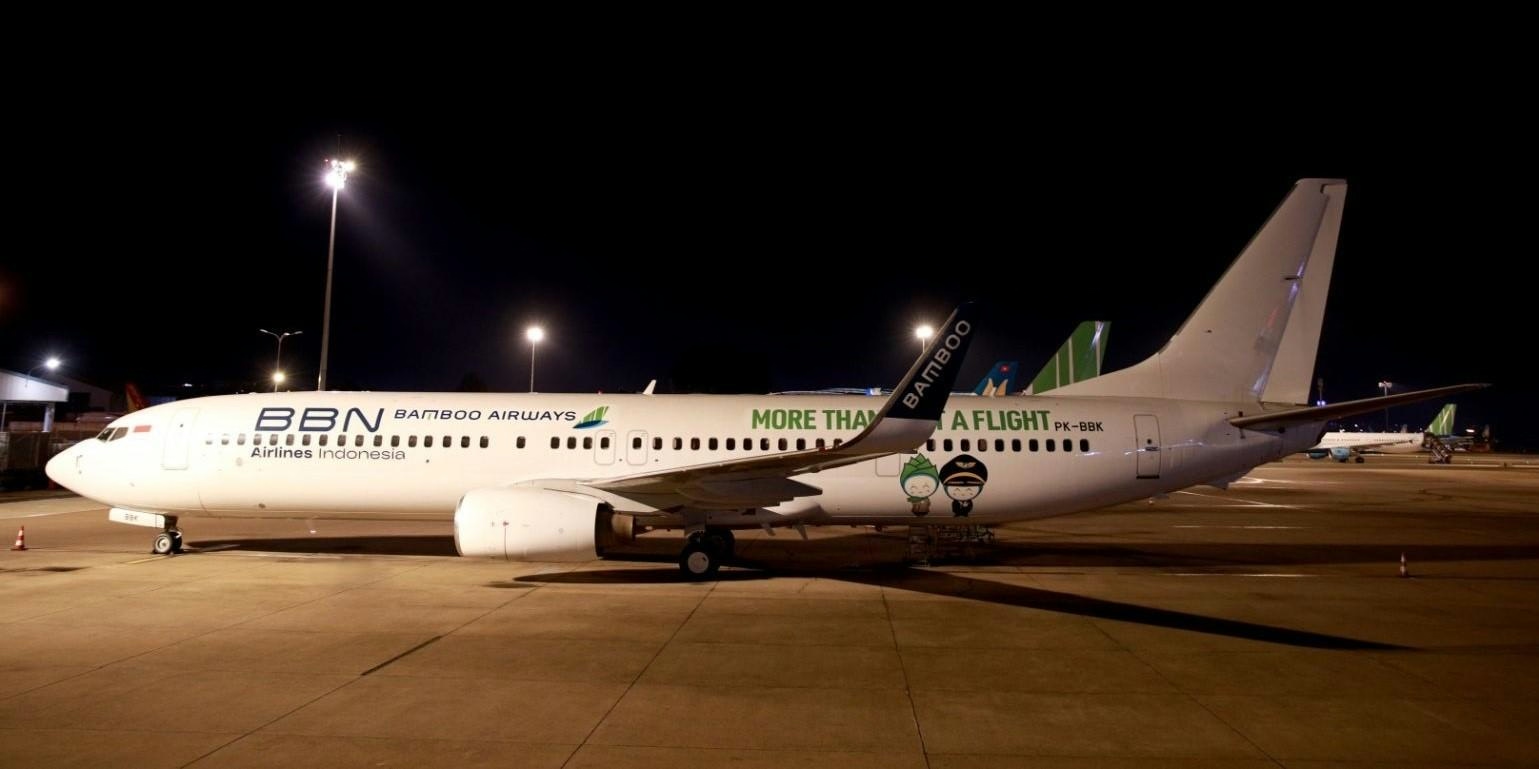
BBN Airlines Becomes IATA Member

FAA Orders Breeze Airways and Delta to Inspect Airbus A220 Fuel Hoses

Philippine Aviation Navigates Expansion and Costs Amid Fuel Price Volatility
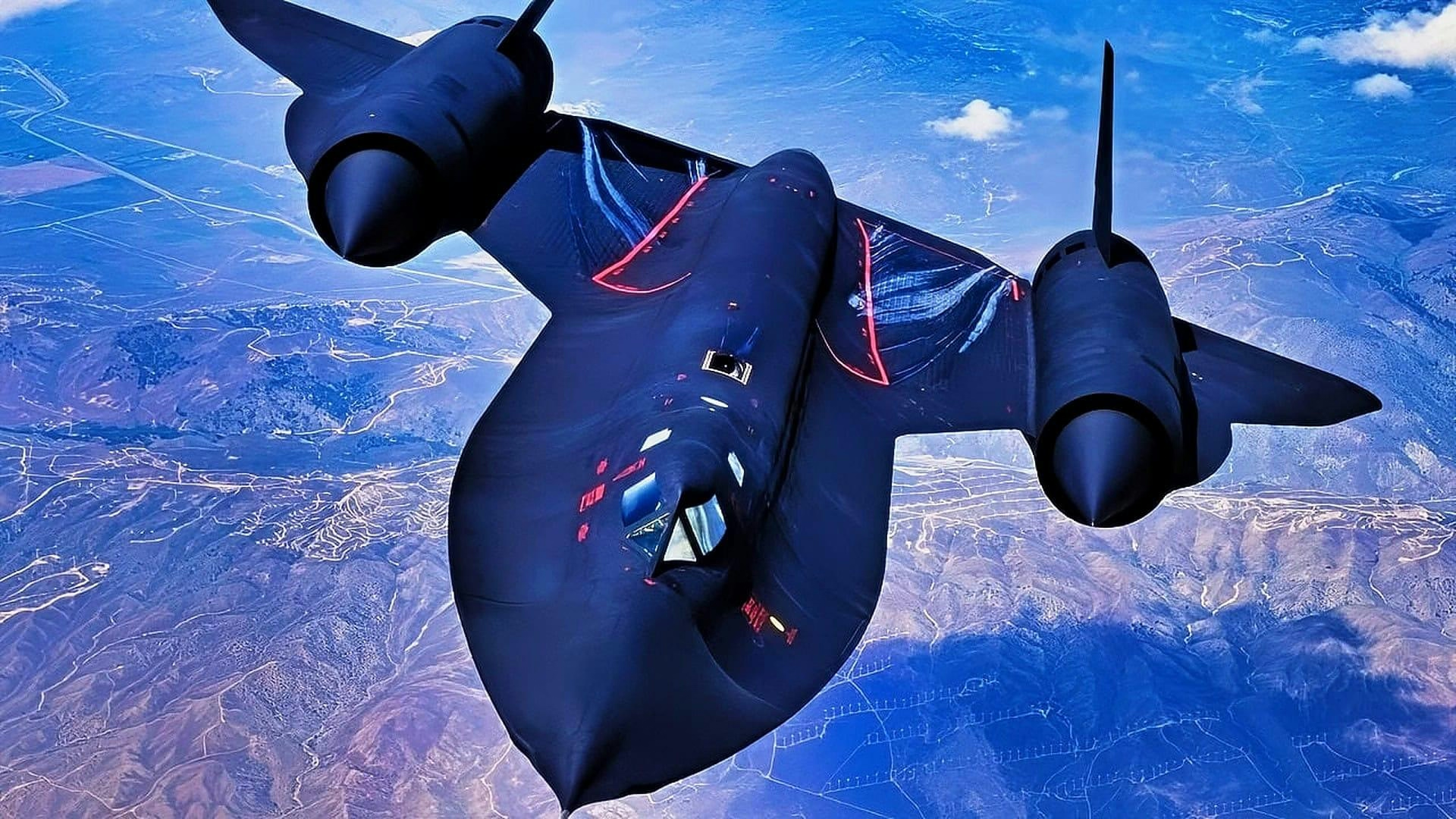
On April 26, 1971, an SR-71 Blackbird Flew Over 15,000 Miles in 10.5 Hours, Limited by Liquid Nitrogen Supply

Boeing 747 Airframe Valued Less Than One Landing Gear Component

The Rear-Fan Engine Behind the Crash of the World's Fastest Airliner
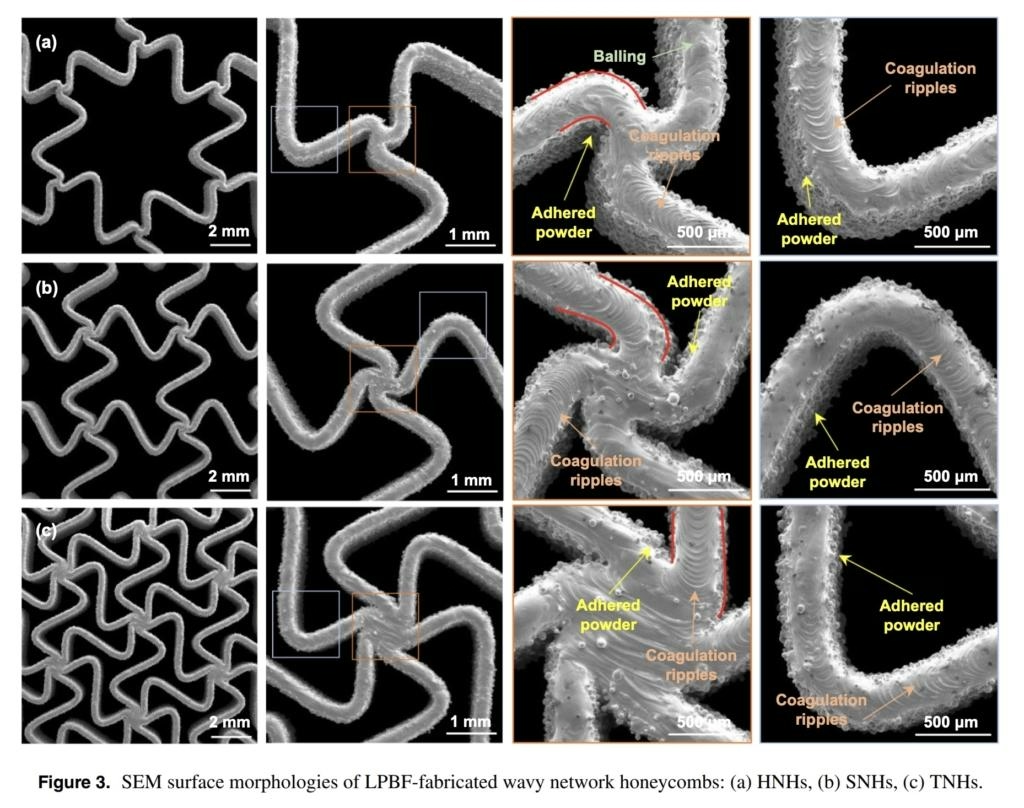
Morphing Aircraft Skin Improves Safety and Fuel Efficiency

BRICS Nations Commit to Enhanced Cooperation on Sustainable Transport and Green Aviation

CFM Turbine Upgrade Doubles LEAP Engine Service Life in Harsh Conditions

CFM Upgrade Doubles LEAP Engine Lifespan in Harsh Climates
