
KI-Erkenntnisse in konkrete Maßnahmen überführen

Trends
Categories
Farnborough and Paris Air Shows 2026 Highlight Advances in Global Aviation
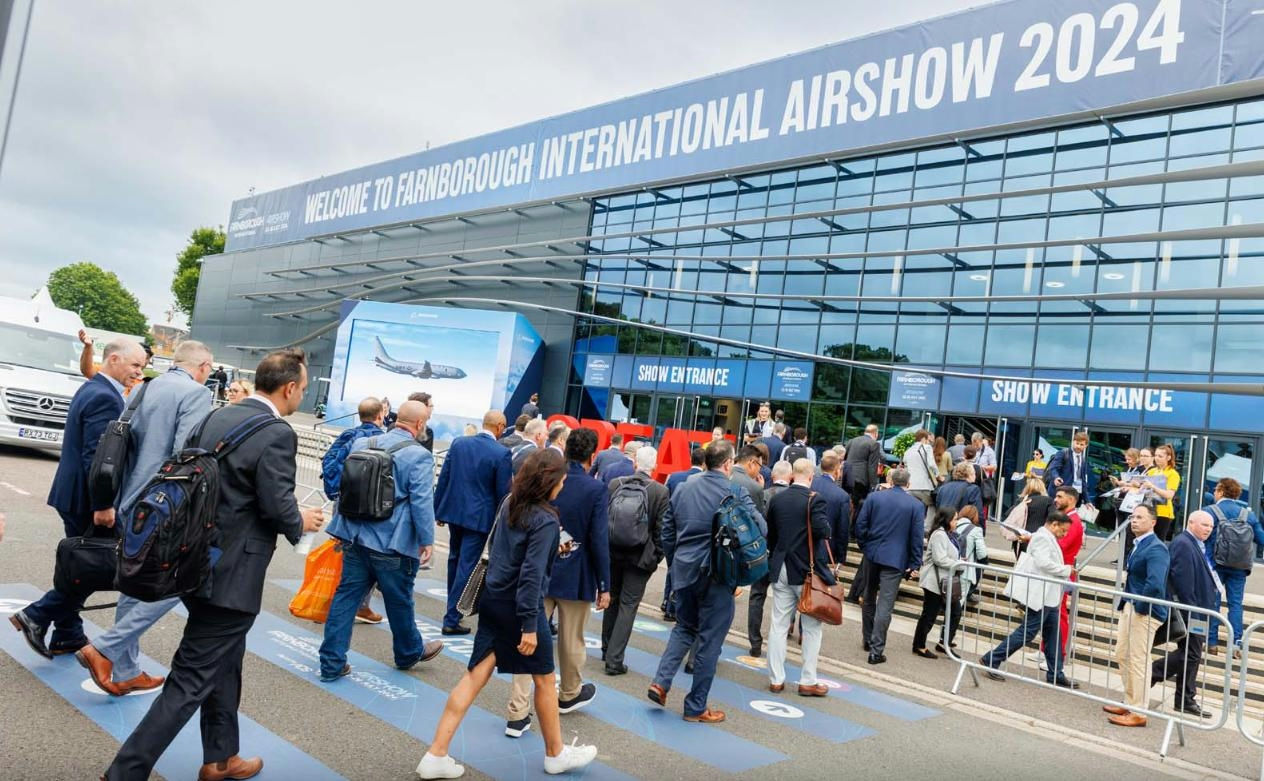
Farnborough and Paris Air Shows 2026 Highlight Advances in Global Aviation
The Farnborough and Paris Air Shows, recognized as the world’s premier aviation exhibitions, are poised to shape the future of global aviation in 2026. These alternating events have historically influenced aircraft design, airline fleet strategies, and travel trends, having introduced landmark models such as the Boeing 747 and Airbus A380. Serving as pivotal launchpads for next-generation, fuel-efficient jets, the upcoming Farnborough Airshow is highly anticipated by airlines, manufacturers, and travelers alike for its potential to transform global routes, sustainability efforts, and the overall passenger experience.
A Pivotal Moment for Aviation Innovation
The 2026 airshows arrive at a critical juncture for the aviation industry. Airlines are under increasing pressure to reduce emissions, enhance fuel efficiency, and adjust to evolving post-pandemic travel demand, particularly as passenger numbers continue to rise in long-haul and leisure markets. Farnborough and Paris have become strategic arenas where leading manufacturers such as Airbus and Boeing vie for multi-billion-dollar contracts, with announcements at these events often triggering significant shifts in global route planning.
For travelers, these developments herald the introduction of newer aircraft capable of longer non-stop flights and potentially more competitive fares as airlines modernize their fleets. The rapid pace of technological advancement is evident in the focus on sustainable aviation fuels, hybrid propulsion systems, and advanced air mobility solutions. These innovations are expected to drive a transformative wave in global travel, enhancing efficiency and environmental performance.
Opportunities and Challenges for Stakeholders
The primary beneficiaries of the Farnborough and Paris airshows include airlines, aircraft manufacturers, and passengers. Airlines gain access to cutting-edge aircraft designed to reduce fuel consumption and extend range, facilitating new direct international routes and improved connectivity between secondary cities. Manufacturers utilize the global platform to demonstrate innovation and secure long-term competitive advantages, with deals struck at these events often influencing fleet strategies for decades.
Beyond the industry, tourism boards and destination markets stand to benefit significantly. The advent of long-range, low-cost operations enabled by new aircraft models can open emerging destinations to global tourism, stimulating growth in hospitality, infrastructure, and regional economies. For travelers, this translates into a broader array of choices, enhanced cabin comfort, and improved reliability on both short-haul and intercontinental flights.
Nevertheless, the 2026 editions of Farnborough and Paris face notable challenges. Infrastructure capacity is an increasing concern, as highlighted by Signature Aviation CEO Tony Lefebvre in a recent Aviation Week survey. The growing interest in advanced air mobility and sustainability initiatives may place additional strain on existing facilities, necessitating substantial upgrades. Concurrently, major airline groups such as Lufthansa, Air France-KLM, and International Airlines Group are expected to respond with strategic initiatives aimed at consolidating their market positions amid both opportunities and industry headwinds.
Implications for Travelers
Although primarily industry-focused, the innovations unveiled at Farnborough and Paris have immediate and lasting effects on passengers. Aircraft introduced at these shows typically enter commercial service within 12 to 36 months, offering quieter cabins, enhanced comfort, longer non-stop routes between global cities, and improved operational efficiency and reliability.
As the aviation community converges on Farnborough and Paris in 2026, the decisions and technological breakthroughs presented will reverberate throughout the industry, fundamentally reshaping how, where, and how sustainably the world travels.

Hong Kong's Five-Year Plan Includes Andrew Fan's Aircraft Parts Processing Hub Proposal

ACIA Aero Leasing Delivers ATR72-600 to Air Nostrum

RTX Appoints Jill Albertelli as Head of Pratt & Whitney

TAT Technologies Joins Beyond Aero Hydrogen Aircraft Program

AURAK Study Highlights Barriers to Air Taxi Adoption in Emerging Economies

Xiamen Air Selects Altitude for 787 Maintenance at Heathrow

Etihad and Swissport Extend Global Partnership

Sepehran Airlines B737 Returns to Mashhad After Tyre and Engine Issues

Etihad Deploys Widebody Fleet to Meet Strong Demand

Korean Air Finalizes $36.2 Billion Deal with Boeing
