
KI-Erkenntnisse in konkrete Maßnahmen überführen

Trends
Categories
From Innovation to Industrialization
From Innovation to Industrialization
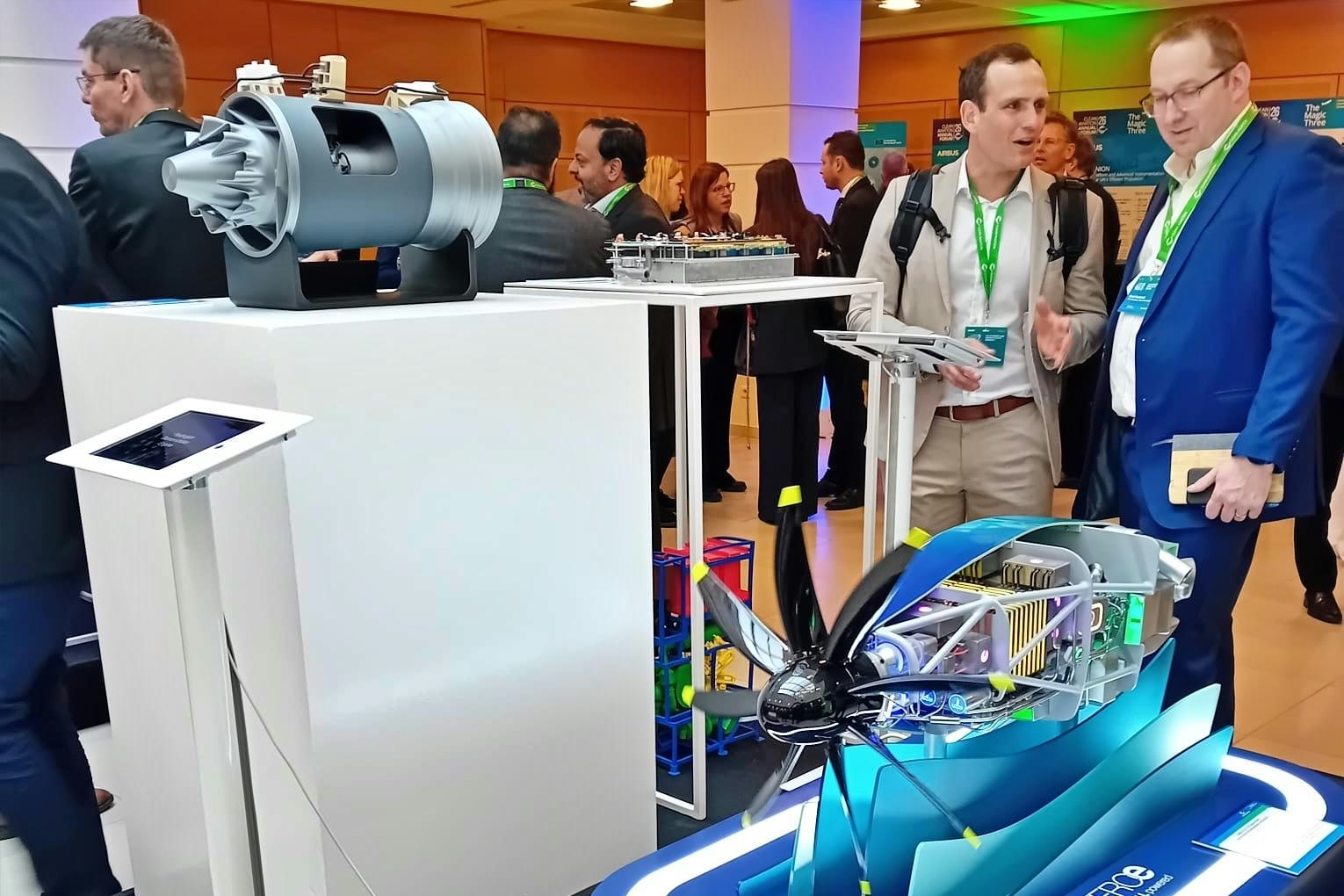
The Clean Aviation Annual Forum, held in Brussels on 17-18 March 2026, convened global delegates to deliberate on the future trajectory of European aerospace. Central to the discussions was the framework known as the ‘Magic Three’: Competitiveness, Sustainability, and Technological Sovereignty. European Commissioner for Sustainable Transport and Tourism Apostolos Tzitzikostas proposed expanding this framework to a ‘Magic Four’ by incorporating Safety as an indispensable pillar. Emphasizing the sector’s unwavering commitment, he stated, “Safety must never be compromised in aviation,” highlighting its foundational role alongside innovation and sustainability.
Accelerating the Transition from Innovation to Industrialization
Amid displays of research achievements, a pressing question dominated the forum: how can Europe expedite the transition from innovation to full-scale industrialization? Hugo Espírito Santo, Portugal’s Secretary of State for Infrastructure, advocated for the establishment of an “execution machine” — a decisive shift from prolonged deliberation to swift, effective action. While acknowledging Clean Aviation’s success in fostering a shared vision, Espírito Santo underscored the critical need to move beyond conceptual discussions toward tangible implementation.
This sense of urgency reflects broader economic challenges confronting multiple industries. As major industrial sectors prepare for a looming multi-billion dollar tariff cliff, aerospace is not isolated in facing economic headwinds. The agriculture sector, for instance, anticipates $1.2 billion in tariff-related costs but lacks the high-growth buffers present in industries such as heavy machinery. Companies like Caterpillar are leveraging sustained demand for AI data centers and North American infrastructure projects to stabilize profit margins. Across sectors, competitors increasingly rely on artificial intelligence and infrastructure booms to mitigate tariff impacts—strategies that may offer valuable insights for aerospace as it strives to bridge the gap between research and market-ready products.
Bridging the Funding Gap in Aerospace Innovation
A significant focus of the forum was the persistent funding gap known as the ‘valley of death’—the critical phase between Technology Readiness Level (TRL) 6 and commercial product deployment. Christian Ehler, Member of the European Parliament, argued that this gap remains a formidable barrier to industrialization. Traditionally defined as TRL 4-6, Ehler contended that halting support at TRL 6 leaves promising innovations stranded before reaching the marketplace.
To address this challenge, both the United Kingdom and the European Union have developed funding mechanisms targeting the mid-TRL gap. The UK’s Aerospace Technology Institute (ATI) and the EU’s Clean Sky and Clean Aviation Joint Undertakings represent distinct approaches. The EU’s model employs targeted calls on specific topics, creating a structured pipeline where technologies are refined and selectively advanced. This approach facilitates continued support beyond TRL 6, easing the path toward production. Henri Werij, Dean of Aerospace Engineering at TU Delft, encapsulated this perspective by stating, “Research is of little value if it is not applied.”
In contrast, the ATI’s open calls, aligned with its broader Technology Strategy, are designed to uncover unexpected breakthroughs but lack a formalized commitment to shepherding technologies through to full industrialization. This structural difference raises questions about the UK’s political resolve to sustain industrialization efforts at scale and, consequently, its future competitiveness in the aerospace sector.
Innovation Beyond Aerospace
While aerospace grapples with these challenges, innovation continues to reshape other industries. In consumer technology, Apple’s recent entry into the foldable smartphone market with the iPhone Fold aims to challenge Samsung’s Galaxy Z Fold series. This move signals a new phase in mobile device evolution and elevates consumer expectations, illustrating the dynamic nature of technological advancement across sectors.
The Clean Aviation Forum underscored the complexity of advancing from innovation to industrialization, a journey fraught with economic, political, and technological obstacles. Nonetheless, with coordinated strategies and a resolute focus on execution, Europe’s aerospace industry aspires to maintain its leadership in global competitiveness, sustainability, and technological sovereignty.

Etihad Airways Suspends Airbus A380 Flights on Key Route

Aditya Birla Group Seeks Approval for Aircraft Leasing in GIFT City

Qatar Airways Highlights Innovation and Connectivity at Arabian Travel Market 2026

Hong Kong's Five-Year Plan Includes Andrew Fan's Aircraft Parts Processing Hub Proposal

ACIA Aero Leasing Delivers ATR72-600 to Air Nostrum

RTX Appoints Jill Albertelli as Head of Pratt & Whitney

TAT Technologies Joins Beyond Aero Hydrogen Aircraft Program

AURAK Study Highlights Barriers to Air Taxi Adoption in Emerging Economies

Xiamen Air Selects Altitude for 787 Maintenance at Heathrow

Etihad and Swissport Extend Global Partnership
