
KI-Erkenntnisse in konkrete Maßnahmen überführen

Trends
Categories
GAMA Outlines Plan for Sustainable Aviation by 2026
GAMA Outlines Plan for Sustainable Aviation by 2026
The General Aviation Manufacturers Association (GAMA) has unveiled a comprehensive white paper outlining strategies to stimulate investment and regulatory support for sustainable aviation. The initiative aims to engage businesses of all sizes in the sector’s transition to greener technologies by 2026. This development comes amid heightened global concerns over energy security, with ongoing conflicts in the Middle East highlighting the aviation industry’s vulnerability to fluctuations in oil prices. GAMA’s report identifies reducing dependence on fossil fuels as a critical response to these geopolitical challenges.
Innovation and Regulatory Collaboration
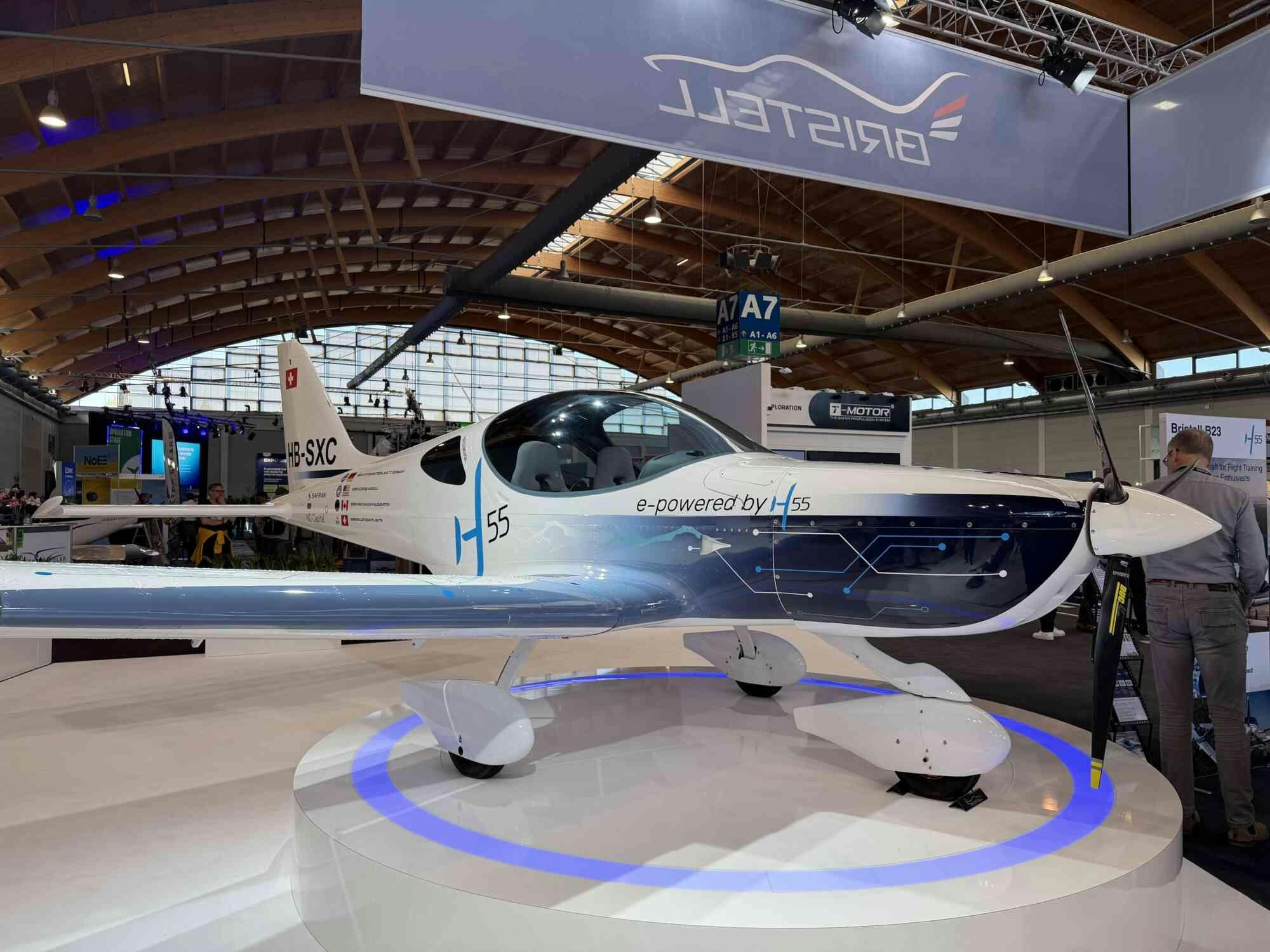
At the Aero 2026 event in Friedrichshafen, electric and hybrid propulsion systems took center stage, reflecting the industry’s growing momentum toward cleaner technologies. However, GAMA stresses that innovation alone will not suffice. Significant investment and regulatory alignment are imperative to bring new sustainable aircraft to market. While major manufacturers such as Airbus, Safran, and Daher have the resources to pursue long-term development, their success depends heavily on close cooperation with regulatory bodies including the European Union Aviation Safety Agency (EASA) and national aviation authorities.
GAMA’s position paper, titled Wings of Change: A Strategy for Competitiveness, Innovation, Industry, and Investment in Europe’s Sustainable Aviation Sector, reiterates a persistent challenge: Europe excels at generating innovation but often struggles to nurture it due to inadequate investment and enduring barriers to growth. Although the European Union’s broader Clean Industrial Deal is progressing, GAMA argues that the aerospace sector must assume a more prominent role in this transition.
Supply Chain and Investment Challenges
A significant obstacle identified in the report concerns the battery supply chain. Despite the existence of alliances such as the European Battery Alliance and the European Raw Materials Alliance, GAMA notes that efforts to customize these supply chains to meet aviation’s specific requirements—such as lightweight and thermally resilient batteries—remain insufficient. This issue was highlighted at Aero 2026, where Swiss company H55 announced the successful completion of testing to satisfy EASA’s stringent CS 23 regulations for electric aircraft batteries.
Securing adequate investment remains a central challenge for GAMA’s vision. The white paper emphasizes the necessity of establishing clear funding pathways for European clean technology, particularly for smaller companies that lack the financial resources of industry giants. Kyle Martin, GAMA’s Vice President for European Affairs, pointed out that most European funding currently targets large-scale airliner projects, leaving smaller innovators at a disadvantage. “Everything funding-wise in Europe is focused on the Part 25 airliner… it’s all focused on the Airbus scale of products,” Martin remarked.
To mitigate this imbalance, GAMA proposes a “One Stop Shop” initiative designed to assist startups and smaller enterprises in navigating the complex application processes for consortium and other funding sources. This initiative aims to accelerate the progression from concept to production for emerging sustainable aviation technologies.
Outlook and Industry Implications
The path forward is not without challenges. Market observers are expected to increase scrutiny of GAMA’s progress toward its sustainability objectives. Concurrently, competitors may intensify their own sustainability efforts to maintain market relevance, thereby accelerating the industry-wide push for greener aviation.
As GAMA advocates for coordinated investment, regulatory support, and targeted supply chain development, the realization of its sustainable aviation roadmap by 2026 will hinge on the industry’s capacity to overcome significant financial and structural barriers.

Etihad Airways Suspends Airbus A380 Flights on Key Route

Aditya Birla Group Seeks Approval for Aircraft Leasing in GIFT City

Qatar Airways Highlights Innovation and Connectivity at Arabian Travel Market 2026

Hong Kong's Five-Year Plan Includes Andrew Fan's Aircraft Parts Processing Hub Proposal

ACIA Aero Leasing Delivers ATR72-600 to Air Nostrum

RTX Appoints Jill Albertelli as Head of Pratt & Whitney

TAT Technologies Joins Beyond Aero Hydrogen Aircraft Program

AURAK Study Highlights Barriers to Air Taxi Adoption in Emerging Economies

Xiamen Air Selects Altitude for 787 Maintenance at Heathrow

Etihad and Swissport Extend Global Partnership
