
KI-Erkenntnisse in konkrete Maßnahmen überführen

Trends
Categories
GKN Aerospace Delivers First High-Voltage EWIS for SWITCH Project
GKN Aerospace Delivers First High-Voltage EWIS for SWITCH Project
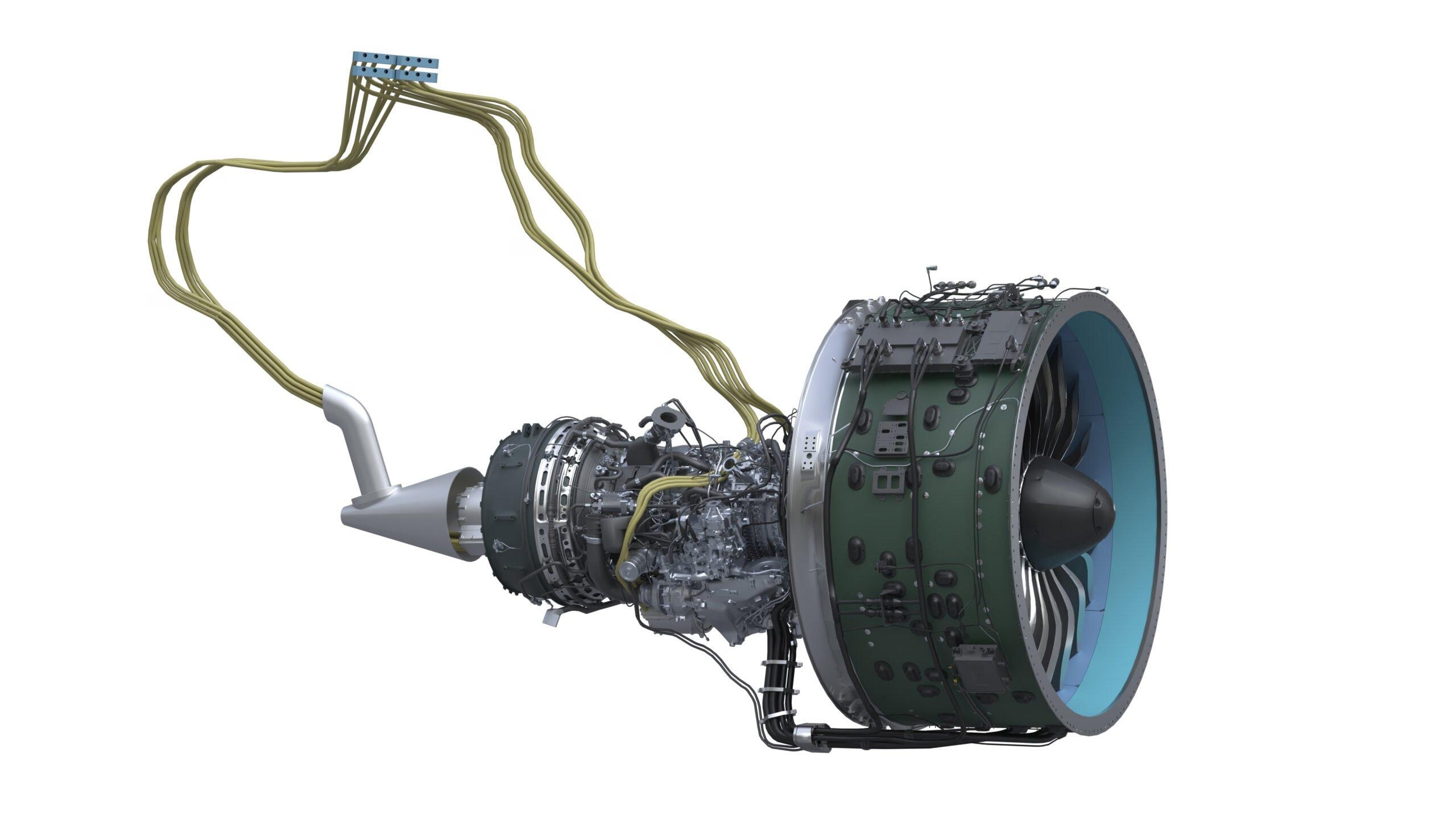
GKN Aerospace has achieved a significant milestone with the delivery of its first high-voltage electrical wiring interconnection system (EWIS) for the Clean Aviation SWITCH project, a key initiative in the development of next-generation hybrid-electric aircraft. Developed at GKN Aerospace’s Papendrecht facility in the Netherlands, the EWIS is engineered to support megawatt-class hybrid-electric propulsion systems. It is scheduled to undergo system integration testing later this year at Collins Aerospace’s advanced electric power systems facility, The Grid, located in Rockford, Illinois. Following this, the EWIS will play a critical role in hybrid-electric Pratt & Whitney GTF™ engine demonstrator testing at EME Aero in Poland.
Advancing Hybrid-Electric Propulsion Through International Collaboration
The SWITCH project is a major international consortium focused on advancing propulsion technologies to improve the efficiency and performance of future short- and medium-range aircraft. Led by MTU Aero Engines AG, the consortium includes RTX businesses Pratt & Whitney and Collins Aerospace, Airbus, and GKN Aerospace. The initiative benefits from funding provided by the European Union’s Clean Aviation Joint Undertaking. Within this collaboration, GKN Aerospace is tasked with the design, assembly, testing, and delivery of high-voltage AC wire harnesses, which are essential for the safe and efficient distribution of power in hybrid-electric aircraft.
As the aviation industry intensifies its focus on sustainable flight, the demand for innovative high-voltage distribution systems is increasing, with power requirements rising from hundreds of kilowatts to several megawatts. GKN Aerospace’s extensive experience in EWIS technologies across civil and defense sectors positions the company as a pivotal contributor to the electrical infrastructure necessary for the future of aviation.
Navigating Challenges in the Clean Aviation Sector
Despite these advancements, the clean aviation sector is encountering new challenges. GKN Aerospace is reportedly scaling back its hydrogen-related projects, a decision influenced in part by delays in Airbus’s ZEROe hydrogen aircraft program. These setbacks may affect GKN’s market positioning and funding prospects, while also impacting the broader industry momentum toward hydrogen-powered flight. In response, some competitors are shifting their focus toward alternative advanced technologies, such as cryogenic cooling systems, as demonstrated by the ICEFlight project.
GKN’s strategic reduction of its hydrogen development efforts may enable the company to reallocate resources and potentially strengthen its position in emerging cryogenic technologies. As the SWITCH project progresses, these evolving industry priorities highlight the necessity for adaptable innovation strategies. GKN Aerospace’s recent EWIS delivery not only advances hybrid-electric propulsion but also exemplifies the company’s capacity to navigate shifting technological and market dynamics in the pursuit of cleaner aviation.

Etihad Airways Suspends Airbus A380 Flights on Key Route

Aditya Birla Group Seeks Approval for Aircraft Leasing in GIFT City

Qatar Airways Highlights Innovation and Connectivity at Arabian Travel Market 2026

Hong Kong's Five-Year Plan Includes Andrew Fan's Aircraft Parts Processing Hub Proposal

ACIA Aero Leasing Delivers ATR72-600 to Air Nostrum

RTX Appoints Jill Albertelli as Head of Pratt & Whitney

TAT Technologies Joins Beyond Aero Hydrogen Aircraft Program

AURAK Study Highlights Barriers to Air Taxi Adoption in Emerging Economies

Xiamen Air Selects Altitude for 787 Maintenance at Heathrow

Etihad and Swissport Extend Global Partnership
