
KI-Erkenntnisse in konkrete Maßnahmen überführen

Trends
Categories
Global Aviation Faces $11 Billion Loss as Aircraft Deliveries Stall
Global Aviation Faces $11 Billion Loss as Aircraft Deliveries Stall
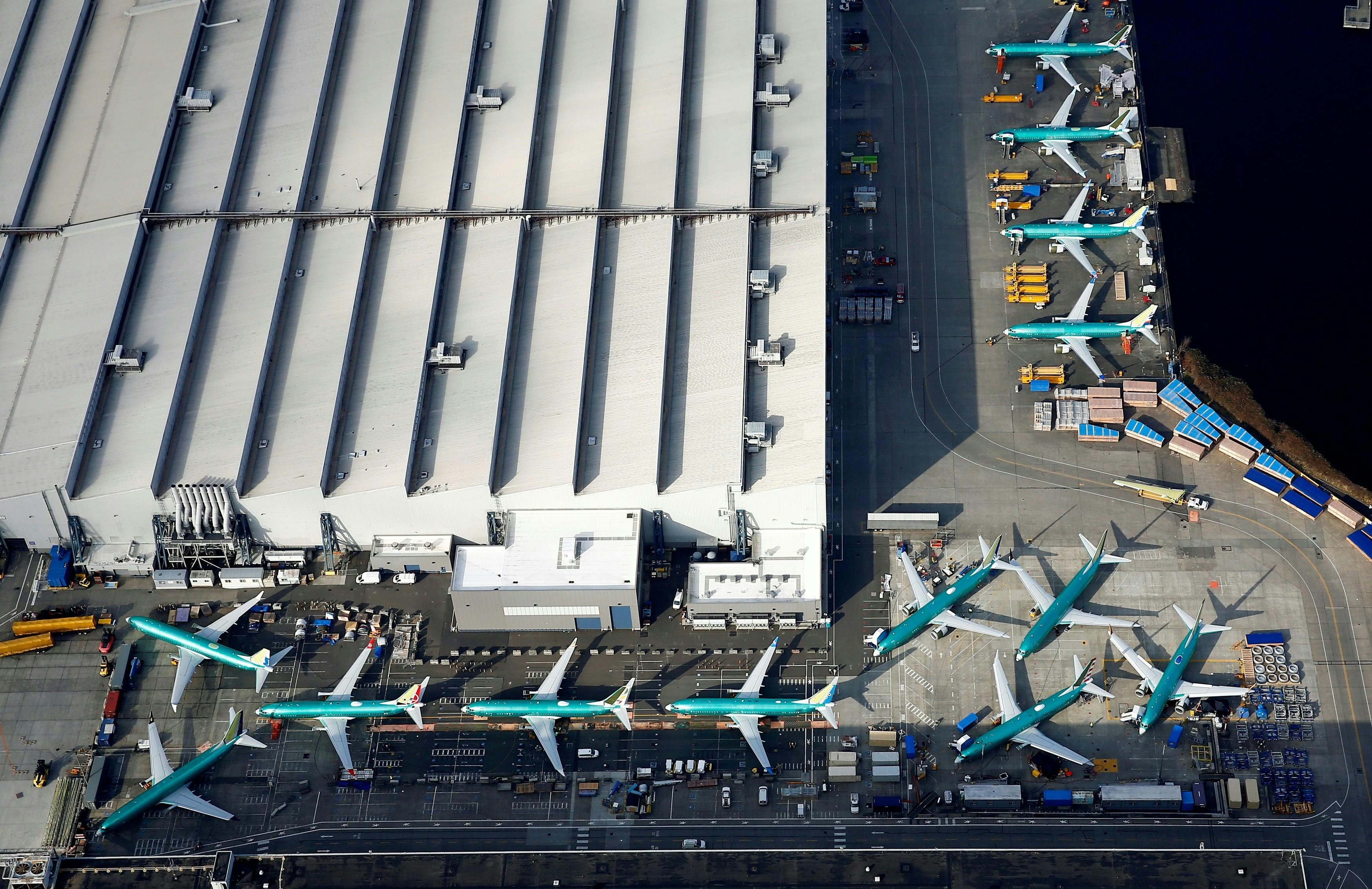
The global aviation industry is grappling with a severe supply chain crisis that threatens to derail its fragile recovery following the COVID-19 pandemic. A recent report from the International Air Transport Association (IATA) reveals that aircraft deliveries in 2024 have plummeted to just 1,254 units, representing a nearly 30% decline compared to pre-pandemic levels. At the same time, the backlog of commercial aircraft orders has surged to an unprecedented 17,000, significantly exceeding the annual average of 13,000 recorded between 2010 and 2019.
Supply Chain Disruptions and Financial Impact
Ongoing supply chain bottlenecks are causing substantial delays in the production of new aircraft and essential components. This has compelled airlines to extend the operational life of older, less fuel-efficient planes, while hundreds of aircraft remain grounded due to persistent engine problems. The resulting operational challenges have left carriers struggling to meet the rising demand for air travel.
These disruptions are exacting a heavy financial toll on the industry. IATA projects that the cumulative cost to airlines will exceed $11 billion in 2025, an increase from similar losses incurred this year. Delayed fuel savings alone are expected to amount to $4.2 billion, while additional maintenance expenses are forecasted at approximately $3.1 billion. The financial strain is further intensified by operational setbacks, including flight cancellations, increased compensation payments to passengers, and the necessity for forced component replacements that ultimately degrade aircraft performance.
Structural Changes and Supply Chain Vulnerabilities
At the core of the crisis lies a fundamental transformation in the aerospace business model. Original Equipment Manufacturers (OEMs) are increasingly reliant on aftermarket revenue streams—such as spare parts, repairs, and maintenance—rather than on initial aircraft sales. Although newer aircraft models offer enhanced fuel efficiency, they also demand more complex maintenance procedures, often binding airlines to OEM-controlled repair networks. This dependency inflates costs and prolongs lead times for critical parts.
Leasing companies, which now control over half of the global aircraft fleet, further constrain airline flexibility by requiring OEM parts for lease returns. This practice limits carriers’ ability to source alternative approved components or expedite repairs, exacerbating the supply chain bottlenecks.
Labour Shortages and Geopolitical Challenges
Compounding these structural issues are fragile supply networks and acute labour shortages. Geopolitical instability has disrupted access to vital materials such as titanium, while ongoing trade tensions have impeded cross-border logistics. Key metals, including aluminium and superalloys, remain in short supply, with competition intensifying between the defence and business aviation sectors for these limited resources.
The industry is also facing a critical shortage of skilled technicians. A wave of retirements among experienced personnel, coupled with the lengthy training required for new entrants, has created a significant workforce deficit. Rising labour costs and constrained manpower are driving up maintenance expenses and prolonging turnaround times.
As the backlog of aircraft orders reaches historic highs and supply chain disruptions continue unabated, the aviation sector confronts a challenging road ahead. The projected $11 billion loss in 2025 highlights the urgent need for coordinated efforts to restore stability and efficiency across the global aviation ecosystem.

Etihad Airways Suspends Airbus A380 Flights on Key Route

Aditya Birla Group Seeks Approval for Aircraft Leasing in GIFT City

Qatar Airways Highlights Innovation and Connectivity at Arabian Travel Market 2026

Hong Kong's Five-Year Plan Includes Andrew Fan's Aircraft Parts Processing Hub Proposal

ACIA Aero Leasing Delivers ATR72-600 to Air Nostrum

RTX Appoints Jill Albertelli as Head of Pratt & Whitney

TAT Technologies Joins Beyond Aero Hydrogen Aircraft Program

AURAK Study Highlights Barriers to Air Taxi Adoption in Emerging Economies

Xiamen Air Selects Altitude for 787 Maintenance at Heathrow

Etihad and Swissport Extend Global Partnership
