
KI-Erkenntnisse in konkrete Maßnahmen überführen

Trends
Categories
Grand Canyon National Park Airport Completes Runway Upgrade
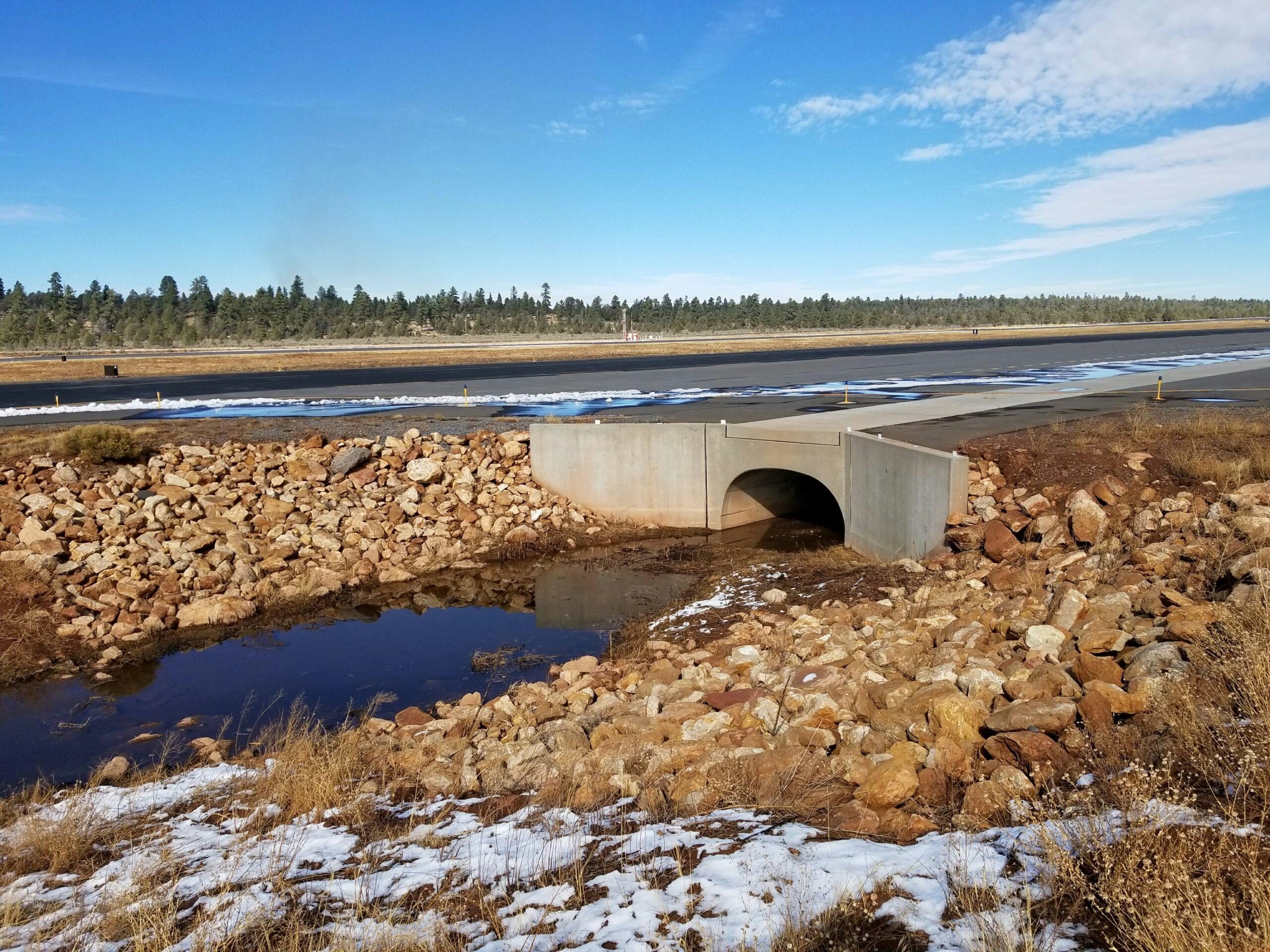
Grand Canyon National Park Airport Completes $12 Million Runway Upgrade
Grand Canyon National Park Airport, overseen by the Arizona Department of Transportation (ADOT), has successfully completed a $12 million runway rehabilitation project designed to improve safety and operational efficiency. The extensive upgrade involved resurfacing the airport’s only runway, reconfiguring a critical taxiway intersection, refreshing apron markings, and updating signage to comply with current Federal Aviation Administration (FAA) standards.
Project Execution and Funding
The rehabilitation was completed in just over two months, requiring meticulous coordination to minimize disruptions to airport operations, tenants, and travelers. David Reffner, Director of Grand Canyon National Park Airport, emphasized the collaborative effort, stating, “This project reflects the strength of our partnership with the FAA and our shared commitment to safe, efficient access to the Grand Canyon.” He also highlighted the project team’s dedication and expertise as key factors in delivering the upgrade on schedule.
Primarily funded through an FAA Airport Improvement Program grant, with matching contributions from the state of Arizona, the project underscores the state’s commitment to maintaining high-quality aviation infrastructure. The construction was carried out by Fann Contracting, with design and project management provided by Mead & Hunt, alongside staff from both ADOT and the FAA.
Regional Impact and Future Outlook
The timing of the upgrade is significant, coinciding with the reopening of portions of the Grand Canyon’s North Rim following recent wildfire closures. The airport anticipates potential increases in visitor numbers and related air traffic as access to the region improves. The enhanced runway is expected to better accommodate this demand from travelers and tourism operators.
Completing the project involved overcoming challenges such as strict adherence to aviation safety regulations and coordination with local tourism and environmental stakeholders. These efforts were crucial to ensuring that airport operations remain safe and efficient while supporting the broader regional tourism economy.
Industry analysts suggest that the improved infrastructure may prompt competing airports and service providers to adjust their offerings or marketing strategies to capitalize on the expected rise in travel to the Grand Canyon area.
For further details on the runway rehabilitation project, interested parties are encouraged to visit ADOT’s project webpage.
American Airlines Plans to Receive New Aircraft Deliveries in 2026

Delta Flight Returns to Atlanta Airport Due to Engine Trouble

Samoa Airways Recovers Damaged DHC-6-300 Aircraft

Man Ingested by Frontier Airlines Engine Marks Denver’s Sixth Airfield Security Breach in Three Years

The Advantages and Disadvantages of Owning Versus Leasing a Private Jet
Former Spirit Employees Express Concerns Over AI Partnership With Google
China Certifies Pilotless Air Taxi for Export; Sri Lanka First Buyer

US Pilot Hourly Pay Ranges from $90 for Regional to $465 for Widebody Flights

NASA Chooses University Teams to Support Aviation Research

Airbus Conducts Freighter First Flight as Delivery Figures Influence Stock
