
KI-Erkenntnisse in konkrete Maßnahmen überführen

Trends
Categories
Growth and Demand in the Philippines Aircraft Maintenance Market

Growth and Demand in the Philippines Aircraft Maintenance Market
The aircraft maintenance, repair, and overhaul (MRO) market in the Philippines is undergoing steady expansion, driven by the revival of commercial aviation and the growth of airline fleets. Market projections estimate the sector will reach USD 2.42 billion by 2025 and is expected to grow to USD 4.12 billion by 2034, reflecting a compound annual growth rate (CAGR) of 6.07% from 2026 to 2034.
Aircraft MRO services encompass a wide array of technical operations, including airframe and engine maintenance, component overhauls, line servicing, and comprehensive inspections. These services are essential to ensuring safety, regulatory compliance, and airworthiness for both civil and commercial aircraft. The sector’s growth is underpinned by several converging factors: increasing passenger air traffic, enhanced regional connectivity, ongoing fleet modernization, and a rising trend toward outsourcing technical maintenance services.
Key Drivers of Market Growth
The resurgence in passenger air travel following the pandemic has significantly increased demand for both domestic and international flights. Airlines have responded by expanding flight frequencies, opening new routes, and deploying additional aircraft. Major airports in Metro Manila, Cebu, and Davao have experienced heightened traffic volumes, intensifying the need for dependable MRO services to maintain fleet readiness and uphold stringent safety standards.
Simultaneously, airlines in the Philippines and the broader Southeast Asian region are modernizing and expanding their fleets with advanced aircraft models. These newer designs require specialized maintenance procedures, sophisticated tools, and certified technical expertise, thereby driving demand for more complex and technologically advanced MRO services.
Regulatory compliance remains a critical factor in the sector’s development. Stringent aviation regulations and international standards impose rigorous maintenance and safety requirements. Adherence to airworthiness directives, inspection protocols, and documentation standards necessitates regular servicing and overhauls conducted by qualified MRO providers.
Additionally, growth in charter operations, cargo services, and the business jet segment is diversifying the demand for MRO services. These sectors require flexible and rapid maintenance solutions, broadening the scope of MRO beyond traditional airline carriers.
Market Segmentation and Insights
The Philippine aircraft MRO market is segmented by service type, aircraft type, end user, and distribution channel. Service offerings include airframe maintenance, engine repair and overhaul, line and component maintenance, modifications, technical support, and engine leasing. Among these, engine and airframe services generate the highest revenues due to their technical complexity and regulatory importance.
In terms of aircraft type, MRO operations cover commercial jets—both narrow-body and wide-body—regional aircraft, business jets, and freighter conversions. Narrow-body aircraft, which dominate domestic and short-haul routes, consistently drive demand for maintenance services.
The customer base spans domestic and international airlines, MRO service providers, cargo operators, charter services, and business aviation fleets. Service delivery channels include dedicated MRO facilities, authorized centers, independent third-party providers, airline in-house teams, and international partnerships. Independent operators and strategic alliances are expanding technical capabilities and extending service reach across the region.
Opportunities and Challenges
Despite promising growth prospects, the sector faces challenges from intensified competition with global MRO providers, geopolitical uncertainties, and fluctuating aviation demand. The recovery of the Philippines’ manufacturing sector in December 2025, propelled by strong domestic demand, suggests potential for increased aircraft maintenance activity. However, ongoing export declines and unpredictable market dynamics may temper growth.
In response to these challenges, industry players are expected to invest strategically in expanding local capacity and diversifying into mid-complexity industries to maintain momentum. As airlines continue to prioritize reliability, turnaround efficiency, and regulatory compliance, the development of a robust MRO ecosystem will be essential to supporting the evolving aviation landscape in the Philippines.

Why AI Trustworthiness Depends on Its Surrounding Systems

United Airlines’ Lie-Flat Boeing 757 Dominated Premium Transcontinental Routes and Its Upcoming Replacement
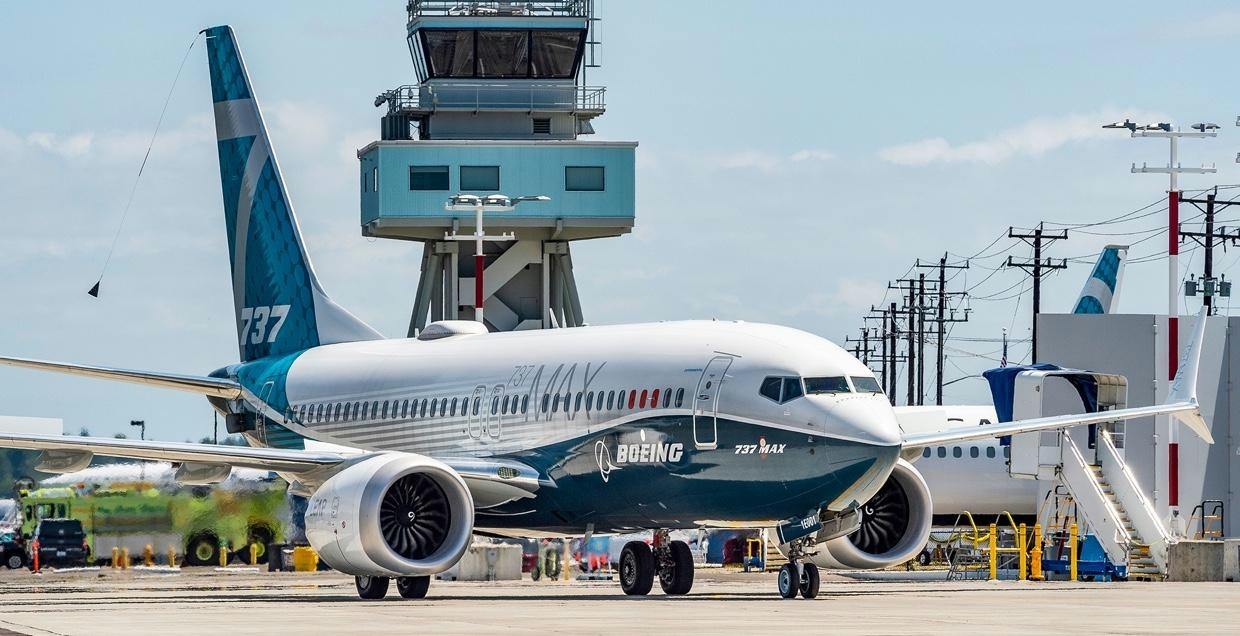
Boeing Completes Flight Tests for 737 MAX 7 and MAX 10, Aiming for 2027 Deliveries

Why the McDonnell Douglas MD-80 Outlasted Its Successor

Alaska Airlines Expands Freighter Fleet to Nine Boeing 737-800BCFs

American Airlines Plans Widebody Aircraft Order to Boost Profits

How Airports Can Use AI to Improve Decision-Making

Textron Cites Workforce Challenges in Jet Delivery Delays

A380 Flight to China Delayed by 10 Hours

Ryanair Expands Partnership with AWS on AI Initiatives
