Bild

KI-Erkenntnisse in konkrete Maßnahmen überführen

Trage dich noch heute in die AeroGenie-Warteliste ein!

Trends

Categories

Gulfstream Opens Customer Support Facility in Singapore
June 14, 2026By ePlane AI
Gulfstream Opens Customer Support Facility in Singapore
0
0
Gulfstream
Customer Support
Seletar Airport

Gulfstream Opens Customer Support Facility in Singapore

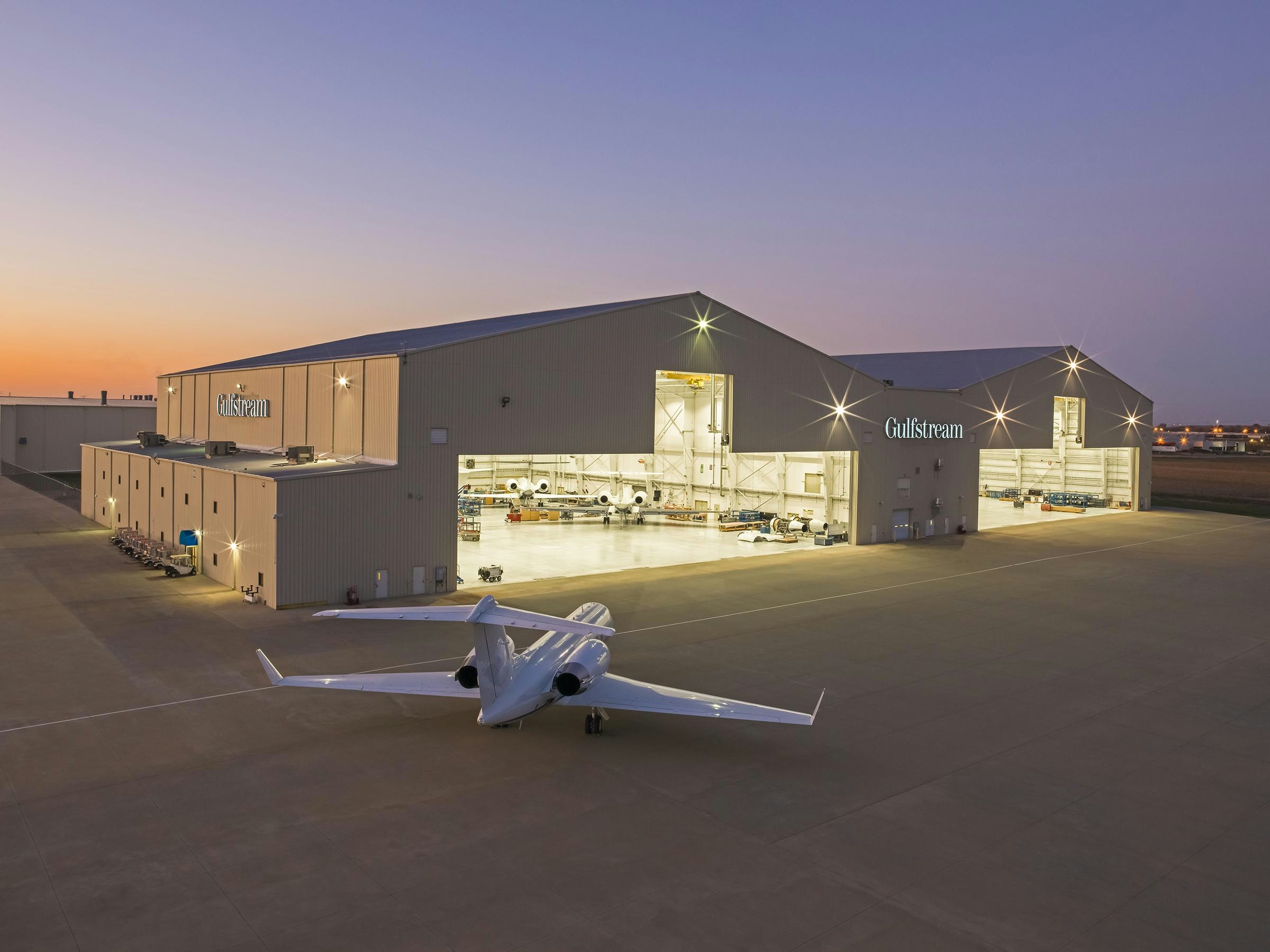
Savannah-based business jet manufacturer Gulfstream has inaugurated its first dedicated customer support center at Seletar Airport in Singapore, in collaboration with Jet Aviation. This strategic move highlights Gulfstream’s confidence in the Asia-Pacific region, with Singapore positioned as a pivotal hub for the company’s expansion in business aviation.

Strategic Expansion in Asia-Pacific

Lor Izzard, Gulfstream’s Senior Vice President of Support, emphasized Singapore’s significance as a “natural choice given its role as a leading aerospace hub.” The newly established facility, situated within Jet Aviation’s Singapore premises, is staffed by a team of eight Gulfstream professionals, including customer technical managers, materials and quality specialists, a field service representative, and a regional sales manager. Izzard noted that having a dedicated on-site team enables Gulfstream to provide a more seamless and convenient service experience for customers throughout the region.

This support center complements Gulfstream’s existing 5,000-square-foot distribution facility in Singapore, which fulfills over 70% of regional parts orders and maintains an inventory exceeding $70 million in spare parts. This infrastructure not only supports repair operations but also advances Gulfstream’s long-term strategy to expand in-house component support capabilities.

Competitive Landscape and Market Dynamics

Gulfstream’s expansion occurs amid intensifying competition within the Asia-Pacific business aviation maintenance sector. Established competitors such as Bombardier are also enhancing their regional presence; notably, Bombardier recently announced a $100 million, 250,000-square-foot facility at Seletar Aerospace Park. Additionally, private aviation services provider WingsOverAsia has commenced construction on a maintenance, repair, and overhaul (MRO) and innovation facility at Seletar, expected to be operational by 2027. This new facility will enable WingsOverAsia to service larger aircraft, including the Gulfstream G700 as well as Boeing and Airbus corporate jets.

Industry observers are closely monitoring how Gulfstream will leverage its Singapore facility to enhance service offerings and sustain its competitive advantage. The company faces the challenge of differentiating itself in a market where rivals are also investing heavily in customer support and infrastructure. Analysts anticipate that competitors may respond with increased marketing efforts and service improvements to safeguard their market share.

Recent Aircraft Debuts and Regional Commitment

The opening of the Singapore support center follows Gulfstream’s European debut of its next-generation G300 and G400 aircraft at Farnborough Airport, London’s business aviation hub, on June 9. Mark Burns, Gulfstream’s president, highlighted the jets’ “unmatched performance, efficiency and cabin innovation—capabilities that are ideally suited to operators in the region.”

Unveiled in September 2025, the super-midsize G300 features the longest cabin in its class, accommodating up to 10 passengers and offering a range of 3,600 nautical miles at Mach 0.80. The G400 set a city-pair speed record en route to Farnborough, flying 3,250 nautical miles from Washington, D.C., in just over six hours at an average speed of Mach 0.87, utilizing sustainable aviation fuel.

Through the establishment of its Singapore support center and the introduction of new aircraft models, Gulfstream is reaffirming its commitment to growth in the Asia-Pacific region, even as it navigates a dynamic and increasingly competitive market environment.

More news
Air India Pauses Expansion Amid Delayed Aircraft Deliveries and Market Challenges

Air India Pauses Expansion Amid Delayed Aircraft Deliveries and Market Challenges

Air India Pauses Expansion Amid Delayed Aircraft Deliveries and Market Challenges India’s aviation sector is at a critical juncture as Air India announces a strategic pause in its ambitious expansion plans. The decision comes in response to delayed aircraft deliveries and mounting market pressures, signaling a significant shift for travelers, airline stakeholders, airport operators, and the wider tourism industry. Challenges in Fleet Modernization and Delivery Delays Central to Air India’s recovery and growth strategy was the modernization of its fleet through substantial orders of new-generation aircraft, including the Airbus A320neo and A350, as well as Boeing’s 737 MAX and 787 Dreamliner families. These additions were intended to enhance operational efficiency, elevate passenger experience, and strengthen the airline’s position in long-haul markets, ultimately aiming to establish Air India as a global aviation leader. However, recent industry reports indicate that hundreds of these planned aircraft deliveries are likely to be deferred. Compounding these delays, the engine trading market faces warnings of a potential sharp correction, further exacerbating supply chain challenges. Consequently, Air India’s capacity expansion is expected to slow, which may affect route availability and hinder the airline’s ambitions to increase its market share. Financial and Operational Pressures Reshape Strategy The airline’s outgoing CEO, Campbell Wilson, has openly acknowledged the difficulties encountered over the past year, highlighting geopolitical tensions, regulatory scrutiny, and persistent financial losses as key factors influencing the company’s current stance. These pressures have compelled Air India to prioritize operational stability over rapid growth, marking a departure from its earlier aggressive expansion approach. Despite these setbacks, Singapore Airlines, Air India’s strategic partner, continues to affirm its commitment to supporting the carrier’s transformation. While Air India remains in a loss-making position, Singapore Airlines regards its investment as a long-term endeavor, maintaining confidence in the airline’s future prospects amid ongoing turbulence. Broader Implications for India’s Aviation Market Air India’s recalibrated growth strategy is being closely monitored by industry analysts, as any slowdown in expansion could create opportunities for rival carriers and alter the competitive dynamics within India’s rapidly growing aviation market. For travelers, tourism authorities, and aviation partners, the airline’s pause may influence route options, fare structures, and connectivity for the foreseeable future. As one of the world’s fastest-expanding aviation markets, India faces a complex balancing act involving market demand, supply chain constraints, and financial sustainability. The coming months will be pivotal in determining how Air India and the broader sector adapt to these evolving challenges.
AirAsia’s Airbus Deal Reshapes Asian Travel as China Southern, Lufthansa, and Cathay Expand Fleets

AirAsia’s Airbus Deal Reshapes Asian Travel as China Southern, Lufthansa, and Cathay Expand Fleets

AirAsia’s Airbus Deal Reshapes Asian Travel as China Southern, Lufthansa, and Cathay Expand Fleets Airlines across Asia and Europe are accelerating their fleet expansion plans amid intensifying competition for future aircraft delivery slots. AirAsia’s unprecedented order of 150 Airbus A220 aircraft, alongside significant commitments from China Southern Airlines, Xiamen Airlines, Lufthansa, Cathay Cargo, and Air China Cargo, highlights how carriers are strategically positioning themselves for sustained growth in both passenger and cargo sectors. With manufacturers facing extensive production backlogs—particularly for popular narrowbody models such as the A320neo and A321neo—airlines are moving swiftly to secure delivery schedules that will support expansion well into the next decade. This surge in orders reflects a broader transformation in global travel, driven by rising passenger volumes, increased demand for connectivity to secondary cities, fleet modernization efforts, and stringent fuel-efficiency targets. Airlines Race to Secure Capacity Amid Strong Demand The aviation industry is currently experiencing one of its most active procurement phases in recent history. As passenger numbers rebound and exceed pre-pandemic levels in many regions, airlines are locking in future capacity ahead of further production constraints. New-generation aircraft are viewed as essential for reducing operating costs, enhancing fuel efficiency, and providing operational flexibility across diverse route networks. For travelers, these investments promise expanded route options, higher flight frequencies, and improved onboard experiences. The resurgence of tourism and the growth of emerging markets have made fleet expansion a strategic imperative. Airlines are making long-term decisions that will shape their networks for decades, particularly in the Asia-Pacific region, where population growth, urbanization, and rising middle-class incomes continue to drive aviation demand. AirAsia’s Landmark Airbus A220 Order Signals Regional Shift AirAsia’s announcement of the largest-ever Airbus A220 order, committing to 150 aircraft, stands out as a pivotal development. This strategic move aims to enhance connectivity between smaller cities and regional destinations across Asia. The A220’s blend of fuel efficiency, operational flexibility, and passenger comfort makes it well-suited for short- and medium-haul routes, supporting AirAsia’s ambition to tap into underserved markets and expand its regional footprint. Competitor Responses and Market Dynamics AirAsia’s bold commitment has prompted notable responses from competitors. Cathay Pacific, for example, has increased its firm order for Airbus A350 freighters to eight aircraft, signaling confidence in long-term cargo and passenger demand despite challenges such as elevated jet fuel prices and geopolitical uncertainties. Cathay Pacific’s CEO, Ronald Lam, remains optimistic about 2026 and is actively expanding the airline’s network, including plans to launch the first nonstop service between Hong Kong and Kazakhstan in early 2027. The competitive landscape is further influenced by evolving travel trends. The rise of “bleisure” travel—where business travelers extend their trips for leisure purposes—is reshaping the Asia-Pacific hotel and airline markets, prompting carriers and hospitality providers to adapt their strategies to capture this growing segment. Outlook As airlines across Asia and Europe compete to secure future aircraft capacity, the latest wave of orders underscores industry confidence in sustained travel demand. With delivery slots becoming increasingly scarce through the 2030s, carriers are making decisive moves to strengthen their networks, modernize fleets, and maintain competitiveness in a rapidly evolving market.
KLM Boeing 737-800 Diverts to Denmark After Engine Failure and Cabin Smoke

KLM Boeing 737-800 Diverts to Denmark After Engine Failure and Cabin Smoke

KLM Boeing 737-800 Diverts to Denmark After Engine Failure and Cabin Smoke **June 14, 2026** — A KLM flight from Bergen, Norway to Amsterdam was forced to divert to Denmark on Friday morning after a Boeing 737-800 experienced engine failure accompanied by smoke in the cabin at cruising altitude. The aircraft, registered PH-BXY, was flying at 35,000 feet when the incident occurred. Thanks to the prompt and professional response of the flight crew, all 190 passengers and crew members disembarked safely in Denmark, underscoring the robustness of contemporary aviation safety protocols. In-Flight Emergency and Immediate Response Flight KL1164 departed Bergen Airport on schedule and was en route to Amsterdam when passengers were startled by two loud bangs emanating from the right engine. Shortly thereafter, an acrid odor, described by passengers as similar to burning electronics, permeated the cabin, followed by visible smoke. The sudden onset of these symptoms caused significant alarm among those onboard. Inside the cockpit, pilots were confronted with multiple warning indicators, including a critical low oil pressure alert for the right engine. Adhering to established emergency procedures, the crew promptly shut down the malfunctioning engine. Although the Boeing 737-800 is engineered to operate safely on a single engine, the presence of smoke heightened the urgency of the situation. Diversion to Billund Airport and Safe Landing Recognizing the severity of the situation, the flight crew declared an emergency and diverted to Billund Airport (BLL) in Denmark, the nearest suitable airfield. Emergency response teams at Billund were immediately mobilized, with fire and medical personnel prepared to assist upon the aircraft’s arrival. Despite the tense circumstances, the pilots maintained full control during the descent. At approximately 10:45 AM local time, KL1164 landed safely without the deployment of emergency slides. The aircraft taxied to the gate under its own power, and all passengers and crew disembarked without injury. Industry Impact and Ongoing Safety Considerations This incident is expected to prompt increased scrutiny of engine safety and reliability, particularly concerning GE Aerospace’s Leap-1B engines, which are undergoing updates to mitigate risks associated with cabin smoke. Such events often lead airlines and manufacturers to reassess maintenance practices and emergency protocols, potentially influencing insurance premiums and operational planning. In the competitive landscape, rival manufacturers may emphasize their own safety records to reassure the traveling public. Meanwhile, Boeing continues to increase production of the 737 series, aiming to reach a monthly output of 52 jets early next year following consultations with the Federal Aviation Administration. This production ramp-up could influence market dynamics in the context of recent high-profile incidents. Affirmation of Aviation Safety Standards While the emergency was undoubtedly distressing for those onboard, the successful handling of the situation highlights the effectiveness of modern aircraft design, rigorous crew training, and comprehensive emergency preparedness. The safe landing of KL1164 serves as a powerful reminder of why commercial aviation remains one of the safest modes of transportation worldwide.
Virgin Australia to Receive First Boeing 737-10 in 2027, Expanding Fleet Capacity

Virgin Australia to Receive First Boeing 737-10 in 2027, Expanding Fleet Capacity

Virgin Australia to Receive First Boeing 737-10 in 2027, Expanding Fleet Capacity Virgin Australia has announced that it will take delivery of its first Boeing 737-10 aircraft in late 2027, marking a pivotal advancement in the airline’s fleet modernization efforts. This new addition will be the largest aircraft in Virgin Australia’s fleet, capable of accommodating between 188 and 204 passengers in a two-class configuration. The initial delivery is part of a firm order for ten 737-10s, with the timeline dependent on Boeing obtaining regulatory approval from US authorities. The announcement follows three years of successful operations with the Boeing 737 MAX series. Currently, Virgin Australia operates 19 Boeing 737-8 aircraft, with an additional seven expected by the end of 2026. Over this period, the airline has reported fuel savings of approximately 30 million litres and a reduction of more than 77,000 tonnes of CO2 emissions compared to its previous 737-800 fleet. Strategic Rationale and Sustainability Virgin Australia’s decision to incorporate the 737-10 into its fleet aligns with its broader modernization and sustainability objectives. The 737-10 offers significant operational efficiencies, including a 20% reduction in fuel consumption and carbon emissions per seat relative to the older 737-800 model. Its range of 5,740 kilometres enables the airline to serve both its extensive domestic network and emerging international routes in Southeast Asia. Chief Executive Officer Dave Emerson emphasized the importance of fleet renewal as “the single biggest lever we have to reduce emissions in the near term,” highlighting the 737-10’s critical role in achieving the airline’s environmental targets. The aircraft’s commonality with the existing 737-8 fleet will facilitate streamlined pilot training, maintenance, and spare parts management, thereby reducing implementation costs and optimizing crew utilization. Industry Context and Competitive Landscape Virgin Australia’s fleet renewal initiative occurs amid increasing competition and tightening regulatory requirements across the Asia-Pacific aviation sector. Airlines in the region face more stringent carbon emissions reporting obligations, such as those imposed by Australia’s Safeguard Mechanism, making the adoption of modern, fuel-efficient aircraft essential for maintaining long-term competitiveness. Similar fleet upgrades are underway among Virgin Australia’s competitors. Southwest Airlines plans to introduce the Boeing 737 MAX 7 in early 2027, while TUI is expanding its 737 MAX fleet. WestJet is also replacing older 737-700s with newer 737-8 models to enhance fuel efficiency. These developments reflect a broader industry trend toward fleet renewal as carriers seek to balance capacity growth with sustainability and cost management. Challenges Ahead Despite the clear advantages, Virgin Australia faces several challenges in integrating the 737-10 into its operations. Securing timely regulatory approvals remains a critical hurdle, as does managing the operational costs associated with deploying a larger aircraft. These challenges are compounded by the fact that competitors are pursuing similar strategies to modernize their fleets, intensifying market pressures. Looking Forward Since emerging from administration in 2020, Virgin Australia has focused on building a modern, fuel-efficient fleet. The introduction of 26 Boeing 737-8 aircraft by the end of 2026 has laid a foundation for capacity expansion and improved environmental performance. The arrival of the 737-10 will further this trajectory, enabling the airline to serve high-demand routes with greater efficiency and reduced per-passenger emissions. In parallel, Virgin Australia is rolling out new business and economy cabin products to standardize the passenger experience across its Boeing fleet. The airline’s broader sustainability strategy includes reducing fleet age, upgrading engine technology, and exploring sustainable aviation fuels—key initiatives as the industry adapts to evolving regulatory and market demands.
The GE90: MTU Maintenance Hanover's Largest Turbofan Engine

The GE90: MTU Maintenance Hanover's Largest Turbofan Engine

The GE90: MTU Maintenance Hanover's Largest Turbofan Engine The GE90 holds the distinction of being the largest turbofan engine ever constructed, celebrated for its extraordinary power and advanced engineering. Measuring 3.26 meters in diameter, this engine generates sufficient thrust to lift the equivalent of 55 small cars vertically, establishing new benchmarks in aviation propulsion. It serves as the primary powerplant for various models of the Boeing 777, cementing its role as a vital component in long-haul commercial aviation. MTU Maintenance Hanover’s Expertise and Industry Challenges MTU Maintenance Hanover has developed a reputation as a leading specialist in the repair and maintenance of the GE90, addressing the complex and demanding upkeep requirements of this powerful engine. The facility’s technical proficiency ensures that airlines operating Boeing 777 aircraft can depend on the GE90’s performance and reliability—two essential factors in the highly competitive aviation sector. Despite its engineering prowess, the GE90 faces mounting challenges amid a rapidly evolving industry landscape. Competition from other turbofan engines, notably CFM International’s Leap series, is intensifying. GE projects that the Leap series will eventually achieve durability comparable to the widely used CFM56, thereby raising industry standards for reliability and longevity. Market perceptions of the GE90 remain closely linked to its operational performance, particularly as Boeing accelerates production of the 787 and GE addresses ongoing delivery delays. Strategic Shifts and Future Prospects The competitive environment is further influenced by strategic decisions among key industry players. MTU Maintenance Hanover is reportedly reevaluating its position in the military engine market, a move that could have significant implications for the broader turbofan engine sector. Concurrently, GE’s development of a new small turbofan engine aimed at the collaborative combat aircraft market reflects a diversification strategy, potentially shifting focus away from large engines like the GE90 and toward emerging segments. As the aviation industry advances, the GE90 continues to symbolize engineering excellence and remains a benchmark for power and performance. Nevertheless, ongoing technological innovation and evolving market strategies will shape the future trajectory of turbofan engines, demanding both progress and adaptability from manufacturers and service providers alike.
China Welcomes 68 Million Tourists Amid Travel Disruptions with Visa Expansion and AI in Aviation

China Welcomes 68 Million Tourists Amid Travel Disruptions with Visa Expansion and AI in Aviation

China Welcomes 68 Million Tourists Amid Travel Disruptions with Visa Expansion and AI in Aviation In 2025, China solidified its position as a dominant force in international tourism by welcoming a record 68 million visitors, a figure nearly three times the global growth rate. The tourism sector expanded by 9.9% to reach $1.8 trillion, more than doubling the global average. This remarkable growth is attributed to a combination of coordinated government policies, technological innovation, and sustained investment in infrastructure, enabling China to stand out amid widespread travel disruptions and airport congestion worldwide. Leveraging AI and Modern Infrastructure for Seamless Travel While many Western transit hubs continue to grapple with flight cancellations and logistical challenges, China has adopted advanced artificial intelligence and modernized aviation systems to create a more efficient travel environment. AI-driven crowd management and predictive analytics, coupled with high-speed rail connections integrated directly into airport terminals, have allowed major cities such as Beijing and Shanghai to process large volumes of travelers with remarkable efficiency. These technological advancements have shielded visitors from countries including the United Kingdom, Russia, the United States, South Korea, Japan, Thailand, Malaysia, and Singapore from the travel disruptions affecting other global hubs. Visa Facilitation and Border Modernization A key driver of China’s tourism surge has been its expansive visa facilitation strategy. Currently, nearly 80 nationalities benefit from visa-free entry, while travelers from 55 countries can take advantage of a streamlined ten-day transit visa option. The introduction of digital visa applications, biometric entry systems, and automated immigration gates has modernized border processing, enabling customs officials to manage unprecedented passenger volumes swiftly and efficiently. These measures have significantly lowered entry barriers and minimized the risk of terminal congestion, a common issue in less technologically advanced nations. Diversified Destinations Fueling Growth China’s tourism boom is not confined to its major metropolitan centers but is distributed across a diverse range of destinations. Beijing and Shanghai remain primary international gateways, attracting millions with their unique blend of historical landmarks and modern luxury. The integration of AI-powered systems and transport links ensures smooth passenger flows for both business and leisure travelers. Interior cities such as Xi’an, renowned for its archaeological heritage, and Chengdu, emerging as a culinary and lifestyle hub, are experiencing rapid growth supported by the high-speed rail network that connects them seamlessly to coastal mega-cities. This connectivity facilitates multi-city itineraries and reduces dependence on domestic flights. Additionally, regions like Yunnan and Hainan appeal to nature enthusiasts, offering mountainous landscapes and tropical resorts that further diversify China’s tourism portfolio. Innovation Amid Ongoing Challenges The continued integration of AI technologies across aviation and hospitality sectors, alongside the development of cultural intellectual property, remains central to the expansion of China’s tourism industry. Nevertheless, challenges persist. Despite improvements in visa facilitation and digital infrastructure, some international visitors still encounter slow visa processing times and limited digital access. Furthermore, China faces difficulties in retaining top AI talent due to travel restrictions and stringent government approval processes affecting leading researchers and startup founders. Outlook By combining technological innovation, expansive visa policies, and robust infrastructure development, China is redefining resilience in global tourism. With international visitor spending projected to reach approximately $135 billion, the country’s tourism economy is positioned for sustained high growth, even as it contends with the complexities of talent retention and digital accessibility.
Upgraded Rolls-Royce Engines to Enhance Efficiency of B-52 Bomber

Upgraded Rolls-Royce Engines to Enhance Efficiency of B-52 Bomber

Upgraded Rolls-Royce Engines to Enhance Efficiency of B-52 Bomber Modernizing a Strategic Icon The Boeing B-52 Stratofortress, a stalwart of the U.S. Air Force since its inaugural flight in 1952, is undergoing a significant upgrade designed to extend its operational viability well into the mid-21st century. Despite its advanced age, the B-52—commonly known as the BUFF—continues to serve as a critical component of America’s strategic strike capabilities. The current modernization effort aims to equip the aircraft with contemporary technologies to meet the demands of modern air warfare. At the heart of this transformation is the Commercial Engine Replacement Program (CERP), a collaborative initiative involving the U.S. Air Force, Boeing, and Rolls-Royce. This program will replace the B-52’s aging Pratt & Whitney TF33 engines with the more advanced Rolls-Royce F130 turbofan engines. These new powerplants are expected to deliver substantial improvements in performance, operational cost efficiency, durability, and mission readiness. Alongside the engine upgrade, the aircraft—redesignated as the B-52J—will be outfitted with cutting-edge systems, including enhanced data links and radar technology adapted from naval fighter aircraft. Advancements in Engine Technology and Operational Impact The Rolls-Royce F130 engine incorporates a modern high-bypass design, which increases air intake to produce equivalent thrust while significantly reducing fuel consumption. Industry estimates indicate that the new engines could reduce fuel usage by as much as 30 percent. This improvement not only extends the B-52’s unrefueled range but also eases the demand on the Air Force’s aerial refueling tankers. Consequently, bombers will be able to maintain longer on-station times and operate from a broader range of airfields. This operational flexibility is vital for agile combat employment, diminishing reliance on large, vulnerable bases and enhancing the unpredictability of the bomber fleet to potential adversaries. Industry Concerns and Market Reactions The decision to rely on a single engine supplier has sparked debate within the aviation sector. United Airlines CEO Scott Kirby has voiced concerns about exclusive engine agreements, highlighting risks related to supply shortages and vulnerabilities in the supply chain. While Rolls-Royce has demonstrated notable fuel efficiency gains with its XWB-84 EP engine—achieving double-digit reductions in fuel burn and significant annual cost savings—questions persist regarding the long-term resilience of the supply network. These apprehensions are reflected in broader market trends, with the U.S. Air Force concurrently investing in alternative propulsion projects, such as the Rolls-Royce Orpheus autonomous fighter engine developed in partnership with GE Aerospace. Despite these challenges, Rolls-Royce’s technological advancements have been met with largely positive responses from both commercial airlines and military operators eager to benefit from improved efficiency and reduced maintenance requirements. Nonetheless, some industry stakeholders, including Emirates, have expressed cautious optimism. While supportive of Boeing’s 777X program, Emirates remains attentive to progress on Rolls-Royce engine upgrades for the Airbus A350-1000 before fully endorsing the developments. Extending the Legacy of the B-52 With the final B-52 produced in 1962, the CERP initiative is set to sustain the fleet’s operational status until at least 2050. This extension could see individual airframes reaching an unprecedented century of service, underscoring the enduring strategic value of the B-52. Future generations of pilots will continue to operate this iconic aircraft, now powered by a new generation of Rolls-Royce engines, blending historic legacy with modern innovation.
Lightning Strike Causes Engine Fire on SriLankan A330, Forcing Mid-Air Return

Lightning Strike Causes Engine Fire on SriLankan A330, Forcing Mid-Air Return

Lightning Strike Triggers Engine Fire on SriLankan Airlines A330, Prompting Mid-Air Return A SriLankan Airlines Airbus A330-200 operating flight UL606 from Colombo to Sydney was compelled to return to Bandaranaike International Airport on June 12 following an engine fire reportedly caused by a lightning strike shortly after takeoff. The aircraft, carrying 207 passengers and 16 crew members, landed safely without any injuries. Incident Details and Immediate Response The event attracted widespread attention after videos and images circulated on social media, showing flames near the aircraft’s right engine during its initial climb. SriLankan Airlines confirmed the safe return of the aircraft and announced that a replacement plane was dispatched, enabling passengers to continue their journey to Sydney later that morning. The aircraft involved was identified by the Aviation Safety Network as an Airbus A330-243, registration 4R-ALH, equipped with two Rolls-Royce Trent 772B-60 engines. Built in 2004, the jet features a configuration of 18 business-class and 252 economy-class seats and forms a key component of the airline’s long-haul fleet, servicing routes across Asia, Australia, Europe, and the Middle East. Investigation and Industry Context Sri Lanka’s civil aviation authorities confirmed that the incident occurred while the flight was still within national airspace. An investigation is underway to determine the precise circumstances surrounding the lightning strike and the extent of any resulting damage. Officials emphasized that comprehensive inspections are standard protocol following such events to ensure the aircraft’s airworthiness before it returns to service. Commercial aircraft are designed to withstand lightning strikes, which industry data suggests typically affect an airliner once every one to two years. Normally, the electrical current passes safely through designated pathways in the airframe. However, the visible flames and sparks observed in this case highlight the critical importance of thorough post-flight inspections to identify any concealed damage. The incident has prompted heightened scrutiny of airline safety protocols and may lead to insurance claims as part of the aviation industry’s response. Competitors are expected to monitor similar occurrences closely and may adjust maintenance schedules to mitigate associated risks. Furthermore, the event underscores the ongoing significance of technological advancements in aviation safety. Recent collaborations, such as those between Lufthansa Technik and Airbus, have explored innovations like drag-reduction films on A330 wings and tail surfaces, aiming to improve both safety and operational efficiency. As the investigation proceeds, SriLankan Airlines and aviation authorities remain focused on ensuring passenger safety and maintaining confidence in long-haul operations. The airline’s prompt response and adherence to established safety procedures have been recognized as vital in managing the situation and minimizing disruption for travelers.
Kochi Emergency Landing: What Is An Aircraft's 'Engine Reverse Thrust System'?

Kochi Emergency Landing: What Is An Aircraft's 'Engine Reverse Thrust System'?

Kochi Emergency Landing: Understanding the Aircraft Engine Reverse Thrust System In the early hours of Saturday, an Air Arabia flight (G9 454) en route from Sharjah to Kozhikode was compelled to make an emergency landing at Cochin International Airport following a technical malfunction. The issue was identified as a failure in the aircraft’s engine reverse thrust system, a critical safety mechanism employed during landing. Airport authorities confirmed that all 170 passengers, including nine children, as well as the crew, were unharmed. The Function and Importance of the Engine Reverse Thrust System The engine reverse thrust system plays a pivotal role in an aircraft’s ability to decelerate upon touchdown. Under normal flight conditions, jet engines generate thrust by expelling air backward, propelling the aircraft forward. Upon landing, however, the reverse thrust system temporarily redirects this airflow forward, producing a braking force that significantly aids in slowing the aircraft. Aviation expert Captain Sooraj Jose highlighted the system’s particular importance at airports with shorter runways, such as Kozhikode’s table-top airport. In these environments, a failure of the reverse thrust system can markedly increase the risk of the aircraft overshooting the runway. While wheel brakes are also engaged during landing, exclusive reliance on them can lead to excessive heat buildup and potential brake failure. The reverse thrust system thus allows pilots to reduce dependence on wheel brakes, facilitating a safer and more controlled deceleration. Industry Implications and Safety Considerations The incident at Kochi underscores the essential role of the reverse thrust system in managing emergency situations, especially when conventional braking mechanisms are compromised. Comparable events, such as the China Eastern A350 incident, have demonstrated how crews depend on reverse thrust to maintain control following brake failures. In response to such occurrences, regulatory authorities often intensify scrutiny of reverse thrust system reliability and performance standards. Airlines and manufacturers may accelerate efforts to enhance reverse thrust technology and implement more rigorous safety assessments. The aviation industry as a whole tends to prioritize upgrades to emergency protocols and system redundancies, aiming to prevent similar incidents and reinforce passenger confidence in air travel safety. Despite its critical function, failures of the reverse thrust system remain infrequent, owing to comprehensive pre-flight inspections conducted by engineers and flight crews. These preventative measures are integral to maintaining the strong safety record of commercial aviation. The recent emergency landing at Kochi serves as a reminder of the ongoing necessity for robust safety systems, continuous innovation, and vigilant regulatory oversight within the aviation sector.
One Year After Air India Crash, Families Continue to Seek Answers

One Year After Air India Crash, Families Continue to Seek Answers

One Year After Air India Crash, Families Continue to Seek Answers One year following the devastating Air India crash, the families of the victims remain in search of clarity and accountability. Vishwash Kumar Ramesh, the sole survivor of the tragedy, has publicly urged authorities to uphold honesty and transparency, highlighting the enduring psychological trauma and financial difficulties he continues to face. Many relatives of those lost express deep frustration as they await a conclusive investigative report, struggling to find closure and justice amid prolonged uncertainty. Investigation Delays and Growing Frustrations Despite the passage of a year, the Aircraft Accidents Investigation Bureau (AAIB) has yet to release substantive new technical information regarding the sequence of events or the potential causes of the crash. This lack of transparency has intensified the anguish experienced by bereaved families, who feel further victimized by what they perceive as a slow and opaque investigative process. The absence of detailed findings has left many questioning the effectiveness and integrity of the inquiry. Concerns about the impartiality of the investigation have also emerged. Rachel Chitra of *The Caravan* interviewed an anonymous AAIB insider who alleged that the investigation’s independence was compromised by the involvement of major aviation corporations. According to this whistleblower, the preliminary report was effectively a negotiated outcome between Air India, Tata, General Electric (the engine supplier for the Dreamliner 787), and Boeing, with the Indian and US regulators playing a largely passive role. The insider revealed that in the days leading up to the July 12, 2025 deadline, extensive email exchanges occurred primarily between the airline and the manufacturer, suggesting that these companies influenced which aspects of the investigation would be disclosed. The whistleblower further claimed that the final decisions on the report’s content were made mere minutes before its release. This, they argued, explains why the preliminary report was published at 1 a.m. in India without any accompanying press conference, official announcement, date, or signature. The source suggested that Boeing aimed to shape public perception through Western media outlets before the report reached Indian audiences. Expert Criticism and Gaps in the Official Narrative Aviation experts and pilots have voiced skepticism regarding the AAIB’s preliminary timeline, contending that it does not align with the operational realities of modern aircraft systems. Chitra’s investigative work, which incorporated insights from approximately 30 aviation specialists, indicates that the report omits critical details and presents a simplified narrative that may not capture the complexity of the incident. Experts emphasize that contemporary aircraft are engineered with multiple redundant safety layers designed to prevent catastrophic failures such as those experienced by flight AI-171. The absence of a detailed analysis of the crucial 32 seconds preceding the crash has further fueled doubts about the report’s completeness. According to the AAIB’s account as of July 12, 2025, the aircraft was cleared for departure at 13:18:38 IST and took off at 13:38:39, reaching a maximum airspeed of 180 knots within three seconds. Beyond this point, the report becomes vague, stating only that fuel supply to both engines was cut off “immediately thereafter,” with a one-second interval between the two events. The sole cockpit voice recording detail disclosed involves an exchange in which one pilot asks, “why did you cut off,” and the other denies doing so. Following this, the engines lost power and the aircraft began to lose electrical systems, with the timeline resuming only when black box data is referenced. As the families continue to await definitive answers, their demands for transparency and justice remain unfulfilled, underscoring the enduring impact of the tragedy and the pressing need for a comprehensive, independent investigation.
line