
KI-Erkenntnisse in konkrete Maßnahmen überführen

Trends
Categories
How the Boeing 787 Dreamliner’s Cabin Air System Differs from Other Aircraft
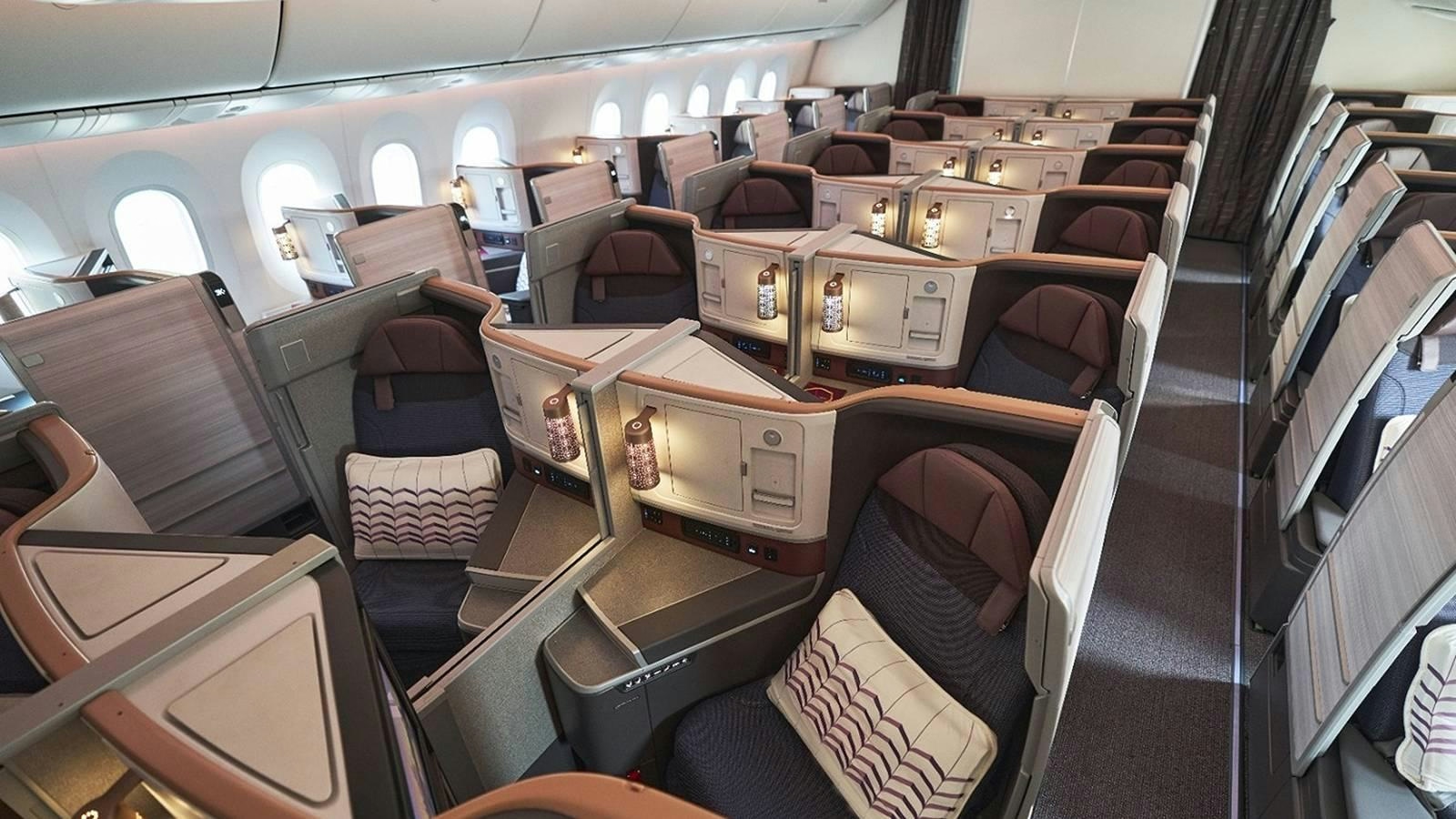
How the Boeing 787 Dreamliner’s Cabin Air System Differs from Other Aircraft
For decades, commercial airliners have utilized a “bleed air” system, which draws pressurized air from the engines to ventilate and pressurize the cabin. While this method has proven effective, it presents limitations in terms of efficiency, complexity, and passenger comfort. With the introduction of the Boeing 787 Dreamliner, the manufacturer reimagined this approach by implementing a system that enhances comfort while improving fuel efficiency and environmental performance. These improvements are particularly evident on ultra-long-haul routes such as Los Angeles to Sydney or London to Perth.
A New Approach to Cabin Air
Most modern aircraft, including the Boeing 777 and Airbus A350, rely on bleed air: high-pressure, high-temperature air is extracted from the engines’ compressor stages, then cooled, filtered, and circulated throughout the cabin. This system has been the industry standard for decades, serving the dual purpose of pressurization and ventilation.
The Boeing 787 Dreamliner departs from this tradition by drawing fresh air directly from outside the aircraft through dedicated inlets located ahead of the wings. This outside air is compressed by electric compressors powered by the aircraft’s advanced electrical generation system, which includes multiple engine-mounted generators and auxiliary power units. This “bleedless” or “no-bleed” system allows the engines to concentrate more on producing thrust rather than powering ancillary systems, thereby improving overall efficiency.
Enhanced Environmental Control and Passenger Comfort
The Dreamliner’s cabin air system is part of a comprehensive suite of advanced environmental control and life support systems (ECS) designed to optimize cabin pressure and humidity. These enhancements contribute to a more comfortable flying experience by maintaining higher humidity levels and a lower cabin altitude, which help reduce passenger fatigue and dehydration—benefits frequently noted by travelers on long-haul flights.
The market response to these innovations has been overwhelmingly positive. Airlines have lauded the Dreamliner for its improved passenger comfort and operational efficiency, advantages that translate into a competitive edge on premium long-haul routes. Passengers often report experiencing less jet lag and greater overall comfort compared to older aircraft models.
Industry Impact and Competitive Response
Boeing’s departure from the bleed air system has prompted competitors to upgrade their own cabin air technologies. Airbus, for instance, has introduced improvements in its latest aircraft models to match the Dreamliner’s advanced features, particularly in terms of cabin pressure and air quality.
Despite these advancements, both Boeing and Airbus face ongoing challenges. As of 2026, increasing production rates and making strategic decisions about future aircraft development remain top priorities. Boeing, in particular, is under pressure to regain market share in the narrowbody segment, where Airbus currently holds a leading position.
Why the Change Matters
By eliminating the bleed air system, the 787’s engines operate more efficiently, contributing to lower fuel consumption and reduced emissions. The integration of electric compressors and advanced environmental control systems not only supports broader environmental goals but also delivers tangible benefits to passengers and airlines alike.
The Boeing 787 Dreamliner’s innovative cabin air system thus establishes a new benchmark for comfort and efficiency, shaping passenger expectations and influencing competition within the aviation industry.

Etihad Airways Suspends Airbus A380 Flights on Key Route

Aditya Birla Group Seeks Approval for Aircraft Leasing in GIFT City

Qatar Airways Highlights Innovation and Connectivity at Arabian Travel Market 2026

Hong Kong's Five-Year Plan Includes Andrew Fan's Aircraft Parts Processing Hub Proposal

ACIA Aero Leasing Delivers ATR72-600 to Air Nostrum

RTX Appoints Jill Albertelli as Head of Pratt & Whitney

TAT Technologies Joins Beyond Aero Hydrogen Aircraft Program

AURAK Study Highlights Barriers to Air Taxi Adoption in Emerging Economies

Xiamen Air Selects Altitude for 787 Maintenance at Heathrow

Etihad and Swissport Extend Global Partnership
