
KI-Erkenntnisse in konkrete Maßnahmen überführen

Trends
Categories
How the General Electric GEnx Engine Transformed Boeing's Aircraft
How the General Electric GEnx Engine Transformed Boeing's Aircraft
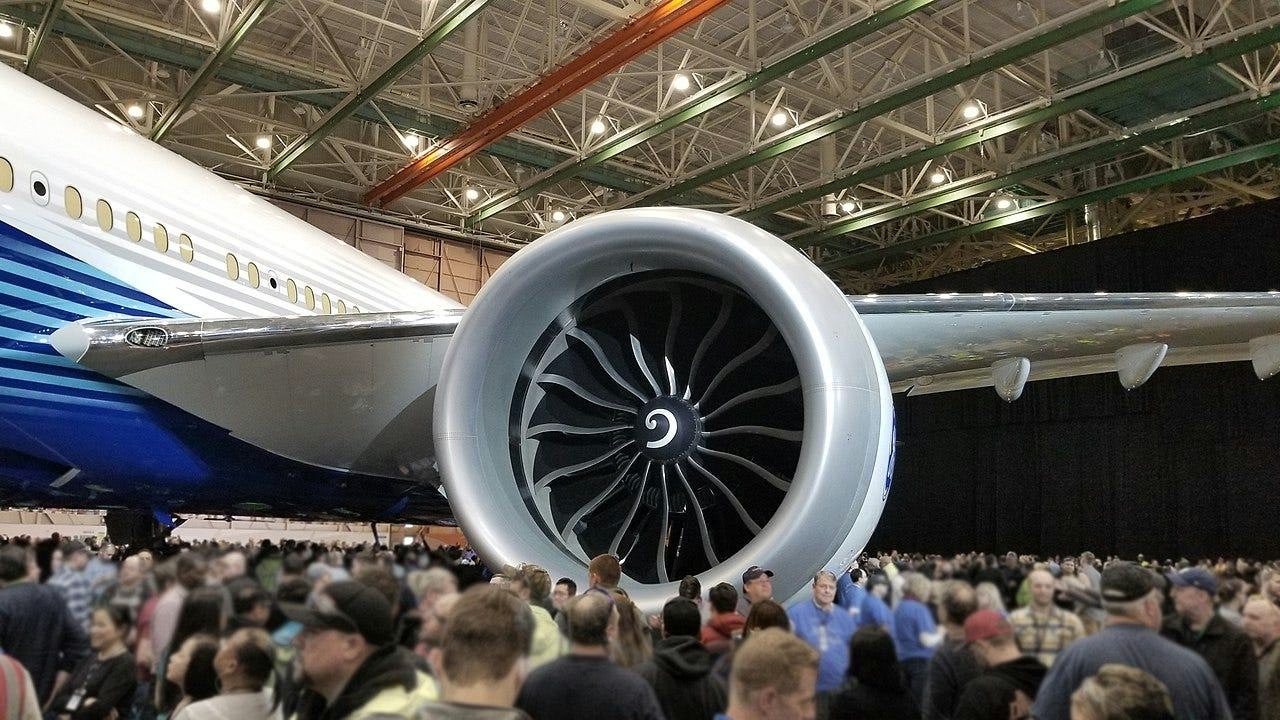
The General Electric GEnx engine has emerged as a transformative force within Boeing’s aircraft portfolio, establishing itself as the fastest-selling and most widely used jet engine in history, with over 3,000 units currently in operation. Its integration into the Boeing 787 Dreamliner and 747-8 models has significantly enhanced aircraft performance while reshaping competitive dynamics across the aviation sector.
Technological Advancements and Environmental Benefits
Incorporating cutting-edge technology, the GEnx engine achieves a 1.4% annual reduction in carbon emissions alongside a 3% increase in yearly utilization compared to earlier engine generations. This improvement allows aircraft to remain operational for up to seven additional days annually, offering airlines a substantial boost in operational efficiency. A hallmark of the GEnx’s design is its pioneering use of carbon fiber composite materials in the fan casing and blades, a world first that results in a lighter, more corrosion-resistant, and quieter engine. These innovations not only reduce maintenance requirements but also enhance overall reliability, directly benefiting airline operations and sustainability goals.
Engineering Innovations and Performance Enhancements
Building upon the foundation of the GE90 engine, the GEnx introduces several engineering breakthroughs. The engine features carbon-fiber composite fan blades with a reduced blade count—18 instead of 22—further decreasing weight and improving aerodynamic efficiency. Notably, it incorporates the first FAA-approved 3D-printed components, such as the power door opening bracket (PDOS), introduced in 2018. The engine’s lean-burning twin-annular pre-swirl combustor significantly lowers nitrogen dioxide emissions, maintaining levels well below regulatory thresholds.
The GEnx-1B variant powers all Boeing 787 models, while the GEnx-2B is utilized on the 747-8 and 747-8F aircraft. Both variants deliver superior fuel efficiency and reduced operating costs. Advances such as next-generation 3D dynamics and titanium aluminide blades reduce engine weight by up to 300 pounds (136 kilograms), optimizing performance on long-haul flights. The GEnx-1B also achieved a 330-minute ETOPS (Extended-range Twin-engine Operational Performance Standards) rating following rigorous endurance testing, thereby expanding operational flexibility for airlines.
Market Impact and Boeing’s Financial Recovery
The technological progress embodied by the GEnx engine has elicited a strong market response. GE Aerospace’s improved profit outlook and increased engine deliveries reflect robust aftermarket demand, as airlines extend the service life of older aircraft amid production delays at Boeing and Airbus. This trend is exemplified by JetBlue’s recent divestment of CF34 engines during its transition to Airbus A220s, signaling shifts in market dynamics and growth in the secondary market for regional engines.
Boeing’s financial turnaround is underscored by higher aircraft deliveries and increased revenue, highlighting the GEnx engine’s role in this recovery. The ongoing production of the 787 Dreamliner and the final delivery of the 747-8 to Atlas Air in 2023 demonstrate sustained demand for aircraft equipped with GEnx technology.
Global Support and Future Prospects
General Electric’s extensive global support network, combined with software-driven maintenance solutions, ensures continued reliability and operational efficiency for airlines worldwide. As the aviation industry navigates evolving market conditions and increasingly stringent environmental standards, the GEnx engine remains a critical driver of efficiency, sustainability, and competitive advantage for Boeing and its customers.

Etihad Airways Suspends Airbus A380 Flights on Key Route

Aditya Birla Group Seeks Approval for Aircraft Leasing in GIFT City

Qatar Airways Highlights Innovation and Connectivity at Arabian Travel Market 2026

Hong Kong's Five-Year Plan Includes Andrew Fan's Aircraft Parts Processing Hub Proposal

ACIA Aero Leasing Delivers ATR72-600 to Air Nostrum

RTX Appoints Jill Albertelli as Head of Pratt & Whitney

TAT Technologies Joins Beyond Aero Hydrogen Aircraft Program

AURAK Study Highlights Barriers to Air Taxi Adoption in Emerging Economies

Xiamen Air Selects Altitude for 787 Maintenance at Heathrow

Etihad and Swissport Extend Global Partnership
