
KI-Erkenntnisse in konkrete Maßnahmen überführen

Trends
Categories
Hybrid Engines Could Bring Back Supersonic Flights by 2030
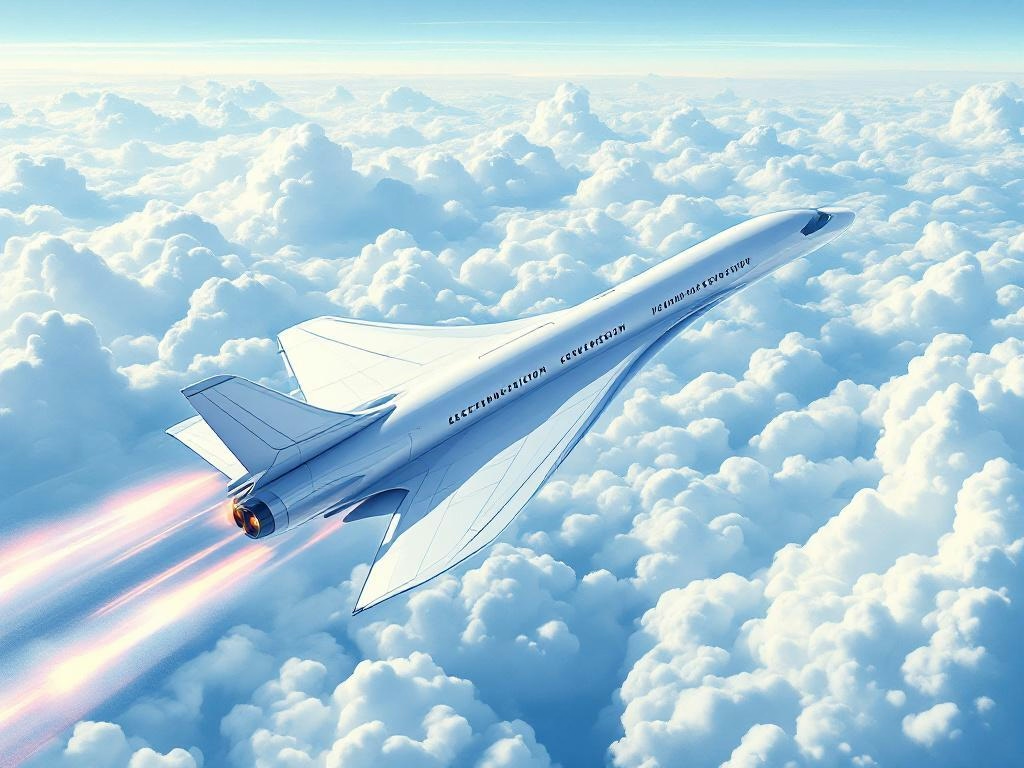
Hybrid Engines Could Revive Supersonic Flights by 2030
The era of supersonic passenger travel, once epitomized by the Concorde, came to an end with its retirement in 2003. The cessation was driven by prohibitive costs, environmental concerns, and stringent regulatory constraints. However, recent technological advancements, particularly those emerging from the electric vehicle sector, are now poised to reinvigorate the prospect of high-speed air travel. This new wave of innovation promises not only faster journeys but also a reduced environmental impact.
Innovations in Hybrid Propulsion
At the forefront of this resurgence is Helix, a UK-based company renowned for producing high-performance electric motors used in hypercars such as the McMurtry Spéirling and Lotus Evija. Helix has formed a strategic partnership with California’s Reaction Engines to adapt these lightweight, powerful motors for aviation applications. Their collaborative objective is to develop hybrid supersonic jet engines that combine conventional turbine propulsion with electric augmentation. This hybrid system aims to enable aircraft to surpass Mach 2 speeds while addressing the inefficiencies that hindered previous supersonic designs.
The hybrid propulsion concept utilizes electric motors to provide additional thrust during critical flight phases, including takeoff and acceleration. This approach enhances fuel efficiency and reduces emissions, which are vital considerations in overcoming the regulatory challenges that restricted the Concorde, particularly overland routes affected by sonic booms. Moreover, integrating electric vehicle technology into jet engines facilitates modular and scalable designs, potentially leading to smaller, more efficient aircraft tailored for premium business travel rather than mass-market routes.
Helix’s electric motors, noted for their exceptional power-to-weight ratios and instantaneous torque delivery, are being incorporated into Reaction Engines’ SABRE (Synergetic Air Breathing Rocket Engine) concept. SABRE is designed to operate in both air-breathing and rocket modes, offering the potential for hypersonic flight. Industry analysts, including those at Top Gear, anticipate that prototypes employing this technology could take flight by the late 2020s, marking a significant milestone in aviation development.
Challenges and Industry Response
Despite the promising technological advances, substantial challenges remain. Securing regulatory approval for new supersonic aircraft is a complex process, particularly due to ongoing concerns about noise pollution and emissions. The maturity of hybrid and hydrogen-electric propulsion systems is still in development, and the market’s readiness to adopt such innovations remains uncertain. Established aviation stakeholders have expressed skepticism regarding the feasibility and safety of these emerging technologies. In response to the competitive pressure from startups, major industry players such as Airbus and CFM are accelerating their own research and development efforts.
Recent achievements in the sector underscore its growing momentum. Successful hydrogen-electric flight tests and NASA’s inaugural flight of the X-59 quiet supersonic jet highlight progress toward quieter and more sustainable supersonic travel. Concurrently, companies like Boom Supersonic are advancing the development of the Overture aircraft, which aims to reach speeds of Mach 1.7 and complete transatlantic flights in approximately three hours. FlyConcorde Ltd. is also targeting the launch of eco-friendly supersonic services by 2026, focusing on sustainable aviation fuels and electric propulsion technologies.
As innovation from both the automotive and aerospace industries converges, the longstanding barriers that grounded supersonic travel may finally be surmounted. Should technological, regulatory, and market challenges be successfully addressed, hybrid engines could indeed herald the return of commercial supersonic flights by 2030, inaugurating a new era of high-speed, sustainable air travel.

Etihad Airways Suspends Airbus A380 Flights on Key Route

Aditya Birla Group Seeks Approval for Aircraft Leasing in GIFT City

Qatar Airways Highlights Innovation and Connectivity at Arabian Travel Market 2026

Hong Kong's Five-Year Plan Includes Andrew Fan's Aircraft Parts Processing Hub Proposal

ACIA Aero Leasing Delivers ATR72-600 to Air Nostrum

RTX Appoints Jill Albertelli as Head of Pratt & Whitney

TAT Technologies Joins Beyond Aero Hydrogen Aircraft Program

AURAK Study Highlights Barriers to Air Taxi Adoption in Emerging Economies

Xiamen Air Selects Altitude for 787 Maintenance at Heathrow

Etihad and Swissport Extend Global Partnership
