Bild

AeroGenie — Ihr intelligenter Copilot.

Fragen Sie alles. Analysieren Sie alles. Handeln Sie sofort.

Trends

Categories

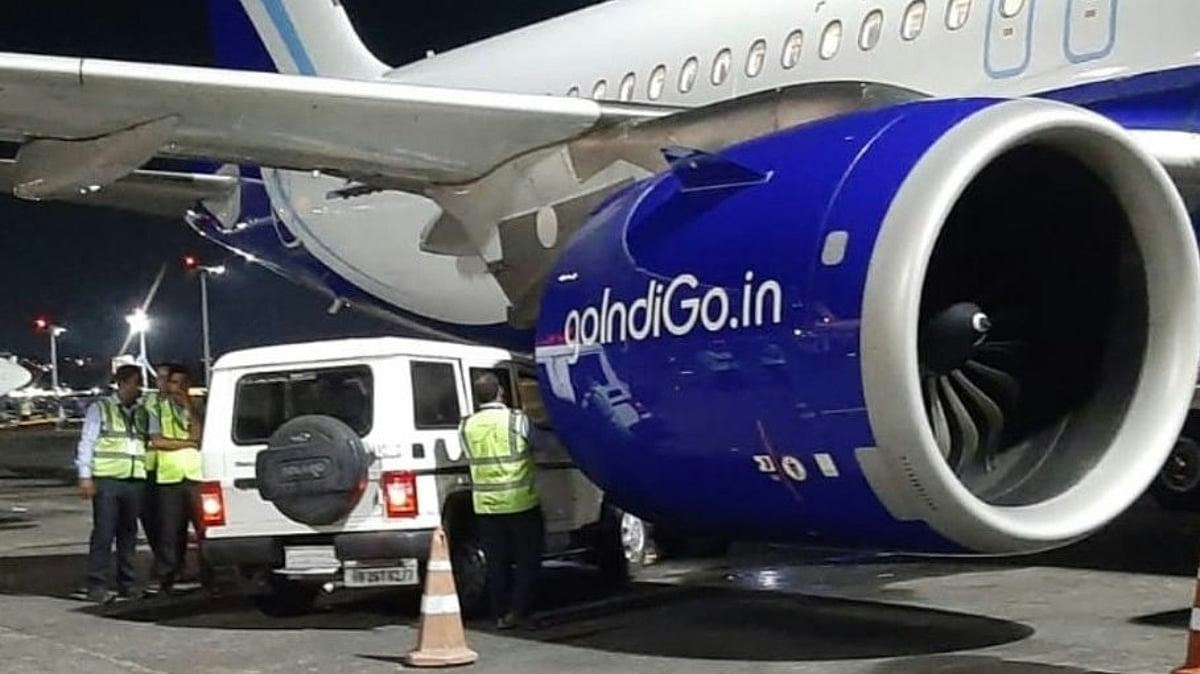
IndiGo Plane Damaged by Catering Vehicle at Kolkata Airport, Grounded for Inspection
April 8, 2026By ePlane AI
IndiGo Plane Damaged by Catering Vehicle at Kolkata Airport, Grounded for Inspection
0
0
IndiGo
Airbus A320
Ground Handling Incident

IndiGo Aircraft Damaged by Catering Vehicle at Kolkata Airport

An IndiGo Airbus A320 was grounded at Netaji Subhash Chandra Bose International Airport in Kolkata on the evening of April 7, 2026, after being struck by a catering service vehicle. The incident occurred around 9:30 PM while the aircraft was parked on the apron between flights. The vehicle collided with the plane’s right engine, causing damage that prompted immediate inspection and grounding of the aircraft.

Details of the Incident and Immediate Response

Initial assessments by IndiGo engineers suggest that the damage to the starboard engine could be substantial, potentially sidelining the aircraft for several days as repairs and thorough inspections are carried out. Fortunately, no passengers or crew were aboard at the time, and no injuries were reported among ground personnel. IndiGo confirmed that the vehicle involved was an unmanned third-party catering SUV operating on the apron, which apparently moved without a driver and made contact with the aircraft.

The airline promptly informed the relevant authorities and grounded the plane as a precautionary measure. The affected aircraft was scheduled to operate IndiGo flight 6E 6663 from Kolkata to Guwahati. To mitigate disruption, IndiGo swiftly deployed an alternate aircraft, ensuring continuity of service and minimizing inconvenience to passengers. This response aligns with standard protocols within the Indian aviation industry, where airlines maintain reserve capacity to manage unexpected operational challenges.

Investigation and Safety Considerations

The Airports Authority of India has initiated an inquiry into the circumstances surrounding the incident. Preliminary findings indicate that the vehicle belonged to Oberoi Hotels’ catering division, responsible for in-flight services at Kolkata airport. Investigators are examining whether the vehicle lost control or moved autonomously without a driver, and whether apron safety protocols—including vehicle operation procedures and driver presence—were properly followed. The inquiry will also consider recommendations to prevent similar incidents in the future.

Apron safety remains a critical concern at airports, given the close proximity of ground vehicles to parked aircraft. Strict guidelines govern vehicle speed, designated lanes, and stopping procedures to ensure the safety of both personnel and equipment. The Director General of Civil Aviation will be notified as part of the standard reporting process for incidents involving aircraft damage.

Operational and Industry Implications

This incident poses several challenges for IndiGo, including potential operational disruptions, heightened regulatory scrutiny, and financial costs associated with repairs and investigations. Industry observers note that such events can raise concerns among passengers and investors about the airline’s operational reliability. Competitors may seek to leverage the situation by emphasizing their own service dependability.

Despite these pressures, IndiGo, India’s largest airline by market share, continues to prioritize operational safety and customer service. The airline’s rapid response and ability to maintain scheduled operations highlight its resilience and commitment to minimizing passenger inconvenience amid unforeseen challenges.

More news
African Airlines Warn of Growing Supply Chain Challenges

African Airlines Warn of Growing Supply Chain Challenges

African Airlines Warn of Growing Supply Chain Challenges African airlines are raising urgent alarms over a convergence of supply chain disruptions that threaten to undermine the continent’s aviation recovery. A combination of jet fuel volatility, shortages of aircraft parts, and ongoing geopolitical tensions is placing significant pressure on regional air connectivity and trade. Industry leaders and analysts warn that these challenges could lead to route reductions, increased airfares, and a slowdown in the sector’s rebound, even as global air traffic surpasses pre-pandemic levels. Fuel Market Volatility and Its Impact on Air Connectivity The recent instability in global oil markets is having a pronounced effect on African aviation. Heightened tensions involving Iran and disruptions near the Strait of Hormuz have driven crude oil prices upward, tightening supplies of refined jet fuel essential to African hubs that depend heavily on imports. Reports from Nairobi and other key regional centers reveal that airlines are now operating with shorter planning horizons for fuel procurement, with some airports maintaining only minimal stock reserves. Carriers with limited capacity to hedge fuel costs and those operating in countries with weaker local currencies face heightened vulnerability. These airlines must purchase fuel in US dollars while generating most of their revenue in local currencies, exposing them to significant financial risk. Kenya, home to the critical Jomo Kenyatta International Airport, is particularly susceptible. Local media have highlighted concerns that a tightening jet fuel supply could disrupt services during peak tourism and business travel seasons, potentially affecting connectivity across Africa and beyond. In response, airlines and airport operators have implemented contingency measures, including increased fuel uplift at alternative airports, tactical schedule adjustments, and enhanced coordination with suppliers. Nevertheless, industry observers caution that if geopolitical tensions persist into 2026, African carriers may struggle to protect passengers from network disruptions and fare increases. Aircraft Parts Shortages and Operational Strain In addition to fuel challenges, persistent shortages of aircraft spare parts and limited maintenance capacity are emerging as critical obstacles. Analyses from the International Airlines Technical Pool (IATP) and the International Air Transport Association (IATA) indicate that African airlines are experiencing extended turnaround times, material scarcities, and constrained engine shop availability. These difficulties stem from global supply chain disruptions initiated during the pandemic and exacerbated by ongoing geopolitical instability, resulting in delayed deliveries of engines, components, and avionics. Kenya Airways exemplifies the operational and financial pressures these issues impose. The airline’s 2025 financial disclosures reveal that several widebody aircraft have been grounded for prolonged periods due to delayed engine overhauls and parts shortages. These groundings, combined with rising maintenance costs, have contributed to renewed financial losses despite robust demand. Similar challenges are reported across the continent, with other carriers forced to postpone fleet expansions or refurbishments as manufacturers and maintenance providers contend with significant backlogs. African operators frequently find themselves at a disadvantage compared to larger global airlines, which benefit from greater bargaining power and higher-volume orders. The slow production of widebody freighters and a backlog of aircraft orders continue to constrain capacity and growth within the region’s air cargo sector. Wider Economic Implications The supply chain disruptions extend beyond airline operations, with rising costs for transport, energy, and raw materials—aggravated by geopolitical instability in key trade corridors such as the Middle East—expected to further strain airline finances. These pressures may also contribute to increased prices for consumer goods across Africa. As airlines, industry groups, and regulators pursue collaborative solutions, the outlook remains uncertain. Without significant improvements in supply chain resilience, African aviation faces a prolonged period of operational vulnerability and constrained growth.
Aviation Titanium Alloy Demand Expected to Rise Through 2035 with New Aircraft Production

Aviation Titanium Alloy Demand Expected to Rise Through 2035 with New Aircraft Production

Aviation Titanium Alloy Demand Set to Rise Through 2035 with New Aircraft Production The global aviation titanium alloy market is projected to experience sustained growth through 2035, driven primarily by increasing demand for next-generation commercial and military aircraft. According to the latest IndexBox report, the sector entering 2026 is characterized by solid demand fundamentals, more disciplined procurement practices, and a geographically diversified supply base. Drivers of Market Expansion The growth in titanium alloy demand is largely fueled by the ramp-up in production of advanced commercial aircraft such as the Boeing 787 and Airbus A350. These models incorporate significantly higher titanium content to achieve weight reduction and enhanced corrosion resistance. In addition, military aviation modernization programs, particularly the acquisition of fifth- and sixth-generation fighter jets, alongside the rapid expansion of the space launch and satellite sectors, are contributing to increased consumption of high-performance titanium alloys. Further momentum arises from the expansion of business and general aviation markets, especially in emerging economies, coupled with increasingly stringent fuel efficiency regulations that encourage the use of lightweight materials in airframe design. Technological advancements, including additive manufacturing or 3D printing, are enabling the fabrication of complex titanium components, thereby broadening the scope of applications within the aerospace industry. Market Challenges and Dynamics Despite these positive trends, the titanium alloy market faces several challenges. Volatility in raw material prices, particularly for titanium sponge, and the complexity of geopolitically sensitive supply chains present ongoing risks. Disruptions in supply and rising input costs have led industry players to consider increased investments in titanium alloy production facilities and to explore more sustainable sourcing strategies. The sector is also marked by high barriers to entry, with stringent certification requirements and lengthy qualification processes for new alloys and suppliers. The capital-intensive nature of titanium production, combined with the need for substantial investment in emerging technologies, continues to constrain market expansion. Additionally, competition from advanced composite materials in certain structural applications exerts further pressure on titanium alloy demand. Industry Responses and Strategic Developments In response to these challenges, companies within the sector are pursuing strategic partnerships, mergers, and acquisitions to enhance market share and technological capabilities. The supply side remains dominated by a limited number of integrated producers controlling the entire value chain from sponge production to melting and primary mill operations. However, forging and precision machining segments are witnessing greater diversification. Pricing trends are expected to reflect fluctuations in titanium sponge and energy costs, tempered by long-term contractual agreements. Geopolitical developments and evolving trade policies are influencing supply chain configurations, prompting a degree of regionalization of production closer to major aerospace manufacturing hubs. Technological innovation is focused on developing alloys with improved strength-to-weight ratios and enhanced high-temperature performance, particularly for next-generation engine designs. Outlook Through 2035 The baseline forecast for 2026 to 2035 anticipates steady, technology-driven growth closely aligned with commercial aerospace production cycles and defense procurement budgets. Military modernization initiatives in the United States, Europe, and the Asia-Pacific region are expected to provide a stable demand base for high-specification titanium alloys. The market will continue to be shaped by high entry barriers and a strong emphasis on innovation, with significant opportunities emerging across both commercial and military aviation sectors. As the industry contends with supply chain complexities and rising costs, strategic investments and technological advancements will be essential to meeting the evolving requirements of the global aviation sector.
Pilots’ Roles Evolve in an AI-Assisted Future

Pilots’ Roles Evolve in an AI-Assisted Future

Pilots’ Roles Evolve in an AI-Assisted Future The Integration of AI in Aviation The concept of self-piloting vehicles has long fascinated the public, but today artificial intelligence (AI) has moved beyond science fiction to become a transformative force across various industries, including aviation. Airlines are investing heavily in AI technologies to enhance operational efficiency and maintain competitiveness. These systems are already assisting pilots by managing fatigue, optimizing flight routes, and predicting maintenance requirements, thereby improving overall safety and performance. Despite these technological advancements, the role of human pilots remains indispensable. Chad Kendall, associate professor of Aviation and Aerospace Science at Metropolitan State University of Denver, underscores the importance of human judgment in aviation. He notes that when unforeseen circumstances arise, it is the pilot who must make critical decisions and bear accountability. While AI can provide valuable information, identify potential threats, and mitigate risks, ultimate responsibility—and the trust of passengers—continues to rest with the individuals in the cockpit. AI as a Support Tool, Not a Replacement Currently, AI functions primarily as a support mechanism rather than a substitute for pilots. Airlines employ AI extensively behind the scenes to improve crew scheduling, maintenance planning, and performance analysis. Predictive maintenance models analyze vast amounts of data to detect potential mechanical issues before they escalate, thereby reducing downtime and preventing delays. Similarly, AI-driven scheduling tools evaluate crew fatigue by monitoring work patterns and rest periods, facilitating safer and more efficient shift management. In addition, AI processes large datasets related to fuel consumption and weather conditions to optimize flight routes and enhance safety. The aviation industry’s cautious adoption of AI is mirrored in stringent regulatory frameworks and comprehensive oversight. This cautious stance was reinforced in early 2026 when the U.S. Congress passed an aviation safety bill requiring at least two qualified pilots to be present on the flight deck of all commercial airline flights. This legislation highlights the enduring necessity of human oversight even as technological capabilities advance. Challenges and Opportunities in an AI-Driven Landscape The evolving role of pilots in an AI-assisted environment presents several challenges. Concerns about job displacement have led to resistance, including worker strikes and legislative debates. Nevertheless, the broader technology job market remains strong. Recent increases in software job openings indicate that AI is generating new employment opportunities alongside transforming existing roles. Companies such as Aon are revising compensation databases to account for emerging AI-driven positions, while AI adoption in manufacturing continues to accelerate. This dynamic illustrates a complex landscape where technology simultaneously disrupts traditional careers and creates new pathways. For those entering the aviation profession, the future appears “future-proof” not because it resists change, but because it embraces adaptation. The likely scenario is not one of pilotless passenger aircraft but rather highly skilled pilots managing increasingly sophisticated AI systems. As AI continues to reshape the aviation sector, the next generation of pilots will be required to combine technical proficiency with the human judgment and accountability that remain essential to safe and reliable flight.
US FAA Considers Recognizing Foreign Maintenance Certificates

US FAA Considers Recognizing Foreign Maintenance Certificates

US FAA Considers Recognition of Foreign Maintenance Certificates The United States Federal Aviation Administration (FAA) has embarked on a rulemaking process that could lead to the recognition of foreign maintenance organization certificates through bilateral agreements. This initiative, confirmed in a statement to ch-aviation, responds to industry petitions seeking to simplify the current certification procedures for foreign repair stations operating within the US aviation sector. Current Framework and Proposed Changes At present, the United States maintains a mutual recognition agreement solely with Canada, requiring all other foreign maintenance providers to obtain separate FAA approval before conducting work on US-registered aircraft. The proposed regulatory changes aim to allow foreign repair stations to be recognized under US standards without the need for duplicative certification processes. Such a shift is expected to reduce both costs and administrative burdens for airlines, potentially streamlining maintenance operations across international boundaries. Industry Support and Safety Considerations Industry groups, notably the Virginia-based Aeronautical Repair Station Association, have strongly advocated for these reforms. They contend that eliminating redundant audits and certifications would not only lower expenses but also improve operational efficiency, all while preserving the stringent safety standards that govern aviation maintenance. Nonetheless, the FAA acknowledges that ensuring foreign maintenance providers meet US safety requirements remains paramount. The agency must carefully evaluate compliance mechanisms to maintain the integrity of its regulatory framework. Challenges and Market Implications Implementing foreign certificate recognition presents several challenges, including the negotiation of complex bilateral agreements with other countries. Additionally, domestic maintenance organizations may resist these changes due to concerns over increased competition and potential impacts on US employment within the sector. Market reactions could be significant: airlines stand to benefit from cost savings by accessing recognized foreign maintenance services, while foreign providers may gain expanded opportunities in the US market. Conversely, domestic competitors might seek to leverage the recognition of foreign certificates to enhance their own market presence or push for stringent mutual recognition standards to protect domestic interests. The FAA has emphasized that the rulemaking process will involve comprehensive data analysis and extensive stakeholder engagement to address these multifaceted concerns. Striking a balance between operational efficiency and uncompromising safety standards will be central to the agency’s final determinations.
Widebody Aircraft Shortage Grounds Ambitions of Fastest-Growing Economy

Widebody Aircraft Shortage Grounds Ambitions of Fastest-Growing Economy

Widebody Aircraft Shortage Grounds Ambitions of Fastest-Growing Economy **NEW DELHI** – India’s rapidly expanding aviation sector is confronting a significant obstacle: a pronounced shortage of widebody aircraft. Despite being the world’s fastest-growing major economy and home to 1.4 billion people, the country operates only around 50 widebody planes. This limited fleet size has been described as a “scandal” by Willie Walsh, the incoming chief executive of IndiGo, in a recent interview with the BBC. Walsh, who currently serves as director general of the International Air Transport Association (IATA) and will assume leadership of IndiGo in August, highlighted that India’s constrained widebody capacity is impeding its ambitions for direct long-haul connectivity, especially from key hubs such as Delhi and Mumbai. “When you think about it, it’s a country of 1.4 billion and counting. But they only had 50 widebody aircraft in the country last year. So that’s probably—you could describe it as a scandal,” Walsh remarked. Global Context of Widebody Aircraft Shortage The shortage of widebody aircraft is not an issue unique to India. Airlines worldwide are grappling with supply chain disruptions affecting the manufacturing of widebody freighters, a challenge underscored by IATA. These disruptions have delayed deliveries and constrained capacity expansion, impacting both passenger airlines and the vital air cargo sector. In the United States, for instance, American carriers face competitive pressures as American Airlines trails behind Delta and United in placing new widebody orders, potentially limiting its growth in lucrative long-haul markets. Additionally, geopolitical tensions, such as the ongoing conflict in Iran, are reshaping global airline routes and market dynamics, further complicating fleet planning and international connectivity. Despite these challenges, there are encouraging signs of recovery. Aircraft orders surged by 83% in February, signaling renewed confidence and a rebound in global aviation demand. Nevertheless, India’s pace of widebody aircraft acquisition remains slow relative to the scale of its market and its strategic ambitions. IndiGo’s Leadership Transition Amid Operational Challenges Willie Walsh’s forthcoming leadership at IndiGo coincides with a critical juncture for the airline and the broader Indian aviation industry. In December, IndiGo experienced its most severe operational crisis when new pilot duty and rest regulations led to the cancellation of approximately 4,500 flights, leaving thousands of passengers stranded. This disruption exposed the difficulties of scaling operations in a rapidly growing market constrained by limited resources. While Walsh refrained from commenting directly on IndiGo’s recent operational issues, citing that he will not take up his role until August, he expressed optimism about the sector’s prospects. He pointed to strong growth trends, improving infrastructure, and substantial investments by both airlines and the government as positive indicators for India’s aviation future. Missed Opportunities and Strategic Imperatives Historically, Indian carriers have depended heavily on Gulf hubs to connect passengers to North America and other long-haul destinations. Walsh views this reliance as a missed opportunity, arguing that expanding the widebody fleet would enable more direct international flights, thereby enhancing India’s global aviation footprint and supporting broader economic growth. As India continues to invest in airport infrastructure and global demand for air travel recovers, the expansion of its widebody fleet will be critical. Addressing supply chain challenges and accelerating aircraft acquisitions will be essential factors in determining whether India can fully realize its potential as a major player in global aviation.
MTU Acquires UAV Engine Manufacturer AeroDesignWorks

MTU Acquires UAV Engine Manufacturer AeroDesignWorks

MTU Acquires UAV Engine Manufacturer AeroDesignWorks Germany’s MTU Aero Engines is poised to strengthen its presence in the expanding market for small turbojet engines used in uncrewed aerial vehicles (UAVs) and missiles through the acquisition of Cologne-based AeroDesignWorks. The financial details of the transaction have not been disclosed. Strategic Expansion into UAV Propulsion AeroDesignWorks, established in 2011 as a spin-out from the German Aerospace Center (DLR), employs approximately 40 staff members and specializes in producing small gas turbines with thrust ratings around 90 pounds (400 newtons). The company is also advancing the development of higher-thrust engines intended for various national and European UAV and guided missile programs, targeting significantly greater thrust classes. MTU’s chief programme officer, Dr. Ottmar Pfander, described the acquisition as a strategic initiative to accelerate MTU’s entry into a key growth sector. He emphasized that AeroDesignWorks will continue to operate as a subsidiary rather than being fully integrated into MTU’s larger operations. This approach is designed to preserve the start-up’s distinctive attributes of speed, cost efficiency, and flexibility. Pfander noted, “This allows us to preserve what sets AeroDesignWorks apart today: speed, cost efficiency, and flexibility.” MTU intends to support the company’s scaling and growth by leveraging its own technologies and industrialization capabilities. Industry Implications and Future Prospects The integration of AeroDesignWorks presents challenges, particularly in maintaining the subsidiary’s agile and cost-effective approach while capitalizing on MTU’s broader resources. Industry analysts suggest that MTU’s acquisition could intensify competition within the small turbojet engine segment for UAVs and missiles, potentially prompting competitors to enhance their technologies or expand their market presence. This increased competition is likely to drive further innovation and influence pricing strategies across the sector. MTU’s expansion aligns with wider industry trends emphasizing rapid prototyping and advanced manufacturing, as defense technology firms seek to respond swiftly to evolving market demands. This acquisition follows MTU’s 2023 purchase of electric motor supplier eMoSys, further consolidating its position in the UAV propulsion market. As MTU integrates AeroDesignWorks, the company aims to balance the advantages of its industrial scale with the nimbleness of its new subsidiary, positioning itself at the forefront of a sector characterized by rapid technological advancement and growing strategic significance.
Mammoth Obtains FAA STC for 777-200 Freighter Conversion

Mammoth Obtains FAA STC for 777-200 Freighter Conversion

Mammoth Secures FAA Certification for 777-200 Freighter Conversion Amid Competitive Market Mammoth Freighters has reached a pivotal milestone with the Federal Aviation Administration (FAA) granting Supplemental Type Certification (STC) for its 777-200LRMF (Long Range Mammoth Freighter) conversion program. This certification authorizes Mammoth to commence deliveries to its launch customer, Qatar Airways Cargo, which will acquire five aircraft through Texas-based lessor Jetran. The first 777-200LRMF is currently undergoing painting in Qatar Airways’ livery, with the delivery date yet to be confirmed. The FAA’s approval validates the aircraft’s design, engineering, and performance, permitting its entry into commercial service. The 777-200LRMF combines long-range capability, payload efficiency, and operational reliability, positioning it as a versatile solution for global cargo operators seeking enhanced freight capacity and flexibility. Industry Perspectives and Market Context Bill Tarpley, CEO of Mammoth Freighters, emphasized the significance of the certification, attributing it to years of rigorous engineering and close collaboration with the FAA. He highlighted that the approval underscores Mammoth’s technical expertise and its ability to deliver a high-performance freighter tailored to the evolving needs of cargo operators worldwide. Jordan Jaffe, CEO of Jetran, expressed confidence in the aircraft’s quality and technical execution, noting that the 777-200LRMF meets the high standards expected by launch customers including DHL, Qatar Airways, and Ethiopian Airlines. He described the Mammoth conversion as a competitive and compelling option in the long-haul freighter market, poised to deliver substantial value to operators. Mammoth’s certification arrives amid intensifying competition in the converted widebody freighter sector. Multiple companies are developing similar 777-200 conversions, which may lead to market saturation. Competitors are expected to escalate efforts to secure contracts and partnerships, particularly in strategic regions such as China, where Mammoth is actively pursuing collaboration. While the new freighter option may be welcomed by some operators, others may remain loyal to established conversion providers, resulting in varied market responses. Technical Achievements and Future Outlook Securing the STC represents a major accomplishment for Mammoth, especially after experiencing delays caused by a 43-day U.S. government shutdown last year. The company had initially anticipated a more expedited certification process following the completion of a test flight for the 777-200LRMF prototype in May 2025. Final FAA-witnessed test flights were conducted in early January, with Type Inspection Authorization (TIA) obtained in February. The 777-200LRMF features the largest main-deck cargo door in its class, a reinforced floor structure, and an advanced, flexible cargo handling system. These attributes, combined with its long-range performance and fuel efficiency, optimize the aircraft for both long-haul and regional freight operations. Looking ahead, Mammoth continues to advance its 777-300ERMF program, with FAA certification for this variant anticipated later in the year. The successful certification of the 777-200LRMF not only bolsters Mammoth’s credibility but also strengthens its position in the competitive global freighter market.
ATC Expands Maintenance Operations with PAS MRO Acquisition

ATC Expands Maintenance Operations with PAS MRO Acquisition

ATC Expands Maintenance Operations with PAS MRO Acquisition Air Transport Components (ATC Group) has announced the acquisition of PAS MRO, a specialized bearing repair service provider based in Bristow, Oklahoma. This strategic move aims to enhance ATC Group’s portfolio and expand its footprint in high-value component repair, thereby strengthening service offerings for airline operators, original equipment manufacturers (OEMs), and aftermarket customers globally. Strengthening Capabilities and Operational Synergies PAS MRO is recognized for its technical expertise, quality standards, and customer responsiveness. Its integration complements ATC Group’s existing facilities in Tulsa, Oklahoma, and Gilbert, Arizona, creating operational synergies and broadening repair capabilities across critical product lines. Jimmy Newman, Chief Executive Officer of ATC Group, emphasized that PAS MRO’s technical depth and customer relationships align closely with ATC’s platform. He noted that the acquisition would enable the company to expand its capabilities while maintaining the speed, reliability, and service quality expected by its customers. Jim Agee, President of PAS MRO, expressed optimism about the acquisition, describing it as an exciting new chapter. He highlighted ATC Group’s reputation for operational excellence and customer focus, suggesting that the combined expertise would deliver enhanced value to customers and support continued business growth. PAS MRO will retain its existing team and leadership, ensuring continuity for both customers and employees. The acquisition forms part of ATC Group’s broader strategy, supported by AE Industrial Partners, to develop a scaled and diversified maintenance, repair, and overhaul (MRO) platform, positioning the company for sustained growth in the aerospace aftermarket. Market Challenges and Competitive Landscape ATC’s expansion occurs within a highly competitive MRO market. Industry analysts have noted concerns raised by competitors such as AerSale regarding a hypercompetitive feedstock environment, which may pose challenges for ATC as it integrates PAS MRO’s operations. Stakeholders have expressed some skepticism about ATC’s ability to maintain service quality and operational efficiency during the integration phase. In response to evolving market dynamics, competitors are also taking strategic actions. Jet Air Inc., for instance, has recently expanded its presence in the Midwest, signaling intensified competition as other MRO providers seek to reinforce their market positions in light of ATC’s growth. The integration of PAS MRO is expected to require substantial investment in technology and workforce training to ensure operational continuity and uphold service standards. As ATC Group advances its expansion plans, it will need to address logistical and operational challenges to fully capitalize on the acquisition and sustain its reputation for reliability and customer service.
Jakub Dvořák Appointed CEO of Job Air Technic

Jakub Dvořák Appointed CEO of Job Air Technic

Jakub Dvořák Appointed CEO of Job Air Technic Job Air Technic, a prominent European provider of aircraft maintenance, repair, and overhaul (MRO) services and a member of the FL Technics Group, has announced the appointment of Jakub Dvořák as its new Chief Executive Officer, effective May 1. Dvořák succeeds Imrich Czére and assumes full leadership amid intensifying competition and shifting market conditions within the European aviation industry. Extensive Experience and Leadership Transition With over 18 years of experience in aviation maintenance, Dvořák’s career encompasses a broad spectrum of technical and senior leadership roles in operations and strategic management. Having dedicated the past seven years to Job Air Technic, he has held pivotal positions including Technical Director and currently serves on the company’s Management Board. Upon his appointment, Dvořák expressed his commitment to a seamless leadership transition and to upholding the high service standards expected by the company’s clientele. Navigating a Challenging Market Environment Dvořák’s leadership begins at a time when the European ACMI (Aircraft, Crew, Maintenance, and Insurance) market is experiencing increased saturation, a trend highlighted by industry figures such as the CEO of Danish Air Transport. This competitive landscape presents challenges that may prompt strategic responses from Job Air Technic’s rivals as they seek to safeguard market share and profitability. Industry analysts anticipate that Dvořák’s ability to steer the company through these pressures will be critical. Despite these challenges, Job Air Technic remains committed to its core operations, continuing to provide base maintenance services to airline customers across Europe. As a key component of FL Technics’ European MRO network, the company is focused on ensuring operational continuity and maintaining consistent service quality. As Dvořák assumes his new role, the aviation sector will closely observe Job Air Technic’s capacity to adapt to evolving market dynamics while preserving its reputation for excellence in service delivery.
HEICO Acquires Majority Stake in Sherwood

HEICO Acquires Majority Stake in Sherwood

HEICO Acquires Majority Stake in Sherwood Avionics and Accessories HEICO Corporation’s Flight Support Group has secured an 80% ownership interest in Sherwood Avionics and Accessories (Sherwood), with the remaining shares retained by Sherwood’s management team. The financial details of the transaction were not disclosed. HEICO expects the acquisition to be accretive to earnings within the first year following its completion. Sherwood’s Expertise and Operations Established in 1992 and headquartered near Miami’s Opa-locka Airport, Sherwood operates as an FAA and EASA Part 145 repair station. The company specializes in the maintenance, repair, and overhaul (MRO) of complex mechanical and electromechanical components critical to defense and select commercial aviation platforms. Sherwood’s technical expertise encompasses auxiliary power units (APUs), landing gear systems, wheels and brakes, pneumatics, hydraulics, fuel and lighting systems, avionics components, and related accessories. Beyond MRO services, Sherwood provides OEM-authorized distribution, engineering services, and manufacturing capabilities. Sherwood supports a diverse fleet of fixed- and rotary-wing aircraft, including prominent defense platforms such as the C-130, CH-47, F-15, F-16, and UH-60. The company operates from two adjacent facilities totaling approximately 70,000 square feet and employs around 150 personnel. Bryan Farrell, a member of Sherwood’s leadership team, will continue to oversee operations at the existing facilities. Strategic Implications for HEICO HEICO, through its Flight Support Group based in Hollywood, Florida, and its Electronic Technologies Group in Miami, focuses on the design, production, servicing, and distribution of products and services across niche sectors including aviation, defense, space, medical, telecommunications, and electronics. This acquisition enhances HEICO’s capabilities within the aviation and defense MRO market, positioning the company for expanded service offerings and market reach. However, the integration of Sherwood’s operations may present challenges, including aligning corporate cultures and systems. Additionally, increased competition and potential regulatory scrutiny could influence the transaction’s long-term outcomes. Market responses may manifest in shifts in investor sentiment and fluctuations in HEICO’s stock price as stakeholders evaluate the strategic and financial implications. Competitors are likely to respond with initiatives such as pricing adjustments, product enhancements, or market expansion efforts to counter HEICO’s strengthened position. Despite these challenges, HEICO’s leadership remains confident that the acquisition will contribute positively to the company’s growth trajectory and enhance value delivery to customers in the aviation and defense sectors.
line










