Bild

AeroGenie — Ihr intelligenter Copilot.

Fragen Sie alles. Analysieren Sie alles. Handeln Sie sofort.

Trends

Categories

Inside the Design and Production of Aviation Interiors
January 14, 2026By ePlane AI
Inside the Design and Production of Aviation Interiors
0
0
Aircraft Interiors
FL Technics
Design Organisation Approval

Inside the Design and Production of Aviation Interiors

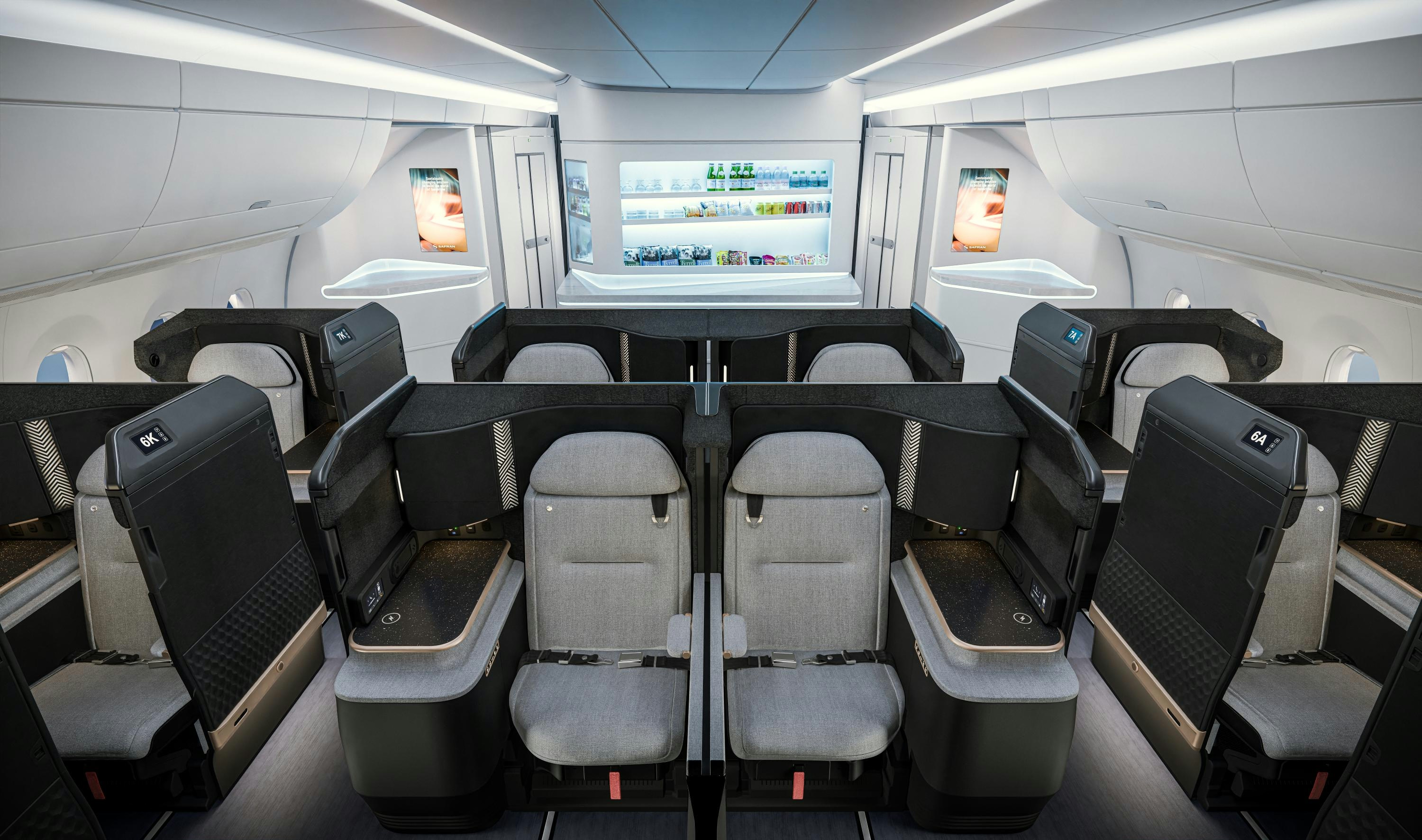
Aircraft interior modifications may seem straightforward at first glance, but each upgrade or structural alteration undergoes a rigorous and highly regulated process. At FL Technics, a prominent aircraft maintenance, repair, and overhaul (MRO) provider, engineering, compliance, and production teams work in close collaboration to transform design concepts into certified, airworthy solutions. Donaldas Barkauskas, Head of Design & Production, and Pavel Olenskij, Head of Airworthiness, oversee how their Design Organisation Approval (DOA) and Production Organisation Approval (POA) teams manage these complex projects, ensuring compliance and quality throughout.

Integrated Design and Production Processes

In the aviation sector, interior design and production are intrinsically linked. At FL Technics, these functions operate as a unified, certified process. According to Olenskij, the Design Office is responsible for developing the engineering solution, whether it involves a minor interior modification or a comprehensive refurbishment, and preparing the full technical documentation. Production then manufactures the component, delivering to the customer both the part and a single installation document that specifies the correct installation procedure. This integrated DOA–POA approach streamlines the process for airlines, leasing companies, and ACMI providers by offering a complete, compliant solution from initial concept through to installation, all managed under one roof.

Balancing Customer Needs with Regulatory Compliance

Aircraft operators frequently seek customized solutions tailored to their operational and commercial objectives. However, not every proposed idea can be safely or legally implemented. Barkauskas emphasizes that while customers naturally present their needs, the role of the design and production teams is to assess the feasibility of these ideas within the constraints of aircraft safety and regulatory requirements. Compliance remains paramount, and regulations can differ significantly between regions such as Europe and the United States. Olenskij notes that some operators proactively plan for potential jurisdictional transitions, which can result in considerable time and cost savings.

Beyond regulatory compliance, there is a growing trend among operators to invest in high-value, innovative solutions that enhance both crew working environments and passenger experiences. Olenskij highlights that while compliance ensures safety, intelligent design choices create added value. The true advantage lies in the combination of both elements.

Industry Trends and Emerging Challenges

The aviation interiors sector is undergoing notable shifts. For instance, the recent relocation of JetMS’s interiors production from the United Kingdom to Lithuania is altering supply chain dynamics and may affect production timelines. These changes are mirrored in the market’s evolving focus, with increased attention on business aviation interiors showcased at events such as the Aircraft Interiors Expo 2026, where advanced design and technology innovations are prominently featured.

Competition within the industry is intensifying. Lufthansa Technik’s ACJ318 Elite upgrade program and the installation of Starlink connectivity systems by NetJets and ExecuJet exemplify the sector’s emphasis on integrating cutting-edge technology and enhancing passenger comfort in business jets.

Selecting the Appropriate Partner

Choosing a DOA or POA partner is not a matter of finding a universal solution. Only a select number of organizations possess the capability to manage the full range of aircraft modifications. FL Technics addresses this challenge by combining its certified expertise with a network of trusted partners to deliver comprehensive, end-to-end solutions. Barkauskas explains that operators seek partners capable of managing entire projects efficiently and reliably. By collaborating with specialized partners, FL Technics ensures customers receive seamless, comprehensive service, thereby eliminating the complexities associated with coordinating multiple suppliers.

As the aviation interiors industry continues to evolve, the integration of design, production, and advanced technology remains essential for delivering safe, innovative, and market-leading solutions.

More news
magniX Unveils Electric Engine for General Aviation

magniX Unveils Electric Engine for General Aviation

magniX Unveils Electric Engine for General Aviation Introduction of the magniAIR Electric Engine In April 2026, magniX, a prominent innovator in electric aviation technology, announced the launch of its latest product, the magniAIR electric engine, designed specifically for the general aviation sector. The company is currently exhibiting the magniAIR integrated into a Van’s Aircraft RV-10 kit plane at the SUN ‘n FUN Aerospace Expo in Lakeland, Florida. The RV-10, equipped with the new electric powertrain, is slated for its maiden flight later this year, with commercial availability of the magniAIR engine expected in 2027. The magniAIR engine boasts a class-leading power-to-weight ratio, delivering 175 kW while weighing only 55 kilograms. It is engineered for seamless integration into a variety of aircraft categories, including experimental, light sport, and electric flight training planes. magniX’s comprehensive powertrain solution combines electric motors, advanced power electronics, and the Samson battery system, aiming to significantly reduce operational expenses and maintenance demands compared to conventional piston engines. Expanding Access to Electric Flight magniX is targeting kit plane builders, aviation enthusiasts, and flight training institutions with the magniAIR engine. The company anticipates that the Federal Aviation Administration’s forthcoming Modernization of Special Airworthiness Certification (MOSAIC) regulations, effective from July, will broaden the definition of light sport aircraft (LSA). This regulatory shift is expected to create new opportunities for electric propulsion within general aviation, particularly benefiting flight training operators who are grappling with rising fuel and maintenance costs amid a persistent pilot shortage. Reed Macdonald, CEO of magniX, emphasized the versatility of the magniAIR engine, stating that it can replace any application currently powered by a 120-175 kW piston engine. He highlighted the simplicity and cost-effectiveness of integrating magniX’s full powertrain, which is designed to bring electric flight within reach of kit plane builders and aviation enthusiasts. Ben Loxton, Vice President of New Product Development at magniX, further noted that escalating fuel prices and maintenance expenses are driving up the cost of flight training, while the industry simultaneously faces a critical shortage of pilots. He suggested that magniAIR could help alleviate these challenges by reducing the overall cost of flight training and other small aircraft operations. Navigating Regulatory and Competitive Challenges Despite the promising outlook for electric propulsion in general aviation, magniX faces potential hurdles as new FAA airworthiness regulations come into effect. Regulatory scrutiny across the sector is intensifying, exemplified by the ongoing investigation by the US International Trade Commission into Joby Aviation for alleged import violations. This heightened oversight may influence the pace of innovation and the market introduction of new electric aviation technologies. The competitive environment is also becoming more dynamic, with companies such as ZeroAvia and Collins Aerospace accelerating the development of their own electric and hybrid-electric propulsion systems. As the industry adapts to regulatory changes and increasing demand for cost-efficient, sustainable flight training solutions, magniX’s magniAIR engine is positioned to play a pivotal role in shaping the future landscape of general aviation.
Coltala Aerospace Appoints New President to Lead North Texas Expansion

Coltala Aerospace Appoints New President to Lead North Texas Expansion

Coltala Aerospace Appoints New President to Lead North Texas Expansion Coltala Aerospace, a Texas-based aviation maintenance, repair, and overhaul (MRO) group supported by Fort Worth’s Coltala Holdings, has named industry veteran Phil Bathurst as its new president. With over three decades of aerospace experience, Bathurst will spearhead the company’s efforts to broaden its mission-critical services for both commercial and defense aviation across North Texas. Strategic Leadership Amid Industry Growth Bathurst emphasized the significance of the current growth phase in the aviation aftermarket, noting that airlines are extending aircraft service life while systems grow increasingly complex. “The industry requires organizations capable of delivering reliable, high-quality maintenance and engineering capabilities,” he stated. Industry data from Grand View Research projects the global aircraft MRO market to expand from $90.85 billion in 2024 to $120.96 billion by 2030, underscoring the sector’s robust potential. Prior to joining Coltala Aerospace, Bathurst served as CEO of Aspire MRO, a Fort Worth-based company backed by Fortress Investment Group, where he managed rapid expansion from 30 to over 500 employees within three years. His career trajectory began with avionics installation on small aircraft and evolved to leading large technical teams and complex maintenance operations. Bathurst expressed his attraction to Coltala Aerospace’s commitment to operational excellence and its strong organizational culture. Expansion Plans and Competitive Landscape Ralph Manning, co-founder and co-CEO of Coltala Holdings, described Bathurst as an ideal leader for the company’s next growth phase, highlighting his ability to scale aerospace operations while preserving industry discipline and culture. Edward Crawford, co-founder of both Coltala Holdings and Coltala Aerospace, added that Bathurst’s comprehensive experience—from shop floor to boardroom—distinguished him as the right choice. Bathurst will work closely with leaders across Coltala Aerospace’s portfolio, including Nick McDonald of Evans Composites and Michael Campbell of AeroParts Machining and ACD Consulting, all based in the Dallas-Fort Worth area. The company aims to capitalize on the region’s status as an aerospace hub, supported by a highly skilled workforce and a network of specialized support shops. Crawford noted the strategic importance of Fort Worth, referencing Governor Greg Abbott’s designation of the city as the aviation and defense capital of Texas. Despite these opportunities, Coltala Aerospace faces intensifying competition within the MRO sector. Competitors such as Acrisure have recently expanded their aviation divisions, increasing pressure for market share in North Texas. While some investors remain optimistic about Coltala’s prospects for organic growth and acquisitions, others express caution regarding the competitive environment and the company’s ability to secure new contracts. Additionally, broader economic conditions and evolving aerospace regulatory requirements may pose further challenges. Looking forward, Coltala Aerospace intends to pursue acquisitions, particularly targeting founder-led companies seeking exit strategies or growth partnerships. Crawford described this approach as a “perfect fit” for the company’s expansion strategy. As Coltala navigates a complex market landscape, Bathurst’s leadership will be pivotal in driving the company’s growth ambitions in the dynamic North Texas aerospace sector.
Air Canada Expands Long-Haul Network Amid Rising Fuel Costs and Geopolitical Tensions

Air Canada Expands Long-Haul Network Amid Rising Fuel Costs and Geopolitical Tensions

Air Canada Expands Long-Haul Network Amid Rising Fuel Costs and Geopolitical Tensions Air Canada is joining a cohort of major North American carriers—including Air Transat, Delta, United, American Airlines, and WestJet—in expanding its wide-body fleet on long-haul routes. This strategic move comes despite significant challenges facing the aviation industry, notably surging fuel prices and escalating geopolitical tensions. Industry Challenges and Strategic Responses The airline sector is contending with a 14% increase in fuel costs, largely driven by ongoing conflicts in the Middle East involving the United States, Israel, and Iran. These geopolitical tensions have caused operational disruptions such as flight cancellations and rerouted journeys, placing additional strain on airline budgets. In response, carriers are adjusting their route networks and pricing strategies to sustain profitability amid these pressures. Air Canada’s approach reflects a broader industry trend characterized by simultaneous expansion and contraction of route networks. While major airlines are aggressively adding transatlantic services to capitalize on strong leisure and premium demand between North America and Europe, they are also scaling back on less profitable routes. This is particularly evident in cross-border flights between the United States and Canada, where passenger demand has softened and operational costs have increased. This dual strategy is a calculated response to uneven demand and volatile market conditions. Airlines are reallocating aircraft to high-yield routes while withdrawing from markets that no longer meet profitability thresholds. The emphasis has shifted from pure growth to operational efficiency, with a particular focus on premium travel segments as carriers seek to maximize returns. Air Canada’s Focus on Long-Haul Markets In line with this strategy, Air Canada has chosen to avoid launching new routes to the United States amid ongoing transborder tensions and cost pressures. Instead, the airline is prioritizing expansion into long-haul markets where demand remains robust and yields are higher. This approach mirrors similar moves by international competitors such as Air France-KLM and Thai Airways, both of which have responded to rising fuel expenses by increasing long-haul ticket prices. For passengers, these adjustments translate into higher airfares and fewer options on certain routes, as airlines pass on increased costs and streamline their operations. The rapid adaptation within the industry underscores the scale of the current transformation: while some routes are being strengthened and new services introduced, others are being eliminated to enhance efficiency and profitability. As the global aviation sector navigates one of its most significant transformations in decades, the strategies adopted by Air Canada and its peers highlight the delicate balance between expansion and retrenchment. With fuel price inflation and geopolitical instability expected to persist, airlines are likely to continue refining their networks, focusing on resilience and sustainable growth in an increasingly unpredictable environment.
Government and Industry Efforts Advance Sustainable Aviation in US Air Travel

Government and Industry Efforts Advance Sustainable Aviation in US Air Travel

Government and Industry Efforts Advance Sustainable Aviation in US Air Travel As the aviation sector undergoes significant transformation, the United States is making concerted efforts to promote sustainable air travel through a combination of government initiatives and industry innovation. Central to this evolution is the rise of Advanced Air Mobility (AAM), particularly electric vertical take-off and landing (eVTOL) aircraft, which promise to revolutionize domestic travel by offering cleaner and more efficient alternatives to traditional aviation. Government Framework for Advanced Air Mobility The U.S. Department of Transportation (DOT) has identified AAM as a critical component of the future transportation landscape. Its Advanced Air Mobility National Strategy, unveiled in 2025, sets forth a comprehensive vision for integrating emerging aviation technologies such as eVTOLs and autonomous systems into the National Airspace System (NAS). This strategy underscores the importance of fostering public-private partnerships to drive innovation, investing in essential infrastructure including vertiports and charging stations, and establishing clear regulatory frameworks to safeguard both safety and environmental standards. The approach relies on close collaboration among federal agencies, local governments, and private sector stakeholders to develop a secure, efficient, and sustainable airspace capable of accommodating next-generation aircraft. FAA’s Role and Safety Oversight The Federal Aviation Administration (FAA) plays a central role in the safe incorporation of AAM technologies into the national airspace. Through initiatives like the eVTOL and AAM Integration Pilot Program (eIPP), the FAA collaborates with industry leaders to conduct rigorous testing of advanced aircraft, formulate operational procedures, and implement robust safety protocols. The agency is actively streamlining certification processes and engaging with manufacturers to expedite the deployment of these innovative technologies, all while upholding stringent safety and risk management standards essential to public confidence and operational integrity. Industry Challenges and Competitive Pressures Despite the promising outlook, the journey toward sustainable aviation is confronted by significant challenges. Regulatory scrutiny has intensified, exemplified by the recent investigation by the U.S. International Trade Commission into Joby Aviation over potential import violations. Additionally, legal disputes between major industry players such as Joby Aviation and Archer Aviation concerning trade secrets and business practices highlight the competitive tensions shaping the sector. These conflicts not only affect investor sentiment but also have the potential to influence the pace and trajectory of technological advancement within the industry. Operational and Market Realities The drive toward sustainable aviation is unfolding amid record-high passenger volumes and growing demand for air travel, which present considerable logistical challenges. These include the risk of flight delays and the complexities involved in scaling environmentally friendly practices across a heavily trafficked national airspace. Striking a balance between rapid technological innovation, operational reliability, and environmental objectives remains a formidable task for regulators and industry participants alike. Looking Ahead The combined efforts of government agencies and private companies are laying the groundwork for a transformative era in U.S. aviation—one that emphasizes safety, sustainability, and innovation. Nonetheless, ongoing regulatory, legal, and operational challenges will necessitate continued collaboration and adaptability as the industry advances toward a greener future.
Air India Chooses Panasonic Avionics for IFE Maintenance, Debuts Retrofitted Boeing 787-8

Air India Chooses Panasonic Avionics for IFE Maintenance, Debuts Retrofitted Boeing 787-8

Air India Partners with Panasonic Avionics for IFE Maintenance Tata Group-owned Air India has entered into a strategic agreement with Panasonic Technical Services (PTS) to maintain in-flight entertainment (IFE) systems across its fleet of 74 aircraft. The partnership involves Panasonic’s Total Care Package, which will support IFE systems on Boeing 787-9, Airbus A350-1000, Airbus A350-900, and Airbus A321neo aircraft. This comprehensive maintenance program covers both Astrova and X Series platforms, including linefit and retrofit configurations, underscoring Air India’s commitment to fleet modernization and enhancing passenger experience. The collaboration arrives amid intensifying competition in the long-haul aviation market, where carriers such as Air Premia, Korean Air, and Lufthansa Technik are expanding their Boeing 787 fleets and associated services. Additionally, recent developments, including ANA’s decision to convert Boeing 787 orders, reflect shifting market dynamics that may influence Air India’s future fleet and maintenance strategies. Panasonic’s Total Care Package offers end-to-end maintenance and support designed to optimize system performance, reduce operational downtime, and provide predictable maintenance costs across both widebody and narrowbody aircraft. As part of this initiative, Panasonic Avionics is investing in India’s aviation infrastructure by establishing two new line maintenance stations in Mumbai and New Delhi. These facilities will facilitate real-time fleet monitoring and on-aircraft maintenance, thereby enhancing Air India’s operational efficiency and reliability. The agreement encompasses full lifecycle support for Air India’s IFE systems, including proactive monitoring, spares management, global field engineering, and round-the-clock technical assistance. This comprehensive approach aims to minimize service disruptions, maximize aircraft availability, and ensure a consistent passenger experience—critical factors as Air India seeks to distinguish itself amid increased scrutiny of its maintenance partnerships and operational performance. Tom Eskola, Vice President of Panasonic Technical Services, highlighted that Air India’s adoption of the Total Care Package reflects the airline’s focus on innovation and operational excellence during its ongoing fleet renewal. Jeremy Yew, Air India’s Senior Vice President of Engineering and Maintenance, emphasized that Panasonic’s expanded presence in India will strengthen the airline’s capacity to reduce IFE-related disruptions. Debut of Retrofitted Boeing 787-8 Dreamliner In conjunction with its enhanced maintenance strategy, Air India has introduced its first retrofitted Boeing 787-8 Dreamliner, registered VT-ANT, at Delhi’s Indira Gandhi International Airport. The aircraft arrived on April 13, 2026, following a non-stop ferry flight from California. This Dreamliner is the first of 26 scheduled to undergo a comprehensive interior upgrade valued at USD 400 million. The retrofit, conducted at Boeing’s Modification Center in Victorville and followed by a new livery application in San Bernardino, features a modern three-class cabin configuration. This upgrade aligns with Air India’s broader efforts to elevate passenger comfort and service quality as it seeks to strengthen its position in the competitive long-haul market. As Air India implements these maintenance and cabin enhancements, the airline aims to improve operational reliability and passenger satisfaction. However, with competitors likely to respond by advancing their own Boeing 787 services, Air India’s ability to integrate these changes effectively will remain under close observation by industry stakeholders and travelers alike.
ThinkYoung and Boeing Open STEM School in Luanda Focused on AI, Robotics, and Aviation

ThinkYoung and Boeing Open STEM School in Luanda Focused on AI, Robotics, and Aviation

ThinkYoung and Boeing Launch STEM School in Luanda Emphasizing AI, Robotics, and Aviation ThinkYoung, in collaboration with Boeing, has inaugurated the first edition of the ThinkYoung STEM School in Luanda, Angola. This initiative aims to equip young learners with practical skills in artificial intelligence (AI), robotics, and aviation through a free educational program. Developed alongside the American Schools of Angola and Global Shapers Luanda, the program welcomed 52 participants aged 12 to 18, including 31 girls, marking a significant advancement in STEM education within the region. Innovative Curriculum and Educational Goals The school’s curriculum extends beyond traditional coding instruction, incorporating modules on AI, robotics, and the metaverse. It places strong emphasis on teamwork, critical thinking, and problem-solving skills. Organizers anticipate that this hands-on approach will inspire students to pursue careers in science, technology, and aviation sectors. Henok Teferra Shawl, Managing Director of Boeing Africa, highlighted the importance of the initiative, stating, “The government of Angola has invested in STEM education to shape the country’s future. We are proud to support this journey. By giving students hands-on experience in robotics, AI and aviation technologies, we create opportunities and build a pipeline of tech-savvy, skilled talent.” Andrea Gerosa, founder of ThinkYoung, underscored the broader vision behind the program: “Bringing our ThinkYoung STEM School to Angola – and soon to Senegal – for the first time sends a clear signal: together with Boeing, we are committed to advance STEM education for young people everywhere. In a time of global uncertainty and rapid advances in AI, STEM skills are more important than ever.” Challenges and Broader Implications Despite the promise of integrating advanced technologies into K-12 education, the initiative faces notable challenges. Industry experts point out that AI development remains predominantly male-dominated, raising concerns about gender imbalance and the potential for limited perspectives in both curriculum design and classroom experience. This issue, highlighted by recent research, underscores the critical need to foster diversity and inclusivity as the school expands its AI and robotics offerings. Moreover, the increasing adoption of AI-driven education has sparked debate among educators and parents. While such programs aim to modernize learning and prepare students for future careers, some critics question the long-term social and emotional impacts of AI-based instruction. Skepticism persists regarding the effectiveness and inclusivity of these new educational models, particularly in regions where access to technology and teacher training may be uneven. The launch of the ThinkYoung STEM School in Luanda also reflects a broader shift in the local educational landscape. As more institutions consider AI-focused curricula, competition is expected to intensify, potentially driving innovation but also raising concerns about equitable access and educational outcomes. Expansion and Future Prospects ThinkYoung and Boeing plan to extend the program to Dakar, Senegal, later this year as part of a wider initiative spanning Africa, Europe, and West Asia. Over the past decade, the partnership has engaged nearly 1,900 young people globally, including 850 in Africa, with approximately 60 percent of participants being girls and young women. The program’s future success will depend on its ability to navigate the opportunities and challenges inherent in integrating advanced technologies into education, ensuring that the next generation of innovators is both skilled and diverse.
Oman to Develop MRO Hub in Partnership with Indonesia

Oman to Develop MRO Hub in Partnership with Indonesia

Oman to Develop Integrated MRO Hub in Strategic Partnership with Indonesia Advancing Aviation Capabilities through Partnership Oman is poised to enhance its aviation sector with the establishment of a fully integrated aircraft maintenance, repair, and overhaul (MRO) facility in collaboration with Garuda Indonesia. This initiative, announced by Eng Said bin Hamoud al Maawali, Minister of Transport, Communications and Information Technology, during a joint media summit on April 13, also includes the launch of a new regional airline aimed at expanding domestic and short-haul connectivity. The new MRO facility will build upon the existing capabilities of Oman Air Engineering at Muscat International Airport. Initially focused on light maintenance services for both domestic and international flights, the workshop is planned to evolve into a comprehensive MRO center. Minister Al Maawali emphasized the strategic objective of localizing high-value aviation services to reduce dependence on foreign providers and retain a larger share of aviation expenditure within Oman’s economy. This development aligns with the National Aviation Strategy 2040, which envisions over RO 1 billion in private sector investment, identifying MRO as a critical growth segment. Strategic Importance and Challenges Maintenance costs represent one of the largest expenses for airlines, often necessitating outsourcing to specialized centers abroad. By cultivating in-country MRO capabilities, Oman aims to improve cost efficiency for its carriers and establish itself as a regional aviation hub. Plans are underway to create an “MRO City” at Muscat International Airport, which will encompass engine overhaul, component repair, and airframe maintenance services. Despite these ambitions, Oman faces potential challenges stemming from regional geopolitical tensions, including the ongoing conflict involving Iran. Such instability has caused operational disruptions across the aviation sector, notably increasing air freight rates and delaying spare parts shipments. These factors could affect the efficiency and competitiveness of Oman’s emerging MRO hub. Furthermore, as other regional players adapt to similar challenges, the competitive landscape for MRO services may intensify, prompting strategic realignments within the industry. Beyond commercial aviation, Oman already maintains specialized maintenance capabilities for military fleets, including those operated by the Royal Air Force of Oman. Technical service providers such as SGS Oman also contribute with non-destructive testing and asset integrity services, underscoring the country’s broader technical expertise in aviation maintenance. Expanding Regional Connectivity and Tourism Synergies In addition to the MRO development, the Ministry of Transport confirmed plans to launch a regional airline focused on smaller aircraft to enhance connectivity to remote and emerging destinations. The new carrier will target locations such as Masirah, Shaleem, Al Hallaniyat Islands, and Khasab, aiming to revitalize these areas and support regional economic activity. Secondary airports like Suhar and Salalah are expected to be linked to international markets, including potential routes to Abha in Saudi Arabia and, conditions permitting, destinations in Yemen. Oman’s efforts to position itself as a regional MRO and aviation hub are complemented by a broader tourism strategy centered on nature and adventure travel. This approach is designed to attract visitors, particularly from India, and is anticipated to reinforce the growth of the aviation sector. Together, these initiatives reflect Oman’s long-term vision for economic diversification and enhanced regional connectivity.
Water and Debris Contamination Causes Crash of Infrequently Flown Cessna 172

Water and Debris Contamination Causes Crash of Infrequently Flown Cessna 172

Water and Debris Contamination Causes Crash of Infrequently Flown Cessna 172 A Cessna 172 experienced a total engine failure and subsequent crash near Rocky Mount/Wilson Regional Airport (KRWI) in North Carolina on April 14, 2024. The failure was attributed to water and debris contamination within the aircraft’s fuel system, raising significant concerns about maintenance practices and safety protocols in general aviation, particularly for aircraft that are flown infrequently. Sequence of Events and Pilot Response The pilot, who was also a certified mechanic, had fueled both the Cessna 172 and an escort aircraft at Delaware Airpark (33N) in Dover, Delaware, prior to departure. He reported conducting a thorough preflight inspection, including a visual check of the fuel tanks, and performed an engine run-up without detecting any anomalies. The aircraft was carrying 46 gallons of fuel and completed nearly three hours of uneventful flight. Difficulties arose during the descent into KRWI when the pilot reduced engine power and applied carburetor heat. The engine abruptly lost all power. Despite confirming the fuel selector was set to BOTH tanks, activating the auxiliary fuel pump, enriching the mixture, and attempting restarts with and without carburetor heat, the engine failed to respond. With limited alternatives, the pilot executed a forced landing on a lit road. During the landing, the aircraft struck power lines before coming to rest near an intersection. Fortunately, the pilot was uninjured. Investigation Findings An FAA inspection of the wreckage revealed the aircraft resting at a 45-degree angle with substantial damage to both wings, the fuselage, and the empennage. The left fuel tank was breached, but fuel recovered from it was free of contaminants. However, rust was observed at both fuel filler ports. Fuel samples taken from the gascolator and carburetor bowls confirmed the presence of water and debris contamination. Examination of the engine showed continuity in the crankshaft and valvetrain, but the intake valve on cylinder No. 3 was found stuck open. Abnormal markings were noted on cylinders Nos. 1 and 3, and the piston rings appeared improperly seated. Both magnetos produced spark on all leads, indicating ignition was not the cause of failure. Maintenance records indicated the engine had undergone an overhaul in January 2022. The pilot, who also performed the annual inspection on the day of the accident, had logged only 1.0 hour of flight time since the major overhaul. Implications for General Aviation Safety This incident highlights the inherent risks associated with aircraft that are flown infrequently, particularly the vulnerability of fuel systems to contamination from environmental exposure. Industry experts suggest that such accidents may prompt increased regulatory scrutiny of maintenance and safety protocols, potentially resulting in higher insurance premiums for similar aircraft. Competitors in the general aviation sector may respond by emphasizing enhanced safety measures and preventive maintenance strategies. The crash underscores the critical importance of rigorous safety checks and ongoing vigilance to mitigate environmental factors that can compromise aircraft integrity. The liabilities and operational risks stemming from lapses in maintenance or inspection are likely to remain a focal point for regulators and operators in the aftermath of this event.
African Airlines Add Surcharges Amid Supply Chain Challenges

African Airlines Add Surcharges Amid Supply Chain Challenges

African Airlines Introduce Fuel Surcharges Amid Persistent Supply Chain and Fuel Challenges South Africa’s aviation industry is facing increasing financial strain as domestic airlines implement fuel surcharges to counter rising operational expenses. Aaron Munetsi, CEO of the Airline Association of Southern Africa, highlighted that this development is a direct consequence of an ongoing global aerospace supply chain crisis, now entering its sixth year. The shortage of new aircraft and spare parts has severely constrained the ability of African carriers to modernize their fleets. Supply Chain Constraints and Operational Impact Munetsi explained that manufacturers of aircraft and engines continue to struggle to restore production to pre-pandemic levels. This has compelled many African airlines to extend the service life of older, less fuel-efficient planes, thereby escalating operational costs. Despite Africa’s large population, the continent accounts for just over 2% of global aviation activity. Munetsi attributed this marginal presence to structural challenges, including fragmented markets and limited access to modern aircraft, which hinder growth prospects. Privately owned South African airlines have shown greater adaptability by swiftly confirming new aircraft orders, outperforming many state-owned carriers. Across Africa’s 52 national airlines, only a few remain fully operational, with Ethiopian Airlines standing out as the sole financially sustainable carrier. Munetsi pointed to government interference as a key factor undermining the performance of state-owned airlines, emphasizing that efficient aircraft utilization is critical to maintaining profitability. Fuel Supply Risks and Industry Responses The sector’s difficulties have been exacerbated by rising fuel prices and supply chain disruptions, intensified by geopolitical tensions in the Middle East. Munetsi warned that the security of Jet A-1 fuel supplies is increasingly precarious, with interruptions to vital supply routes diminishing fuel availability across the continent. This vulnerability has prompted airlines to pass additional costs onto passengers through surcharges, while also considering adjustments to flight schedules and routes to manage fuel shortages. In response to these challenges, industry organizations such as the International Air Transport Association (IATA) and the International Airlines Technical Pool (IATP) have launched a joint strategy to address supply chain disruptions. However, the effectiveness of these initiatives remains uncertain amid the volatile operating environment. Munetsi underscored that securing a reliable supply of conventional jet fuel is the immediate priority for African airlines. Although there is a broader industry movement toward sustainable aviation fuels, he cautioned that the current supply challenges make such a transition difficult. “We cannot move towards sustainable aviation fuel if we cannot sustain the supply of ordinary fuel now,” he stated. Compounding these operational challenges are broader economic factors, including sluggish growth and low disposable incomes in parts of Africa, which continue to suppress demand for air travel and complicate the sector’s recovery efforts.
Air Canada Unveils New Cabins for A321XLR and 787-10 Ahead of Delayed Deliveries

Air Canada Unveils New Cabins for A321XLR and 787-10 Ahead of Delayed Deliveries

Air Canada Introduces New Cabin Designs for A321XLR and 787-10 Amid Delivery Delays Air Canada has unveiled redesigned cabin interiors for its upcoming Airbus A321XLR and Boeing 787-10 aircraft at the Aircraft Interiors Expo in Hamburg, Germany. This announcement arrives as both aircraft face delivery delays, with the first A321XLR expected to enter service in May on domestic transcontinental routes before expanding to longer-haul flights. The larger Boeing 787-10 is scheduled to join the fleet by the end of the year. Innovative Cabin Features and Configurations The A321XLR will represent a milestone for Air Canada by introducing lie-flat business class seats on a single-aisle aircraft. The cabin will accommodate 14 Signature Class seats alongside 168 economy seats, targeting routes that bridge the operational gap between traditional narrowbody and widebody aircraft. Planned destinations include transatlantic services from eastern Canada to cities such as Berlin, Tenerife, and Palma de Mallorca, as well as premium domestic routes. The Boeing 787-10 will feature a three-class layout with a total capacity of 332 passengers: 42 business class seats, 28 premium economy, and 262 economy seats. The business class cabin will notably include four “Signature Plus Suites” at the front, offering additional space, a companion seat, and beds nearly two meters in length. Both aircraft will benefit from updated seating designs, larger in-flight entertainment screens, and enhanced connectivity options. Every seat will be equipped with 4K displays, Bluetooth audio, USB-C ports, and AC power outlets. Premium economy seats will provide increased privacy, while economy seating will feature improved ergonomics and personal device holders. Design Consistency and Brand Identity Air Canada has emphasized design consistency across both aircraft, employing similar materials and layouts to create a cohesive passenger experience. The cabins will showcase wood-pattern finishes, metallic accents, a muted color palette, and subtle branding elements such as red stitching. The A321XLR will feature a backlit maple leaf-inspired entryway, while the 787-10 will offer a redesigned entrance tailored for premium travelers. These cabin enhancements align with Air Canada’s strategic objective to expand its long-haul and premium network. The A321XLR is expected to open new routes unsuitable for larger widebody aircraft, while the 787-10 will increase capacity on established long-haul services. However, both programs have encountered setbacks, with the A321XLR delayed due to certification and engine issues, and the 787-10 arriving later than initially planned. Industry Context and Market Challenges Air Canada’s fleet modernization and passenger experience upgrades come amid broader industry challenges, including economic uncertainty, geopolitical tensions, and the impact of tariffs, all of which continue to affect airline profitability. The competitive environment is intensifying as rivals such as United Airlines and Delta invest heavily in premium cabin enhancements to attract high-yield travelers. This competitive pressure may compel Air Canada to balance competitive pricing with service quality while introducing its new cabins. Market reactions to the new cabin designs are expected to be mixed. While many passengers will appreciate the improved comfort and amenities, some may express frustration over the delayed aircraft deliveries. As Air Canada navigates these challenges, the performance of its new cabins will be closely observed by both customers and industry competitors.
line










