
KI-Erkenntnisse in konkrete Maßnahmen überführen

Trends
Categories
Investigators Examine Theory That Cockpit Sun Visor Caused Boeing 737 Engine Shutdown After Takeoff
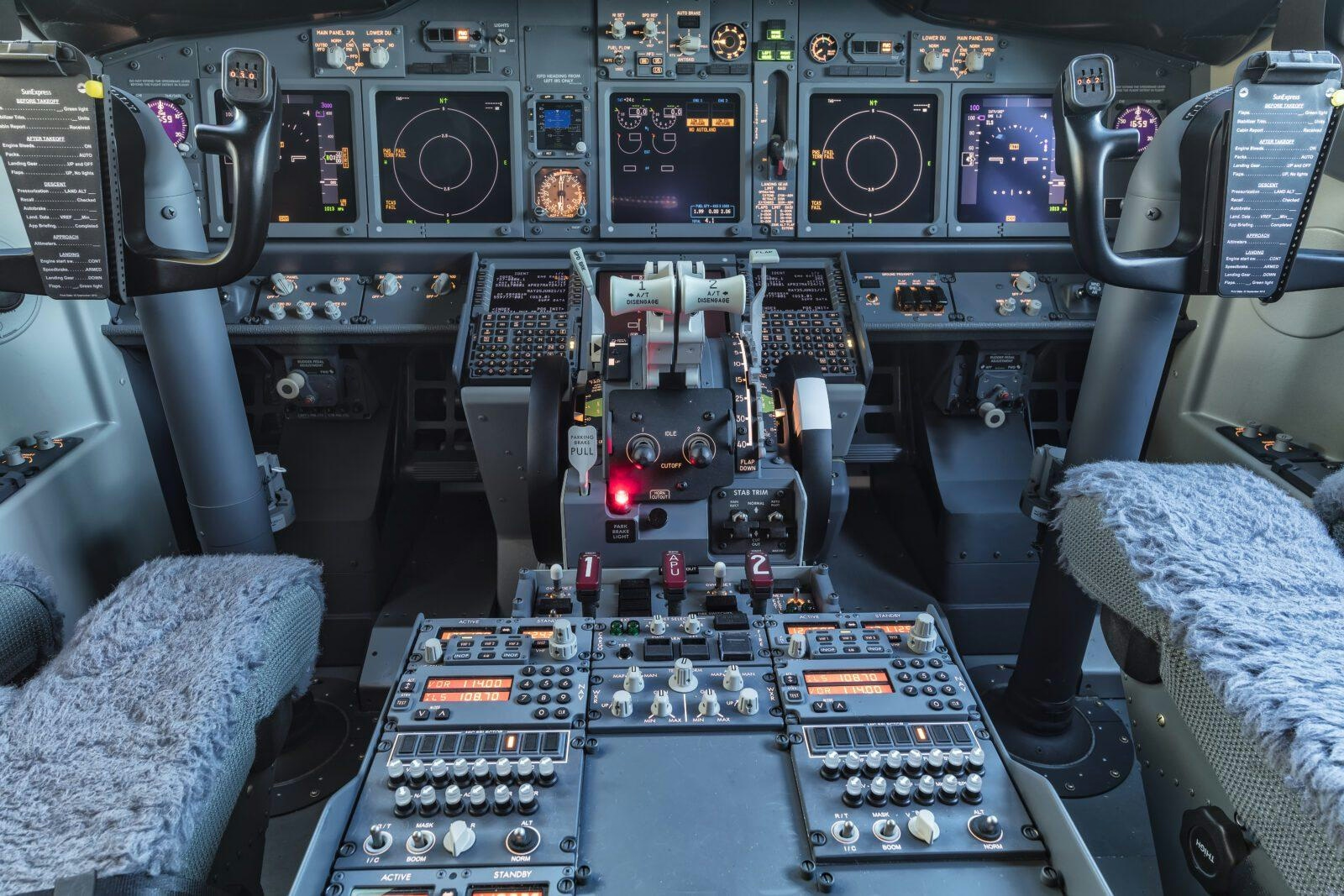
Investigation into Boeing 737 Engine Shutdown Focuses on Cockpit Sun Visor Theory
Aircraft accident investigators have initiated a detailed inquiry into a serious incident involving a Boeing 737 MAX, after one of its two engines unexpectedly shut down shortly after takeoff. The flight, carrying up to 197 passengers, experienced the engine failure at approximately 8,000 feet. Central to the investigation is an unusual hypothesis: that a malfunctioning cockpit sun visor may have become dislodged and struck the engine shut-off switch, leading to the loss of power.
Incident Details and Preliminary Findings
The event occurred on December 8 during Ryanair flight FR-3505, operating from Krakow, Poland, to Milan, Italy. The aircraft involved was a Malta Air Boeing 737 MAX 8200 (registration 9H-VUE), a high-capacity variant of the 737 MAX-8. Shortly after departure from Krakow Airport at around 1:10 pm, the pilots declared a PAN PAN emergency, signaling an urgent but non-life-threatening situation, after one engine suddenly shut down during the initial climb.
Preliminary investigations suggest that the cockpit sun visor may have torn loose during takeoff and inadvertently activated one of the engine start levers, also known as fuel cut-off switches. These switches, standard across Boeing aircraft, control the fuel supply to each engine. If triggered, they can cause an engine to lose power. The flight crew successfully restarted the affected engine, allowing the aircraft to continue safely to Milan, where it landed without further incident. The plane was subsequently grounded for two days for precautionary inspections before being cleared to resume service.
Ongoing Investigation and Industry Implications
The investigation faces significant technical challenges, particularly in confirming whether the sun visor was indeed responsible for activating the fuel cut-off switch. Regulatory authorities are closely overseeing the inquiry, while Boeing has expressed a “significant interest” in the outcome. Should the theory be validated, the manufacturer may encounter increased scrutiny regarding potential design vulnerabilities in cockpit components.
The incident has already influenced market sentiment, with Boeing’s stock experiencing a temporary decline amid heightened safety concerns. Competitors have seized the opportunity to highlight their own safety records and cockpit design features. As the investigation remains active, no definitive conclusions have yet been reached.
This event highlights the critical importance of stringent safety protocols and thorough design evaluations in commercial aviation. Regulators and manufacturers alike are expected to carefully review the findings to determine whether further measures or design modifications are necessary to prevent similar incidents in the future.

Etihad Airways Suspends Airbus A380 Flights on Key Route

Aditya Birla Group Seeks Approval for Aircraft Leasing in GIFT City

Qatar Airways Highlights Innovation and Connectivity at Arabian Travel Market 2026

Hong Kong's Five-Year Plan Includes Andrew Fan's Aircraft Parts Processing Hub Proposal

ACIA Aero Leasing Delivers ATR72-600 to Air Nostrum

RTX Appoints Jill Albertelli as Head of Pratt & Whitney

TAT Technologies Joins Beyond Aero Hydrogen Aircraft Program

AURAK Study Highlights Barriers to Air Taxi Adoption in Emerging Economies

Xiamen Air Selects Altitude for 787 Maintenance at Heathrow

Etihad and Swissport Extend Global Partnership
