
KI-Erkenntnisse in konkrete Maßnahmen überführen

Trends
Categories
Joby and Air Space Intelligence Collaborate to Manage U.S. Electric Air Taxi Operations
Joby and Air Space Intelligence Collaborate to Manage U.S. Electric Air Taxi Operations
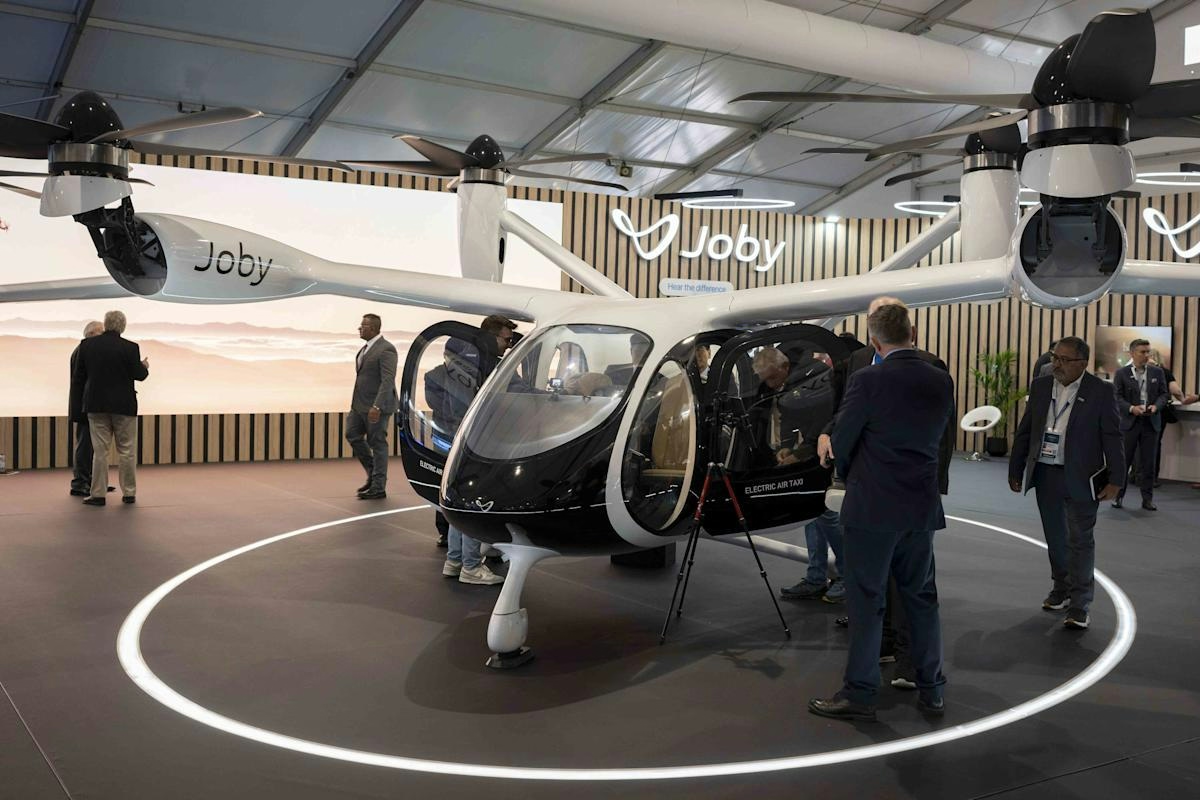
Joby Aviation and Air Space Intelligence (ASI) have entered into a strategic partnership aimed at integrating artificial intelligence-driven airspace management into the burgeoning U.S. electric air taxi sector. This collaboration will utilize ASI’s Flyways AI platform to model and coordinate high-density electric vertical takeoff and landing (eVTOL) traffic, addressing the complex challenges of urban airspace management ahead of Joby’s planned commercial flight launch later this year.
Advancing Airspace Management for eVTOL Operations
Historically, the electric air taxi industry has concentrated on aircraft design elements such as wing configurations, battery endurance, and noise reduction. However, as Joby Aviation approaches Federal Aviation Administration (FAA) type certification and the White House’s eVTOL Integration Pilot Programme facilitates early commercial operations across ten U.S. states, the focus is shifting toward managing the simultaneous operation of potentially hundreds of air taxis in congested urban environments.
Announced on April 7, 2026, the partnership between Joby and ASI aims to accelerate the integration of advanced air mobility into the U.S. National Airspace System (NAS). Central to this effort is ASI’s Flyways AI platform, which will provide predictive, real-time recommendations to air traffic controllers and operators. The companies intend to conduct joint demonstrations, including live operational exercises, before the end of 2026, aligning with Joby’s commercial launch timeline.
Developing a New Operating System for Urban Airspace
Founded in Boston in 2018, Air Space Intelligence has developed sophisticated digital tools for conventional aviation, including its PRESCIENCE platform. PRESCIENCE creates a four-dimensional digital twin of the airspace by assimilating live traffic, weather, and demand data. Building on this foundation, Flyways AI translates these simulations into actionable guidance, enabling controllers to proactively manage airspace flows and mitigate congestion. ASI’s technology is already employed by Alaska Airlines and the U.S. Department of Defense, providing the company with extensive operational data and regulatory credibility that newer entrants in advanced air mobility often lack.
Bernard Asare, President of Civil Aviation at ASI, emphasized the significance of this approach: “Scaling advanced air mobility requires more than new aircraft—it requires a new operating system for the airspace. Our Flyways AI platform gives operators and controllers the predictive awareness to coordinate high-density operations proactively, not reactively. This partnership brings that same capability to eVTOL operations from day one.”
Challenges and Competitive Dynamics
Despite the promise of this collaboration, significant challenges remain. Regulatory hurdles persist as Joby and ASI work to integrate advanced air mobility into the NAS, and market sentiment remains divided. While some investors express optimism about the potential of electric air taxis, others remain cautious regarding the technology’s maturity and safety record.
Competition within the sector is intensifying. Archer Aviation, a prominent rival, has accused Joby of fraud, alleging that the company concealed business ties to China and misrepresented itself as an American-made enterprise to secure U.S. government contracts. These allegations highlight the high stakes and scrutiny confronting the industry as it advances toward commercialization.
The White House-backed eVTOL Integration Pilot Programme may accelerate Joby’s market entry but simultaneously raises the competitive bar for all electric air taxi developers. As the industry prepares for a new era of urban air mobility, the capacity to safely and efficiently manage increasingly crowded skies will be as critical as the aircraft themselves.

Etihad Airways Suspends Airbus A380 Flights on Key Route

Aditya Birla Group Seeks Approval for Aircraft Leasing in GIFT City

Qatar Airways Highlights Innovation and Connectivity at Arabian Travel Market 2026

Hong Kong's Five-Year Plan Includes Andrew Fan's Aircraft Parts Processing Hub Proposal

ACIA Aero Leasing Delivers ATR72-600 to Air Nostrum

RTX Appoints Jill Albertelli as Head of Pratt & Whitney

TAT Technologies Joins Beyond Aero Hydrogen Aircraft Program

AURAK Study Highlights Barriers to Air Taxi Adoption in Emerging Economies

Xiamen Air Selects Altitude for 787 Maintenance at Heathrow

Etihad and Swissport Extend Global Partnership
