Bild

KI-Erkenntnisse in konkrete Maßnahmen überführen

Trage dich noch heute in die AeroGenie-Warteliste ein!

Trends

Categories

Korea Advances Domestic Aircraft Engine Development with KASA's First Dual-Use Turbofan
May 26, 2026By ePlane AI
Korea Advances Domestic Aircraft Engine Development with KASA's First Dual-Use Turbofan
0
0
Korea Aerospace Administration
Dual-Use Turbofan Engine
Hybrid Propulsion Systems

Korea Advances Domestic Aircraft Engine Development with KASA's First Dual-Use Turbofan

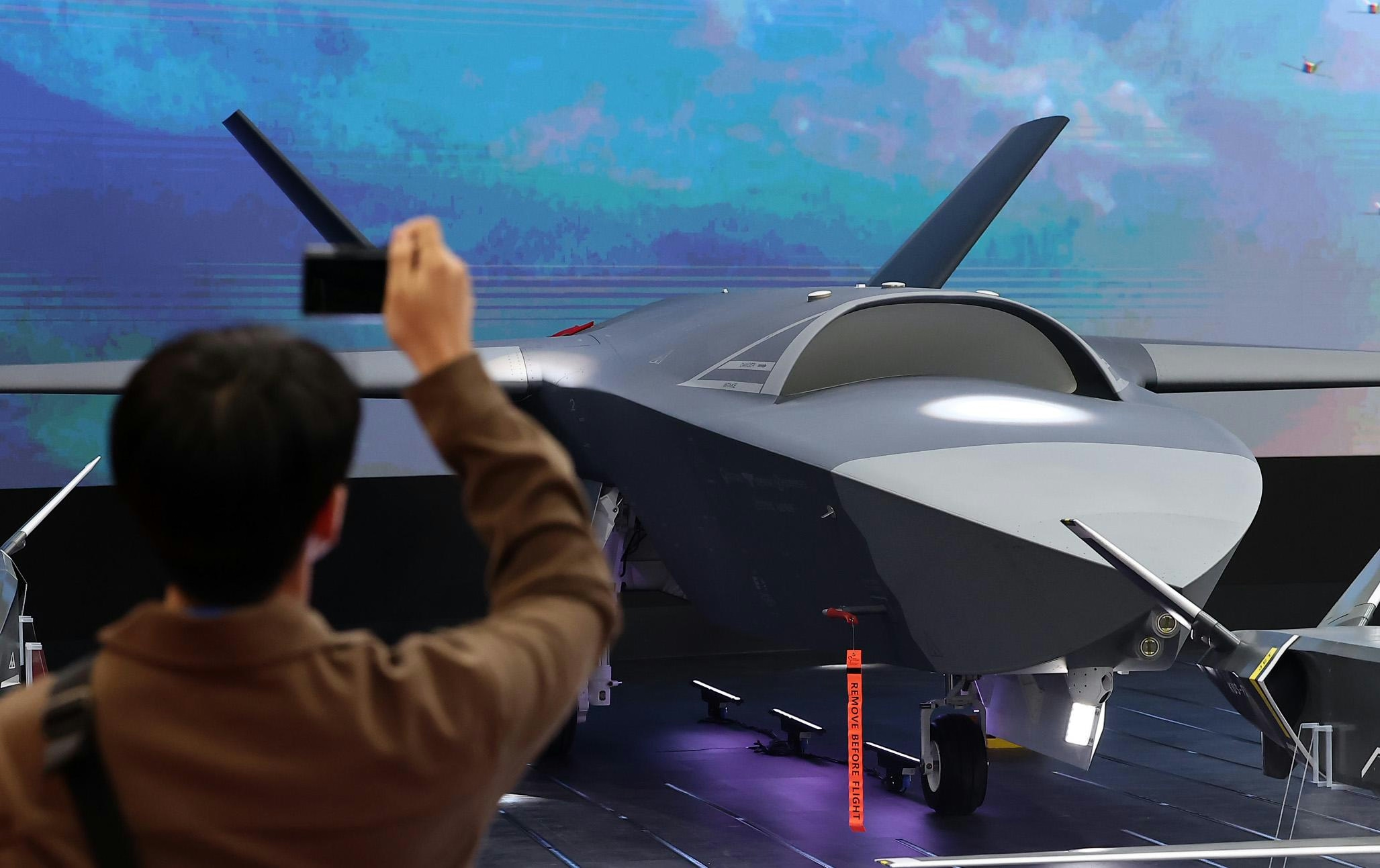
South Korea has embarked on a significant initiative to develop its first domestically produced dual-use turbofan engine and hybrid propulsion system, marking a pivotal move toward greater self-reliance in advanced aerospace technologies. The Korea Aerospace Administration (KASA) announced on May 26 the commencement of this ambitious project, which aims to localize core propulsion technologies essential for future electrified aircraft and the rapidly evolving sectors of Urban Air Mobility (UAM) and Advanced Air Mobility (AAM).

Project Overview and Objectives

Unveiled at the "Joint Inception Briefing for the Next-Generation Dual-Use Aircraft Engine and Propulsion System Development Project," the initiative is slated to receive approximately 900 billion won in funding over four years, from 2026 to 2029. KASA’s overarching goal is to bolster the domestic aerospace propulsion industry and establish South Korea as a competitive force in the global aviation market.

The project is structured around two primary components. The first focuses on the development of a high-bypass turbofan engine, targeting a 4,500-pound-force (lbf) class gas turbine suitable for both civil and military applications. This includes integration into More Electric Aircraft (MEA) and unmanned aerial vehicles. Key technological advancements under development encompass high-bypass fan and booster systems, advanced combustor testing, and the design and manufacture of a rotor-integrated embedded starter generator (ISG). KASA emphasized that progressing beyond mere parts manufacturing to full system integration is critical for achieving global competitiveness.

The second component centers on hybrid propulsion system technologies aimed at eco-friendly propulsion solutions. This effort seeks to enhance the operational range and efficiency of future air mobility vehicles through the development of a 500 kW-class turbogenerator, a 300 kW-class multiplexed electric engine (comprising motor and inverter), and the integration design of a 1.5 MW-class hybrid electric propulsion system. The project will also establish ground test systems and integration analysis capabilities to support these developments.

Strategic Implications and Challenges

KASA anticipates that these technological advancements will enable domestic companies to penetrate the global aviation supply chain while enhancing South Korea’s technological self-sufficiency in both civil and military aviation sectors. However, the project faces potential challenges, notably rising production costs. This concern has been underscored by recent considerations to delay the production of the KF-21 Block 2 fighter jet, which may affect the timeline and scope of engine development.

The initiative has garnered increased attention in the market, reflecting growing interest in South Korea’s pursuit of aerospace self-reliance. At the same time, it intensifies competition on the international stage, as other countries such as Russia and Turkey accelerate their own aircraft engine manufacturing programs. Russian officials have highlighted the importance of adopting new technologies and platform standardization to maintain competitiveness in the global market.

Industry experts, academics, and research leaders attending the briefing concurred on the critical importance of localizing aircraft engine and propulsion technologies to generate high added value within the domestic aerospace sector. They also stressed the necessity of strengthened cooperation among stakeholders to ensure that research outcomes are effectively translated into practical applications.

As South Korea advances this project, the progress and outcomes of KASA’s dual-use turbofan and hybrid propulsion system development will be closely monitored both domestically and internationally, serving as a key indicator of technological progress and strategic autonomy in the aerospace industry.

More news
The Role of Aviation Software in Reducing Flight Delays

The Role of Aviation Software in Reducing Flight Delays

The Role of Aviation Software in Reducing Flight Delays Flight delays extend far beyond mere inconvenience at departure gates; they trigger cascading disruptions across connecting flights, inflate operational costs, create scheduling conflicts, and diminish passenger satisfaction. As airlines expand their fleets and airports face increasing traffic volumes, the complexity of maintaining punctual operations has intensified. Even minor disturbances can propagate through flight schedules, crew assignments, and destination logistics, amplifying the impact of initial delays. In response to these challenges, the aviation industry is increasingly adopting intelligent digital solutions that enhance operational visibility and enable faster, data-driven decision-making. Modern aviation software platforms empower airlines to monitor flights in real time, coordinate resources efficiently, anticipate potential risks, and respond promptly to unforeseen events. This proactive approach facilitates early identification and resolution of issues before they escalate into significant delays, thereby improving overall efficiency and reliability for travelers worldwide. Persistent Challenges Behind Flight Delays Flight delays rarely arise from a single cause; rather, they emerge from a complex interplay of operational factors involving airlines, airports, crews, and ground service providers. The growing volume of air traffic further complicates the management of these variables. Operational inefficiencies remain a significant contributor, as many airlines continue to rely on fragmented and disconnected systems for scheduling, dispatch, maintenance, and operations. This siloed infrastructure impedes timely information sharing and hampers rapid responses to changing conditions, increasing the likelihood of disruptions. Maintenance and fleet availability also play critical roles, with aircraft requiring regular inspections and compliance checks. Unexpected technical issues can ground planes without warning, forcing last-minute schedule adjustments that reverberate through subsequent flights. Airport and air traffic congestion present additional challenges. Rising passenger demand places considerable strain on airport infrastructure and airspace management. Limited runway capacity, crowded airspace, and gate shortages frequently result in departure queues and arrival delays, particularly during peak travel periods. Furthermore, communication gaps among airlines, airport authorities, ground handlers, maintenance crews, and air traffic controllers can exacerbate delays. Inefficiencies or inaccuracies in sharing operational updates slow decision-making processes and prolong disruptions. How Aviation Software Addresses These Issues Addressing flight delays requires more than reactive measures; it demands comprehensive operational visibility, intelligent automation, and precise forecasting capabilities. Aviation software development services are pivotal in this transformation, delivering customized solutions that integrate critical systems, streamline workflows, and support rapid, informed decision-making. Modern platforms provide real-time flight monitoring by aggregating live data from aircraft, airports, weather systems, and operational teams. This centralized visibility enables control centers to detect disruptions early, evaluate their potential impact, and minimize schedule alterations. Advanced predictive analytics employ sophisticated algorithms to forecast potential challenges such as adverse weather or maintenance requirements, allowing airlines to implement preventive strategies. Additionally, integrated systems enhance coordination among all stakeholders, reducing delays caused by communication breakdowns. Despite its advantages, the implementation of aviation software faces several obstacles. High initial investment costs, difficulties integrating with legacy systems, and the necessity for extensive staff training can impede widespread adoption. Some airlines remain cautious about the software’s efficacy and express concerns regarding data privacy. In response, industry competitors are exploring similar technologies to improve operational efficiency or developing proprietary solutions to secure competitive advantages. Data consistently underscores the disruptive and costly nature of flight delays, highlighting the urgent need for effective digital interventions. While challenges persist, the aviation sector’s gradual shift toward technology-driven operations is fostering more reliable and efficient travel experiences for passengers around the globe.
Patria Advances Innovation in Global F-35 Program

Patria Advances Innovation in Global F-35 Program

Patria Advances Innovation in Global F-35 Program Milestone in Finnish Defense Industry Cooperation Finnish defense company Patria has officially commenced the assembly of forward fuselages and engines for the F-35 fighter jet, alongside the production of critical structural components. This development marks a significant milestone in Finland’s involvement in the global F-35 program, with the project progressing according to schedule. Since Finland initiated its multirole fighter acquisition, Patria has been a pivotal participant in the industrial cooperation framework established with the United States. Petri Hepola, Patria’s Executive Vice President of Sales & Marketing and Chief Program Officer for the F-35, emphasized that after an extensive preparatory phase, production activities are now fully underway. Finland has placed an order for 64 F-35A fighters from Lockheed Martin, with Patria tasked with assembling the forward fuselages and manufacturing landing gear doors at its modernized Halli facility in Jämsä. Production of forward fuselages began in early March, while manufacturing of landing gear doors is scheduled to commence in spring 2026. Notably, Patria is the first partner outside the United States to produce forward fuselages for Lockheed Martin’s fighter aircraft, which are then shipped to the final assembly line in Fort Worth, Texas. “This represents a significant step in defense industry cooperation between Finland and the United States,” Hepola stated. Beyond supporting Finland’s own fleet, Patria will contribute to Lockheed Martin’s global F-35 supply chain. Under the current framework agreement, the company is set to produce 400 forward fuselages and landing gear door sets for F-35 fighters between 2026 and 2042. Expanding Capabilities and Strategic Challenges In addition to fuselage assembly, Patria is responsible for assembling F135 engines for the F-35. To facilitate this, new production facilities have been completed at Linnavuori, Nokia, designed to meet stringent U.S. Government and Pratt & Whitney security standards. The first engines are expected to be delivered in 2026. These facilities will also serve as centers for maintenance and overhaul of Finland’s F135 engines, with Patria overseeing lifecycle maintenance for the Finnish F-35 fleet well into the 2060s. Patria’s progress in the global F-35 program unfolds amid a complex and evolving international defense environment. Navigating procurement dynamics remains challenging, as demonstrated by Finland and Sweden’s collaboration on the Patria TRACKX armored vehicle. The competitive landscape is intensifying, highlighted by recent developments such as the U.S. decision to permit Turkey’s purchase of F-35s despite regional tensions, and Germany’s entry into global combat air programs, which may influence timelines and delivery schedules. Europe’s broader defense build-up strategy depends heavily on successful partnerships, which could both support and complicate Patria’s role within the F-35 program. As the defense sector continues to evolve, Patria’s capacity for innovation and international collaboration will be essential to maintaining its position as a key contributor to the global supply chain.
Airbus Adapts A220 for Extended Transatlantic Flights

Airbus Adapts A220 for Extended Transatlantic Flights

Airbus Adapts A220 for Extended Transatlantic Flights Strategic Partnership Enhances Cabin Comfort On June 23, 2026, Airbus and 3M announced a long-term agreement to supply advanced thermal and acoustic insulation for the Airbus A220. While initially appearing as a routine supplier contract, this partnership reflects a broader strategic initiative by Airbus to adapt the A220 for longer, more demanding missions, including transatlantic flights lasting up to eight hours. As airlines increasingly deploy the A220 on extended routes, Airbus is investing in technologies aimed at enhancing passenger comfort by reducing noise, improving temperature stability, and minimizing fatigue—attributes traditionally associated with larger widebody aircraft. Expanding the A220’s Operational Role Originally developed as the Bombardier CSeries, the A220 was designed to replace aging regional jets on short-haul flights of two to four hours, emphasizing lower fuel consumption and operating costs. Since Airbus’s acquisition of the program in 2018, the aircraft’s role has expanded significantly. Airlines have identified the A220’s potential for “long-thin” routes that connect secondary cities and underserved markets where demand does not justify larger aircraft. This approach enables carriers to open nonstop routes that bypass major hubs, thereby reducing travel times and increasing fleet flexibility. Several airlines have embraced this strategy. JetBlue Airways has incorporated the A220 alongside its A321LR and A321XLR models to support network expansion. Delta Air Lines continues to grow its A220 fleet for both domestic and international operations. Breeze Airways has built its business model around connecting underserved city pairs with efficient, smaller aircraft, while airBaltic operates an all-A220 fleet across Europe, including longer sectors as market conditions permit. These carriers share a common objective: aligning aircraft capacity more closely with actual demand rather than relying on larger jets that may be difficult to fill consistently. Challenges and Competitive Pressures Adapting the A220 for extended transatlantic service presents significant challenges. The aircraft requires substantial modifications to meet the demands of longer routes, which could increase costs and potentially delay deliveries. Some airlines remain cautious, favoring established long-haul aircraft over a narrowbody like the A220 for transatlantic operations. Meanwhile, competitors such as Boeing and Embraer may accelerate development of their own long-range narrowbody models in response to Airbus’s initiative, intensifying competition in this emerging market segment. Further complicating Airbus’s strategy is CEO Guillaume Faury’s reluctance to prioritize short-term new product development, which may delay decisions on launching the anticipated A220-500 variant. This hesitation could provide an opportunity for rivals to capture market share in the extended transatlantic sector before Airbus fully commits to expanding the A220 family. Despite these obstacles, Airbus’s latest insulation agreement with 3M underscores its commitment to positioning the A220 as a compelling option for longer flights. As the aircraft’s role continues to evolve, Airbus is betting that a quieter, more comfortable cabin will distinguish the A220—not merely as another narrowbody crossing the Atlantic, but as a transatlantic specialist redefining expectations for single-aisle travel.
American, Delta, Southwest, and United Airlines Drive Major Changes in U.S. Aviation

American, Delta, Southwest, and United Airlines Drive Major Changes in U.S. Aviation

American, Delta, Southwest, and United Airlines Drive Major Changes in U.S. Aviation The U.S. airline industry is experiencing a significant transformation as American Airlines, Delta Air Lines, Southwest Airlines, and United Airlines undertake extensive fleet expansions, aircraft modernizations, and record investments in maintenance. This period marks a pivotal shift in North American air travel, promising more efficient aircraft, enhanced route networks, and improved operational reliability for passengers. Fleet Expansion and Modernization Efforts Despite persistent delays in aircraft deliveries, these leading carriers are advancing ambitious growth strategies. United Airlines is spearheading the largest fleet expansion in the country, placing substantial orders for Airbus A321neo, A321XLR, Boeing 737 MAX, and future Airbus A350 aircraft. American Airlines is simultaneously renewing its fleet with Airbus A321XLRs, Boeing 787 Dreamliners, and upgraded narrowbody jets. Delta is expanding its widebody fleet with additional Airbus and Boeing aircraft, including a recent order for Boeing 787-10s. Meanwhile, Southwest Airlines continues its transition to an all-Boeing 737 MAX fleet, systematically replacing its older 737-700 models. These developments are driving unprecedented demand for maintenance, repair, and overhaul (MRO) services. United, with a fleet exceeding 1,090 aircraft, faces the highest maintenance requirements due to its size and the aging profile of some jets. American Airlines, operating over 1,000 aircraft, remains one of the world’s largest MRO users, supported by four major maintenance bases. Delta’s relatively older fleet generates significant engine and airframe maintenance needs, while Southwest’s ongoing transition to the 737 MAX is fueling increased narrowbody MRO demand. Other carriers are also pursuing modernization. SkyWest is updating its regional fleet, Alaska Airlines is expanding its Boeing 737 MAX fleet following its integration with Hawaiian Airlines, and JetBlue is renewing its aircraft with Airbus A220s and A321neos. Additionally, Allegiant and Frontier are replacing older planes with newer, more fuel-efficient models, further intensifying MRO activity across the sector. Regulatory and Operational Challenges This industry transformation is not without challenges. The expansion and strategic moves of these major airlines have attracted antitrust scrutiny, notably during a June 2026 House antitrust subcommittee hearing focused on competition and regulation within the U.S. airline industry. As these carriers increasingly target premium passengers, the disparity between premium and economy classes is widening, prompting market reactions and raising concerns about accessibility and competitive balance. In response to these pressures, American Airlines is reportedly considering new widebody aircraft orders from Boeing or Airbus to maintain parity with Delta and United’s recent acquisitions. Operational difficulties have also persisted. Severe weather events in the Midwest and Southeast have compelled airlines to issue travel waivers, accommodating affected passengers and testing the resilience of their expanded networks. As the United States prepares for its largest fleet renewal in decades, the investments and strategic shifts undertaken by American, Delta, Southwest, and United are reshaping competition and connectivity across the continent. These developments position the airlines for sustained growth while subjecting them to increased regulatory scrutiny amid a rapidly evolving market. Passengers can anticipate a new era of air travel characterized by modern fleets, enhanced service, and ongoing industry transformation.
Delta Ends Near-Free Upgrades to Increase Premium Revenue

Delta Ends Near-Free Upgrades to Increase Premium Revenue

Delta Ends Near-Free Upgrades to Boost Premium Revenue Changing Dynamics in Premium Air Travel Over recent years, demand for premium airline seating has steadily increased, with passengers showing a growing willingness to pay for additional space, comfort, and enhanced onboard amenities. This evolving consumer preference has prompted airlines to expand their premium offerings beyond traditional long-haul international routes to include domestic flights as well. From lie-flat business class cabins to upgraded economy experiences, premium products have become a vital revenue stream for major carriers, fundamentally altering how seat inventory is marketed and sold. Delta Air Lines is among the carriers capitalizing on this shift. In 2024, the Atlanta-based airline made it clear that it no longer views upgrades as complimentary rewards but as valuable revenue opportunities. At its 2024 Investor Day, Delta outlined a strategy focused on reducing free upgrades, increasing options for customers to purchase premium seats, and implementing dynamic pricing tailored to each passenger’s willingness to pay. The airline is also testing new fare structures aimed at converting more travelers into paying premium customers. From Complimentary Upgrades to Revenue Generation Historically, Delta routinely provided complimentary upgrades to frequent flyers, particularly on domestic routes. Medallion members often enjoyed automatic moves to first class at no extra cost, with upgrades allocated based on loyalty tier and seat availability. This system rewarded miles flown rather than money spent, allowing travelers to earn elite status through volume—even on discounted tickets—and still receive premium perks. For many business travelers and status seekers, these upgrades became a dependable benefit, especially on short- and medium-haul flights during off-peak times. This approach fostered loyalty among frequent flyers who chose Delta for the chance of a better seat, even when cheaper alternatives were available. However, the model presented long-term challenges. A significant portion of premium cabin seats frequently went unsold, filled instead by passengers who had not paid for the product. This practice diminished the potential value of premium seating and constrained the airline’s ability to maximize revenue from one of its most sought-after offerings. Recognizing these inefficiencies, Delta’s leadership began to reconsider the upgrade system. Viewing it as outdated and financially unsustainable, the airline decided to implement strategic changes to better align premium seating with revenue goals. Premium Seating as a Core Business Focus At the 2024 Investor Day, Delta Air Lines President Glen Hauenstein emphasized that the era of routinely handing out premium seats was over. He described premium cabins as the airline’s “biggest loss leader” in previous years, acknowledging that “we didn’t sell them, we gave them away.” This candid assessment underscored the need to reposition premium seats as high-value products with consistent revenue potential. Hauenstein explained that Delta previously charged significantly higher fares for first class but often undermined this pricing by distributing upgrades freely. The airline’s new approach aims to treat premium seating as a strategic asset, focusing on monetization rather than complimentary distribution. By reducing free upgrades and offering more opportunities for passengers to purchase premium seats, Delta seeks to enhance profitability while meeting growing customer demand for premium travel experiences.
Qatar Airways and Industry Leaders Unveil New Aircraft and Innovations at Farnborough Airshow 2026

Qatar Airways and Industry Leaders Unveil New Aircraft and Innovations at Farnborough Airshow 2026

Qatar Airways and Industry Leaders Unveil New Aircraft and Innovations at Farnborough Airshow 2026 Qatar Airways is set to make a significant return to the Farnborough International Airshow 2026, joining prominent industry players such as Etihad Airways, DHL Air UK, Airbus, Embraer, and Bombardier in presenting the latest advancements in aviation technology, fleet expansion, and innovation. Recognized as one of the world’s foremost aviation events, the airshow provides a global platform for airlines, manufacturers, and technology providers to showcase next-generation aircraft and outline strategic growth initiatives. Industry Context and Strategic Developments This year’s Farnborough Airshow arrives at a critical juncture for the aviation sector. Airlines are emphasizing the deployment of fuel-efficient fleets, enhanced passenger experiences, and smarter aviation solutions amid persistent challenges. Elevated jet fuel prices and ongoing geopolitical tensions, concerns highlighted by Cathay Pacific CEO Ronald Lam, continue to influence carrier strategies worldwide. In response, airlines are not only investing heavily in innovation but are also recalibrating their route networks to maintain competitiveness. Qatar Airways exemplifies this approach by resuming flights to Philadelphia and expanding services to Dubai, part of its broader plan to restore its global network to over 160 destinations. These strategic moves are prompting competitors to consider similar adjustments and expansions in their own operations. Qatar Airways’ Showcase and Industry Highlights At Farnborough 2026, Qatar Airways will feature two flagship aircraft: a Boeing 777-300ER adorned with FIFA World Cup 2026 branding and equipped with Starlink Wi-Fi, alongside the Qatar Executive Gulfstream G700. These aircraft will provide attendees with an up-close experience of the airline’s latest innovations in passenger comfort, onboard connectivity, and luxury travel. Qatar Airways’ participation underscores its ongoing commitment to operational excellence and technological advancement, reinforcing its position as a leading global carrier. Other notable participants include DHL Air UK, which will present a Boeing 777-200LR Freighter emphasizing advanced cargo capabilities. Etihad Airways is expected to announce an order for approximately ten Boeing 787 Dreamliners, signaling continued fleet modernization. Airbus will be a major exhibitor, featuring a flying demonstration of the A350-1000 and exhibits focused on commercial aviation, sustainability, and defense. Embraer will showcase the C-390 Millennium in flight and the E195-E2 in static display, while Bombardier will conduct a flying demonstration of its Global 8000 business jet. Additional displays include GE Aerospace’s Boeing 747-400 test aircraft and Saab 340B, BETA Technologies’ CX300 electric aircraft and MV250 in both flying and static displays, Vertical Aerospace’s VA-1X eVTOL aircraft in flight, and General Atomics AeroTec Systems’ static display of the Do228 NXT. As Farnborough 2026 attracts global attention from airlines, investors, suppliers, and aviation enthusiasts, the event is set to influence the future trajectory of commercial and private aviation. Despite prevailing industry challenges, the airshow highlights how leading carriers and manufacturers are harnessing innovation and strategic agility to navigate a rapidly evolving landscape.
Kenya Airways Considers Boeing 777 Freighters and E2 Jets

Kenya Airways Considers Boeing 777 Freighters and E2 Jets

Kenya Airways Evaluates Boeing 777 Freighters and Embraer E2 Jets Amid Fleet Renewal Kenya Airways (KQ), based at Nairobi’s Jomo Kenyatta International Airport, is actively considering the acquisition of two or more Boeing 777-200 Freighters to strengthen its cargo operations. Alongside this, the airline is exploring further additions to its Boeing 737 fleet and evaluating Embraer’s E2 jets as part of a broader strategy to modernize and optimize its aircraft lineup. Cargo Expansion and Competitive Challenges Acting Group Managing Director and CEO George Kamal revealed that Kenya Airways is engaged in discussions with both Boeing and Embraer, with the final number and specific variants of the 777 freighters contingent on market availability. The airline is likely to pursue pre-owned or leased aircraft to meet its objective of maintaining a daily cargo capacity between 180 and 200 tons. This initiative follows the airline’s recent decision to replace its Boeing 747-400(BCF) capacity agreement with Terra Avia by securing capacity on Boeing 767 and 777 freighters. However, Kenya Airways has dismissed the possibility of acquiring Boeing 767 freighters due to the high costs associated with introducing a new aircraft type, including expenses related to training, tooling, and maintenance. Currently, Kenya Airways operates a narrowbody cargo fleet comprising two company-owned Boeing 737-300(SF) aircraft and two leased Boeing 737-800(SF) freighters. The consideration of new widebody freighters comes amid intensifying competition in the cargo sector, particularly from Middle Eastern carriers such as Emirates and the Saudia Group, both of which have recently placed significant orders for Boeing 777 freighters. This heightened competition is expected to influence market dynamics, potentially prompting rival airlines to adjust pricing strategies, enhance service offerings, or pursue strategic partnerships to protect their market share. Such developments could impact Kenya Airways’ plans for cargo expansion. Introducing widebody freighters will require meticulous operational planning to ensure seamless integration with existing infrastructure and processes. The airline must carefully balance the advantages of increased cargo capacity against the complexities of fleet integration and the volatility of market demand. Passenger Fleet Renewal and Operational Considerations On the passenger side, Kenya Airways is assessing the Embraer E2 as a potential replacement for its current fleet of E190 aircraft. Of the eleven E190s in the fleet, four have been sold, two are undergoing maintenance, and five remain in active service, according to data from ch-aviation and ADS-B tracking. The E2 is being evaluated primarily to address payload and baggage restrictions on regional routes departing from Nairobi, which are affected by the airport’s challenging hot-and-high operating conditions. Kamal emphasized that while no final decision has been made, the E2 is under positive consideration, highlighting Kenya Airways’ unique position as the only African carrier operating an Embraer maintenance center. Additional fleet developments include the planned return of a Boeing 777-300ER, currently leased to Turkish Airlines, to Kenya Airways’ network on July 17. This aircraft will be deployed on the Nairobi to London Heathrow route. Furthermore, two leased Boeing 737-800NGs are expected to join the fleet in 2026, with one arriving from Aerolíneas Argentinas in November of that year. Plans to lease six Boeing 737-8 aircraft have been deferred to 2027 due to ongoing parts and engine shortages, compounded by liquidity constraints. At present, Kenya Airways’ fleet consists of nine Boeing 737-800s, nine Boeing 787-8s (three of which remain grounded due to engine supply chain delays), eleven E190s, and four Boeing 737 freighters, according to ADS-B data. As the airline navigates a complex environment shaped by evolving market conditions, competitive pressures, and operational challenges, its forthcoming decisions on fleet composition will be critical to sustaining growth and efficiency.
Horizon Aircraft Selects BETA Systems for Cavorite X7 VTOL Jet

Horizon Aircraft Selects BETA Systems for Cavorite X7 VTOL Jet

Horizon Aircraft Selects BETA Technologies for Flight Control Systems in Cavorite X7 VTOL Jet Horizon Aircraft Ltd. (NASDAQ: HOVR) has announced a strategic partnership with BETA Technologies, Inc. (NYSE: BETA) to supply advanced flight control computers and software for its flagship hybrid-electric vertical take-off and landing (VTOL) aircraft, the Cavorite X7. This collaboration will integrate BETA’s fly-by-wire (FBW) flight control hardware and bespoke software into the Cavorite X7 as Horizon advances through development, testing, and certification phases. Advanced Flight Control Technology for VTOL Applications BETA’s FBW platform is specifically engineered for modern VTOL aircraft, incorporating safety-critical software, system redundancy, and a flexible architecture designed to ensure reliable and secure operations. The flight control computer (FCC) supports certification pathways under FAA Part 21.17(b) for powered-lift, as well as Part 23 and Part 25 standards. It is also designed to meet evolving international regulatory requirements, including those from Transport Canada and the European Union Aviation Safety Agency (EASA). Kyle Clark, Founder and CEO of BETA Technologies, highlighted the company’s commitment to advancing aviation technology: “Horizon Aircraft has a strong team capable of designing and flying the X7, and they chose our flight control computers because we built them to meet the most rigorous standards in the industry. They’re compact, purpose-built for powered-lift, and designed with the certification discipline that DAL-A software and hardware development demands.” Flight control systems are among the most safety-critical components in VTOL aircraft, directly influencing handling, performance, and regulatory approval. Tom Brassington, Chief Technology Officer at Horizon Aircraft, emphasized the thorough selection process: “Flight controls are at the heart of our aircraft, so the process of selecting a flight controls partner was done methodically. We were attracted to BETA because of their sophisticated VTOL-specific FBW platform, a shared engineering philosophy, and the ability to support the rigorous long-term program requirements of aircraft certification.” Certification and Operational Advantages BETA’s FCCs, developed entirely in-house, deliver the capability, speed, and reliability essential for modern powered-lift aircraft. The compact system utilizes advanced electronics to provide high-performance flight control within a lightweight form factor, meeting stringent environmental and lightning protection standards necessary for eVTOL operations in both U.S. and international airspace. Horizon will employ the same FCC hardware as BETA’s own fleet, enabling both companies to benefit from economies of scale, reduced component costs, and enhanced manufacturing efficiency. As a merchant supplier of safety-critical components—including motors, batteries, and flight controllers—BETA possesses the in-house expertise to develop hardware and software to Development Assurance Level A (DAL-A), the highest level of rigor recognized by the FAA and international regulators. Challenges and Competitive Landscape Despite the promising partnership, Horizon Aircraft faces potential challenges as ongoing reviews of the Cavorite X7’s flight-test plan may affect the timeline for its inaugural flight. This uncertainty could raise concerns among investors regarding possible delays. Meanwhile, competitors such as Volocopter and Eve are making significant strides in their respective eVTOL programs, intensifying competition and potentially accelerating development efforts across the sector. Nonetheless, Horizon’s collaboration with BETA Technologies represents a significant advancement in the development of the Cavorite X7, underscoring the company’s dedication to safety, performance, and regulatory compliance within the rapidly evolving eVTOL industry.
Malaysia Plans New Aviation Rules to Support Aerospace Growth, Says Loke

Malaysia Plans New Aviation Rules to Support Aerospace Growth, Says Loke

Malaysia to Introduce New Aviation Regulations to Propel Aerospace Industry Regulatory Framework to Support Low-Altitude Economy Malaysia is set to implement a new regulatory framework for the low-altitude economy by the end of this year, a move designed to accelerate the country’s ambitions of becoming a leading aerospace hub in the region. Transport Minister Anthony Loke announced the initiative during the groundbreaking ceremony for the Subang MRO Logistics Complex at Subang Aerotech Park. He revealed that the Civil Aviation Authority of Malaysia (CAAM) has been tasked with developing the framework following discussions at the recent Low Altitude Economy Forum. Loke emphasized that the forthcoming regulations will complement the Malaysia Aerospace Industry Blueprint 2030, facilitating the growth of emerging aviation technologies and industries. He underscored the significant potential within Malaysia’s aerospace sector, particularly in maintenance, repair, and overhaul (MRO) services, which continue to experience strong demand across the Asia-Pacific region. “There is no need to put a limit or cap on our target. The potential of Malaysia’s aerospace industry, especially in the MRO segment, is huge,” Loke stated, noting that the country must now fully leverage its strategic advantages. Expanding Aerospace Industry and Economic Impact Currently, Malaysia’s aerospace industry generates approximately RM32.5 billion in annual revenue and supports over 35,000 highly skilled jobs. The Asia-Pacific MRO market is projected to surpass US$60 billion by 2030, with Malaysia already ranked third in the region and fourth globally for business aviation MRO activities. Despite these achievements, Loke highlighted the necessity for ongoing investment in infrastructure, talent development, and technology to sustain and enhance the country’s competitive position. The new regulatory framework is expected to stimulate increased business for key industry players such as ExecuJet and Collins Aerospace, as demand for maintenance services grows. However, the sector faces challenges including the need for substantial investment in workforce training and infrastructure. Additionally, regional competitors are likely to respond by upgrading their own aviation facilities, intensifying competition within the industry. Loke also pointed to the rising importance of aviation to Malaysia’s broader economy, noting that the value of the country’s air trade reached RM644.08 billion in the first five months of 2026, surpassing sea freight, which stood at RM618.02 billion during the same period. International Collaboration and Sustainability Focus Sustainability remains a critical consideration as Malaysia seeks to align its aerospace growth with global decarbonization goals. Balancing industry expansion with environmental commitments presents ongoing challenges that will require careful management. On the international front, Loke expressed gratitude to the Japanese Embassy and Japanese corporations for their continued confidence in Malaysia’s aviation and logistics sectors. He highlighted the expanding collaboration with Japan’s Mitsui Fudosan Group, which now extends beyond the Subang MRO Logistics Complex to include the transformation of the Lalaport development into a transport-oriented city hub. “We have been working very closely with Japan, and I sincerely hope we can further strengthen this cooperation through projects like these to promote greater investment and growth in the aerospace sector,” Loke remarked. The Subang MRO Logistics Complex, a joint venture between Malaysia Airports and Mitsui Fudosan Group, is anticipated to enhance Malaysia’s aerospace ecosystem by improving logistics infrastructure, facilitating technology transfer, and expanding regional MRO capacity.
Aviation Capital Group Obtains $1.48 Billion Unsecured Loan

Aviation Capital Group Obtains $1.48 Billion Unsecured Loan

Aviation Capital Group Secures $1.48 Billion Unsecured Term Loan Aviation Capital Group (ACG) has successfully closed a $1.48 billion unsecured term loan facility, significantly enhancing its long-term funding capacity to support fleet investments and refinancing efforts. The facility, arranged through a syndicate of 33 lenders from multiple countries, underscores the continued strong lender appetite for high-quality aviation leasing assets despite an increasingly selective global credit environment. The loan was executed by ACG Aircraft Financing Ireland DAC, a wholly owned subsidiary of ACG, with the parent company providing a guarantee. The unsecured facility matures in July 2031, with commitments available for drawdown until January 2027. To date, no borrowings have been made under the facility. Future proceeds are intended for general corporate purposes, including capital expenditures, working capital, repayment or refinancing of existing debt, and financing-related expenses. Strategic Importance and Market Context This transaction highlights the critical role of diversified funding sources for aircraft leasing companies, particularly as airlines continue to pursue fleet renewal programs amid constrained aircraft production. Access to long-term unsecured financing provides leasing platforms with greater financial flexibility and reduces dependence on secured debt tied to individual aircraft assets. The deal was arranged by a consortium of prominent financial institutions, including DBS Bank Ltd., The Bank of East Asia, Cathay United Bank, China Construction Bank Corporation, CTBC Bank Co., Ltd., Industrial and Commercial Bank of China, and Oversea-Chinese Banking Corporation Limited. DBS Bank served as the global coordinator, while Wilmington Trust (London) Limited acts as agent for the lending group. Eric Blau, senior vice president, treasurer, and head of capital markets at ACG, remarked, “The success of this transaction is a testament to the incredible support ACG and its subsidiaries receive from our global lender base and is a clear demonstration of the depth and sophistication of the APAC lending market in our sector.” The financing comes amid heightened competition in the business aviation sector. Recent market developments include Global Jet Capital’s $659 million securities raise and Air France-KLM’s €1 billion credit facility aimed at mergers and acquisitions, reflecting a robust financing environment. However, the bankruptcy of hybrid-electric aircraft developer Maeve Aerospace serves as a reminder of the financial risks inherent in the industry. ACG’s substantial financial commitment may attract increased scrutiny from investors and analysts, while competitors may respond by seeking similar funding or adopting new strategies to maintain market share. Growing Influence of Asia-Pacific Financial Institutions The transaction also illustrates the expanding role of Asia-Pacific financial institutions in aviation finance. Regional banks are increasingly active in providing capital to aircraft lessors and airlines, and ACG’s ability to syndicate the facility across 33 lenders demonstrates broad institutional support for established leasing platforms with global customer bases. Founded in 1989, Aviation Capital Group is a wholly owned subsidiary of Tokyo Century Corporation and ranks among the world’s largest full-service aircraft asset managers. As of March 31, 2026, the company owned, managed, or had commitments for approximately 500 aircraft leased to around 90 airlines across roughly 50 countries. Beyond commercial aircraft leasing, ACG offers aircraft asset management and financing solutions to third-party customers worldwide.
line









