
KI-Erkenntnisse in konkrete Maßnahmen überführen

Trends
Categories
Lufthansa at 100: A Century of Fleet Evolution to the Airbus A350-900 and Boeing 777X
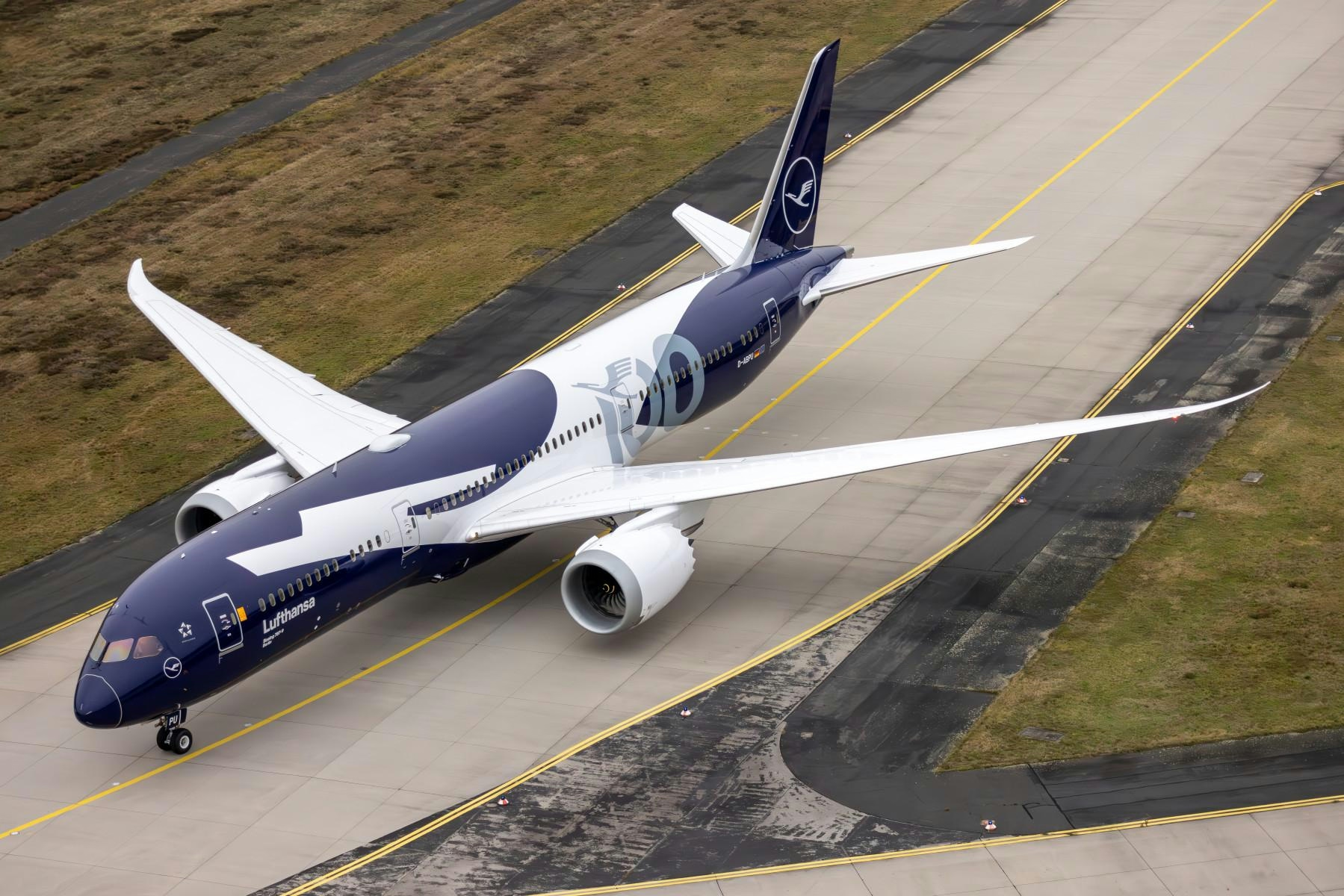
Lufthansa at 100: A Century of Fleet Evolution to the Airbus A350-900 and Boeing 777X
On April 6, a deep-blue Airbus A350-900, adorned with a striking super crane emblem and the years 1926 | 2026 in silver, taxied across Berlin Brandenburg Airport. This flight to Zurich was far from routine; it served as a high-tech tribute to a century of German aviation history. Exactly 100 years earlier, a Fokker-Grulich F II had taken off from Berlin-Tempelhof, marking the founding of Deutsche Luft Hansa AG. From these modest origins, Lufthansa has grown into a global aviation powerhouse, now defined by the advanced carbon-fiber wings of the A350 and the anticipated folding wingtips of the Boeing 777X.
Humble Beginnings
German commercial aviation began with bold ambition on April 6, 1926. From the grassy fields of Berlin-Tempelhof, Deutsche Luft Hansa AG launched its inaugural services to Zurich and Cologne using the Fokker-Grulich F II and Dornier Komet III aircraft. These early flights were a stark contrast to today’s sophisticated air travel: pilots navigated visually, and passengers were seated on wicker chairs inside wood-and-fabric fuselages. With cruising speeds of just 140 km/h (87 mph), the Berlin-Zurich route was an all-day journey, and unpressurized cabins left travelers exposed to the elements.
Despite the absence of modern comforts, this pioneering era established the operational framework for European connectivity. By the late 1920s, Lufthansa’s fleet had transitioned to all-metal aircraft such as the Junkers G 24 and the iconic Ju 52, enhancing durability and passenger capacity. These three-engine workhorses enabled the airline to expand its reach toward the Far East and South America, laying the groundwork for a global network well before the advent of the jet age.
Postwar Rebirth and Jet Age Transformation
Following a wartime hiatus, Lufthansa resumed operations in 1955. The airline’s true transformation occurred five years later with the introduction of the Boeing 707, which revolutionized transatlantic travel by reducing journey times from several days to approximately ten hours. This milestone marked Lufthansa’s emergence on the global stage and set the pace for decades of innovation and expansion.
Modern Challenges and Fleet Evolution
Lufthansa’s fleet evolution continues today with the integration of the Airbus A350-900 and the forthcoming Boeing 777X. These aircraft embody the airline’s commitment to efficiency and sustainability, incorporating advanced materials and cutting-edge technology. However, this new era has not been without challenges. Recent consecutive strikes by pilots and flight attendants have disrupted operations for five out of seven days, testing Lufthansa’s ability to maintain its ambitious schedule.
The competitive landscape is also undergoing significant shifts. Taiwan’s China Airlines is scaling back its Airbus orders, while Austrian Airlines, a member of the Lufthansa Group, is considering expanding its Boeing 787 long-haul fleet. In response, Lufthansa Group executives are implementing rapid market response strategies, adjusting capacity and flight schedules on a daily basis to navigate ongoing labor unrest and evolving market dynamics.
A Century of Adaptation
From open-cockpit biplanes to state-of-the-art widebody jets, Lufthansa’s history is one of continuous adaptation. Over the course of ten decades, the airline has endured industrial revolutions, economic crises, and the complete transformation of global air travel. As Lufthansa celebrates its centenary, its journey encapsulates both the triumphs and challenges of aviation itself—constantly evolving and perpetually reaching for new horizons.

Etihad Airways Suspends Airbus A380 Flights on Key Route

Aditya Birla Group Seeks Approval for Aircraft Leasing in GIFT City

Qatar Airways Highlights Innovation and Connectivity at Arabian Travel Market 2026

Hong Kong's Five-Year Plan Includes Andrew Fan's Aircraft Parts Processing Hub Proposal

ACIA Aero Leasing Delivers ATR72-600 to Air Nostrum

RTX Appoints Jill Albertelli as Head of Pratt & Whitney

TAT Technologies Joins Beyond Aero Hydrogen Aircraft Program

AURAK Study Highlights Barriers to Air Taxi Adoption in Emerging Economies

Xiamen Air Selects Altitude for 787 Maintenance at Heathrow

Etihad and Swissport Extend Global Partnership
