Bild

KI-Erkenntnisse in konkrete Maßnahmen überführen

Trage dich noch heute in die AeroGenie-Warteliste ein!

Trends

Categories

Maintenance Lapse Cited as Likely Cause of Air India Engine Fire
May 26, 2026By ePlane AI
Maintenance Lapse Cited as Likely Cause of Air India Engine Fire
0
0
Air India
Airbus A320
Maintenance Lapse

Maintenance Lapse Identified as Probable Cause of Air India Engine Fire

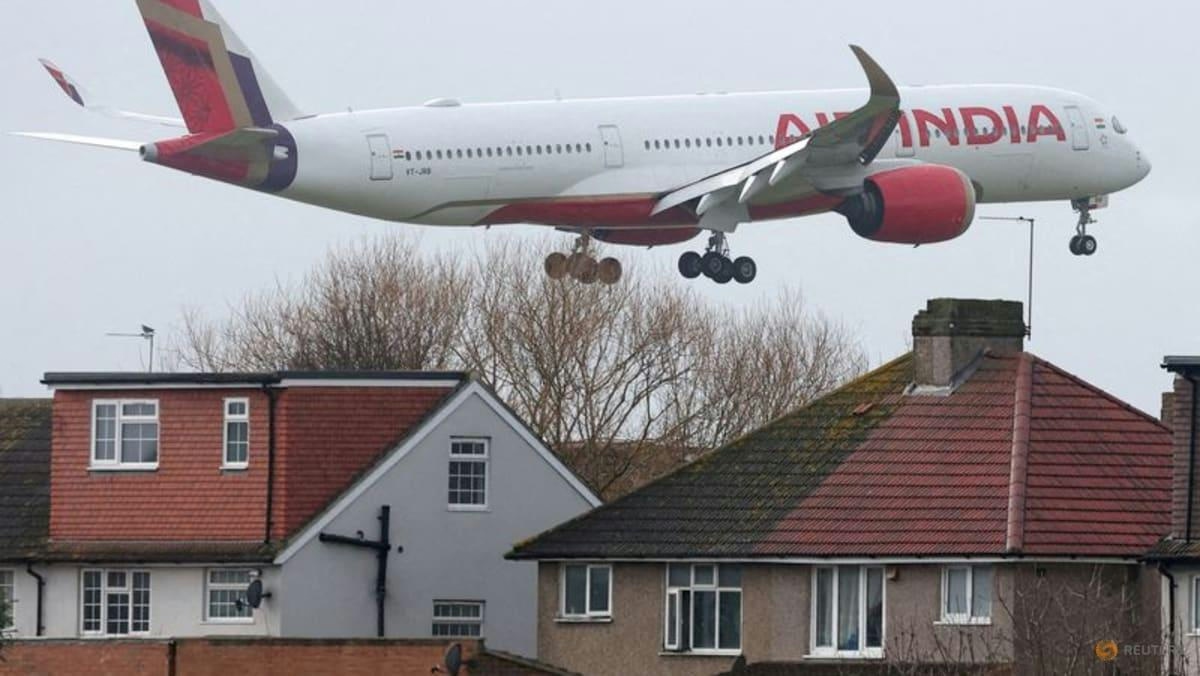
The Directorate General of Civil Aviation (DGCA) has preliminarily attributed an engine fire on an Air India Airbus A320 to improper maintenance. The incident, which compelled the aircraft to make an emergency landing last week, has intensified scrutiny of the airline’s maintenance procedures and raised broader concerns within the aviation industry.

Details of the Incident and Investigation

Investigators revealed that a nozzle replacement had been carried out on the aircraft just one to two days prior to the engine fire. It is believed that several nuts were not adequately tightened during this maintenance operation, leading to a fuel leak that subsequently ignited. The flight, operating from Bengaluru to Delhi with 160 passengers on board, declared a Mayday after the pilots received a fire warning from one of the engines and safely landed at Delhi Airport.

While the investigation remains ongoing, the DGCA has suspended the technician and engineer responsible for the maintenance work. Air India has been directed to conduct thorough inspections of all aircraft that recently underwent nozzle replacements. An engineer familiar with the case explained that fuel leaking onto hot engine components inevitably causes fire. Maintenance manuals specify precise torque requirements for fastening nuts; failure to apply the correct pressure can result in leaks, whereas excessive force risks deforming parts.

Broader Implications and Industry Context

This incident follows a series of engineering shortcomings at Air India since its acquisition by the Tata Group in 2022. The airline’s aging fleet demands more frequent and meticulous maintenance compared to its competitors. Although Air India has bolstered its in-house engineering capabilities, it continues to depend on Air India Engineering Services Limited (AIESL)—a government-owned entity excluded from the airline’s privatisation—for maintenance of certain narrow-body and all wide-body aircraft.

An Air India spokesperson confirmed the ongoing probe, stating, “We have proactively mobilised and strengthened our in-house engineering and maintenance capabilities, while also optimising available third-party support, to ensure continuity of maintenance activities across the fleet.”

The repercussions of this maintenance lapse extend beyond immediate safety concerns. Aviation regulators are expected to increase oversight, and Air India may face financial penalties alongside reputational damage. Industry analysts caution that the incident could lead to higher insurance premiums for the airline and prompt competitors to reassess their own maintenance standards. The episode also casts a spotlight on the aviation maintenance sector, which is contending with the dual challenges of rising fuel prices and a shortage of skilled engineers.

The shortage of experienced technicians has been exacerbated by rapid fleet expansions at Air India and IndiGo. Retention difficulties have intensified amid recent strikes by hundreds of AIESL technicians demanding better wages, compelling the company to rely increasingly on third-party firms and retired personnel for routine maintenance.

Standard industry practice requires that after a technician completes a task, an aircraft maintenance engineer must verify and sign off on the work. However, the repetitive nature of such procedures means errors can still occur, underscoring the critical need for rigorous oversight and strict adherence to safety protocols.
More news
FAA Expands Advanced Air Mobility Test Program with New States and Aircraft

FAA Expands Advanced Air Mobility Test Program with New States and Aircraft

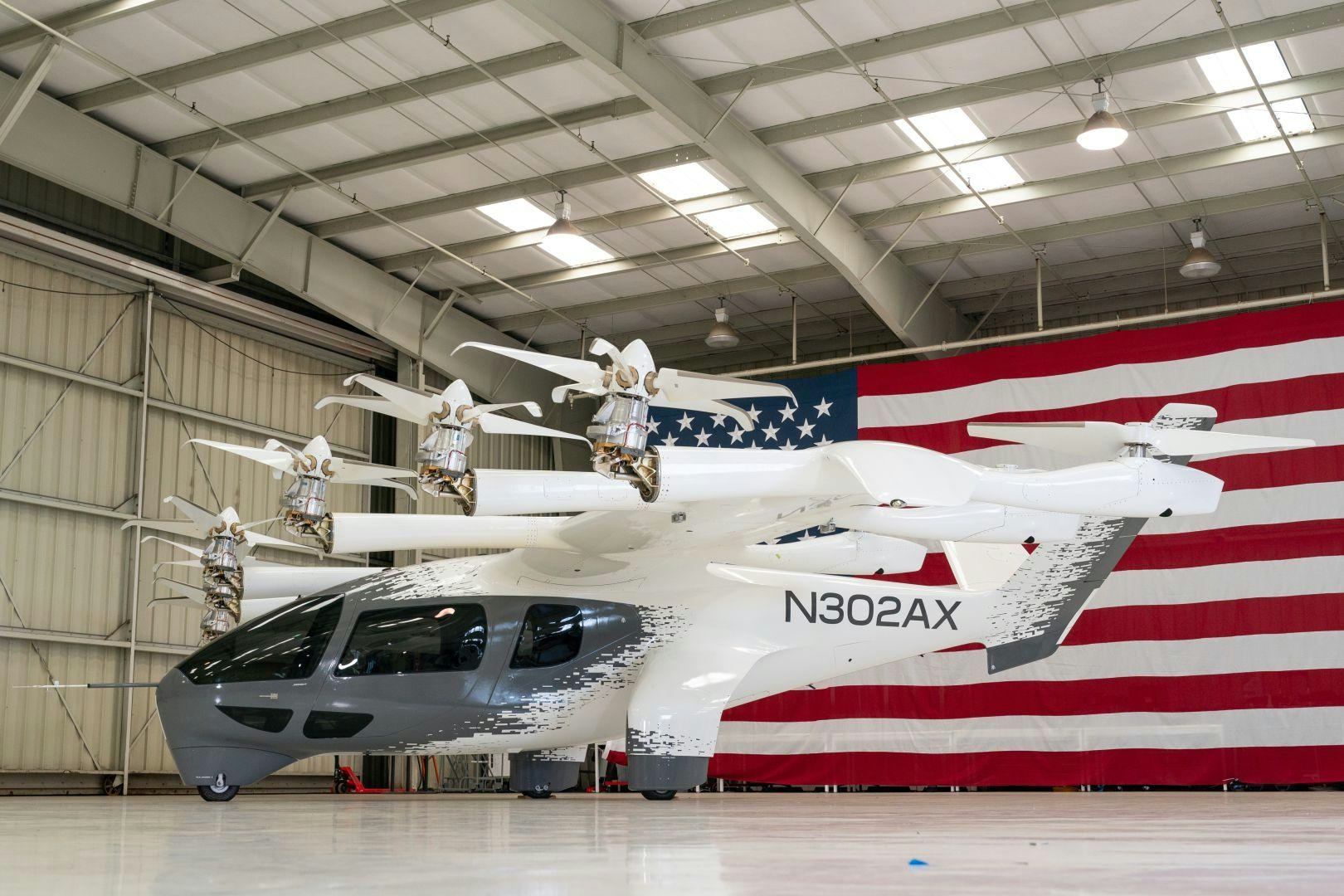
FAA Expands Advanced Air Mobility Test Program with New States and Aircraft The Federal Aviation Administration (FAA) is undertaking a significant expansion of its three-year Advanced Air Mobility (AAM) test program, incorporating additional states and aircraft manufacturers into a nationwide initiative aimed at integrating air taxis, cargo drones, and other emerging aviation technologies. This expansion, announced on Tuesday, extends the program’s reach to 26 states, reflecting a broadening commitment to developing next-generation air transportation solutions. Broadening Participation and Regional Focus Initially, the U.S. Department of Transportation (DOT) designated eight lead participants in March but withheld the full list of states involved in AAM demonstrations. The Pennsylvania Department of Transportation (PennDOT) now leads a consortium comprising 18 states, with a focus on revitalizing regional air services, including routes akin to those supported by the Essential Air Service program. This consortium, known as the Multistate Collaborative eIPP (MSCE) National Integration Complex, includes states such as Massachusetts, Alaska, Illinois, Maine, Delaware, West Virginia, Wyoming, Tennessee, and California—a key hub for several AAM manufacturers. Other participants include North Carolina, New Mexico, Oregon, and Oklahoma, which were previously confirmed as lead participants or partners. Pivotal, a developer of personal electric vertical takeoff and landing (eVTOL) aircraft, has joined the consortium alongside PennDOT. The company emphasizes its commitment to ensuring that AAM technologies and services reach underserved regions across the United States, rather than concentrating solely on affluent urban centers. According to Pivotal, the MSCE aims to provide equitable access to these emerging aviation innovations for all Americans. Infrastructure, Stakeholders, and Industry Momentum The MSCE National Integration Complex functions as a cross-state testing “sandbox” designed to identify unmet needs in sectors such as cargo and medical logistics, while also assessing the economic viability of future AAM services. The initiative involves seven infrastructure providers, six universities, and over 30 stakeholder partners, collectively representing 68 sites with the potential to serve more than 50 million Americans. Four operators are actively participating: United Therapeutics, Republic Airways, the University of Pittsburgh Medical Center’s STAT MedEvac, and Nulton Aviation Tri State Charter. In parallel with the FAA’s program expansion, several industry players are intensifying their development efforts. Companies including Wisk Aero, Bombardier, Zuri, and Eve Air Mobility are accelerating flight test campaigns and advancing product development. Wisk Aero, for instance, is expanding its Gen 6 flight test campaign by introducing a second aircraft, while Eve Air Mobility has completed 59 test flights of its eVTOL prototype. These advancements are attracting heightened investor interest and increasing competition within the AAM sector. Challenges Ahead Despite the program’s growing momentum, it faces considerable challenges. Regulatory complexities, technological integration hurdles, and the need for effective coordination among an expanding array of stakeholders remain significant obstacles. The FAA and its partners must navigate these issues carefully to ensure that advanced air mobility technologies are successfully integrated and that their benefits are realized across diverse communities nationwide.
SpaceX’s Starlink Secures Contract with American Airlines

SpaceX’s Starlink Secures Contract with American Airlines

SpaceX’s Starlink Secures Contract with American Airlines A Strategic Partnership in In-Flight Connectivity SpaceX’s Starlink has secured a landmark contract with American Airlines to equip more than 500 Airbus aircraft with its satellite internet service. This agreement marks a significant advancement in the competitive in-flight connectivity market, as airlines increasingly seek to replace outdated Wi-Fi systems with faster, more reliable solutions. By adopting Starlink’s low-Earth orbit (LEO) network, American Airlines joins a growing number of carriers aiming to meet escalating passenger demands for seamless, high-speed internet access at cruising altitudes. The timing of this deal is particularly crucial for SpaceX, which is reportedly preparing to take Starlink public. Enterprise contracts such as this one are highly valued by investors, offering stable, multi-year revenue streams that underscore Starlink’s evolution from a consumer broadband provider to a dominant player in enterprise connectivity. Industry analysts estimate that Starlink’s standalone valuation could range between $50 billion and $100 billion, with aviation and other commercial contracts providing the recurring, high-margin income necessary to drive these figures upward. Industry Implications and Competitive Dynamics American Airlines’ commitment places it alongside United Airlines and Delta Air Lines in adopting next-generation satellite internet technology. United initiated this trend last year by announcing plans to retrofit its entire mainline fleet with Starlink, while Delta has chosen Amazon’s Kuiper Systems for its in-flight Wi-Fi, illustrating the intensifying competition within the sector. American’s agreement is among the largest to date, signaling a broader industry shift away from traditional geostationary satellite providers such as Viasat and Intelsat. These legacy companies are now under pressure to upgrade their networks or pursue mergers to remain competitive. Starlink’s technological advantage lies in its LEO satellites, which orbit approximately 340 miles above Earth—significantly closer than the 22,000-mile altitude of conventional geostationary satellites. This proximity enables faster data speeds and lower latency, directly addressing persistent issues of unreliable and slow internet service on aircraft. The improved connectivity is particularly valuable for business travelers who require uninterrupted access during flights. Deployment Challenges and Market Impact Although American Airlines has not disclosed a precise timeline for the rollout, industry insiders suggest that installations could commence as early as late 2026 and continue through 2028. Retrofitting over 500 aircraft involves complex modifications, including airframe adjustments, antenna installations, and obtaining regulatory certifications. Ensuring consistent, reliable connectivity across such a vast fleet while integrating with existing systems and navigating regulatory frameworks will be critical challenges for SpaceX as it scales its aviation services. Market response to the announcement has been largely positive. American Airlines’ endorsement is viewed as a significant validation of Starlink’s technology and a boost to SpaceX’s prospects ahead of its anticipated initial public offering. For airlines, enhanced Wi-Fi capabilities have the potential to transform in-flight connectivity from a cost center into a revenue-generating service. For SpaceX, enterprise clients such as airlines, shipping companies, and military operations represent higher-margin, lower-churn customers compared to residential subscribers. As competition intensifies in the in-flight connectivity arena, Starlink’s expanding portfolio and technological strengths are reshaping the market landscape, setting the stage for a high-stakes contest both in the skies and on financial markets.
High Lander Joins STEP Ecosystem to Advance Unmanned Innovation in the U.S.

High Lander Joins STEP Ecosystem to Advance Unmanned Innovation in the U.S.

High Lander Joins STEP Ecosystem to Advance Unmanned Innovation in the U.S. LISBON, May 2026 – High Lander has formally become a member of the STEP Ecosystem, a Houston-based American investment fund dedicated to fostering growth in the uncrewed systems (UxS) and counter-uncrewed aerial systems (C-UAS) sectors. The partnership was unveiled at Airspace World in Lisbon, where both organizations co-exhibited, establishing High Lander as the principal software provider within STEP’s expanding network of autonomous operations. STEP’s strategy transcends conventional investment by deliberately assembling a portfolio of interoperable companies spanning aerial, ground, and maritime domains. This integrated approach accelerates the development of comprehensive autonomous systems, with each portfolio company reinforcing the others. High Lander’s software now functions as the operational core for the aerial segment, overseeing the management, coordination, and deconfliction of UAV operations across the ecosystem. The collaboration is particularly targeted at the rapidly growing U.S. aviation market, leveraging High Lander’s technological solutions to facilitate large-scale airspace management and complex fleet operations. BG (ret.) Benny Mehr, Head of Strategy & Defense at STEP, emphasized the necessity of a robust and adaptable central operating system to unlock potential across defense, civilian, and critical infrastructure markets. He noted, “High Lander provides the definitive software backbone we needed. Integrating Vega for airspace management and Orion for multi-drone operations gives our ecosystem the operational intelligence required to lead autonomous aviation and homeland security deployments in the United States.” Software Backbone for Autonomous Aviation High Lander’s technology suite includes Vega UTM, a next-generation uncrewed traffic management platform that delivers automated strategic and tactical deconfliction for unified airspace. Complementing Vega is Orion Drone Fleet Management, a hardware-agnostic platform designed to enable automated, scalable multi-drone missions. Together, these platforms bridge the operational gap between localized drone activities and broader airspace safety requirements. Nonetheless, integrating Vega with other advanced systems, such as ThirdEye’s MeduzaX optical-detection platform, presents significant technical challenges. Achieving seamless interoperability will be essential as the ecosystem expands, particularly given the growing interest from national aviation authorities and defense-sector operators. This demand is further intensified by emerging threats, including Hezbollah’s increasing use of drones, which highlight the critical need for robust, integrated counter-UAS solutions. Establishing a U.S. Footprint and Navigating a Competitive Market Beyond securing a strategic foothold in Texas through its partnership with STEP, High Lander is actively establishing a long-term operational presence in the United States via live deployments in Tulsa. These real-world operations serve as vital proof points for scalability and integration, demonstrating capabilities such as automated flight plan approvals and real-time telemetry tracking within municipal and industrial environments. The U.S. counter-drone market is evolving rapidly, with expansion into regions like Romania intensifying competition and driving innovation. As rival companies enhance their unmanned systems to maintain or increase market share, High Lander’s capacity to integrate with native counter-UAS technologies and comply with FAA regulations will be pivotal. Alon Abelson, CEO and co-founder of High Lander, underscored the importance of integrated airspace management, stating, “The future of aviation relies on a fully integrated sky where crewed and uncrewed aircraft operate in harmony. By embedding our software into the STEP ecosystem and demonstrating this architecture in Lisbon, we are providing the essential digital infrastructure needed to manage complex airspaces safely and at scale. This collaboration offers a direct path for operators and municipalities to move from isolated testing to sustained, high-density drone operations.” As High Lander and STEP deepen their collaboration, their focus will remain on overcoming integration challenges, adhering to regulatory standards, and sustaining a competitive advantage in the rapidly evolving unmanned systems landscape.
Nigeria set to establish aircraft leasing firm

Nigeria set to establish aircraft leasing firm

Nigeria to Establish Aircraft Leasing Firm to Strengthen Aviation Industry Nigeria is preparing to launch a national aircraft leasing company aimed at alleviating financial pressures on local airlines, reducing flight cancellations, and lowering ticket prices. The Federal Executive Council (FEC) approved the initiative, which was announced by the Minister of Aviation and Aerospace Development, Festus Keyamo, during a meeting with the Airline Operators of Nigeria (AON) in Abuja. Addressing Challenges in Aircraft Acquisition Minister Keyamo highlighted that the new leasing firm seeks to resolve a persistent obstacle faced by domestic carriers: the difficulty in acquiring aircraft. This challenge has been a significant contributor to frequent flight disruptions and elevated airfares. Emphasizing the government’s role, Keyamo stated, “Since we don’t own a national airline and we don’t subsidise one, our duty as a government is to ensure that we support domestic airline operators to make them stable and make their businesses thrive.” The plan, endorsed by President Bola Tinubu, aims to provide operators with the necessary support to secure aircraft for their operations. The company will function primarily as a private entity, with the government maintaining only a minimal equity stake. Keyamo explained that while the government will offer strategic backing, nearly 95 to 99 percent of investments will come from private sources, including development banks across Africa and private investors both within Nigeria and internationally. The government’s involvement will be limited to providing a sovereign guarantee to ensure the safety and repossession of leased aircraft. International Support and Market Context The initiative has garnered substantial international backing. The African Development Bank (AfDB) has pledged a $7 billion package to support its integrated African aviation programme, with Nigeria selected as a pilot country. In recognition of his role, Keyamo has been appointed as an ambassador for the programme by the AfDB. Nigeria’s entry into the aircraft leasing market occurs amid intense competition and industry challenges. Established global firms such as TrueNoord, which recently acquired a majority stake from Arcus Infrastructure Partners, dominate the sector. Industry analysts have expressed reservations about the ability of a new Nigerian leasing company to compete on the international stage, particularly as the sector contends with supply chain disruptions and a surge in commercial aircraft production. Competitors are expected to respond with strategic partnerships or acquisitions, as demonstrated by recent moves involving Airbus and TrueNoord. Despite these challenges, Nigeria’s aviation sector is showing promising growth. The country is advancing plans to establish an Airbus aviation hub and accelerate deliveries of Apache helicopters. These developments are anticipated to enhance local aviation infrastructure and activity, indirectly supporting the new leasing firm’s prospects. Industry Response and Outlook Representing the AON, George Uriesi, Managing Director of Ibom Air, welcomed the government’s initiative, underscoring the financial burden of aircraft acquisition. He remarked, “Aircraft is the most expensive thing any airline can buy and for people like us who have ordered for brand new airplanes, these are multi-million dollar equipment.” The establishment of the aircraft leasing company is expected to provide critical relief to Nigeria’s airline operators. By facilitating easier access to aircraft, the initiative has the potential to transform the country’s aviation landscape, making air travel more accessible and affordable for Nigerians.
AMETEK Completes Acquisition of First Aviation

AMETEK Completes Acquisition of First Aviation

AMETEK Completes Acquisition of First Aviation On May 26, 2026, AMETEK, Inc. announced the completion of its acquisition of First Aviation Services, a prominent provider of highly engineered defense and aviation maintenance, repair, and overhaul (MRO) services, as well as a manufacturer of proprietary aviation components. The transaction was disclosed through a company press release and detailed in a filing with the U.S. Securities and Exchange Commission. First Aviation Services is widely recognized for its specialized expertise in defense and aviation MRO, delivering tailored services and components to a diverse client base. Through this acquisition, AMETEK intends to leverage First Aviation’s technical capabilities to broaden its service offerings and reinforce its position within the aviation and defense sectors. Strategic Implications and Market Response The acquisition aligns with AMETEK’s broader strategic objective to enhance its portfolio of engineered products and services. By integrating First Aviation’s operations, AMETEK anticipates expanding its market reach and providing increased value to its customers. The company has highlighted that First Aviation’s specialized knowledge and established customer relationships will be critical drivers of future growth. Nonetheless, the integration process poses several challenges. AMETEK must ensure a seamless transition by aligning operational processes, maintaining compliance with rigorous aviation regulations, and managing potential resistance from employees or customers accustomed to First Aviation’s existing practices. Market analysts observe that the acquisition may attract scrutiny from both investors and competitors. Investors are expected to closely monitor AMETEK’s ability to manage the integration effectively and realize the anticipated synergies. Meanwhile, competitors in the aviation MRO sector may respond with strategic initiatives to protect their market positions. Looking Ahead AMETEK’s leadership has expressed confidence in the acquisition, emphasizing the opportunity to build upon First Aviation’s strengths and further enhance the company’s service capabilities. The focus will remain on leveraging First Aviation’s expertise to deliver innovative solutions and sustain a competitive advantage in the evolving aviation and defense landscape. The financial terms of the transaction were not disclosed. AMETEK’s common stock continues to be traded on the New York Stock Exchange under the symbol AME. About AMETEK Headquartered in Berwyn, Pennsylvania, AMETEK, Inc. is a global manufacturer of electronic instruments and electromechanical devices, serving a broad range of industries including aerospace, defense, and industrial markets. --- *This article is based on information provided in AMETEK’s SEC filing and official press release dated May 26, 2026.*
Fixing the 2,400°F Combustor Could Determine the Boeing 777X’s Future

Fixing the 2,400°F Combustor Could Determine the Boeing 777X’s Future

Fixing the 2,400°F Combustor Could Determine the Boeing 777X’s Future The future of Boeing’s long-delayed 777X aircraft now appears to rest less on its hallmark features—such as innovative folding wingtips or its spacious cabin—and more on the reliability of its GE9X engines under extreme operating conditions. The latest postponement, which has pushed the aircraft’s entry into service to 2027, is attributed to a newly discovered durability issue involving the engine’s combustor seal. This technical challenge has already contributed to program charges exceeding $15 billion, underscoring the severity of the problem. Engine Reliability: A Critical Concern for Launch Customers For launch customers including Lufthansa, Emirates, and Qatar Airways, the paramount question is whether the GE9X engine can consistently perform under real-world conditions. The engine’s durability has become a defining factor in the 777X’s commercial viability, especially in an industry still cautious after a decade marked by significant engine reliability crises. These include issues with the Rolls-Royce Trent 1000 and Trent XWB-97, as well as the Pratt & Whitney PW1000G families, which have heightened airline sensitivity to early operational problems. Airlines are now intensely focused on achieving “out of the gates” reliability, as any initial fuel efficiency gains are quickly offset if engines require frequent removals or inspections shortly after entering service. This scrutiny highlights why resolving the combustor seal issue is critical—not only for Boeing’s reputation but also for the broader aviation market’s confidence. The Technical Challenge of the GE9X Engine The GE9X engine was specifically designed for the 777X, with ambitious fuel-efficiency targets that necessitate operation at higher temperatures and pressures than previous widebody engines. Featuring a 27:1 pressure-ratio high-pressure compressor and delivering 105,000 pounds of thrust, the GE9X ranks among the most thermally demanding commercial engines ever developed. To withstand these extreme conditions, GE Aerospace integrated advanced Ceramic Matrix Composite (CMC) materials into the combustor and turbine sections. These CMCs can endure temperatures up to 2,400°F (1,315°C) while weighing approximately one-third as much as steel, enabling hotter, more efficient engine operation and reducing the need for cooling air. For airlines operating ultra-long-haul routes, even marginal improvements in fuel efficiency translate into millions of dollars in annual savings. However, pushing the engine closer to its thermal and pressure limits reduces durability margins, making technical solutions such as the combustor seal fix essential to ensuring long-term reliability. Broader Implications for Boeing and the Aviation Industry The resolution of the combustor issue carries significant implications beyond technical performance. Investor confidence in Boeing’s capacity to overcome these challenges could affect the company’s stock performance and influence broader market dynamics. Competitors may respond by accelerating advancements in their own engine technologies or adjusting their product strategies accordingly. Additionally, a successful fix could impact the aviation maintenance sector by increasing demand for specialized services as the new combustor technology becomes more widely adopted. Meanwhile, industry leaders such as Rolls-Royce remain optimistic despite ongoing geopolitical uncertainties, signaling resilience within the aviation sector. Ultimately, the outcome of Boeing’s efforts to resolve the combustor durability problem will not only determine the 777X’s commercial fate but may also shape competitive strategies and market sentiment across the global aerospace industry.
Fly Meta Partners with HAECO for Freighter Maintenance in Greater China

Fly Meta Partners with HAECO for Freighter Maintenance in Greater China

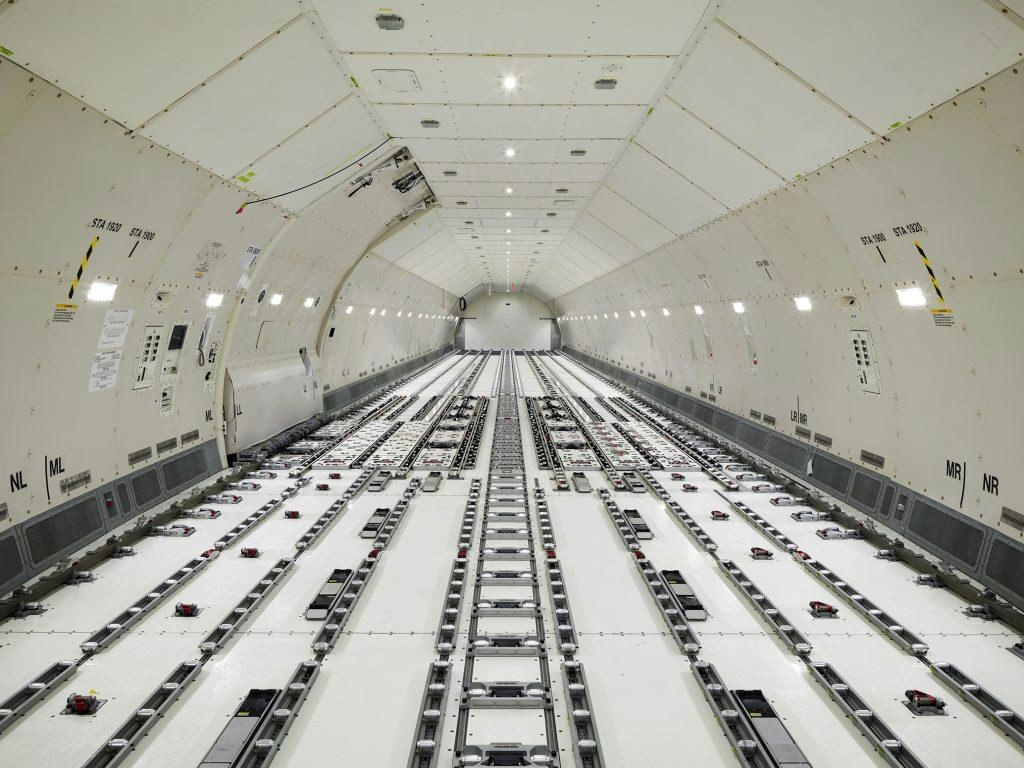
Fly Meta and HAECO Forge Strategic Partnership for Freighter Maintenance in Greater China Engineering and maintenance specialist HAECO has formalized a memorandum of understanding (MoU) with Fly Meta Group to establish a strategic alliance supporting the cargo airline’s expanding widebody freighter operations across Greater China. The agreement, signed during the inaugural Aviation Week MRO Greater China event in Beijing, marks the beginning of a long-term collaboration that will leverage HAECO’s extensive maintenance network and technical expertise. Comprehensive Maintenance Services for Widebody Freighters Under the terms of the MoU, Hong Kong-based Fly Meta and HAECO will collaborate on a broad range of maintenance, repair, and overhaul (MRO) services. These services encompass airframe and line maintenance, engine support, landing gear upkeep, composite materials repair, and component maintenance for Fly Meta’s Boeing 747F and 777F freighter fleet. A key focus of the partnership will be engine maintenance, with HAECO Engine Services (Xiamen) expected to provide repair, overhaul, on-wing support, and spare engine services for GE90 engines. The commencement of these engine services is anticipated in the second half of 2026, contingent upon the finalization of a multi-year engine service agreement. The partnership also aims to explore further expansion of airframe maintenance capabilities across Hong Kong, Xiamen, and the wider Greater China region, aligning with Fly Meta’s fleet growth strategy. HAECO currently supports over 140 airlines globally through a network of 19 line maintenance stations situated in Hong Kong and Mainland China. Industry Perspectives and Market Context Gerald Steinhoff, Chief Commercial Officer at HAECO, emphasized the synergy between the two companies, stating, “By combining Fly Meta’s growing freighter platform with HAECO’s end-to-end MRO capabilities, including our dedicated airframe, engine, and component teams across the Chinese Mainland and Hong Kong, we are well positioned to support the long-term development of their fleet and global operations.” Helen Chen, Chief Executive Officer of Fly Meta, expressed optimism about the partnership, noting, “We are pleased to partner with HAECO as we continue to expand our freighter business. HAECO’s strong track record of safe, reliable, and high-quality integrated MRO solutions will provide trusted support to our fleet, effectively enhancing our operational efficiency and future growth in a highly competitive logistics environment.” Despite the promising collaboration, the partnership enters a competitive and closely regulated market. Established MRO providers such as ST Engineering have reported significant aftermarket growth and recently secured contracts for Airbus A330-300 conversions, highlighting the intensity of competition in the region. As Fly Meta and HAECO deepen their cooperation, they may encounter increased scrutiny from aviation regulators concerned about the consolidation of maintenance services. Concurrently, rival MRO firms are likely to bolster their service offerings or pursue new strategic alliances to maintain their market positions. Fly Meta’s Position in the Air Cargo Sector Founded in 2022, Fly Meta Group specializes in widebody freighter asset management and air cargo solutions. The company operates a core fleet comprising Boeing 747F and 777F freighters and integrates aircraft asset management, CMI/ACMI and charter operations, operational control center (OCC) support, and aircraft material management into a cohesive business system. This integrated approach positions Fly Meta as an emerging player in the competitive air cargo sector within the Greater China region.
GA Telesis and CASC Sign Strategic Cooperation Agreement at MRO Greater China

GA Telesis and CASC Sign Strategic Cooperation Agreement at MRO Greater China

GA Telesis and CASC Sign Strategic Cooperation Agreement at MRO Greater China GA Telesis, LLC, a global leader in integrated aviation solutions, has formalized a strategic cooperation framework agreement with China Aviation Supplies Co., Ltd. (CASC) during the inaugural MRO Greater China exhibition held on May 26, 2026. This agreement represents a significant milestone in the longstanding partnership between the two companies and highlights their mutual commitment to advancing China’s civil aviation industry. Scope and Objectives of the Partnership The framework agreement outlines a collaborative effort between GA Telesis and CASC to leverage their respective strengths across several critical areas. These include aviation materials support, major component leasing and distribution, maintenance, repair, and overhaul (MRO) services, as well as overseas asset management. By combining their extensive platform resources, the partnership aims to enhance operational efficiency and support the ongoing growth and modernization of China’s commercial aviation sector. The agreement was officially signed at the event by Mr. Su Longlong, Chairman of CASC, and Ms. Lynda Cheng, Senior Vice President, Asia Pacific of GA Telesis. Industry Context and Competitive Implications This strategic alliance emerges amid a period of rapid transformation within the global aviation industry, characterized by increasing investments and evolving market dynamics. While the partnership is expected to attract heightened investor interest due to the combined capabilities of GA Telesis and CASC, it also presents challenges related to the integration of their technologies and operations. Effective coordination will be essential to ensure seamless collaboration and to fully realize the benefits of the agreement. Market analysts observe that competitors may respond by accelerating innovation, enhancing their service offerings, or forming new alliances to maintain competitive advantage. Recent strategic initiatives by industry players such as Stellantis and Dongfeng underscore the intensifying competition and the necessity for agility among market leaders. Company Profiles GA Telesis is renowned for its comprehensive aerospace solutions, encompassing aftermarket services, lifecycle management, parts distribution, logistics, inventory management, leasing and financing, engine overhaul, and MRO services. Operating through a global network of 54 locations across 30 countries on six continents, the company is dedicated to sustainability and digital transformation, employing advanced materials and connected aircraft technologies to improve efficiency and reliability. China Aviation Supplies Co., Ltd., established in 1980 and headquartered in Beijing, serves as China’s primary centralized procurement organization for commercial aircraft and aerospace equipment. CASC acts as a crucial intermediary between the global aerospace market and the Chinese aviation industry, providing services that include aircraft procurement, aviation material supply, logistics, technology cooperation, exhibition management, and industry consulting. The company has been instrumental in supporting China’s rapid aviation growth and facilitating major aircraft acquisitions from global manufacturers. As the aviation sector continues to evolve, the partnership between GA Telesis and CASC is positioned to influence the competitive landscape, fostering further innovation and collaboration within the industry.
General Aviation Airports Drive South Florida’s Economy

General Aviation Airports Drive South Florida’s Economy

General Aviation Airports Drive South Florida’s Economy While recent attention in South Florida’s aviation sector has centered on Spirit Airlines’ bankruptcy at Fort Lauderdale-Hollywood International Airport, a less conspicuous yet crucial narrative is unfolding across the region’s 15 general aviation airports. These facilities, often overshadowed by commercial hubs, serve as vital economic engines, sustaining thousands of jobs and generating billions in economic activity. Economic Contributions and Regional Impact The Florida Department of Transportation’s 2022 Statewide Economic Impact Study underscores the significance of general aviation, revealing that it supports over 156,000 jobs statewide and contributes more than $27 billion annually to Florida’s economy. In South Florida, the influence of general aviation is particularly pronounced. Fort Lauderdale Executive Airport alone accounts for nearly 23,000 jobs and a $3.9 billion annual economic impact. Miami-Opa Locka Executive Airport supports 5,288 jobs with an $841 million contribution, while Pompano Beach Airpark sustains 2,597 jobs and generates $410 million in economic activity. Collectively, these three airports create over 30,000 jobs and contribute $5.1 billion annually to the regional economy. Beyond their economic footprint, these airports function as critical hubs for flight training, business aviation, emergency response, and community engagement. Pompano Beach Airpark, for instance, hosts five flight schools, the Goodyear “Wingfoot Two” blimp, and the North American headquarters of aircraft manufacturer Daher TBM. North Perry Airport in Pembroke Pines supports eight flight schools and operates the largest aerial media operation in the Southeast, providing banner towing services across 49 states and serving as a helicopter base for local news organizations. Miami-Opa Locka Executive Airport manages over 147,000 operations annually and is home to the nation’s busiest U.S. Coast Guard Air/Sea Rescue Station. Its three fixed-base operators (FBOs) help alleviate congestion at Miami International Airport, while the facility also functions as a staging ground for Caribbean cargo and hosts Bombardier’s largest North American service center. Fort Lauderdale Executive Airport is a focal point for business aviation, featuring four FBOs, extensive maintenance facilities, and a strategic location within a foreign-trade zone. The presence of U.S. Customs and Border Protection on-site supports high-wage employment and fosters economic development in Broward County. The airport also serves as the venue for the Fort Lauderdale Air Show and organizes career events aimed at inspiring the next generation of aviation professionals. Challenges and Future Outlook Despite their critical role, South Florida’s general aviation airports face significant challenges. An aging workforce poses a threat to the sustainability of Florida’s $86.6 billion aviation industry, with concerns over the future availability of skilled pilots, mechanics, and support personnel essential to airport operations. Additionally, major upcoming events such as the 2026 FIFA World Cup are expected to increase demand for business aviation services, placing further strain on airport infrastructure and staffing. In response to these pressures, industry players are expanding capacity. For example, Sheltair is increasing hangar space at North Florida Gulf Airport to accommodate a growing number of aircraft, reflecting broader efforts to meet rising demand for business aviation storage and services. Policy uncertainties also present potential challenges. Ongoing discussions in Washington, D.C., regarding the privatization of air traffic control could alter operational priorities, potentially favoring commercial aviation over general aviation needs. Despite these headwinds, South Florida’s general aviation airports remain indispensable. They continue to support flight training, emergency services, business operations, and specialized industries, thereby sustaining the region’s economic vitality and connectivity.
Regulatory Breaches and Engine Failure Cited in Tema Crash

Regulatory Breaches and Engine Failure Cited in Tema Crash

Regulatory Breaches and Engine Failure in Fatal Tema Aircraft Crash The Aircraft Accident and Incident Investigation and Prevention Bureau (AIB Ghana) has identified a series of critical operational, regulatory, and maintenance failures that culminated in the tragic aircraft crash in Tema on March 16, 2026, which resulted in two fatalities. Unauthorized Flights and Procedural Violations Captain Paul Fordjour, Head of Investigations at AIB Ghana, revealed that all three flights conducted from Ho Airport on the day of the incident were unauthorized, lacking valid permits and proper regulatory clearance. This exposed significant weaknesses in aviation compliance and oversight. Investigators found that neither Air Traffic Control (ATC) nor airport management at Ho and Accra were fully aware of the flight permissions, highlighting serious coordination failures within the aviation system. Although the pilot was licensed and qualified, the investigation uncovered deviations from approved flight procedures. Notably, the pilot occupied the rear seat of the microlight aircraft on all three flights, while a friend and the pilot’s brother occupied the front pilot seats. This seating arrangement violated permit conditions and restricted the pilot’s access to essential flight instruments and controls. The report further clarified that the third passenger disembarked in Ho before the aircraft’s final, fatal journey to Tema. Maintenance Deficiencies and Engine Failure AIB Ghana’s investigation also exposed significant maintenance shortcomings involving the aircraft, registered as 9G-ADV. There was no designated maintenance facility or assigned personnel responsible for the aircraft’s upkeep. Previous incidents of engine overheating and white smoke emissions had not been adequately addressed despite clear signs of mechanical distress. No maintenance records were available for the aircraft between January 14 and March 16, 2026, during which approximately 15 flights were conducted. Investigators concluded that persistent engine overheating likely led to engine failure, which played a central role in the crash. Compounding these issues, no distress call or emergency declaration was made before the aircraft went down, limiting the opportunity for emergency response. Additionally, ATC failed to notify the Bureau about the incident as required by law, underscoring further procedural lapses in emergency reporting. Broader Regulatory Context and Industry Implications These findings emerge amid heightened regulatory scrutiny of the aviation sector, particularly concerning engine reliability. Mandatory inspections for certain engine types, such as CF34 engines affected by corrosion issues, are increasing operational costs for airlines and causing potential delays in maintenance schedules. The intensified focus on safety and compliance is also driving up insurance premiums and prompting airlines to consider alternative engine technologies. As manufacturers face pressure to improve engine reliability and safety features, shifts in market share among competitors are anticipated. The investigation recommends that the Ghana Civil Aviation Authority (GCAA) strengthen oversight of General Aviation operations and ensure that approved maintenance providers are properly documented to enhance safety. Furthermore, the GCAA should establish procedures to guarantee timely communication between Air Traffic Control and relevant authorities in the event of incidents, thereby improving emergency response and regulatory compliance. The Tema crash underscores the urgent need for improved regulatory enforcement, maintenance oversight, and industry-wide vigilance to safeguard aviation safety in Ghana.
line