
KI-Erkenntnisse in konkrete Maßnahmen überführen

Trends
Categories
Malaysia Airlines Introduces AI Assistant ‘Mavis’ to Enhance Passenger Support
Malaysia Airlines Introduces AI Assistant ‘Mavis’ to Enhance Passenger Support
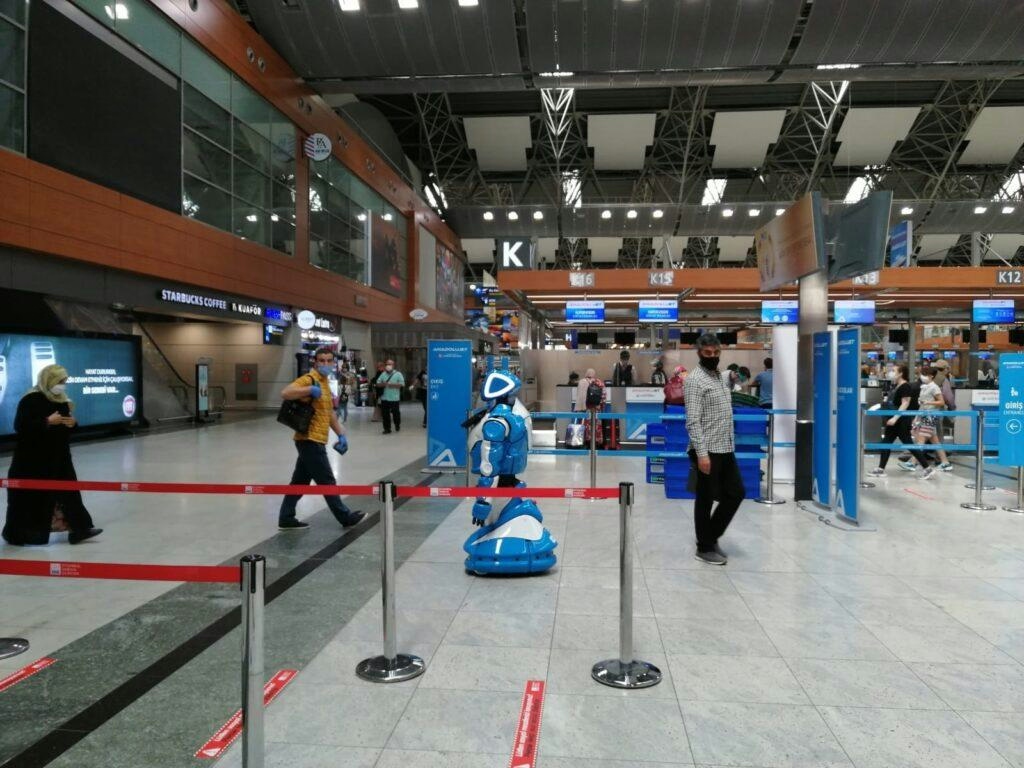
Malaysia Airlines has launched “Mavis,” an artificial intelligence-powered virtual assistant designed to improve passenger support throughout the entire travel experience. Developed in partnership with Ada, a leading provider of AI-native customer experience solutions, Mavis is now accessible via the airline’s website, mobile application, and email channels. This initiative represents a significant milestone in Malaysia Airlines’ ongoing digital transformation efforts.
Enhancing Passenger Experience Through AI
Mavis is engineered to meet the growing demand for instant, round-the-clock customer service by addressing a wide range of traveler needs. The AI assistant can provide information on flight schedules, real-time status updates, booking and itinerary details, online check-in, boarding gate confirmations, and fare options. Additionally, it facilitates seat upgrades and other high-demand services. By autonomously resolving many routine inquiries through advanced automation and contextual understanding, Mavis streamlines the customer service process. For more complex issues requiring human intervention, the system smoothly transfers passengers to live agents, ensuring a balance between efficiency and personalized assistance.
Language accessibility is a core component of Mavis’s deployment. Currently supporting both English and Malay, the assistant caters to Malaysia Airlines’ diverse passenger base. The airline plans to expand its multilingual capabilities to better serve its extensive network across Asia, Europe, Australia, and other regions, recognizing the importance of language inclusivity in enhancing the overall customer experience.
Strategic Integration and Future Prospects
The introduction of Mavis aligns with Malaysia Airlines’ broader omnichannel strategy, which seeks to create a seamless and connected digital ecosystem. Passengers can transition effortlessly between platforms without losing context, as Mavis currently supports interactions on web, mobile, and email channels. The airline intends to extend AI-driven support to additional digital and voice platforms in the future, further integrating the technology into its customer service framework.
Despite the promising benefits, the integration of AI assistants like Mavis presents challenges. Ensuring compatibility with existing systems, maintaining a consistent customer experience, and addressing privacy concerns remain critical considerations as the airline advances its digital initiatives. This development occurs amid intensifying competition within the aviation industry, where rival carriers are also accelerating investments in AI technologies to enhance their market positions.
The broader adoption of AI in customer engagement is reflected in market projections estimating the AI patient engagement sector alone could reach $33.68 billion by 2032. This underscores the significant advancements and investments in AI across various industries, including aviation.
With the deployment of Mavis, Malaysia Airlines aims to establish a new benchmark for digital passenger support by combining automation with human interaction to meet the evolving expectations of travelers worldwide.

Etihad Airways Suspends Airbus A380 Flights on Key Route

Aditya Birla Group Seeks Approval for Aircraft Leasing in GIFT City

Qatar Airways Highlights Innovation and Connectivity at Arabian Travel Market 2026

Hong Kong's Five-Year Plan Includes Andrew Fan's Aircraft Parts Processing Hub Proposal

ACIA Aero Leasing Delivers ATR72-600 to Air Nostrum

RTX Appoints Jill Albertelli as Head of Pratt & Whitney

TAT Technologies Joins Beyond Aero Hydrogen Aircraft Program

AURAK Study Highlights Barriers to Air Taxi Adoption in Emerging Economies

Xiamen Air Selects Altitude for 787 Maintenance at Heathrow

Etihad and Swissport Extend Global Partnership
