
KI-Erkenntnisse in konkrete Maßnahmen überführen

Trends
Categories
Marine Corps Develops AI Tools for Aviation Supply and Maintenance
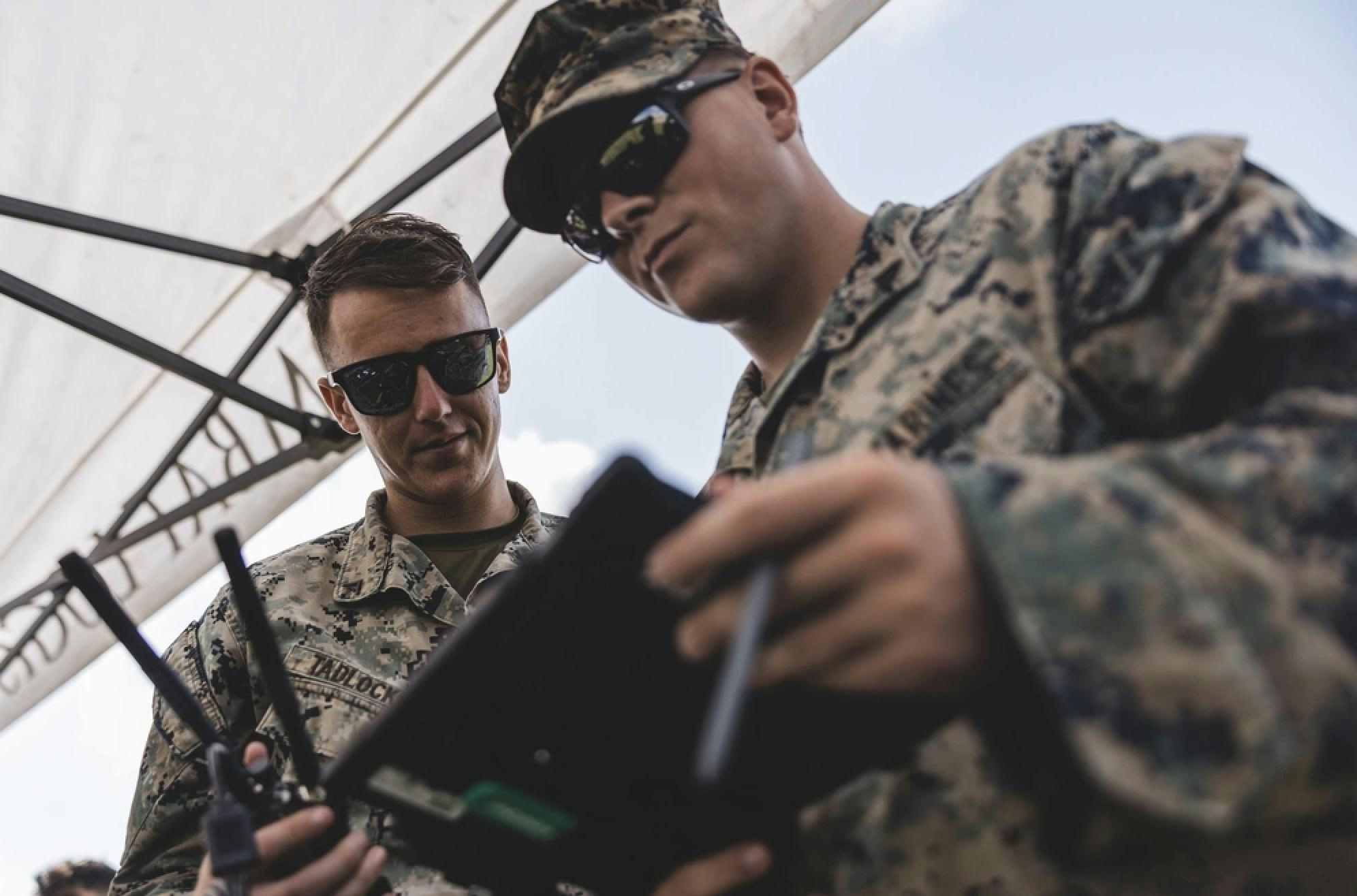
Marine Corps Develops AI Tools for Aviation Supply and Maintenance
Modernizing Aviation Sustainment Through Artificial Intelligence
The United States Marine Corps is undertaking a significant effort to modernize its aviation supply and maintenance operations by developing advanced artificial intelligence (AI) tools. These innovations aim to transform the Corps’ traditionally “outdated” inventory and maintenance processes, enabling more efficient identification and ordering of aircraft parts while forecasting maintenance needs with greater accuracy. The initiative is part of a broader modernization strategy designed to keep the Marine aviation fleet mission-ready amid evolving operational demands.
Set to launch this summer, the AI system will leverage historical performance data to predict when aircraft components require replacement, allowing maintenance teams to address issues proactively. Lt. Gen. William Swan, deputy commandant for aviation, emphasized the importance of this approach during a panel at the Sea-Air-Space conference, stating, “Let’s change it before it needs to be in the air, declare an emergency, land in some place we don’t want it to land, etc. That’s the whole idea: supply first, then maintenance, and then the operational stuff pulls together.”
Addressing Persistent Challenges in Aircraft Maintenance
Aircraft maintenance continues to be a costly and complex challenge for the military, exacerbated by aging platforms, personnel shortages, and strained supply chains. According to Swan, the Marine Corps’ aviation units maintain an average mission capability rate of approximately 62 to 64 percent, with training squadrons performing below this threshold. The Corps’ annual aviation plan, released in February, places AI at the core of efforts to improve sustainment by fostering a “data-enabled culture” and shifting toward predictive, rather than reactive, maintenance practices.
This AI initiative is embedded within Project Eagle, the strategic blueprint guiding the Aviation Combat Element’s balance between crisis response and modernization. The latest plan marks a notable shift by prioritizing AI and machine learning in aviation sustainment—areas previously regarded as “isolated and underfunded.” Officials now identify this effort as a top priority for the Corps.
Challenges and Progress in AI Integration
Despite the promise of AI, integrating these new tools with existing legacy systems presents significant challenges. Ensuring data accessibility and consistency, as well as cultivating a data-driven mindset among maintenance personnel, remain critical hurdles. Additionally, the initiative may encounter skepticism from traditional maintenance providers, while competitors in the aviation maintenance, repair, and overhaul (MRO) sector could accelerate their own AI developments in response.
The foundation for this transformation was laid several years ago. In 2022, the Marine Corps began cataloging repair parts and consumables for the F-35 Lightning II after recognizing the limitations of its existing maintenance and resupply methods. Col. Robert Petersen, head of the Corps’ aviation sustainment branch, described the data as “siloed, sitting there, really unavailable for us to harvest and use in any meaningful way” for the fighter jet. Given the global nature of the F-35 supply chain and the competitive environment involving allies and partners, the F-35 was a logical starting point for the AI-driven overhaul.
Since then, the Corps has cataloged every consumable part for the F-35 and developed two prototype parts packages using the new AI tools. Data collection efforts have also commenced for the KC-130J aircraft to integrate into the system. Lt. Gen. Swan acknowledged the novelty and complexity of this undertaking, stating, “This is new to us,” underscoring both the potential benefits and the challenges of embedding AI into military aviation sustainment.
As the Marine Corps advances this AI-driven approach, its success will depend not only on technological innovation but also on overcoming institutional resistance and ensuring seamless integration with existing systems.

Etihad Airways Suspends Airbus A380 Flights on Key Route

Aditya Birla Group Seeks Approval for Aircraft Leasing in GIFT City

Qatar Airways Highlights Innovation and Connectivity at Arabian Travel Market 2026

Hong Kong's Five-Year Plan Includes Andrew Fan's Aircraft Parts Processing Hub Proposal

ACIA Aero Leasing Delivers ATR72-600 to Air Nostrum

RTX Appoints Jill Albertelli as Head of Pratt & Whitney

TAT Technologies Joins Beyond Aero Hydrogen Aircraft Program

AURAK Study Highlights Barriers to Air Taxi Adoption in Emerging Economies

Xiamen Air Selects Altitude for 787 Maintenance at Heathrow

Etihad and Swissport Extend Global Partnership
