
KI-Erkenntnisse in konkrete Maßnahmen überführen

Trends
Categories
Middle East Conflict Poses Risks to Aerospace Supply Chain, Report Finds
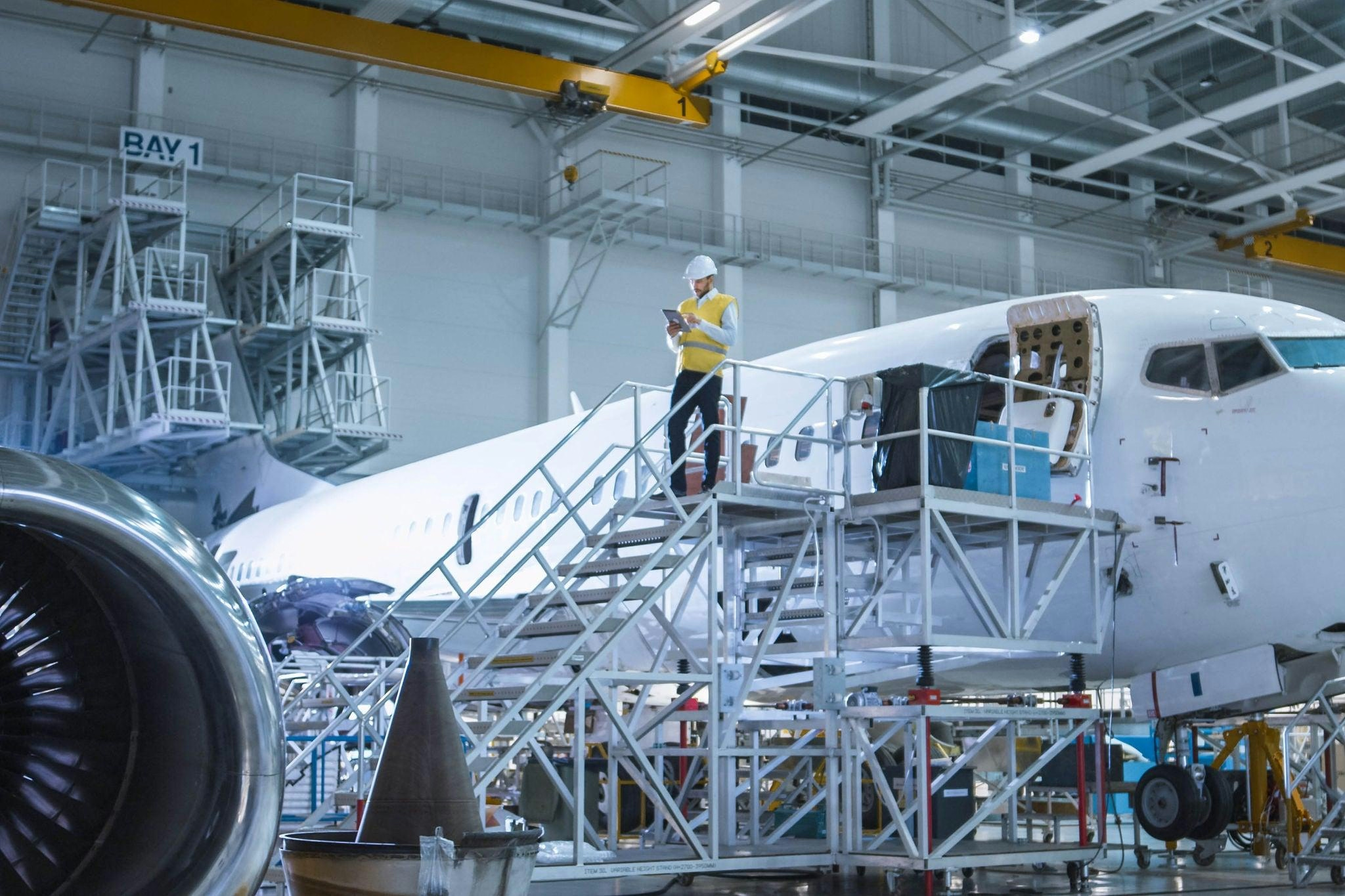
Middle East Conflict Poses Risks to Aerospace Supply Chain, Report Finds
Persistent Challenges in Aerospace Supply Chains
Global aerospace supply chains continue to encounter significant difficulties despite some alleviation of financial and personnel pressures, according to a recent industry survey. Production and efforts to increase manufacturing rates remain hindered by ongoing disruptions, with unresolved shortages in critical components presenting persistent risks. The escalating conflict in the Middle East is identified as a growing factor that could further destabilize the sector, particularly in the latter half of 2026, the report cautions.
The annual supply chain health assessment, conducted by consultancy Roland Berger in collaboration with aerospace industry associations from France (GIFAS), Germany (BDLI), and the United Kingdom (ADS), gathered insights from 95 companies. Now in its fourth year, the survey was completed in early 2026 ahead of the ILA Berlin and Farnborough International Airshows. Approximately 80% of respondents serve the large commercial aircraft and defense sectors, while others are engaged in helicopters, regional aircraft, business jets, space, and advanced air mobility.
More than 70% of companies report feeling “well or very well prepared” for upcoming production increases, a positive indicator as major manufacturers such as Airbus, Embraer, and Boeing scale up output of their flagship commercial programs. Nevertheless, 55% of respondents continue to face “sizable issues,” particularly in meeting the growing demand for aircraft parts. Procurement challenges persist in aerostructures, equipment and systems, and engines, with nearly one-third of companies operating on EBIT margins below 5%.
Supply Chain Disruptions and the Impact of the Middle East Conflict
Material shortages are driven by extended lead times and limited availability of raw materials and semi-finished goods, including forgings for engines and landing gear, as well as electronic components. Quality concerns linked to a shortage of experienced personnel and delays in services such as testing and finishing remain widespread. Shortages of fasteners for aerostructures have been highlighted as a specific bottleneck.
The conflict in the Middle East is intensifying these pressures. Increased demand for weapons systems is placing additional financial strain on aerospace and defense suppliers, while global chip manufacturers, including TSMC, report new challenges stemming from supply chain disruptions and rising energy costs. The conflict has also reduced available seat capacity worldwide, affecting airlines and travel routes. In response, defense and aerospace companies are reevaluating their risk management strategies, and logistics firms are gaining recognition for maintaining more resilient supply chains.
Indirect effects are also evident on the demand side. The report notes that original equipment manufacturers (OEMs) are adjusting production rates or postponing orders due to shortages of input parts, causing disruptions even for suppliers capable of meeting requirements.
Dr. Jörg Schuler, CEO of Diehl Aviation and a BDLI executive board member, remarked that the survey’s findings reflect his company’s experience as both a defense manufacturer and aircraft interiors specialist. “It’s getting better on the large scale, but there are still supply chain disruptions, and when you have one, they are very severe,” he stated.
While some improvements have been observed, the aerospace industry remains vulnerable to both ongoing and emerging risks, with the Middle East conflict introducing an additional layer of uncertainty to an already strained global supply chain.

Etihad Airways Suspends Airbus A380 Flights on Key Route

Aditya Birla Group Seeks Approval for Aircraft Leasing in GIFT City

Qatar Airways Highlights Innovation and Connectivity at Arabian Travel Market 2026

Hong Kong's Five-Year Plan Includes Andrew Fan's Aircraft Parts Processing Hub Proposal

ACIA Aero Leasing Delivers ATR72-600 to Air Nostrum

RTX Appoints Jill Albertelli as Head of Pratt & Whitney

TAT Technologies Joins Beyond Aero Hydrogen Aircraft Program

AURAK Study Highlights Barriers to Air Taxi Adoption in Emerging Economies

Xiamen Air Selects Altitude for 787 Maintenance at Heathrow

Etihad and Swissport Extend Global Partnership
