
KI-Erkenntnisse in konkrete Maßnahmen überführen

Trends
Categories
Mineta San José Airport Introduces AI Robot to Improve Efficiency by 2026
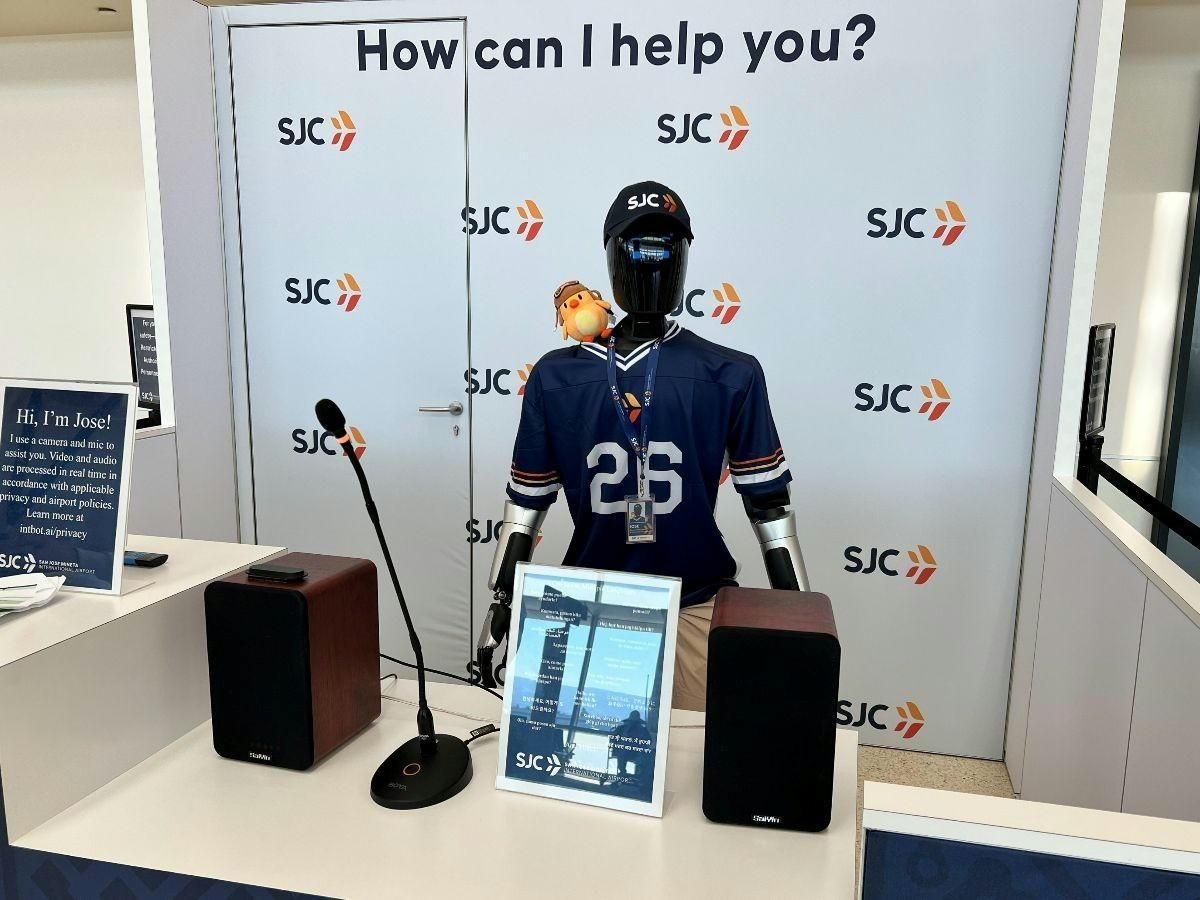
Mineta San José Airport Introduces AI Robot “José” to Enhance Efficiency by 2026
Mineta San José International Airport has unveiled “José,” an advanced artificial intelligence robot designed to revolutionize airport operations and improve the passenger experience in the heart of Silicon Valley. Scheduled for full deployment by 2026, this initiative represents a significant advancement in the modernization of airport technology across the United States.
Operational Capabilities and Impact
José operates autonomously within terminal zones, providing real-time flight updates, guiding passengers to their gates, and proactively identifying operational bottlenecks before they escalate. The AI system is fully integrated with existing airline networks and customer service protocols, facilitating seamless coordination with airline operations centers, ground control, and platforms such as FlightAware.
Since the pilot phase, airport officials have reported a 23% increase in passenger navigation speed and an 18% reduction in ground handling delays. Average passenger wait times have decreased dramatically from 8.2 minutes to 3.1 minutes, representing a 62% improvement. Equipped with advanced sensors, José detects congestion patterns often overlooked by manual systems, while its machine learning capabilities enable continuous adaptation to evolving passenger flows and airline workflows.
Major airline partners at Mineta San José have incorporated José into their operational frameworks, benefiting from enhanced real-time coordination between boarding sequences and passenger movement. Improvements in on-time departures and baggage handling have been observed, with José interfacing directly with crew scheduling systems. The deployment adheres to International Air Transport Association (IATA) standards, ensuring compatibility across all carriers.
Enhancing the Passenger Experience
José offers multilingual assistance, wayfinding support, and up-to-date flight information, catering to accessibility requirements through both audio and visual guidance. The robot manages over 340 passenger inquiries daily, significantly alleviating congestion at traditional information desks. Early passenger feedback has been overwhelmingly positive, with José receiving a 4.7 out of 5-star rating, particularly among connecting travelers and first-time visitors. Its round-the-clock availability guarantees consistent support during both peak and off-peak hours.
Challenges and Industry Reactions
Despite these advancements, the introduction of José has encountered challenges. Some travelers initially expressed reluctance in interacting with AI technology, and technical glitches emerged during the pilot phase. Ongoing updates are necessary to maintain José’s database accuracy and responsiveness to the dynamic airport environment. Furthermore, concerns have been raised by traditional service providers regarding potential job displacement, reflecting broader industry apprehensions about automation.
Competitor airports are closely observing Mineta San José’s progress. While some are exploring similar AI-driven solutions to enhance their services, others are emphasizing traditional customer service approaches to maintain differentiation.
Setting a National Benchmark
The adoption of José at Mineta San José International Airport establishes a new standard for airport modernization in North America. The system’s success is influencing infrastructure planning at other major airports and underscores California’s leadership in aviation technology. The airport remains fully compliant with federal regulations, ensuring that innovation aligns with Federal Aviation Administration (FAA) safety and operational standards.
As airports across the nation strive to balance efficiency, customer service, and workforce considerations, José’s deployment offers a compelling vision of the future of air travel.

Etihad Airways Suspends Airbus A380 Flights on Key Route

Aditya Birla Group Seeks Approval for Aircraft Leasing in GIFT City

Qatar Airways Highlights Innovation and Connectivity at Arabian Travel Market 2026

Hong Kong's Five-Year Plan Includes Andrew Fan's Aircraft Parts Processing Hub Proposal

ACIA Aero Leasing Delivers ATR72-600 to Air Nostrum

RTX Appoints Jill Albertelli as Head of Pratt & Whitney

TAT Technologies Joins Beyond Aero Hydrogen Aircraft Program

AURAK Study Highlights Barriers to Air Taxi Adoption in Emerging Economies

Xiamen Air Selects Altitude for 787 Maintenance at Heathrow

Etihad and Swissport Extend Global Partnership
