
KI-Erkenntnisse in konkrete Maßnahmen überführen

Trends
Categories
NASA Demonstrates Simulation Platform for Urban Air Mobility
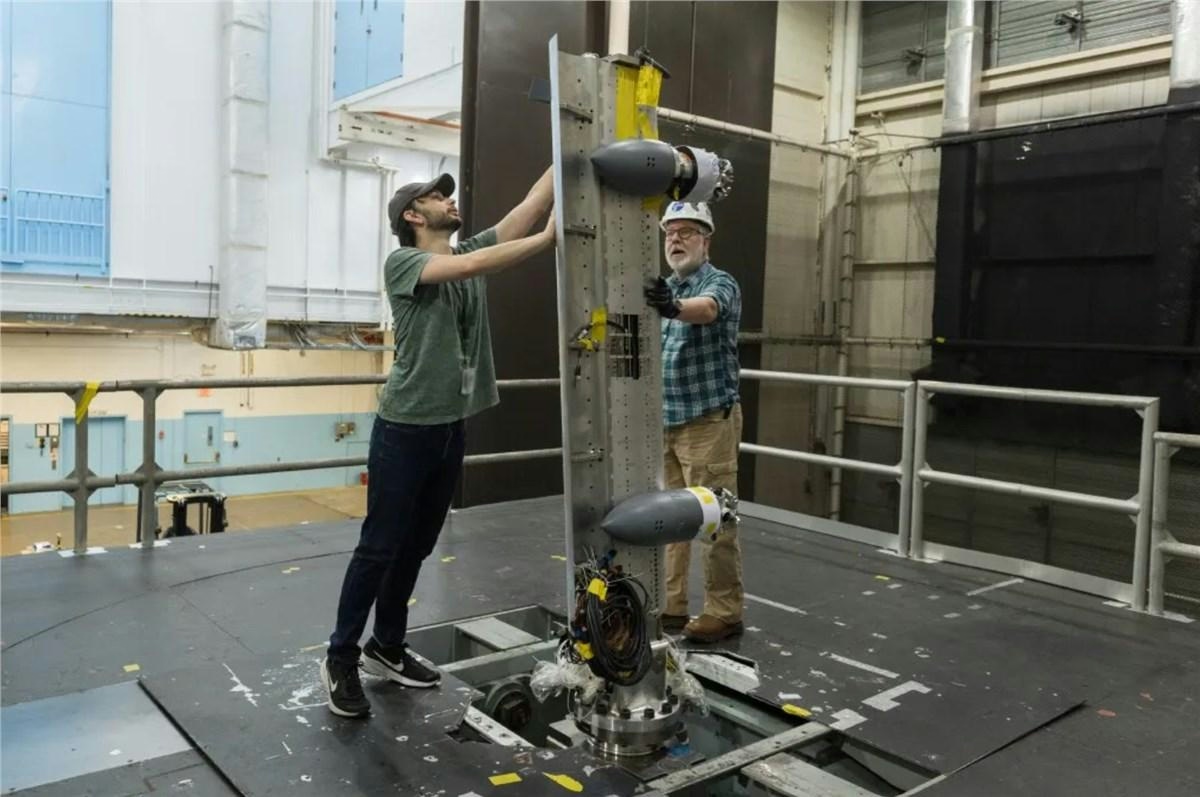
NASA Demonstrates Advanced Simulation Platform for Urban Air Mobility
NASA has introduced its Strategic Deconfliction Simulation platform, a cutting-edge technology designed to manage the complex operations of electric air taxis and drones within congested urban airspace. The agency showcased this platform at its Ames Research Center, emphasizing its potential to address the escalating challenges posed by the rapid growth of urban air mobility.
Innovative Tools for Airspace Management
The demonstration featured two principal components: the Situational Viewer and the Demand-Capacity Balancing Monitor. These tools offer real-time visualization of air traffic and facilitate dynamic adjustments to flight plans, enabling operators to effectively manage congestion and balance airspace demand. The simulation focused on drone operations over the Dallas-Fort Worth region, illustrating how preplanned flight paths can alleviate congestion and optimize the use of limited urban airspace.
Hanbong Lee, an engineer at NASA Ames, highlighted the importance of such simulations, stating that they support broader efforts to ensure the safe integration of drones and other advanced aerial vehicles into the United States airspace system.
Collaborative Development and Industry Partnerships
The Strategic Deconfliction Simulation platform is a key component of NASA’s Air Mobility Pathfinders project, which operates under the Airspace Operations and Safety Program. The agency collaborated with several industry partners to develop and demonstrate the technology. ANRA Technologies contributed its fleet and vertiport management systems, coordinating multiple aircraft and ground operations during the simulation. Additionally, NASA partnered with ResilienX to create tools that enhance preflight planning and provide real-time risk assessments, thereby assisting operators in making safer decisions to protect both passengers and people on the ground.
Challenges and Future Prospects
Despite the promising demonstration, NASA faces significant challenges in ensuring the platform’s reliability and scalability in real-world urban environments. The technology must be robust enough to manage the complexities of dense city airspace and integrate seamlessly with existing urban air mobility infrastructures. Industry experts are closely monitoring the feasibility of adopting such advanced simulation systems on a broad scale.
The market’s response to NASA’s progress may prompt competitors to accelerate the development of their own simulation technologies or improve existing systems to remain competitive. NASA’s planned technical capability level simulation, scheduled for 2026, is expected to further refine these services and could influence the pace of industry adoption. Success in these endeavors may encourage industry partners to expedite the integration of similar technologies, potentially shaping the future landscape of urban air mobility.
NASA’s ongoing efforts aim to ensure that as drones and air taxis become increasingly prevalent, they can operate safely and efficiently within the crowded skies of modern cities.

Etihad Airways Suspends Airbus A380 Flights on Key Route

Aditya Birla Group Seeks Approval for Aircraft Leasing in GIFT City

Qatar Airways Highlights Innovation and Connectivity at Arabian Travel Market 2026

Hong Kong's Five-Year Plan Includes Andrew Fan's Aircraft Parts Processing Hub Proposal

ACIA Aero Leasing Delivers ATR72-600 to Air Nostrum

RTX Appoints Jill Albertelli as Head of Pratt & Whitney

TAT Technologies Joins Beyond Aero Hydrogen Aircraft Program

AURAK Study Highlights Barriers to Air Taxi Adoption in Emerging Economies

Xiamen Air Selects Altitude for 787 Maintenance at Heathrow

Etihad and Swissport Extend Global Partnership
