Bild

KI-Erkenntnisse in konkrete Maßnahmen überführen

Trage dich noch heute in die AeroGenie-Warteliste ein!

Trends

Categories

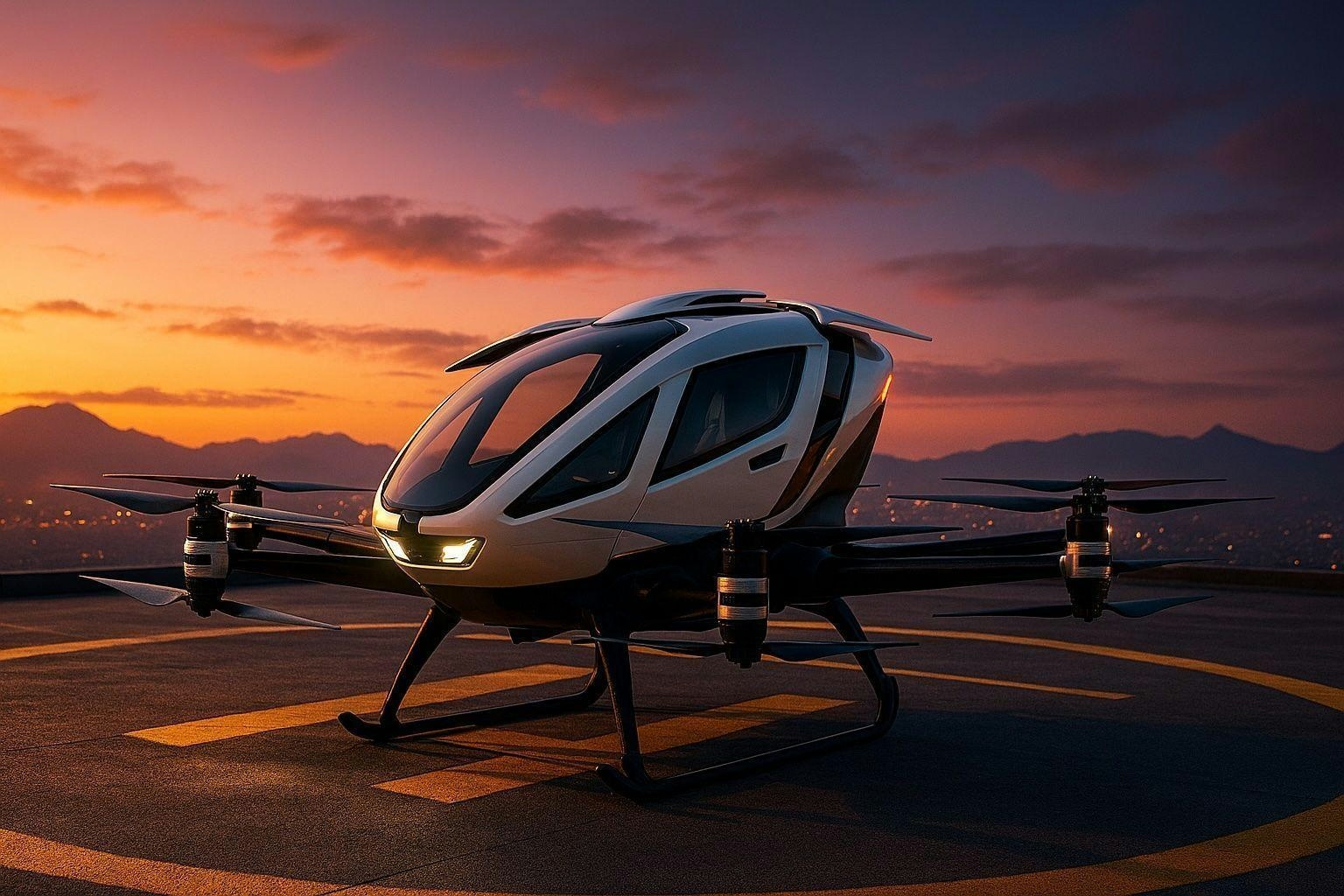
New Low-Altitude Weather Sensor Network Launched in North Texas to Enhance Drone and Air Taxi Safety
August 27, 2025By ePlane AI
New Low-Altitude Weather Sensor Network Launched in North Texas to Enhance Drone and Air Taxi Safety
0
0
Low-Altitude Weather Sensors
Drone Safety
eVTOL Operations

New Low-Altitude Weather Sensor Network Launched in North Texas to Enhance Drone and Air Taxi Safety

A pioneering low-altitude weather sensor network has been established in North Texas to improve the safety and reliability of emerging transportation technologies, including drone delivery, autonomous trucking, and electric vertical takeoff and landing (eVTOL) aircraft. This initiative represents a significant step toward addressing the unique meteorological challenges faced by next-generation air mobility systems operating in urban environments.

Collaborative Effort to Advance Urban Air Mobility Safety

The network has been deployed by TruWeather Solutions, a Reston, Virginia-based company, in partnership with Hillwood, the City of Fort Worth, and the North Central Texas Council of Governments. The system spans Hillwood’s expansive 27,000-acre AllianceTexas development in north Fort Worth, creating a comprehensive data environment to monitor and analyze wind patterns critical to the safe operation of drones and air taxis.

Don Berchoff, CEO of TruWeather Solutions, emphasized the importance of this collaboration, stating that hosting advanced low-altitude wind sensors at strategic locations within AllianceTexas enables a deeper understanding of wind behavior. This, in turn, enhances the safety and efficiency of urban drone and air taxi operations. Berchoff credited the strong public-private partnership for transforming TruWeather’s innovative concepts into a functional and operational network.

Funding and Technological Innovation

The project benefits from a NASA Small Business Innovation Research (SBIR) Award and a $2 million U.S. Department of Transportation (USDOT) SMART Grant awarded to the City of Fort Worth. The NASA-funded Urban Weather Sensing Infrastructure Testbed aims to improve weather data collection and mitigate risks associated with Advanced Air Mobility Systems. Meanwhile, the USDOT SMART Grant, managed in collaboration with the North Central Texas Council of Governments, supports the development and pilot testing of a micro-weather network designed to enhance safety and operational efficiency for both intermodal and autonomous transportation modes.

Central to the new infrastructure is the Wind Guardian system, an advanced low-altitude wind sensor employing Light Detection and Ranging (LiDAR) technology developed by Metro Weather, a partner of TruWeather. More than 20 sophisticated weather and wind sensors are being installed at key locations within AllianceTexas, including Perot Field Fort Worth Alliance Airport, Alliance Gateway 57 in Roanoke, and the AllianceTexas Flight Test Center. The network also incorporates road weather sensors, cloud-detection instruments, and innovations in laser technology, sensor design, and data processing.

Challenges and Industry Implications

Despite its promise, the system faces challenges such as maintaining data accuracy and reliability across varying weather conditions, integrating seamlessly with existing drone and air taxi infrastructure, and addressing regulatory and safety concerns. The initiative is anticipated to draw increased interest from operators seeking enhanced safety capabilities, potentially prompting competitors to accelerate the development of their own advanced weather monitoring technologies.

This launch aligns with a broader industry trend toward technological innovation in air mobility safety, exemplified by partnerships like NASA and ResilienX’s collaboration on drone preflight planning tools. Christopher Ash, president of Alliance Aviation Companies at Perot Field Fort Worth Alliance Airport, highlighted AllianceTexas’s role as a hub for transportation innovation. He noted that the partnership with TruWeather advances the future of logistics and mobility through micro-weather data that will shape the next era of transportation.

More news
Factors Behind the Growth of the Aviation Carbon Fiber Market

Factors Behind the Growth of the Aviation Carbon Fiber Market

Factors Behind the Growth of the Aviation Carbon Fiber Market The integration of carbon fiber composites into aviation has marked a significant shift in aircraft manufacturing. The Boeing 787 Dreamliner, for instance, incorporates between 32 and 35 tons of carbon fiber, a practice that would have been considered extravagant just a few decades ago. Today, carbon fiber composites constitute approximately half of the 787’s total weight, effectively replacing the aluminum that dominated aviation manufacturing throughout the 20th century. This transformation has been driven by a combination of economic pressures, increasingly stringent environmental regulations, and persistent engineering innovation. The global aviation carbon fiber market reflects this evolution, currently valued at around $2.3 billion and projected to nearly triple to $6.4 billion by 2035, with a compound annual growth rate of 10.8%. However, this growth trajectory has been shaped by complex factors and challenges. From Luxury to Necessity Initially, carbon fiber was a material reserved for specialized applications where cost was a secondary concern, such as fighter jets, spacecraft, and high-performance racing vehicles. Commercial airlines, operating under tight financial constraints and long asset lifecycles, were hesitant to adopt the expensive composites. The economic rationale for replacing well-established aluminum alloys with costly carbon fiber composites appeared uncertain. The decisive factor that altered this perspective was fuel efficiency. Jet fuel represents the largest operating expense for most airlines, often accounting for 20 to 25 percent of total costs. Carbon fiber’s substantial weight advantage—approximately one-third the density of steel while maintaining comparable strength—directly contributes to reduced fuel consumption. The Boeing 787, engineered to be 20 percent more fuel-efficient than its predecessor, the 767, demonstrated that the initial investment in composites could yield significant operational savings. Airbus followed this trend with the introduction of the A350 XWB in 2015, which employs carbon fiber reinforced polymer extensively throughout its structure, achieving roughly 25 percent better fuel efficiency per seat compared to earlier wide-body aircraft. By 2024, Airbus had advanced its efforts further by exploring bio-based carbon fiber composites derived from renewable sources. This initiative forms part of a broader commitment to reducing product-level CO₂ emissions, addressing both economic and environmental imperatives within the industry. Market Drivers and Challenges While commercial aviation dominates the market share for carbon fiber composites, military aviation has historically been an early adopter. Aircraft such as the F-22 Raptor and the forthcoming B-21 Raider rely heavily on composite materials, with defense procurement prioritizing performance over cost considerations. Military programs often serve as testing grounds for new materials before their adoption in civilian fleets. Despite the promising outlook, the sector faces significant challenges. High costs and material shortages, particularly acute in aviation maintenance as highlighted by recent Oliver Wyman surveys, are constraining market growth. Regulatory pressures, including evolving European Union rules, complicate strategies for sustainable aviation fuel (SAF) production. Additionally, labor shortages and geopolitical instability disrupt supply chains, adding layers of uncertainty to the industry’s expansion. Nonetheless, ongoing advancements in carbon fiber production, including the development of bio-based precursors, continue to propel market growth. As manufacturers and airlines pursue lighter, more efficient, and sustainable solutions, carbon fiber is poised to play an increasingly central role in reshaping aircraft construction and addressing the aviation sector’s most pressing challenges.
Switzerland Grounds Two Airbus A220-100 Jets to Maintain Larger A220-300 Fleet Amid Engine Shortages

Switzerland Grounds Two Airbus A220-100 Jets to Maintain Larger A220-300 Fleet Amid Engine Shortages

Switzerland Grounds Two Airbus A220-100 Jets to Sustain Larger A220-300 Fleet Amid Engine Shortages Swiss International Air Lines has taken the unusual step of permanently grounding two of its Airbus A220-100 aircraft to preserve the operational capacity of its larger and more widely utilized A220-300 fleet. This decision arises amid significant shortages of Pratt & Whitney PW1500G geared turbofan engines, which power both A220-100 and A220-300 models, affecting Swiss and the broader aviation industry. Strategic Fleet Adjustments Amid Engine Supply Constraints The grounding affects Swiss operations across Switzerland, France, and Germany. The two A220-100 jets, registered HB-JBC and HB-JBD, have been transferred to Toulouse, France, for dismantling. This allows Swiss to salvage critical spare parts from these aircraft, which are then repurposed to support the maintenance and continued operation of the A220-300 fleet. The larger A220-300 aircraft serve higher-demand routes and are deemed more economically viable, making their uninterrupted service a priority. This approach reflects a wider trend among international carriers, which are increasingly retiring older or smaller aircraft to maintain the reliability of their core fleets. By reallocating resources in this manner, Swiss aims to minimize disruptions to its daily flight schedules and reduce passenger inconvenience despite ongoing engine shortages. Background and Ongoing Challenges Swiss’s engagement with the A220 family began in 2016 when it became the global launch operator of the then-Bombardier CS100. Over the past decade, these single-aisle jets have been central to the airline’s short-haul operations. However, persistent supply chain disruptions and stringent maintenance requirements for the PW1500G engines have compelled Swiss to reassess its fleet priorities. Initially, nine A220-100 aircraft were slated for temporary withdrawal from service. Instead of placing all in long-term storage, Swiss chose to permanently retire two airframes for parts, creating a short-term buffer to manage the engine shortage. The airline stresses that this is an internal resource management measure and does not represent a definitive decision on the future of the A220-100 subfleet. The engine shortage has been intensified by rigorous maintenance and inspection protocols mandated by Pratt & Whitney, resulting in prolonged turnaround times at overhaul facilities worldwide. Consequently, airlines have faced difficulties securing sufficient spare engines to maintain their fleets. Future Outlook and Industry Context To further address the issue, Swiss plans to progressively withdraw the remaining seven A220-100 jets from active service over the coming months, with three already grounded. This phased approach prioritizes the operational stability of the larger A220-300 fleet, which is vital for sustaining the airline’s European network. Despite these operational challenges, the Airbus A220 continues to enjoy strong global demand. Highlighting the aircraft’s enduring appeal, Malaysia’s AirAsia recently placed an order for 150 A220-300 jets, marking the largest single order ever for this model. Swiss’s tactical fleet management exemplifies the difficult decisions airlines must make amid ongoing supply chain and maintenance challenges, as they seek to balance immediate operational reliability with long-term fleet strategy.
Rolls-Royce Advances India’s Aerospace and Nuclear Capabilities

Rolls-Royce Advances India’s Aerospace and Nuclear Capabilities

Rolls-Royce Advances India’s Aerospace and Nuclear Capabilities Rolls-Royce is poised to significantly expand its presence in India through a series of strategic initiatives aimed at bolstering the country’s aerospace and nuclear energy sectors. The company plans to establish a domestic Maintenance, Repair, and Overhaul (MRO) facility for civil aviation engines, transfer advanced jet engine technology to support indigenous military programs, and explore opportunities in civil nuclear energy. These efforts are expected to foster innovation within India’s aerospace industry and accelerate its transition toward clean energy. Developing a Domestic MRO Hub for Civil Aviation Indian airlines, including Air India and IndiGo, currently rely on overseas facilities in Singapore and Hong Kong for servicing their aircraft engines. With both carriers having placed orders for over 100 Airbus A350 aircraft—each powered exclusively by Rolls-Royce engines—the volume of engines and spares entering India is projected to exceed 220 units in the near future. To meet this growing demand, Rolls-Royce will establish a local MRO hub, which will reduce dependence on foreign maintenance centers and streamline servicing processes for Indian carriers. This development is expected to enhance operational efficiency and support the expanding civil aviation market in India. Indigenous Military Jet Engine Development and Technology Transfer In a significant advancement for India’s defense manufacturing capabilities, Rolls-Royce intends to set up an aero gas turbine complex dedicated to the indigenous development of military jet engines, beginning with the Advanced Medium Combat Aircraft (AMCA) program. Crucially, the company has committed to a full transfer of intellectual property rights, ensuring that India retains sovereignty over the design and production of these engines. Ground trials for the new engines are scheduled for 2032, with the first flight anticipated by 2034. The facility may also be expanded in the future to support dual-use engines applicable to both military and civil aviation sectors, further strengthening India’s self-reliance in aerospace technology. Exploring Small Modular Reactors for Civil Nuclear Energy Following the enactment of India’s Shanti Act 2025, which ended the public sector monopoly in nuclear energy, Rolls-Royce is exploring the deployment of small modular reactors (SMRs) to provide clean and scalable nuclear power. This initiative aligns with India’s broader goals of expanding sustainable energy sources and could attract substantial investment into the country’s civil nuclear sector. The introduction of SMRs represents a strategic move to diversify India’s energy mix while supporting its climate objectives. Strategic Implications and Market Context Rolls-Royce’s expansion in India elevates the country to its fourth “home market,” alongside the United Kingdom, the United States, and Germany. This development builds on longstanding partnerships with Indian firms such as Hindustan Aeronautics Limited (HAL) and Force Motors. The company’s initiatives are projected to generate over 10,000 jobs and inject significant capital into India’s aerospace and energy industries. However, these advancements occur within a highly competitive global environment. Established players like Lockheed Martin and Northrop Grumman dominate the U.S. defense and aerospace markets and maintain influential roles in nuclear defense. As Rolls-Royce advances its technology transfer and innovation agenda, competitors are likely to intensify efforts to protect their market positions. Investor sentiment may be divided, with some attracted by Rolls-Royce’s ambitious expansion, while others remain cautious due to the competitive pressures. In addition, Rolls-Royce Power Systems’ introduction of hybrid drive systems for mining trucks could reshape market dynamics in the mining sector, potentially prompting rival companies to accelerate the development of similar technologies to maintain competitiveness. Challenges and Risks The company’s ambitious plans require sustained capital investment in research, development, and infrastructure. Rolls-Royce must also navigate intense global competition from established aerospace and defense giants based in the United States and Europe. Furthermore, India’s domestic supply chain ecosystem will need to be strengthened to reduce reliance on imported sub-systems and components, a critical factor for the success of indigenous manufacturing efforts. As Rolls-Royce deepens its commitment to India, its strategic initiatives have the potential to reshape the nation’s aerospace and nuclear sectors, contingent upon effectively managing the challenges posed by global competition and domestic capability development.
FAA Addresses Fuel Pump Issue and Fire Risk in GEnx Engines

FAA Addresses Fuel Pump Issue and Fire Risk in GEnx Engines

FAA Proposes Safety Measures to Mitigate Fire Risk in GEnx Engines The Federal Aviation Administration (FAA) has introduced new safety requirements targeting U.S. airlines operating aircraft powered by GE Aerospace’s GEnx turbofan engines. This regulatory action follows concerns over a potential engine fire hazard linked to defective fuel pumps. Background and Investigation Findings The impetus for the FAA’s proposal arose after a Boeing 787-8, equipped with GEnx-1B engines, experienced a fuel imbalance caused by a leak in the inlet housing of the main fuel pump. A subsequent investigation by the engine manufacturer revealed that the inlet housing damage resulted from failed thrust bearing screws within the housing. The root cause was identified as inadequate torque control during engine overhaul procedures. Fuel leaks originating from the inlet housing pose a significant fire risk if left unaddressed. In response, the FAA’s proposed rule, published on June 2, mandates the replacement of affected fuel pumps with new or overhauled units. This directive applies to 265 U.S.-registered aircraft, including Boeing 787s powered by GEnx-1B engines and 747-8s equipped with GEnx-2B engines. Operators are required to complete these replacements during the engines’ next scheduled maintenance shop visit. Industry Response and Regulatory Implications The FAA’s initiative aligns with existing recommendations from GE Aerospace and exemplifies a proactive stance on aviation safety management. GE Aerospace emphasized that the proposed rule is consistent with its guidance to operators and reflects a shared commitment to mitigating safety risks. While the current focus is on GEnx engines, the incident and regulatory response may prompt other engine manufacturers to scrutinize their products for similar vulnerabilities. The broader industry reaction and any subsequent measures by competitors remain to be observed. This proposal highlights the FAA’s dedication to addressing safety concerns swiftly and transparently, aiming to prevent future incidents related to fuel pump failures in commercial aviation.
Australia and Germany Unveil Great Barrier Reef Design on Qantas’ New Airbus Jet

Australia and Germany Unveil Great Barrier Reef Design on Qantas’ New Airbus Jet

Australia and Germany Unveil Great Barrier Reef Design on Qantas’ New Airbus Jet Qantas, Australia’s national airline, has introduced a striking new livery on its latest Airbus A321XLR aircraft, celebrating both technological advancement and the country’s rich environmental heritage. The aircraft, named *Coral Sea*, was unveiled at Airbus’ advanced paint facility in Hamburg, Germany. Its design draws inspiration from the Great Barrier Reef, featuring vibrant depictions of marine life such as sea turtles and clownfish. This collaboration with the Great Barrier Reef Foundation highlights Qantas’ commitment to marine conservation and raises awareness of the ecological challenges facing this iconic natural wonder. Fleet Modernization and Operational Enhancements The *Coral Sea* is the seventh A321XLR delivered to Qantas as part of an extensive fleet renewal program involving 48 aircraft. This initiative aims to replace older Boeing 737s and regional jets with next-generation models that offer extended range, improved fuel efficiency, and reduced carbon emissions per seat-kilometer. The A321XLR’s advanced engineering enables it to fly over 3,000 kilometers farther than previous narrowbody jets, allowing Qantas to open new non-stop routes that were previously unattainable for single-aisle aircraft. Since becoming the first Asia-Pacific airline to introduce the A321XLR into commercial service in September 2025, Qantas has deployed the aircraft on high-demand domestic routes. The new jets have been praised for their quieter cabins and enhanced passenger comfort. As additional airframes are completed in Germany and delivered to Australia, Qantas is positioned to significantly reshape its domestic and near-international network. Challenges Amid Ambitious Expansion Despite these advancements, Qantas faces challenges that could affect its broader strategic goals. The airline is experiencing delays in the delivery of its specially modified Airbus A350-1000 aircraft, which are essential for the launch of Project Sunrise—ultra-long-haul flights to London and New York. Supply chain disruptions have pushed back the start of these routes to April 2027, potentially impacting Qantas’ competitive standing in the long-haul market and altering market expectations. Environmental and safety concerns near the Great Barrier Reef have also come to the fore. A recent fatal shark attack on a spearfisher in the region has intensified discussions about balancing tourism promotion with public safety. These issues may influence visitor numbers and public perception, underscoring the complex relationship between environmental stewardship and economic interests. As Qantas and Airbus celebrate their partnership through the *Coral Sea* livery, the aircraft serves as both a symbol of aviation innovation and a reminder of the responsibility to protect Australia’s unique natural environment. The airline’s fleet renewal and conservation efforts arrive at a critical juncture for both the aviation industry and the future of the Great Barrier Reef.
Trade Secrets Dispute Intensifies in Electric Air Taxi Industry

Trade Secrets Dispute Intensifies in Electric Air Taxi Industry

Trade Secrets Dispute Intensifies in Electric Air Taxi Industry Rising Legal Conflicts Among Industry Leaders The electric air taxi sector is witnessing an intensification of legal battles over trade secrets, significantly altering the competitive dynamics and unsettling investor confidence. Vertical Aerospace, an electric air taxi company with strong Irish aviation connections, and its primary competitor Archer Aviation are embroiled in a growing dispute as both firms strive to lead the development of electric vertical take-off and landing (eVTOL) aircraft. Alongside other key players such as Joby Aviation, these companies are competing to revolutionize urban mobility through innovative and sleekly designed aircraft. The race for technological dominance has triggered a series of high-stakes lawsuits. Archer Aviation’s recent legal action against Joby Aviation, accusing the latter of patent infringement, has intensified scrutiny across the sector. This dispute has not only escalated tensions between competitors but also raised concerns among strategic partners. Delta Air Lines, which maintains a partnership with Joby, is reportedly apprehensive that ongoing investigations could jeopardize its collaboration and future initiatives within the eVTOL market. Impact on Industry Momentum and Investor Sentiment The ongoing legal disputes are exerting tangible effects on the industry’s progress. Certification timelines for new aircraft face potential delays, threatening to slow the commercial rollout of air taxi services. Investor enthusiasm, once robust given the sector’s promise, has waned amid the growing uncertainty. Shares of leading air taxi manufacturers have declined, with Archer Aviation experiencing a particularly notable drop in value over the past year. Despite support from the Trump administration’s eVTOL Integration Pilot Program, which sought to accelerate the adoption of electric air taxis, the sector’s advancement is being hindered by unresolved legal conflicts. As companies pursue similar business models and technological strategies, the ability to distinguish themselves through proprietary innovation has become increasingly critical. With mounting legal challenges, the industry stands at a pivotal juncture that may determine which firms will ultimately lead the transformation of urban transportation.
United Airlines Plans AI System to Explain Flight Delays Without Human Input

United Airlines Plans AI System to Explain Flight Delays Without Human Input

United Airlines to Deploy Fully Automated AI System for Flight Delay Explanations United Airlines is advancing its AI-driven customer communication strategy by developing a fully automated system designed to provide passengers with real-time explanations for flight delays without human involvement. This initiative builds on the airline’s existing "Every Flight Has a Story" program, which began integrating generative AI technology earlier in 2024 as part of a broader effort to improve transparency and operational efficiency. Enhancing Passenger Communication Through AI At a recent investor presentation, United’s CEO Scott Kirby outlined the airline’s vision for the next iteration of the program. Kirby emphasized the goal of delivering clear, plain-language updates directly to customers whenever delays occur. The system will send text messages and, notably, will include maintenance videos and detailed information about the specific issues affecting each aircraft. Kirby highlighted that the AI should be capable of answering the same questions a passenger might ask, providing comprehensive and accessible explanations without the need for human intermediaries. Since its launch in 2018, "Every Flight Has a Story" has combined human storytellers with AI-generated content to offer travelers insights into flight disruptions. The new development aims to create a “brand new work path” enabling the system to operate autonomously by leveraging operational data to generate delay explanations. Kirby expressed confidence that this fully automated approach will distinguish United from its competitors and enhance customer loyalty, while also uncovering new efficiencies in airline operations. Industry Context and Challenges United’s ambitious AI rollout comes amid increasing scrutiny of airline performance and customer service. The U.S. Department of Transportation’s February 2026 Air Travel Consumer Report highlighted a rise in delays and baggage mishandling, intensifying passenger demand for transparent and human-like communication regarding disruptions. At the same time, competitors such as Auddia Inc. have introduced AI-native digital travel agencies, raising expectations for technological innovation and customer experience in the sector. The airline’s reliance on AI-generated messaging also raises concerns about the accuracy and reliability of automated explanations, particularly as regulatory oversight grows more stringent. The Federal Aviation Administration’s recent enforcement of operating limits on United’s schedule at Chicago O’Hare International Airport illustrates the complex regulatory environment surrounding the deployment of new technologies in aviation. In addition to "Every Flight Has a Story," United employs AI in its ConnectionSaver tool, which the company reports has helped preserve nearly 54,000 flight connections in Denver alone. As United continues to expand its AI capabilities, it faces the dual challenge of meeting heightened customer expectations while navigating a competitive and regulatory landscape that is rapidly evolving. United Airlines has not yet provided further comment on the latest developments in its AI initiatives.
Thailand and Vietnam Expand Aviation Ties with VietJet's Utapao MRO Hub

Thailand and Vietnam Expand Aviation Ties with VietJet's Utapao MRO Hub

Thailand and Vietnam Expand Aviation Ties with VietJet's Utapao MRO Hub A significant development is underway in Southeast Asia’s aviation sector as VietJet explores the establishment of a major Maintenance, Repair, and Overhaul (MRO) hub at Utapao International Airport in Thailand. This initiative reflects the region’s rapid fleet expansions and the launch of new routes, driven by sustained growth in passenger demand and tourism. Although still under evaluation, the proposed MRO facility is viewed by industry experts as a strategic move that could enhance maintenance capacity not only for VietJet and its affiliates but also for other airlines across the Asia-Pacific region. For Thailand, the project aligns with broader national ambitions to transform the eastern seaboard into a premier aviation and logistics hub. The development of advanced maintenance infrastructure at Utapao could improve operational reliability, support airline expansion, and strengthen connectivity between key tourism destinations in Thailand, Vietnam, and neighboring countries. Utapao’s Strategic Position in the Eastern Economic Corridor Utapao International Airport, situated within Thailand’s Eastern Economic Corridor (EEC), is increasingly recognized as a complementary aviation hub to Bangkok’s primary airports. The EEC is a government-backed initiative focused on infrastructure development in sectors such as aerospace, logistics, advanced manufacturing, and tourism. Establishing an MRO facility at Utapao would provide airlines with more accessible maintenance services, reducing the need to transport aircraft to distant locations for inspections, repairs, and upgrades. Given that aircraft downtime directly affects profitability, proximity to maintenance infrastructure offers a significant competitive advantage. The airport’s location within the EEC grants access to major industrial and logistics networks, while its expanding infrastructure supports future airline growth. Its proximity to popular tourism destinations further bolsters regional travel, and the government’s commitment to aerospace investment encourages the development of such facilities. Collectively, these factors position Utapao as a strategic site for an MRO hub serving Southeast Asian carriers. Rising Demand and Industry Dynamics VietJet’s interest in Utapao coincides with a broader trend of airlines across the Asia-Pacific region placing substantial aircraft orders to accommodate increasing passenger volumes. As one of the largest low-cost carriers in the region, VietJet has rapidly expanded its network, serving numerous destinations and investing heavily in fleet modernization. Industry forecasts consistently identify Asia-Pacific as the fastest-growing aviation market globally over the next two decades. This growth drives a corresponding rise in demand for MRO services, which encompass a range of critical activities including routine line maintenance, extensive base maintenance, engine overhauls, component repairs, and modifications or upgrades to cabins and technology systems. The establishment of a robust MRO hub at Utapao would address these needs, supporting the operational efficiency of expanding fleets. Challenges and Competitive Landscape Despite its potential, the proposed MRO hub faces several challenges. Regulatory complexities in establishing such a facility, competition from established regional MRO providers, and the substantial investment required for infrastructure and technology development could affect the project’s timeline and viability. Additionally, increased interest from other airlines in Thailand and Vietnam may intensify competition, prompting existing players to enhance their maintenance capabilities or expand their fleets to maintain market share. As VietJet and regional stakeholders carefully consider these factors, the development of an MRO hub at Utapao stands to play a pivotal role in shaping the future of Southeast Asia’s aviation industry. It promises to strengthen cross-border industry ties, support tourism growth, and contribute to economic development throughout the region.
Airbus Tests Passenger Plane Capable of 22-Hour Nonstop Flight

Airbus Tests Passenger Plane Capable of 22-Hour Nonstop Flight

Airbus Advances Ultra-Long-Range Aviation with A350-1000ULR Test Flight Airbus has successfully completed the maiden test flight of its new A350-1000ULR, a widebody aircraft engineered for nonstop journeys lasting up to 22 hours. The test flight, conducted from Airbus’s Toulouse facility, lasted three hours and 43 minutes, reaching an altitude slightly above 41,000 feet (12,500 meters). This milestone marks the commencement of a two-month certification process designed to validate the aircraft’s modifications, including the integration of an additional fuel tank that extends its range to approximately 18,500 kilometers (11,500 miles). Project Sunrise and Market Implications The A350-1000ULR is a cornerstone of Qantas’s Project Sunrise, an ambitious initiative to establish nonstop flights between Sydney and London. Qantas has placed an order for 12 of these specially adapted jets to enable this unprecedented route. However, the project has encountered delays due to persistent supply-chain disruptions within the aviation sector. Originally slated for delivery in late 2026, the first A350-1000ULR is now expected to be handed over in April 2027, consequently postponing the launch of Qantas’s ultra-long-haul services to later that year. This aircraft is set to challenge the current record for the world’s longest commercial flight, presently held by Singapore Airlines’ Singapore-to-New York route, which covers 15,350 kilometers and exceeds 18 hours in duration. The extended range of the A350-1000ULR has the potential to transform ultra-long-haul travel by enabling airlines to connect distant city pairs without intermediate stops, thereby reshaping global air travel networks. Industry Context and Future Prospects Airbus’s progress is being closely observed by competitors as the race to dominate the ultra-long-haul market intensifies. Concurrently, advancements in alternative aviation technologies are emerging, exemplified by China’s recent testing of a hydrogen-fueled turboprop engine. Such developments suggest a future where traditional jet fuel may face competition from more sustainable propulsion methods, adding complexity to the evolving aviation landscape. Despite the setbacks, both Airbus and Qantas remain steadfast in their commitment to Project Sunrise. The forthcoming months of rigorous testing will be pivotal in determining when passengers can expect to experience nonstop flights bridging Australia and Europe, potentially redefining the parameters of long-distance air travel.
TPA Named Finalist for InnoLead 2026 Impact Awards

TPA Named Finalist for InnoLead 2026 Impact Awards

Tampa International Airport Named Finalist for InnoLead 2026 Impact Awards Tampa International Airport (TPA) has been named a finalist for the prestigious InnoLead 2026 Impact Awards, highlighting its expanding role in artificial intelligence and smart infrastructure innovation. This recognition centers on TPA’s Overwatch system, an advanced technology that utilizes sensor data to actively manage roadway safety, delivering measurable improvements since its implementation. Overwatch: Transforming Roadway Safety Launched on April 3, the Overwatch system represents a significant evolution from traditional passive warning signs to a fully integrated roadway management platform. According to Doug Wycoff, TPA’s Director of Digital Technologies & Innovation, Overwatch continuously monitors vehicle height, volume, and speed, converting sensor data into actionable safety measures. The system has successfully detected between 18 and 20 overheight vehicles daily, effectively preventing incidents that could result in costly damage and operational delays. Wycoff emphasized the system’s impact, noting that a single semi-truck collision under the terminal can incur damages ranging from $25,000 to $100,000 and disrupt travel for hundreds of passengers. Since Overwatch went live, TPA has not experienced any such incidents, underscoring the system’s effectiveness. Recognition Among Global Innovators TPA’s nomination places it in distinguished company alongside global technology leaders such as Apple and NVIDIA. Wycoff expressed pride in this achievement, highlighting the significance of competing with organizations possessing vast resources. He remarked, “It’s exciting to see our ideas stand alongside global innovators like Apple and NVIDIA. These are companies with deep resources, and yet we’re right there with them, proving that creativity and smart thinking can come from any size organization.” Other finalists for the InnoLead 2026 Impact Awards include Adidas, recognized for its Trionda smart soccer ball that transmits real-time data to referees during World Cup matches; Apple, for its commitment to using 100% recycled materials in key components; Lowe’s, for its Mylow Companion AI assistant aiding store associates; Medtronic, for the BrainSense Adaptive DBS system personalizing Parkinson’s treatment; and the Minnesota Vikings, for their Winter Whiteout Innovation Campaign engaging a global Gen Z audience. Expanding the Reach of Smart Infrastructure TPA’s inclusion among these innovators reflects the growing role of airports as hubs for technological advancement and smart infrastructure development. The airport’s technology partner, Sotereon.AI, is already collaborating with 15 to 20 other airports to deploy similar systems nationwide. Wycoff noted, “We’re proud to see this idea taking off beyond Tampa. It’s not just about preventing incidents, it’s about building smarter, safer airports everywhere.” As TPA gains international recognition, it faces the challenge of sustaining its competitive advantage amid rapid technological progress and shifting industry standards. The nomination is likely to attract increased investor interest and may prompt competitors to intensify their research and development efforts or pursue strategic partnerships to match or exceed TPA’s accomplishments. Doug Wycoff will represent Tampa International Airport at the Impact 2026 Conference in Cambridge, Massachusetts, where the award winners will be announced on June 9.
line









