
KI-Erkenntnisse in konkrete Maßnahmen überführen

Trends
Categories
Next-Generation Aircraft Transform the Global Fleet
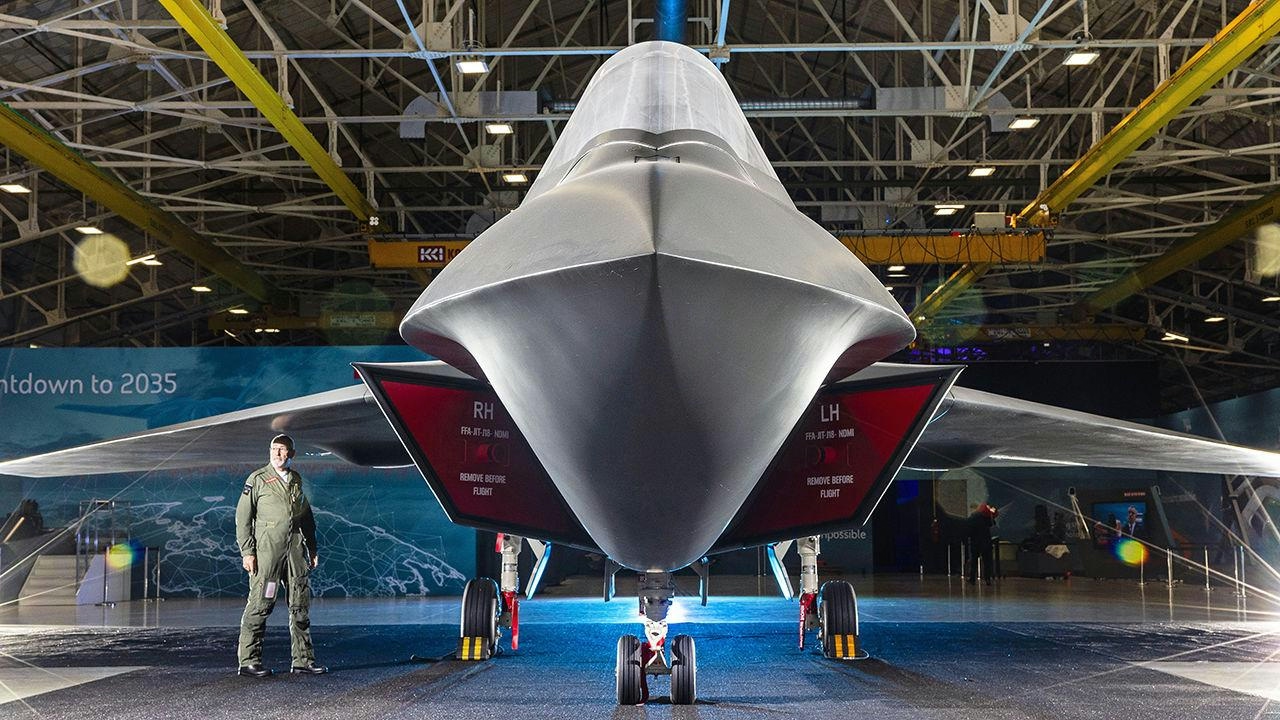
Next-Generation Aircraft Transform the Global Fleet
The global airline industry is experiencing a profound transformation as next-generation aircraft increasingly dominate commercial fleets, according to the International Air Transport Association’s (IATA) latest World Air Transport Statistics (WATS) report for 2025. This data reveals a clear shift toward newer, more efficient aircraft models, propelled by operational imperatives and evolving market dynamics.
Growth in Narrowbody and New-Generation Aircraft
Narrowbody aircraft remain the cornerstone of global aviation operations. The Boeing 737 family continued to lead as the most-utilized aircraft in 2025, operating 10.8 million flights, representing a 3.1% increase compared to 2019. The Airbus A320 closely followed with 8.7 million flights, marking a 7.6% rise over the same period. Notably, the Airbus A321 experienced significant growth, with flights increasing from 2.6 million in 2019 to 4.2 million in 2025, a substantial 61.6% surge. The Embraer ERJ170/190 family also maintained steady performance, operating 2.7 million flights, up 2.8%.
More striking, however, were the gains among new-generation aircraft. The Airbus A350 more than doubled its activity, rising from 200,000 flights in 2019 to 434,000 in 2025, an increase of 117.4%. The Boeing 787 also recorded robust growth, with operations climbing 40.8% to 795,000 flights. The Airbus A220 demonstrated the fastest expansion of any aircraft type, soaring from 61,000 flights in 2019 to 530,000 in 2025, a remarkable 770.4% increase.
Industry Outlook and Strategic Responses
This transformation is set against a backdrop of anticipated growth in global air travel. Boeing projects that worldwide passenger traffic will double by 2045, with the commercial fleet expected to exceed 50,000 aircraft. These forecasts emphasize the urgency for airlines to modernize their fleets, enhance fuel efficiency, and incorporate advanced technologies. Embraer, for instance, is increasing production of its KC-390 military aircraft to 10 units by 2030 while expanding E-Jet output, reflecting intensifying competition in both commercial and defense sectors.
Industry players are responding with strategic adjustments. Amentum has intensified its focus on UK defense priorities, while Korean Air has selected Bombardier Global 6500s for government contracts, signaling a broader trend toward fleet renewal and technological advancement. Market dynamics are increasingly influenced by the promise of reduced operating costs and environmental benefits offered by next-generation aircraft, compelling airlines and manufacturers to adapt their strategies to sustain market share and innovation leadership.
Decline of Older Aircraft Models
Conversely, older aircraft types are experiencing a steady decline in utilization. The Airbus A319 saw a 34.3% reduction in flights, falling from 2.1 million in 2019 to 1.4 million in 2025. The Airbus A380 continued its gradual phase-out, with flights decreasing by 24.4% to 90,000 in 2025.
IATA’s 2025 WATS report, which aggregates operational data from 1,315 airlines worldwide, underscores a pivotal moment for the aviation industry. As airlines accelerate the adoption of next-generation aircraft, the global fleet is poised for ongoing evolution, driven by technological innovation, competitive pressures, and the demands of a rapidly expanding market.

Etihad and Swissport Extend Global Partnership
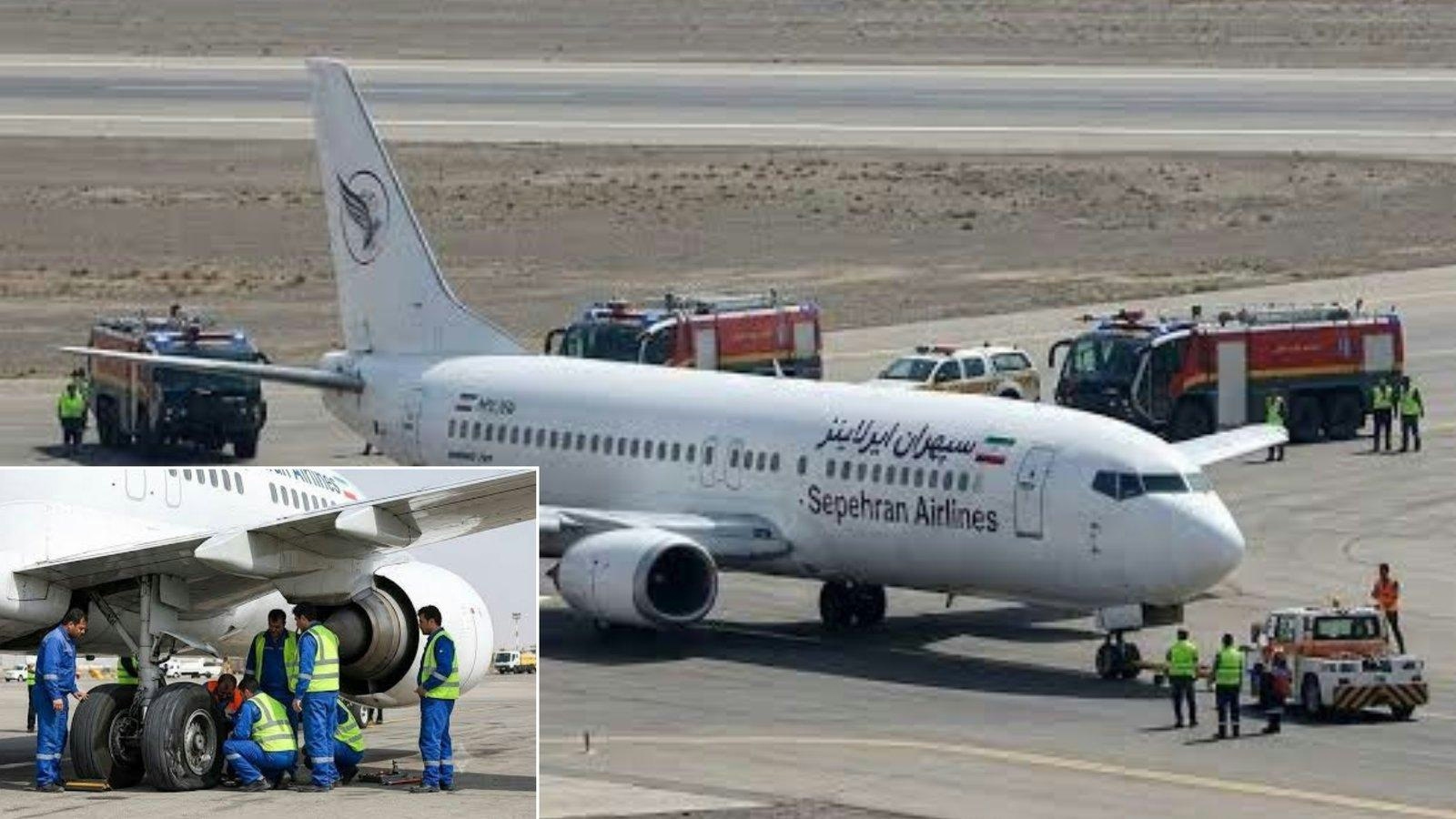
Sepehran Airlines B737 Returns to Mashhad After Tyre and Engine Issues

Etihad Deploys Widebody Fleet to Meet Strong Demand
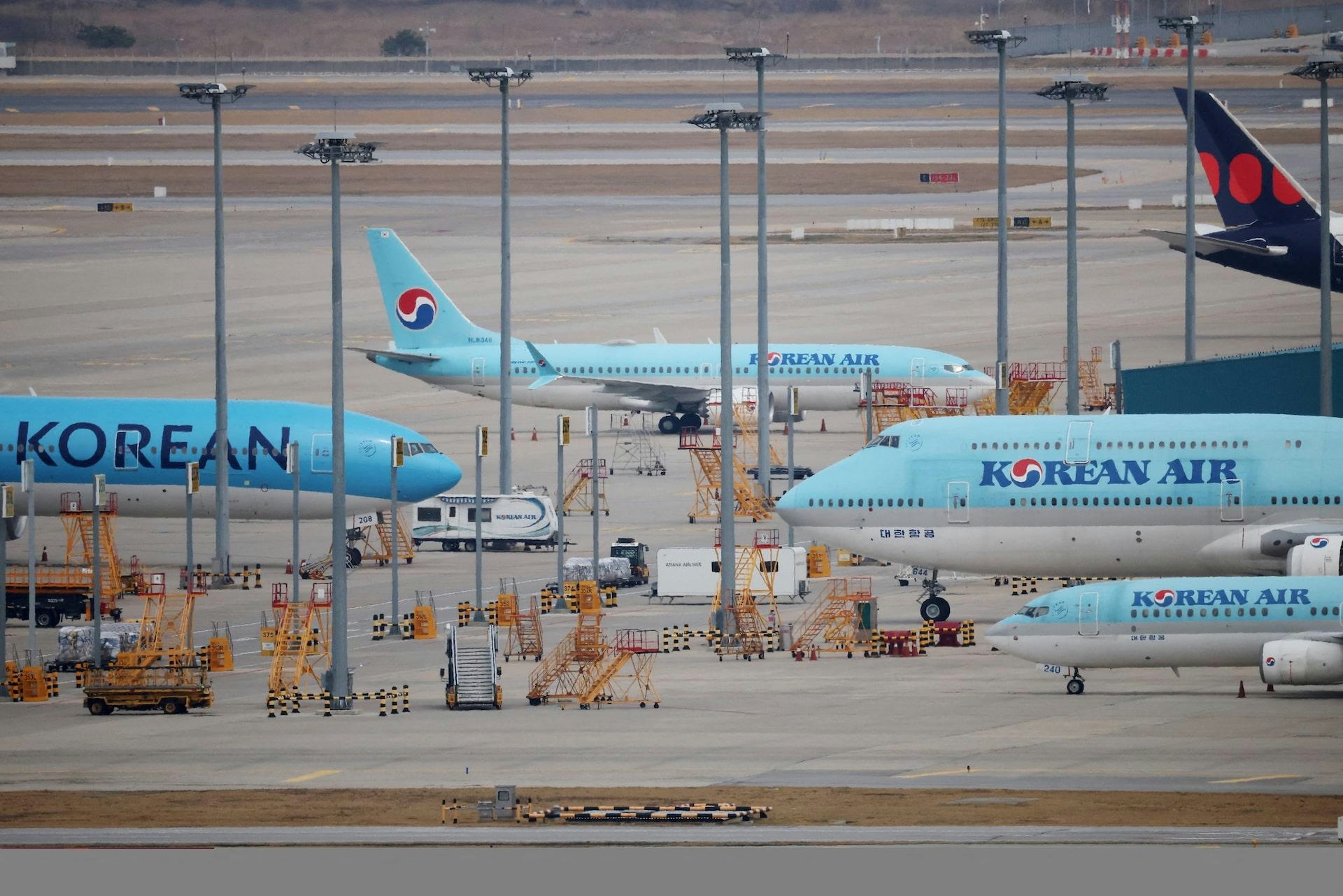
Korean Air Finalizes $36.2 Billion Deal with Boeing
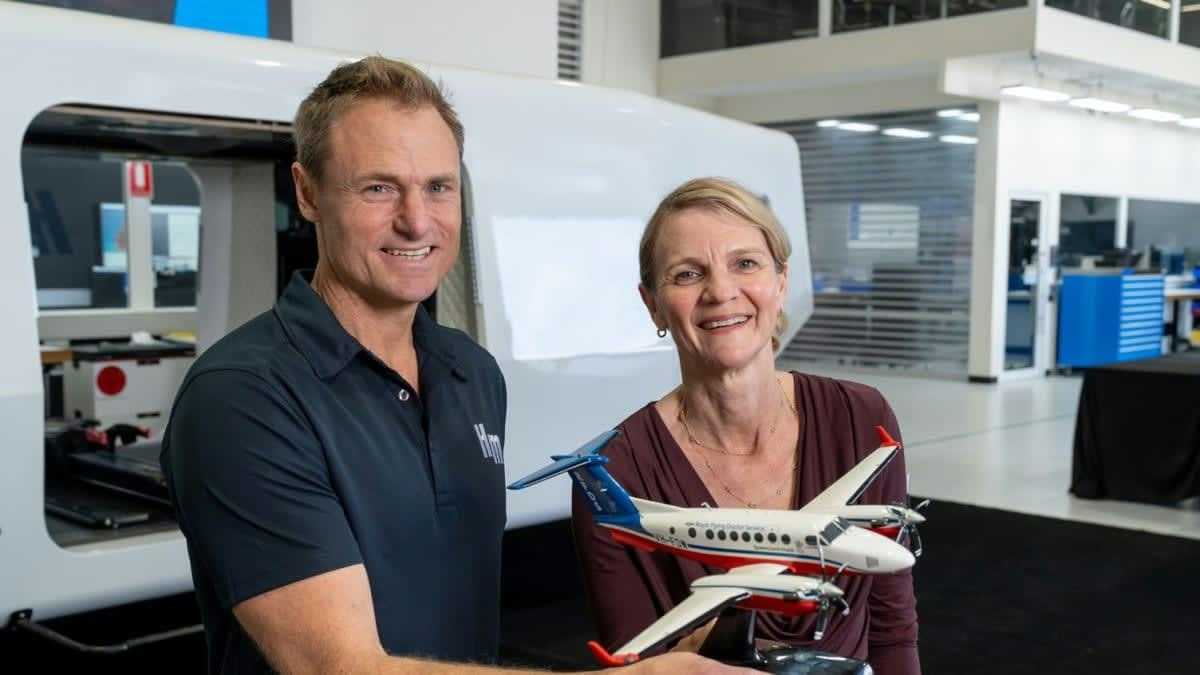
Australia’s RFDS Queensland Section Orders Six King Air 260Cs

Korean Air Finalizes Order for 103 Boeing Jets and Engines
Embraer E195-E2 Features Distinctive Engine Placement Among Regional Jets
What Passengers Can Expect on Boeing’s New 777X Jet

How Ethiopian Airlines Became Africa’s Leading Carrier Amid Gulf Competition
Joby Aviation Extends Autonomous Flight Capabilities with Cross-Country Tour
