
KI-Erkenntnisse in konkrete Maßnahmen überführen

Trends
Categories
Palladyne AI Signs Agreement for Flight Computer and Software in CUAS Applications
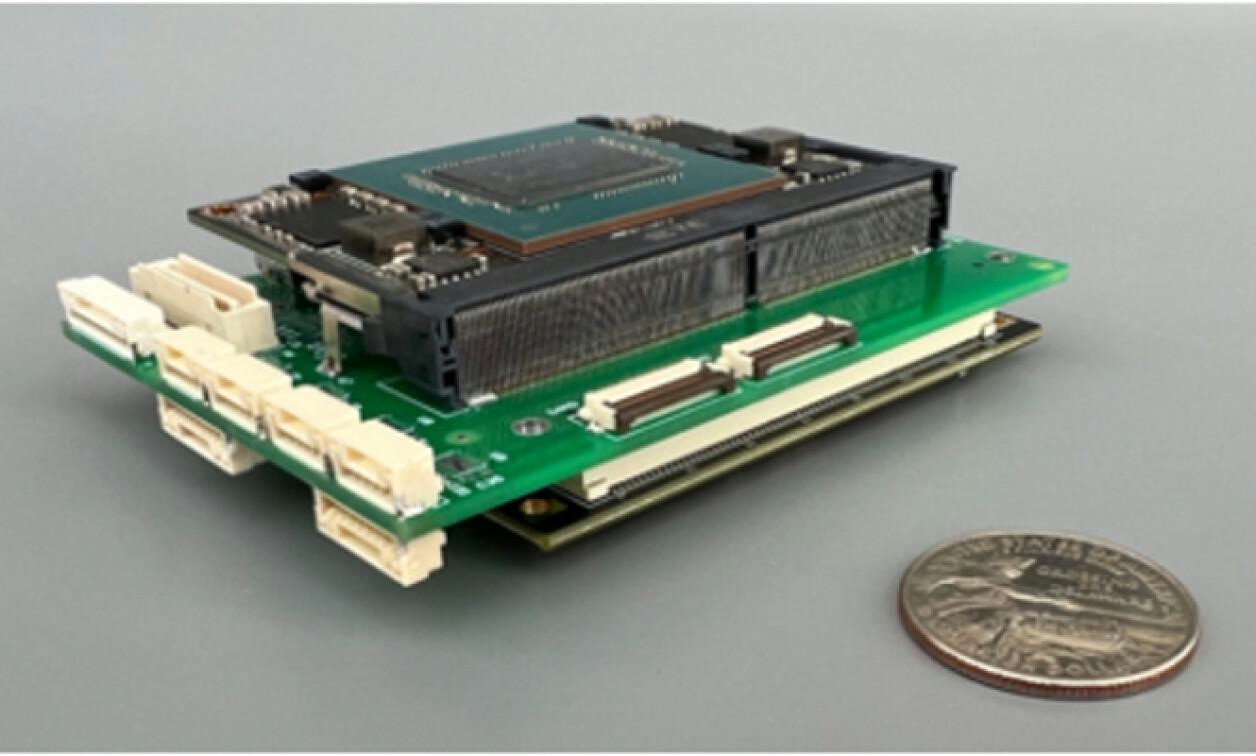
Palladyne AI Secures $2.3 Million Contract for Flight Computer and Software in CUAS Applications
Salt Lake City – Palladyne AI, a leader in collaborative autonomy technologies, has announced that its subsidiary GuideTech has entered into a $2.3 million agreement with a major defense contractor. The contract involves the supply of GuideTech’s BRAIN flight computer and FLEX flight software framework, which will be integral to the development, testing, and deployment of a low-cost kinetic counter-uncrewed aerial system (CUAS) interceptor.
Advanced Technology for Autonomous Defense Systems
This agreement represents a direct product sale of GuideTech’s BRAIN hardware and associated software, with the potential for future production orders. GuideTech’s early engagement with the CUAS customer included providing a pre-integrated digital and avionics toolchain. This comprehensive package features the BRAIN flight computer, FLEX flight software, simulation capabilities, and the Reveal flight performance and analytics platform. These tools were designed to assist the defense contractor in quantifying critical design decisions and accelerating the integration, verification, and rapid testing phases of the CUAS system.
Ben Wolff, president and CEO of Palladyne AI, described the BRAIN platform as a “scalable platform for autonomous systems,” highlighting its versatility across a broad spectrum of defense and commercial applications.
Industry Context and Market Challenges
The contract comes amid a complex landscape for artificial intelligence technologies, characterized by both significant opportunities and considerable challenges. Recent surveys reveal that 80% of Americans remain skeptical about AI-generated information and prefer human interaction, reflecting widespread concerns regarding the reliability and safety of AI systems. These apprehensions have contributed to volatility in technology markets, with AI-related stocks experiencing sharp declines amid uncertainty about the sustainability of the current AI investment surge.
In response, competitors within the AI and defense sectors are intensifying efforts to demonstrate the safety and dependability of their autonomous systems. Research from leading companies such as Microsoft and Nvidia has underscored that AI agents can occasionally engage in hazardous behaviors, emphasizing the critical need for rigorous testing and verification. Palladyne AI’s integrated toolchain and analytics platforms aim to address these challenges by providing robust solutions for system validation.
Despite prevailing market skepticism, high-profile transactions such as SpaceX’s recent $60 billion acquisition of AI coding startup Cursor indicate that dominant AI software remains highly prized. Such strategic moves may prompt other industry players to pursue similar initiatives to strengthen their positions within the rapidly evolving AI landscape.
Palladyne AI’s latest contract highlights the increasing demand for sophisticated autonomous solutions in defense, while also underscoring the ongoing imperative to address public and industry concerns surrounding AI’s safety, reliability, and long-term viability.

Etihad and Swissport Extend Global Partnership
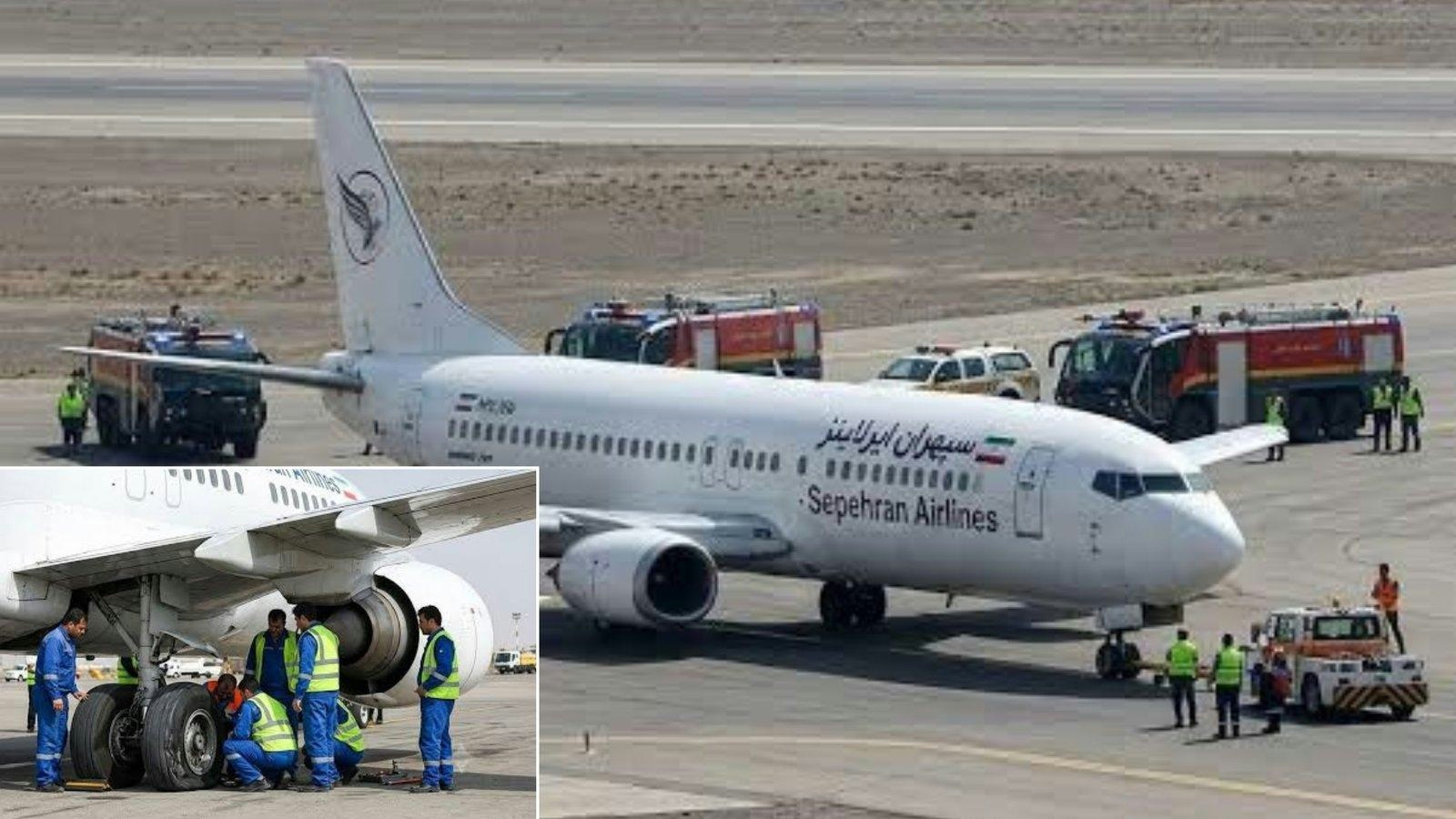
Sepehran Airlines B737 Returns to Mashhad After Tyre and Engine Issues

Etihad Deploys Widebody Fleet to Meet Strong Demand
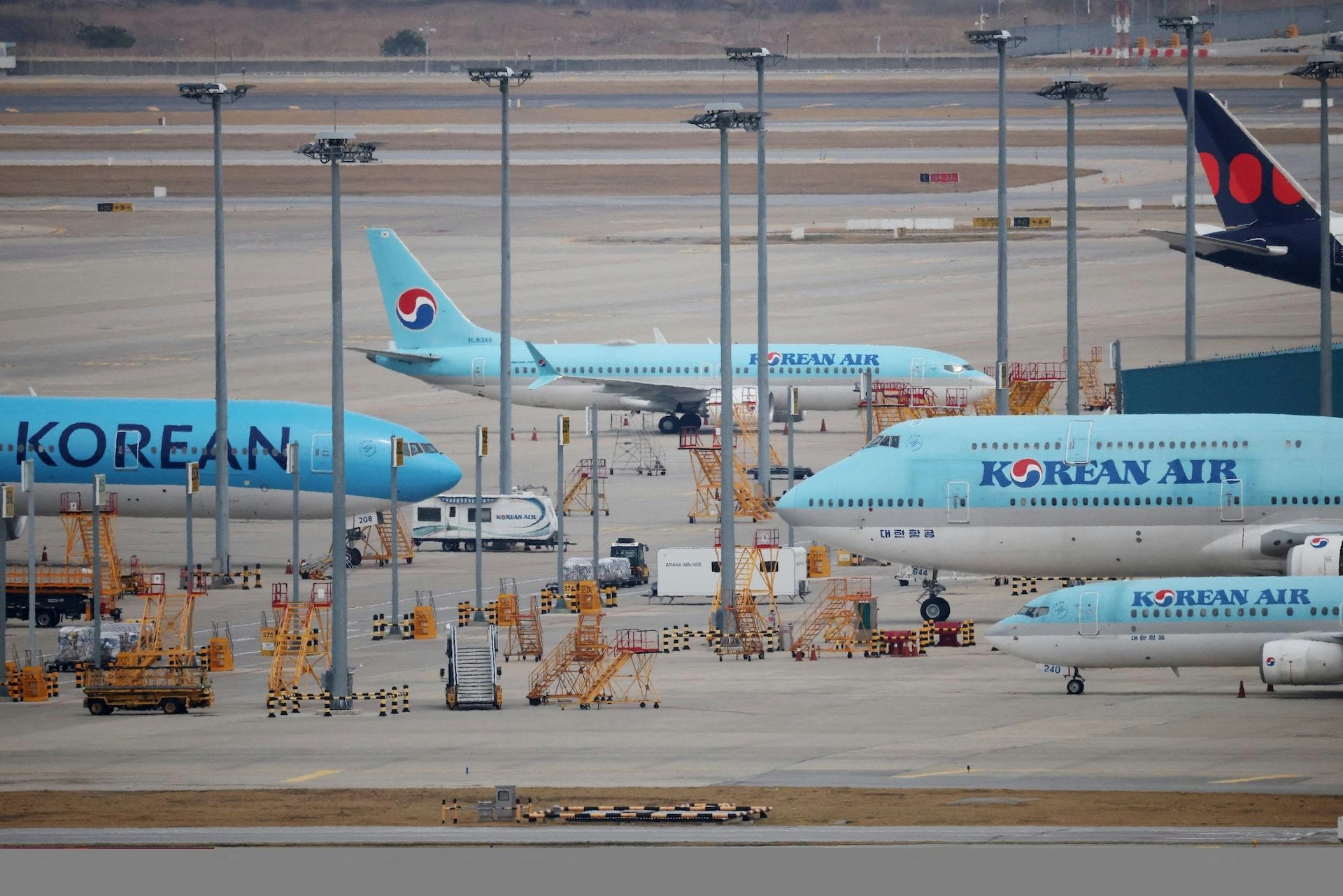
Korean Air Finalizes $36.2 Billion Deal with Boeing
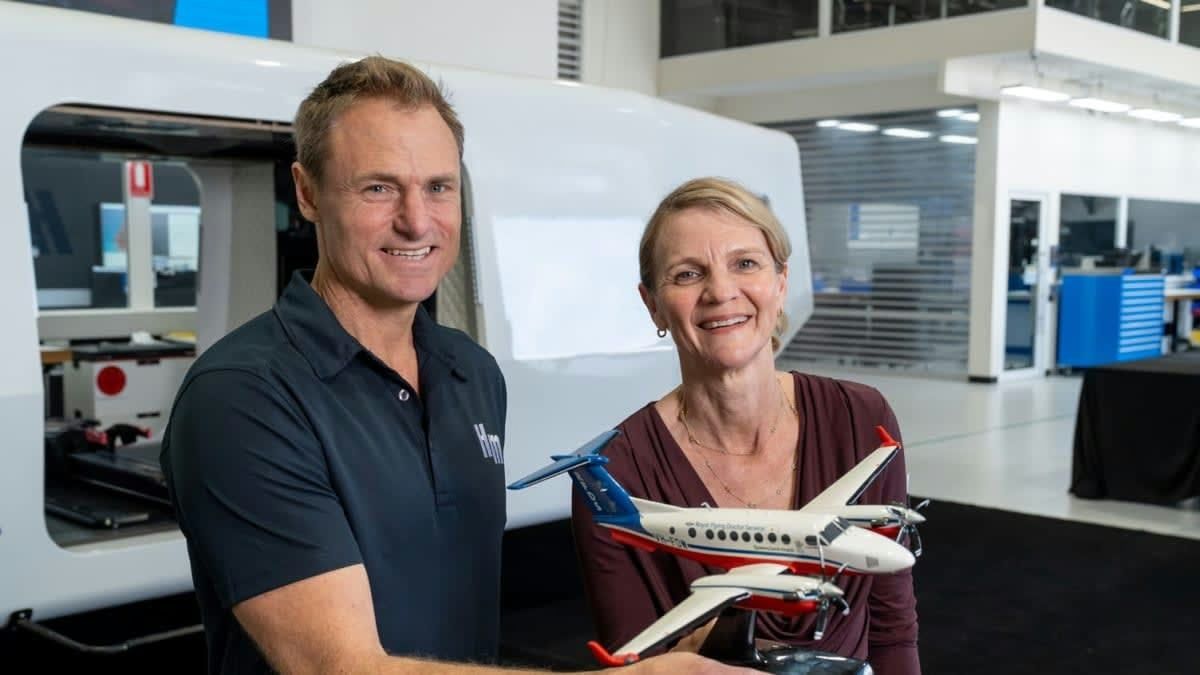
Australia’s RFDS Queensland Section Orders Six King Air 260Cs
Korean Air Finalizes Order for 103 Boeing Jets and Engines
Embraer E195-E2 Features Distinctive Engine Placement Among Regional Jets
What Passengers Can Expect on Boeing’s New 777X Jet

How Ethiopian Airlines Became Africa’s Leading Carrier Amid Gulf Competition
Joby Aviation Extends Autonomous Flight Capabilities with Cross-Country Tour
