Bild

AeroGenie — Ihr intelligenter Copilot.

Fragen Sie alles. Analysieren Sie alles. Handeln Sie sofort.

Trends

Categories

PBY-5A Catalina 'Princess of the Stars' Grounded for Engine Overhaul
July 9, 2025By ePlane AI
PBY-5A Catalina 'Princess of the Stars' Grounded for Engine Overhaul
0
0
PBY-5A Catalina
Engine Overhaul
Vintage Aircraft Maintenance

PBY-5A Catalina 'Princess of the Stars' Grounded for Engine Overhaul

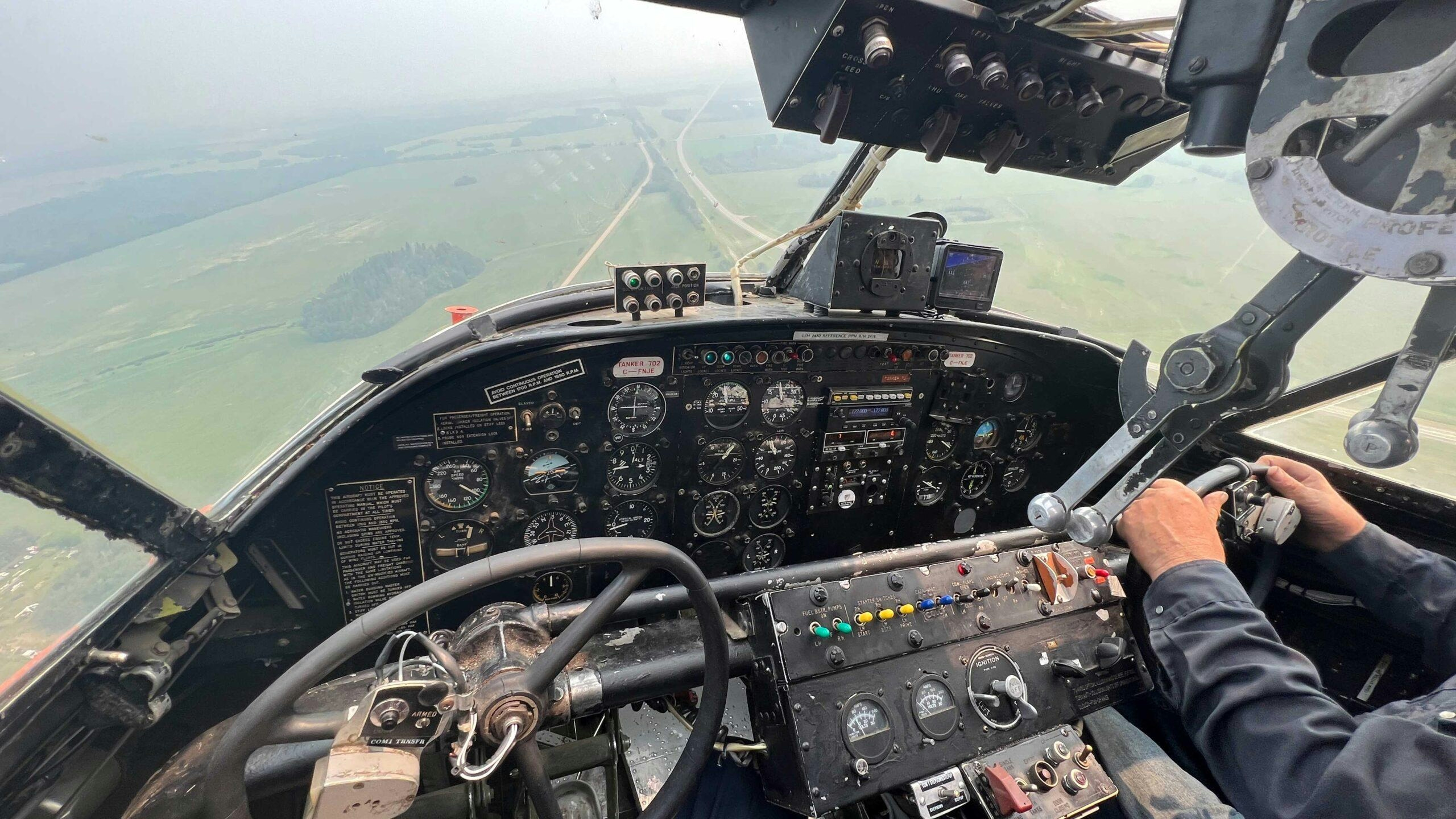
The historic PBY-5A Catalina, affectionately known as "Princess of the Stars," operated by the Soaring by the Sea Foundation, is currently grounded in Arlington, Washington, following an engine failure during a recent flight. The aircraft now awaits a comprehensive engine overhaul and reinstallation, a process that highlights the considerable technical and financial challenges involved in maintaining vintage warbirds.

Funding and Industry Context

To finance the necessary repairs, the foundation has initiated a GoFundMe campaign with a target of $100,000. This effort is supported by a matching pledge for the first $50,000 from a committed donor. The urgency of the campaign reflects the high costs associated with specialized maintenance, as well as the potential for delays and escalating expenses that often accompany such extensive overhauls. Within the broader aviation industry, engine maintenance remains a critical concern. Recent reports from Aviation Week have underscored ongoing issues, such as the Pratt & Whitney PW1000G GTF engine problems affecting Turkish Airlines, while other carriers like SpiceJet have marked successful overhaul milestones. Meanwhile, companies such as ITP Aero are emphasizing parts repair, signaling a wider industry trend toward sustaining aging fleets through robust maintenance, repair, and overhaul (MRO) strategies.

For the Soaring by the Sea Foundation, the grounding of "Princess of the Stars" carries reputational implications as well. Extended downtime can raise questions about reliability and safety, potentially inviting comparisons with other organizations that prioritize operational efficiency and proactive maintenance. Despite these challenges, the foundation remains steadfast in its mission to preserve aviation heritage and inspire future generations.

A Storied History

Built in 1943 by Boeing Canada as a Canso A, "Princess of the Stars" served with the Royal Canadian Air Force under serial number 9767 until 1946. Following its military service, the aircraft transitioned to civilian roles, spending decades as a firefighting platform across Canada with operators including Canadian Pacific Airlines, Northland Airlines, and Avalon Aviation. Its eventful career featured dramatic incidents, such as a crash during a water pickup in Saskatchewan that left the aircraft temporarily submerged. Retired in the late 1980s, the Catalina later appeared in the French television series Operation Kavango before being brought to the United States in 2010 and acquired by Soaring by the Sea LLC in 2019.

Preservation and Outreach

The foundation is dedicated to restoring and flying vintage aircraft with documented combat histories. “We strive to restore aircraft as close to their original wartime appearance as possible,” said Coy Pfaff. Beyond restoration, the organization actively engages in veteran outreach and youth education, regularly hosting STEM events and open houses designed to inspire the next generation of aviators. Its collection includes other significant warbirds, such as a combat-tested Skyraider and another PBY Catalina with military service history. The recent addition of “Currawong” nose art to their P-40 further exemplifies the foundation’s commitment to authenticity and honoring aviation heritage.

To support the restoration of "Princess of the Stars" and learn more about the foundation’s work, visit www.soaringbythesea.com.

More news
IATA to Host 2026 World Data Symposium in Singapore Focused on Aviation Technology and Cybersecurity

IATA to Host 2026 World Data Symposium in Singapore Focused on Aviation Technology and Cybersecurity

IATA to Host 2026 World Data Symposium in Singapore Focused on Aviation Technology and Cybersecurity The International Air Transport Association (IATA) has announced that the 2026 World Data Symposium (WDS) will be held in Singapore on April 8–9. The event aims to convene leaders in data, technology, and cybersecurity to address the rapidly evolving challenges and opportunities within the aviation sector. Themes and Industry Focus The symposium will concentrate on three principal themes that are currently shaping the aviation industry. These include the strategic use of data to improve operational efficiency and decision-making, the enhancement of cybersecurity measures across the aviation value chain, and the application of artificial intelligence (AI) and automation to elevate both operational performance and passenger experience. Kim Macaulay, IATA’s Senior Vice President of Information & Data and Chief Information & Data Officer, emphasized the importance of data as a critical strategic asset for aviation. She highlighted that this second edition of the WDS will place particular focus on AI’s role in the sector’s digital future, alongside the urgent need to strengthen cyber-resilience as digital innovation accelerates. Addressing Emerging Challenges The 2026 symposium arrives at a time when the aviation industry is confronting increasing cybersecurity threats and privacy concerns, especially with the growing adoption of predictive maintenance technologies. These issues are expected to dominate discussions, as stakeholders seek to balance technological advancement with the protection of sensitive information. The outcomes of the symposium are anticipated to influence market dynamics and establish new benchmarks for best practices in data protection and cyber-resilience. In addition to technological challenges, geopolitical tensions—such as potential disruptions to flights in the Gulf region—may also inform the event’s agenda. This underscores the critical need for robust digital infrastructure and comprehensive crisis preparedness within the aviation ecosystem. The symposium will also provide a platform for industry competitors to showcase their cybersecurity initiatives and technological innovations, positioning themselves as leaders in a rapidly evolving landscape. Program Highlights and Key Participants The WDS program will feature a series of sessions addressing a broad range of topics, including digital transformation in aviation, the integration of open AI technologies, cloud security, aviation resilience, and the use of digital twins in airports and aviation operations. Additional sessions will explore innovative cross-industry applications, such as how smart stadium technology can inspire advancements in airport management, alongside insights into Korean innovation stories. Singapore Airlines, serving as the official airline partner, will contribute through the participation of CEO Goh Choon Phong and Senior Vice President of Information Technology George Wang. IATA’s leadership, including Director General Willie Walsh, Kim Macaulay, and Dr. Marie Owens Thomsen, Senior Vice President of Sustainability and Chief Economist, will also be in attendance. The roster of confirmed speakers features prominent figures from across the aviation and logistics sectors. These include Nasaruddin A. Bakar, President and Group CEO of Malaysia Aviation Group; Chai Eamsiri, CEO of Thai Airways; Olivier Beaujean, Vice President and CIO of Cargolux; Masaya Fukushima, Vice President of System Management at Japan Airlines; Pratik Patel, Global Vice President of Customer Operations at DHL Global Forwarding; Yanling Liu, Senior Vice President of Airport Operations and Transformation at Changi Airport Group; Bum-ho Kim, Vice President of Incheon International Airport Corporation; Pablo Fernandez Kruk, Vice President of Digital Strategy at Airlines AI Studio, Golant; David Fairman, CIO and CSO for APAC at Netskope; and Andrew Sellers, Vice President of Technology Strategy and Enablement at Confluent. Full program details and registration information will be made available through IATA. The 2026 World Data Symposium is poised to play a significant role in shaping the future trajectory of aviation technology, cybersecurity, and digital innovation amid an increasingly complex global environment.
HAECO and Air India Sign Line Maintenance Agreement

HAECO and Air India Sign Line Maintenance Agreement

HAECO and Air India Renew Line Maintenance Agreement at Shanghai Pudong Airport HAECO has secured a new three-year contract with Air India to provide technical ground handling services at Shanghai Pudong International Airport (PVG), extending their collaboration through 2029. The agreement encompasses line maintenance support for Air India’s wide-body fleet, including Boeing 777, Boeing 787, and Airbus A350 aircraft. Strengthening a Longstanding Partnership This renewed partnership builds upon a relationship that began in 2014, when HAECO first offered technical support to Air India at PVG. Although services were temporarily suspended in 2020 due to the COVID-19 pandemic, the resumption of Air India’s scheduled flights to Shanghai in February has enabled HAECO to reestablish its role as the airline’s trusted line maintenance provider. In addition to its work at PVG, HAECO has previously supported Air India with base maintenance and non-technical transit flight services in Hong Kong. Gerald Steinhoff, Chief Commercial Officer of HAECO, emphasized the company’s commitment to the partnership, stating, “We are delighted to once again support Air India at Shanghai Pudong International Airport, building on a long-standing relationship that dates back more than a decade. Drawing on more than 75 years of MRO expertise and a well-established operational network, HAECO is well positioned to support Air India’s growing operations with the highest standards of safety, quality, and operational excellence.” Operational Scope and Challenges HAECO’s global operations span Hong Kong, mainland China, Europe, and the United States, offering a comprehensive range of maintenance, repair, and overhaul (MRO) services covering airframes, components, and engines. The company currently provides line maintenance support to over 140 airlines worldwide through a network of 19 stations across Hong Kong and the Chinese mainland. Despite the promising outlook, the renewed agreement presents several operational challenges. Integrating differing maintenance cultures and processes between HAECO and Air India will require meticulous coordination to ensure seamless service delivery. Both companies must uphold strict compliance with international aviation standards while managing the logistical complexities inherent in coordinating maintenance activities across multiple locations. Furthermore, the partnership’s success will depend on effectively leveraging predictive maintenance technologies to enhance service quality and reliability. Market analysts suggest that this agreement could improve operational efficiency and reduce maintenance costs for Air India. However, it may also prompt competitors in the line maintenance sector to intensify efforts to secure similar contracts, potentially heightening competition for Air India’s future maintenance requirements. As HAECO and Air India advance their collaboration, their ability to navigate these operational and market dynamics will be critical to fully realizing the benefits of the partnership.
Thales' Yannick Assouad on aviation's most critical decade

Thales' Yannick Assouad on aviation's most critical decade

Thales’ Yannick Assouad on Aviation’s Most Critical Decade Yannick Assouad, Executive Vice-President of Avionics at Thales, asserts that the aviation industry is poised to undergo its most transformative period since the advent of the jet age. Charged with overseeing the systems that ensure pilot awareness and flight safety, Assouad identifies the coming decade as crucial, driven by advancements in artificial intelligence, digital connectivity, and sustainability initiatives. Speaking at the Singapore Airshow 2026, Assouad articulated a comprehensive vision for the future of aviation. She highlighted the pressing need for decarbonization, the evolving role of AI-assisted cockpits, and the increasing risks posed by GPS interference. Additionally, she addressed the ongoing challenge of enhancing female representation within aerospace leadership. Singapore: A Strategic Hub for Avionics Innovation In May 2025, Thales, in partnership with the Civil Aviation Authority of Singapore (CAAS), inaugurated the International Avionics Lab in Singapore, marking the company’s first such facility outside France. This lab is dedicated to developing and testing cutting-edge avionics solutions aimed at improving air traffic management and airport operations throughout the Asia-Pacific region and beyond. Assouad described Singapore’s dense and complex airspace as an “ideal sandbox” for pioneering technologies that could shape the future of air traffic control. A central objective of this initiative is to transcend the traditional voice-based communication between pilots and air traffic controllers. Thales aims to establish direct digital links between aircraft and ground systems, thereby streamlining operations and enabling global optimization. Assouad explained, “Today, the connection between those two bodies—the onboard system and the on-ground system—is the voice of the pilot and the controller. We need to change that to really make it seamless, much more efficient, and optimize more globally.” AI in the Cockpit: Support, Not Replacement Assouad offered a candid assessment of artificial intelligence’s role in aviation, acknowledging both its potential and current limitations. While the integration of AI into safety-critical onboard systems remains a long-term objective, she emphasized the immediate advantages of AI as a support tool for pilots. AI can assist in diagnosing and troubleshooting system failures during flight by rapidly analyzing data without the emotional biases that can affect human judgment. She noted, “Emotion-less, of course, which is very important to have a good troubleshooting of anything happening.” Another significant application lies in trajectory optimization. AI systems, trained on millions of flight scenarios and real-time data, can calculate more efficient routes than traditional pilot-controller coordination. Assouad envisions AI agents working alongside flight crews and controllers, with humans retaining ultimate decision-making authority. Navigating Industry Challenges Despite these forward-looking ambitions, Thales confronts considerable challenges. The company’s avionics technology, largely derived from existing platforms such as those used in Airbus’s next-generation narrowbody aircraft, requires rapid innovation to maintain a competitive edge amid intensifying market competition. Rival avionics providers are simultaneously advancing their systems, heightening the pressure on Thales to evolve. Structural obstacles remain, particularly in emerging markets like Brazil, where underdeveloped infrastructure and financial limitations hinder growth. Furthermore, the rise of autonomous and drone technologies introduces both opportunities and regulatory complexities for avionics manufacturers, necessitating agile and forward-thinking strategies. As the aviation sector approaches a period of profound change, Assouad remains committed to harnessing technology to enhance flight safety, efficiency, and sustainability, while navigating the intricate realities of a rapidly evolving industry.
Turkish Airlines Plans to Launch Leasing Company in Ireland

Turkish Airlines Plans to Launch Leasing Company in Ireland

Turkish Airlines to Launch Aircraft Leasing Company in Ireland Turkish Airlines is embarking on a significant strategic transformation by establishing a dedicated aircraft leasing subsidiary in Ireland. This move marks a shift from its traditional airline operations toward becoming a more diversified aviation group with a pronounced presence in financial services. Instead of selling older aircraft upon retirement, the carrier intends to capitalize on its fleet as financial assets, extending their value through leasing—a sector known for higher profit margins and operational efficiency. Strategic Rationale and Fleet Modernization This initiative aligns with Turkish Airlines’ broader fleet modernization efforts, which focus on replacing aging aircraft with newer, more fuel-efficient models. By situating its leasing subsidiary in Dublin, a global center for aircraft leasing renowned for its favorable tax environment, legal expertise, and concentration of industry leaders, the airline aims to tap into international financial markets and attract a worldwide customer base. Ahmet Bolat, Chairman of the Board, emphasized the economic benefits of the leasing business model, highlighting its potential to generate substantial revenues with a relatively small workforce compared to the labor-intensive nature of passenger operations. Bolat noted that a leasing unit staffed by approximately 100 employees could achieve revenues of $2.2 billion, a level of per capita return that is unattainable in conventional airline activities. Currently, Turkish Airlines operates a fleet of 361 aircraft, which supports not only its mainline services but also its subsidiary Ajet and the joint venture SunExpress with Lufthansa Group. The airline further supplements its operations with 134 dry-leased aircraft and an additional 45 leased for Ajet. This extensive fleet underscores the potential for an internal leasing solution, allowing aircraft retired from primary service to be profitably redeployed rather than sold at residual value. Challenges and Market Implications Despite the promising outlook, Turkish Airlines faces several challenges in executing this strategy. The company must navigate Ireland’s regulatory framework, secure favorable leasing agreements, and manage currency risks inherent in international finance. Additionally, maintaining profitability, network quality, and resilience amid geopolitical tensions and fluctuating fuel prices will be critical factors closely monitored by industry analysts. Market observers are expected to scrutinize how this new leasing venture fits within Turkish Airlines’ disciplined growth strategy and ongoing fleet expansion. The airline’s entry into the aircraft leasing sector may also provoke competitive responses from other major carriers, potentially intensifying competition as airlines reassess their own leasing approaches. By outsourcing aircraft management to a specialized, profit-driven subsidiary, Turkish Airlines aims to optimize its balance sheet and position itself alongside established leasing companies, using its existing fleet as an initial portfolio. As the airline continues to modernize and expand, this strategic pivot could redefine its role in the global aviation industry, blending operational expertise with financial innovation.
Experts Discuss Growing Role of Aviation Finance in Central Asia Amid Geopolitical Changes

Experts Discuss Growing Role of Aviation Finance in Central Asia Amid Geopolitical Changes

Experts Discuss Growing Role of Aviation Finance in Central Asia Amid Geopolitical Changes Expanding Aviation Finance in a Dynamic Region The aviation sector in Central Asia and the Caucasus is experiencing significant growth, driven by increasing demand for air travel and evolving geopolitical dynamics. At a recent roundtable held on March 10 at the Astana International Financial Centre (AIFC), industry experts highlighted the accelerating importance of aviation finance in the region. Projections from the AIFC indicate that the aircraft fleet in Central Asia could double by 2030, reflecting broader global trends. Airbus forecasts a near doubling of the worldwide aircraft fleet from 24,730 in 2024 to approximately 49,210 by 2044. This rapid expansion is intensifying the need for innovative financing mechanisms, particularly aircraft leasing, as airlines seek to modernize and grow their fleets. Leasing as a Dominant Model and Kazakhstan’s Strategic Role Leasing has emerged as the predominant model for fleet management in Central Asia and the Caucasus, with estimates suggesting that between 55% and 80% of commercial aircraft in the region are leased—surpassing the global average of around 60%. Assel Bagissova, Head of the AIFC Aviation Finance Hub, noted that only 45% of the global commercial fleet is owned outright by airlines, underscoring leasing’s appeal due to its favorable risk-return profile. Industry data from 2024 further indicates that leasing companies have outperformed aircraft manufacturers in operational efficiency. Kazakhstan, in particular, is positioned as a regional leader in this expanding market. Peter Foster, CEO of Air Astana, emphasized the country’s strategic geographic location, growing infrastructure, and skilled workforce as key factors underpinning its leadership. He acknowledged the rapid development occurring across the region and stressed the need for a coordinated aviation development strategy to maintain Kazakhstan’s competitive edge. The AIFC is actively promoting Kazakhstan as a hub for aviation finance and leasing, aiming to attract investment, support sustainable growth, and enhance international collaboration. Zhanbolat Kakishev, Chief Product Officer of the AIFC Authority, highlighted the Aviation Finance Hub’s role in facilitating financing and leasing arrangements for both commercial and cargo aircraft. Challenges, Competition, and Regulatory Considerations Despite the promising outlook, the region faces several challenges. Experts pointed to regulatory fragmentation and the necessity for greater financial transparency, especially within private aviation sectors. These issues contribute to increased scrutiny from investors and customers concerning the financial stability of airlines and lessors operating in the region. The competitive landscape is also evolving rapidly. Market participants are pursuing strategic partnerships, such as FlyHouse’s collaboration with Brazilian operators, and embracing technological innovations exemplified by Elevate Jet’s self-service air charter application. Geopolitical shifts are further influencing growth strategies; for instance, Finnair is redirecting its focus toward Europe and Asia in response to pressures on North Atlantic yields. Legal and regulatory frameworks remain critical to the attractiveness of jurisdictions for aviation leasing. Jim Bell, Partner at Watson Farley & Williams, emphasized that a robust legal system, favorable tax policies, and a well-developed aviation services ecosystem are essential. He suggested that the AIFC could complement established global leasing centers if it carefully calibrates its regulatory environment and market positioning. As Central Asia’s aviation sector continues its expansion, the establishment of reliable and secure financing frameworks will be vital to sustaining growth and enhancing the region’s competitiveness on the global stage.
Joby Air Taxi Completes Bay Area Flight Amid FAA Commercial Approval Efforts

Joby Air Taxi Completes Bay Area Flight Amid FAA Commercial Approval Efforts

Joby Air Taxi Completes Bay Area Flight Amid FAA Commercial Approval Efforts Demonstration Flight Marks Significant Progress Joby Aviation advanced its pursuit of commercializing electric air taxis with a demonstration flight over San Francisco on Thursday. The Northern California-based company, headquartered in Marina and with offices in Santa Cruz and San Carlos, showcased its aircraft flying past iconic landmarks such as the Golden Gate Bridge after departing from Oakland. This event represents a critical milestone in Joby’s ongoing efforts to secure Federal Aviation Administration (FAA) approval for commercial operations. JoeBen Bevirt, Joby’s CEO and founder, described the flight as a “landmark achievement” for the company, which employs over 2,500 people, many of whom are based in Northern California. The company is simultaneously ramping up manufacturing capabilities in the region and Ohio. Reflecting on his 16-year journey to bring electric air taxis to fruition, Bevirt emphasized the immediacy and significance of this development, stating, “It’s here, and it’s happening right now. That’s what’s so remarkable and so exciting.” Vision for Urban Air Mobility and FAA Integration The aircraft, designed to carry one pilot and up to four passengers, aims to revolutionize urban transportation by offering quick and quiet flights. Didier Papadopoulos, Joby’s President of Aircraft OEM, highlighted the potential impact on daily commutes, noting that trips currently taking about an hour by car could be reduced to 10 minutes or less by air. He expressed optimism about the near future, suggesting that passengers will soon experience this mode of travel firsthand. Joby’s demonstration flight coincides with its selection by the FAA for the Electric Vertical Takeoff and Landing (eVTOL) Integration Pilot Program. This initiative could enable Joby to commence operations within months across multiple states, including Arizona, Florida, Idaho, New Jersey, New York, North Carolina, Oklahoma, Oregon, Texas, and Utah. Planned activities under the program range from cargo delivery in Florida to medical transport operations in North Carolina. The FAA’s endorsement is widely regarded as a pivotal step toward enabling commercial air taxi services that promise to significantly reduce commute times. Challenges and Competitive Landscape Despite these advances, Joby faces considerable challenges on the path to market entry. Regulatory approval remains a complex hurdle, and the company contends with increasing competition from other eVTOL manufacturers, notably Bay Area rival Archer Aviation. The competitive environment has intensified amid legal and reputational disputes, with Archer accusing Joby of fraud related to alleged ties to China, adding further pressure to the race for FAA certification. Market acceptance will depend heavily on Joby’s ability to demonstrate safety, reliability, and cost-effectiveness at scale. The company aims to price rides comparably to Uber Black, seeking to make the service accessible to a broad commuter base. Additionally, Joby is exploring autonomous flight capabilities that would eliminate the need for an onboard pilot, potentially transforming operational models in the future. While the timeline for regular air taxi service in San Francisco remains uncertain, Thursday’s flight underscores growing momentum within the urban air mobility sector. As Joby and its competitors accelerate testing and regulatory compliance efforts, the Bay Area may soon witness the emergence of a new era in transportation.
Azul’s AI Approach Focuses on Augmentation Over Transformation

Azul’s AI Approach Focuses on Augmentation Over Transformation

Azul’s AI Strategy: Prioritizing Augmentation Over Transformation Artificial intelligence (AI) has swiftly transitioned from a specialized experiment to a strategic imperative within the global airline industry. Carriers are increasingly investing in data science, automation, and machine learning to refine pricing strategies, optimize network operations, and enhance overall resilience. Despite this enthusiasm, many AI initiatives continue to face challenges, often becoming complex technological endeavors that struggle to produce clear commercial benefits. The Challenge of Integration in a Complex Industry The primary obstacle is seldom the technology itself. Airlines operate within deeply integrated ecosystems shaped by decades of legacy systems, stringent regulatory frameworks, and rigorous operational protocols. The prospect of replacing foundational platforms is frequently cost-prohibitive, disruptive, and impractical. Consequently, the industry is shifting its perspective, recognizing that AI’s true value lies not in radical transformation but in practical augmentation—improving the intelligence and efficiency of existing processes rather than attempting wholesale reinvention. This pragmatic approach is increasingly evident across the aviation sector. Airlines are employing machine learning to enhance demand forecasting accuracy, automate operational decision-making, and advance predictive maintenance capabilities. Dynamic pricing models are evolving as carriers strive to respond more agilely to fluctuating demand and competitive market pressures. However, scaling these AI-driven capabilities remains a complex endeavor. Success hinges not only on the sophistication of algorithms but also on organizational alignment, seamless data integration, and cultivating trust in automated systems. Azul’s Pragmatic AI Focus Amid Market Realities For Azul, the emphasis on augmentation over transformation reflects both strategic pragmatism and the realities of the current market environment. The industry is gravitating toward a philosophy that values tangible assets and operational AI—prioritizing projects that yield immediate, measurable returns. This shift presents challenges for AI initiatives lacking clear short-term outcomes, as capital allocation tightens and investor tolerance for speculative AI ventures diminishes. Azul and similar carriers must demonstrate that AI can be reliably embedded within existing infrastructures to drive practical improvements, rather than merely showcasing its transformative potential. Competitors are responding by harnessing expansive data sets for predictive maintenance and integrating these insights with revenue management systems to reduce aircraft downtime and enhance profitability. In this context, the ability to generate operational gains through AI—without destabilizing core systems—has emerged as a critical differentiator. Market sentiment increasingly favors airlines that move beyond experimentation and hype, embedding AI solutions that tangibly improve efficiency and operational resilience. For airline executives, the pivotal question is no longer whether AI will influence future operations, but how it can be effectively deployed to deliver genuine commercial value while maintaining the stability of established systems. As the industry contends with evolving investor expectations and intensifying competitive pressures, the focus remains firmly on augmentation—leveraging AI to make existing processes smarter, faster, and more dependable.
Low-Altitude Economy Requires Institutional Support

Low-Altitude Economy Requires Institutional Support

Low-Altitude Economy Requires Institutional Support China’s forthcoming 15th Five-Year Plan (2026-2030) marks a significant strategic shift by elevating the low-altitude economy to an independent priority alongside other emerging sectors such as new energy, new materials, and aerospace. Previously subsumed under the broader category of strategic emerging industries during the 14th Five-Year Plan (2021-2025), the low-altitude economy is now recognized for its distinct potential and the need for coordinated, large-scale development efforts. Strategic Importance and Technological Foundations The low-altitude economy represents a new frontier of productive forces, integrating cutting-edge technologies from aerospace, smart manufacturing, new energy, and artificial intelligence. Its extensive industrial chains and diverse application scenarios position it to exceed one trillion yuan (approximately $145 billion) in market size within the next five years, fostering regionally diversified economic growth. However, realizing this ambitious target requires systematic planning focused on breakthroughs in core technologies, talent development, and the construction of a robust industrial ecosystem. Indigenous innovation is critical to enhancing resilience amid global uncertainties and to sustaining high-quality growth. The sector’s advancement hinges on rapid technological progress in unmanned aerial vehicles (UAVs) and electric vertical takeoff and landing aircraft (eVTOLs). These technologies depend on continued improvements in flight control systems, high-energy-density batteries, and reliable electric propulsion. Recent advancements in lithium metal batteries, which offer significant gains in energy density and performance, exemplify the technological strides that could reshape the global low-altitude economy. Institutional Challenges and Policy Imperatives Despite promising technological developments, the growth of the low-altitude economy faces structural challenges that require strong institutional support. Experiences from other markets, such as Brazil, where aviation industry leaders have pointed to regulatory and infrastructural barriers, highlight the risks of underdeveloped frameworks impeding sectoral expansion. This underscores the necessity for China to establish robust institutional mechanisms and policy frameworks to unlock the full potential of the low-altitude economy. To maintain global competitiveness, China must increase investment in indigenous research and consolidate resources to build a secure, coordinated innovation system. Addressing critical bottlenecks—such as redundant flight control chips, high-precision LiDAR, and advanced battery materials—is essential. Accelerating the commercialization of technological achievements and enhancing self-reliance across the entire industry chain will be pivotal in this regard. Green Development and Innovation Ecosystem Green development remains a central pillar of China’s strategy, aligned with its dual-carbon goals. The international race to develop green aviation technologies has intensified, with traditional lithium battery systems facing inherent energy density limitations. Consequently, the pursuit of both electrification and hydrogen-based solutions is imperative. Promoting higher-density batteries, advancing airworthiness certification, and commercializing electric aircraft for urban mobility, emergency rescue, and logistics are critical steps forward. Concurrently, intensified research into hydrogen storage, transportation, and utilization is necessary to support sustainable growth. An effective technology transfer mechanism is equally vital. Establishing a demand-driven, full-chain innovation model through testing bases and demonstration zones can facilitate the integration of new technologies into practical applications. Data-driven feedback loops will help shorten commercialization cycles and refine business models. Collaboration between universities and enterprises can tailor research to regional needs, accelerating scalable and sustainable development. Workforce Development and Infrastructure Preparation The sector’s success also depends on cultivating a workforce of composite, innovative, and highly skilled professionals. Addressing talent gaps in aerospace engineering, intelligent control, and airspace management requires closer integration between industry and education, updated curricula, and diversified training mechanisms. Preparing traditional infrastructure, including vertiports and energy supply stations, alongside fostering a coordinated innovation ecosystem, will be essential for the sustainable expansion of China’s low-altitude economy. Market responses to emerging technologies remain cautious, as evidenced by significant outflows from Bitcoin ETFs, reflecting institutional hesitancy toward new markets. This further highlights the critical role of strong institutional support in nurturing confidence and stability within the low-altitude economy.
Aviation Industry Adopts AI and Green Fuels Amid Changing Passenger Habits

Aviation Industry Adopts AI and Green Fuels Amid Changing Passenger Habits

Aviation Industry Adopts AI and Green Fuels Amid Changing Passenger Habits The commercial aviation sector continues to demonstrate remarkable resilience and adaptability despite ongoing economic and geopolitical challenges. Airlines are expanding their networks through new routes and codeshare agreements, while technological innovation and sustainability initiatives are driving growth and transformation across the industry. Digital Transformation and Operational Innovation Artificial intelligence (AI) is rapidly reshaping the aviation landscape by enhancing operational efficiency in areas such as predictive maintenance, route optimization, and personalized passenger services. The adoption of biometric scanning and contactless processing at airports has become increasingly widespread, significantly reducing wait times and improving the overall travel experience. However, as digitalization deepens, the industry is placing greater emphasis on cybersecurity to mitigate the growing risks posed by cybercrime and digital warfare targeting airlines and airport infrastructure. AI’s impact extends beyond operational improvements to the travel planning process itself. Automated booking systems and AI-driven itinerary management are beginning to disrupt traditional intermediaries, including online travel agencies (OTAs) and global distribution systems (GDSs). This technological shift has exerted pressure on these companies’ profit margins and led to workforce reductions, as evidenced by recent layoffs at firms such as Supernal. These developments highlight the sector’s ongoing struggle to adapt swiftly to rapid technological change. Sustainability Efforts and the Challenge of Green Fuels The aviation industry has committed to achieving net-zero carbon emissions by 2050, with a significant focus on transitioning to Sustainable Aviation Fuel (SAF). However, the path to decarbonization remains complex and fraught with challenges. The European Union’s mandate for advanced synthetic green fuels (eSAF) presents considerable obstacles, as commercial-scale production is still limited and the costs of these fuels remain substantially higher than those of conventional jet fuel. This situation complicates airlines’ efforts to comply with regulatory requirements and meet environmental targets. In addition to SAF, aircraft manufacturers are investing in the development of electric and hydrogen-powered planes, aiming to introduce these technologies into commercial service. Engineers are also pursuing aerodynamic enhancements and fuel-efficient design improvements to reduce emissions. Furthermore, the emergence of electric vertical take-off and landing (eVTOL) aircraft promises to revolutionize urban mobility, potentially creating new revenue streams for both aviation companies and city transport providers. Shifting Passenger Preferences and Airline Strategies Evolving travel habits are prompting airlines to reconsider their strategic approaches. The growing trend of “bleisure” travel, which combines business and leisure trips, continues to influence network planning decisions. Rising demand for family and group travel has led carriers to introduce group deals and tailored offers to better serve these segments. Personalization remains a key focus, with airlines encouraging direct bookings by offering customizable packages that allow passengers to select preferred amenities both before and during flights. Airlines are also enhancing their premium offerings to meet changing passenger expectations. For instance, Thai Airways’ introduction of the Business Plus cabin exemplifies the industry’s commitment to delivering a more refined inflight experience that aligns closely with customer preferences. As the aviation sector navigates the complexities of technological disruption, regulatory pressures, and shifting consumer demands, its capacity for innovation and adaptation will be critical in shaping the future of air travel.
Federal Approval Advances New York City Air Taxi Test Program

Federal Approval Advances New York City Air Taxi Test Program

Federal Approval Advances New York City Air Taxi Test Program New York City is poised to alleviate some of its notorious traffic congestion through a pioneering federal initiative that designates the metropolitan area as a test zone for electric air taxis. This program aims to introduce high-speed, electric vertical takeoff and landing (eVTOL) aircraft to shuttle passengers between Manhattan and regional airports, potentially reducing travel times to as little as five to fifteen minutes. The service is expected to be priced comparably to luxury car rides, offering a new alternative for urban commuters and travelers. A Collaborative Effort to Revolutionize Urban Transit The three-year pilot program, announced on Monday, involves a partnership between the Port Authority of New York and New Jersey and several leading aerospace companies, including Archer Aviation, Electra, BETA Technologies, and Joby Aviation. These firms will deploy electric aircraft resembling helicopters, capable of operating from short runways or heliports. The initial network will connect key locations such as JFK, LaGuardia, and Newark airports, with flights potentially commencing as early as this summer. Ticket prices are anticipated to range between $110 and $165. Archer Aviation, headquartered in San Jose, has proposed a network linking skyports in Lower Manhattan and Midtown to major airports, with plans to expand service to Teterboro, Westchester County, and Long Island’s Republic Airport. Electra’s electric planes, notable for requiring as little as 150 feet for takeoff and landing, could operate from unconventional sites such as fields or parking lots, enhancing operational flexibility. Passengers may soon benefit from integrated booking options that combine traditional airline tickets with air taxi segments departing from Manhattan skyports, streamlining the journey from city center to airport. This initiative forms part of the broader federal Electric Vertical Takeoff and Landing (eVTOL) Integration Pilot Program, which includes test sites across Texas, Utah, Pennsylvania, Louisiana, Florida, North Carolina, and New Mexico. Some of these locations will also trial autonomous cargo flights. Market Response and Emerging Challenges The announcement has generated significant enthusiasm within the market, with shares of companies like Joby Aviation and Archer experiencing notable gains. Industry analysts anticipate heightened competition as more firms enter the advanced air mobility sector, potentially accelerating technological innovation and expanding service offerings. Nonetheless, the program faces considerable challenges. Regulatory approval processes, safety concerns, and technological limitations remain critical hurdles for operators and policymakers alike. Community apprehensions regarding noise pollution and safety have already emerged, with Federal Aviation Administration data indicating a 150% increase in noise complaints near existing heliports and proposed vertiport sites. Despite these obstacles, industry leaders express optimism about the program’s potential. Marc Allen, CEO of Electra, described the initiative as “American innovation at its best,” emphasizing the administration’s role in enabling domestic companies to showcase hybrid-electric propulsion technologies that could transform urban transportation. As New York and other participating cities prepare for the introduction of air taxis, the coming years will serve as a crucial period for testing not only the technology itself but also public acceptance and regulatory frameworks necessary to support this new mode of urban mobility.
line










