
KI-Erkenntnisse in konkrete Maßnahmen überführen

Trends
Categories
Pratt & Whitney Produces First PW1900G Engine in Middletown
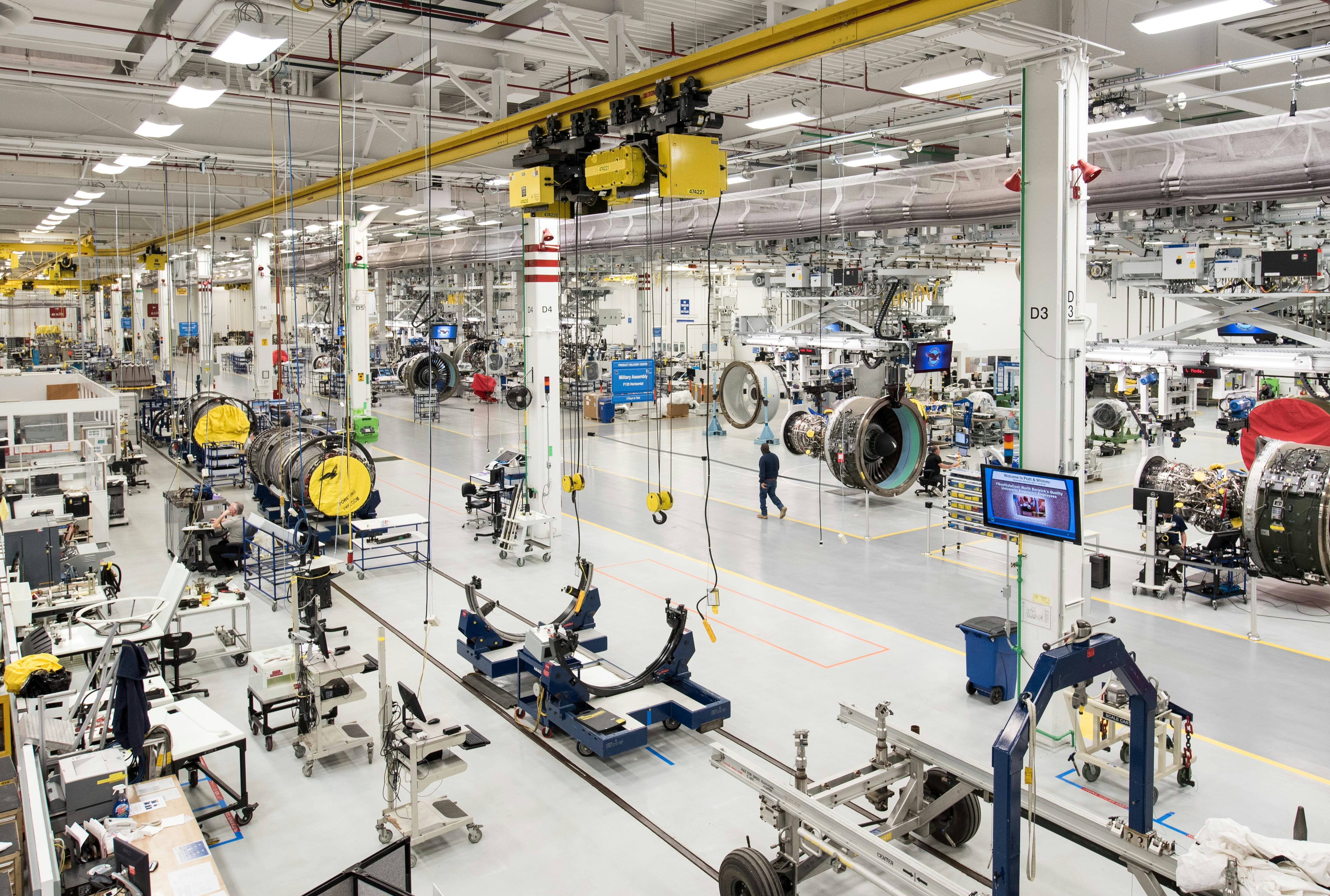
Pratt & Whitney Assembles First PW1900G Engine in Middletown
Pratt & Whitney (P&W) has successfully assembled its first PW1900G engine at its Middletown, Connecticut facility, marking a pivotal expansion of the company’s manufacturing capabilities within the United States. This development forms part of P&W’s strategic initiative to increase production of its two smallest geared turbofan (GTF) variants—the PW1100G and PW1900G—in response to growing demand from airlines seeking engines that offer enhanced efficiency and durability.
Expanding Production Capacity Amid Rising Demand
Until now, the PW1900G engine, which powers Embraer’s E190-E2 and E195-E2 aircraft, was exclusively assembled at P&W’s Mirabel facility near Montreal. This site also produces the related PW1500G engine for the Airbus A220. The decision to establish an additional assembly line in Middletown follows a significant acceleration in Mirabel’s output, with PW1500G production increasing by 20% year-on-year in 2025. Given this surge, P&W opted to expand its assembly capacity to Middletown, located south of Hartford, which already serves as a primary production hub for the PW1100G engine, an option for the A320neo family.
Rick Deurloo, president of P&W Commercial Engines, explained the rationale behind the move: “As Mirabel production lines ramped up, we needed more room. It was always the plan to move some production to Middletown.” While some PW1900G engines and all PW1500G units will continue to be assembled in Mirabel, the expansion enhances the company’s supply chain flexibility and resilience.
Challenges and Industry Context
The integration of new production lines in Middletown presents challenges, particularly in maintaining the rigorous quality control standards essential to P&W’s reputation. Nevertheless, this expansion positions the company to better meet the increasing market demand as airlines seek to modernize their fleets with more fuel-efficient aircraft. Industry analysts anticipate that competitors, including Rolls-Royce with its Trent engine family, may respond by accelerating their own production to preserve market share.
Innovation Beyond Manufacturing
P&W’s commitment to innovation extends beyond its assembly operations. On July 15, the company announced the acquisition of Amsterdam-based Aiir Innovations, a developer of artificial intelligence-powered borescope inspection software. This technology, already employed by commercial customers and maintenance providers, streamlines engine inspections by delivering faster and more consistent assessments. P&W has implemented the software for inspections of International Aero Engines V2500 turbofans, which power first-generation A320s, and is currently evaluating its application for GTF and F135 engines—the latter powering Lockheed Martin’s F-35 fighter jets.
Meanwhile, Airbus continues to increase production of the A220, aiming for a monthly output of 13 aircraft by 2028. The manufacturer delivered 93 A220s in 2025, up from 75 in 2024, with further growth anticipated this year.
By expanding its U.S. production footprint and integrating advanced inspection technologies, Pratt & Whitney is reinforcing its competitive position in the global engine market, emphasizing durability, efficiency, and innovation as key differentiators.

Etihad and Swissport Extend Global Partnership
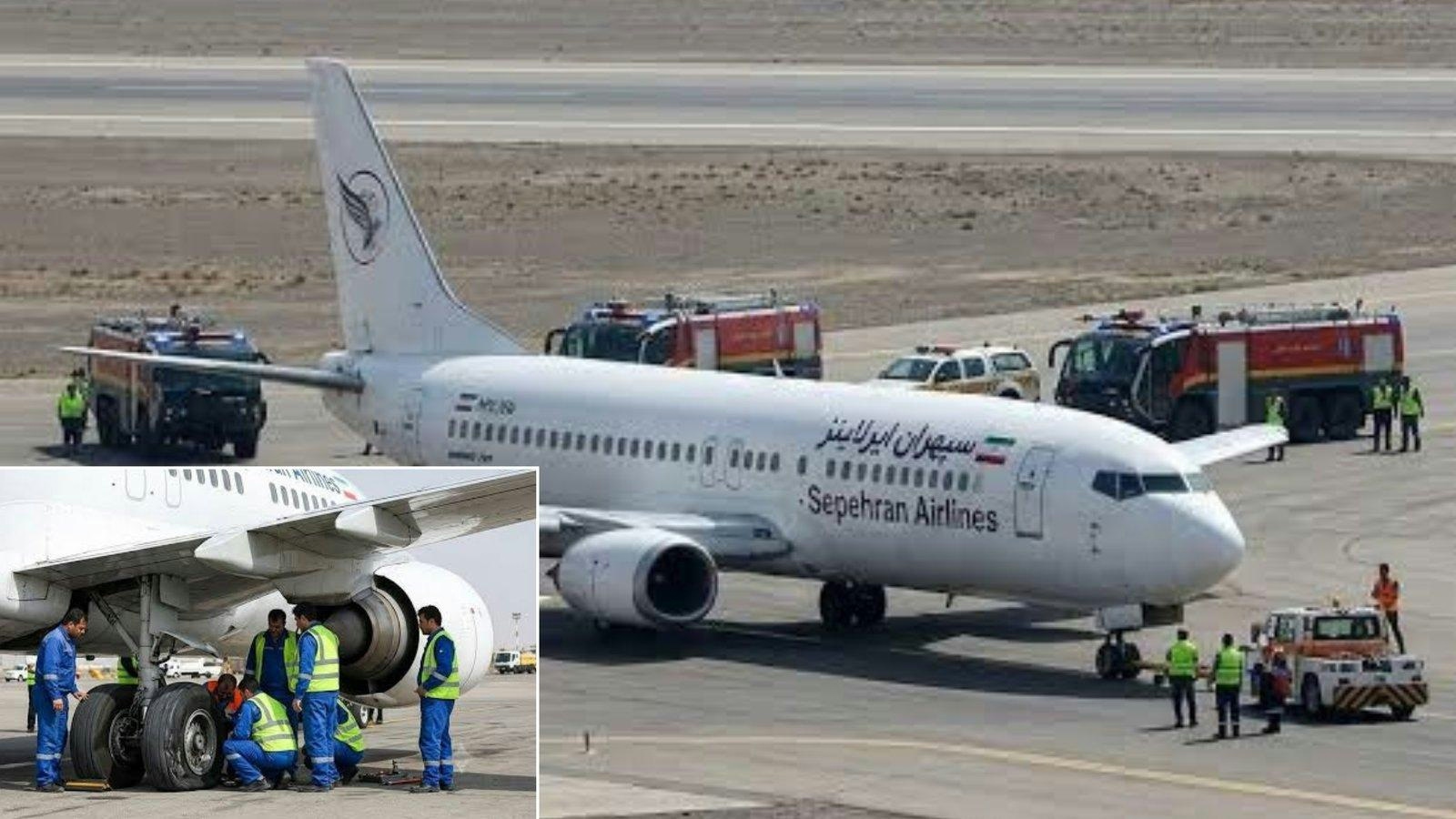
Sepehran Airlines B737 Returns to Mashhad After Tyre and Engine Issues

Etihad Deploys Widebody Fleet to Meet Strong Demand
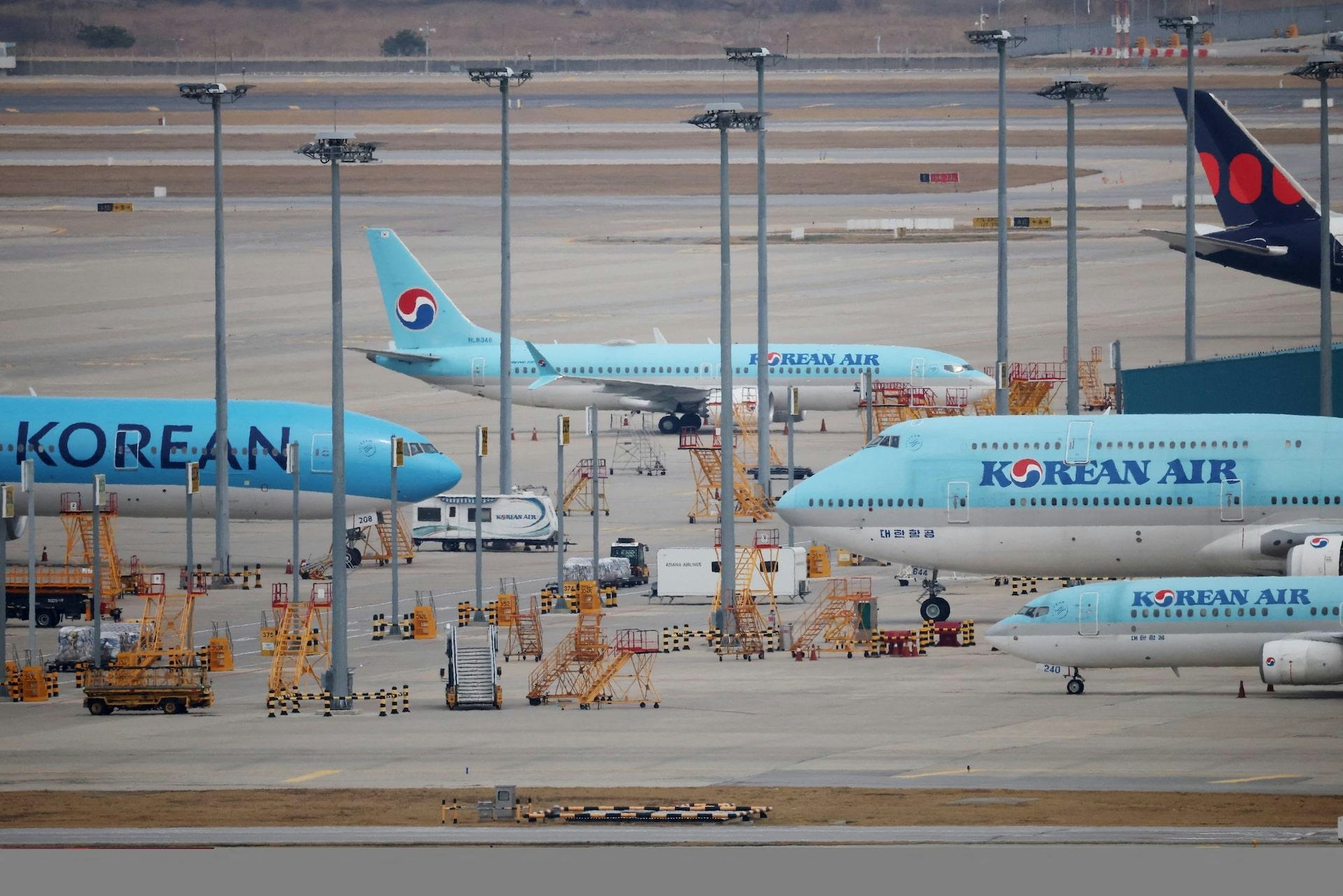
Korean Air Finalizes $36.2 Billion Deal with Boeing
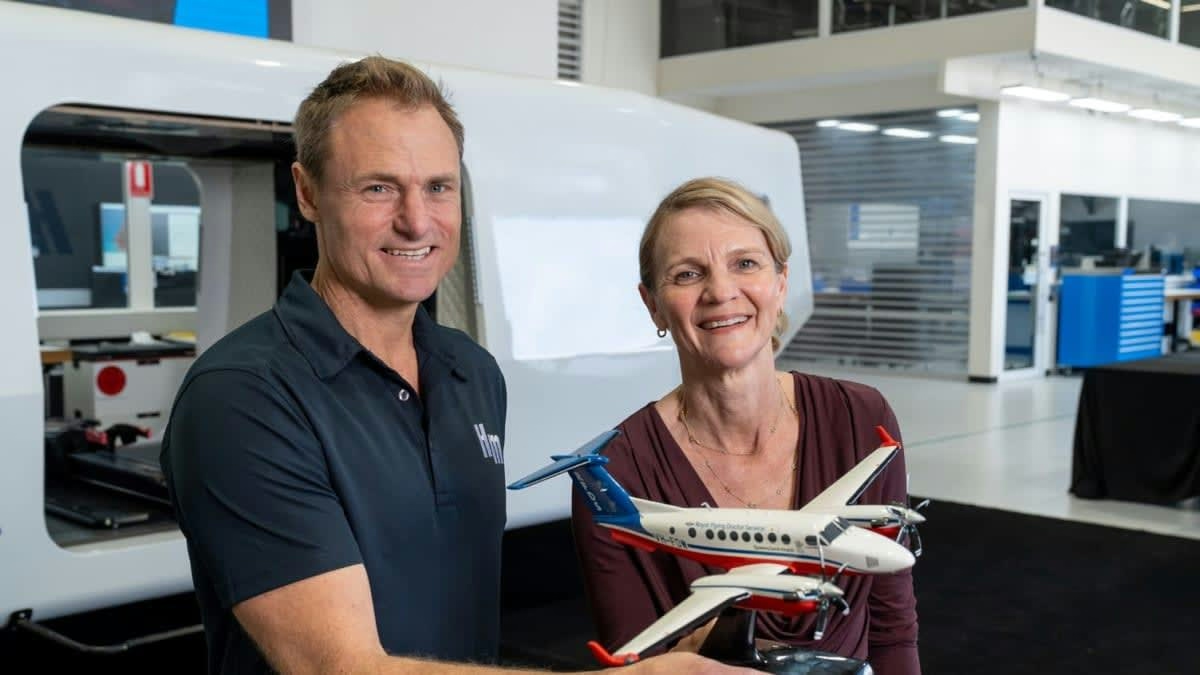
Australia’s RFDS Queensland Section Orders Six King Air 260Cs
Korean Air Finalizes Order for 103 Boeing Jets and Engines
Embraer E195-E2 Features Distinctive Engine Placement Among Regional Jets
What Passengers Can Expect on Boeing’s New 777X Jet

How Ethiopian Airlines Became Africa’s Leading Carrier Amid Gulf Competition
Joby Aviation Extends Autonomous Flight Capabilities with Cross-Country Tour
