
KI-Erkenntnisse in konkrete Maßnahmen überführen

Trends
Categories
Range Comparison Between Airbus A321XLR and Boeing 737 MAX
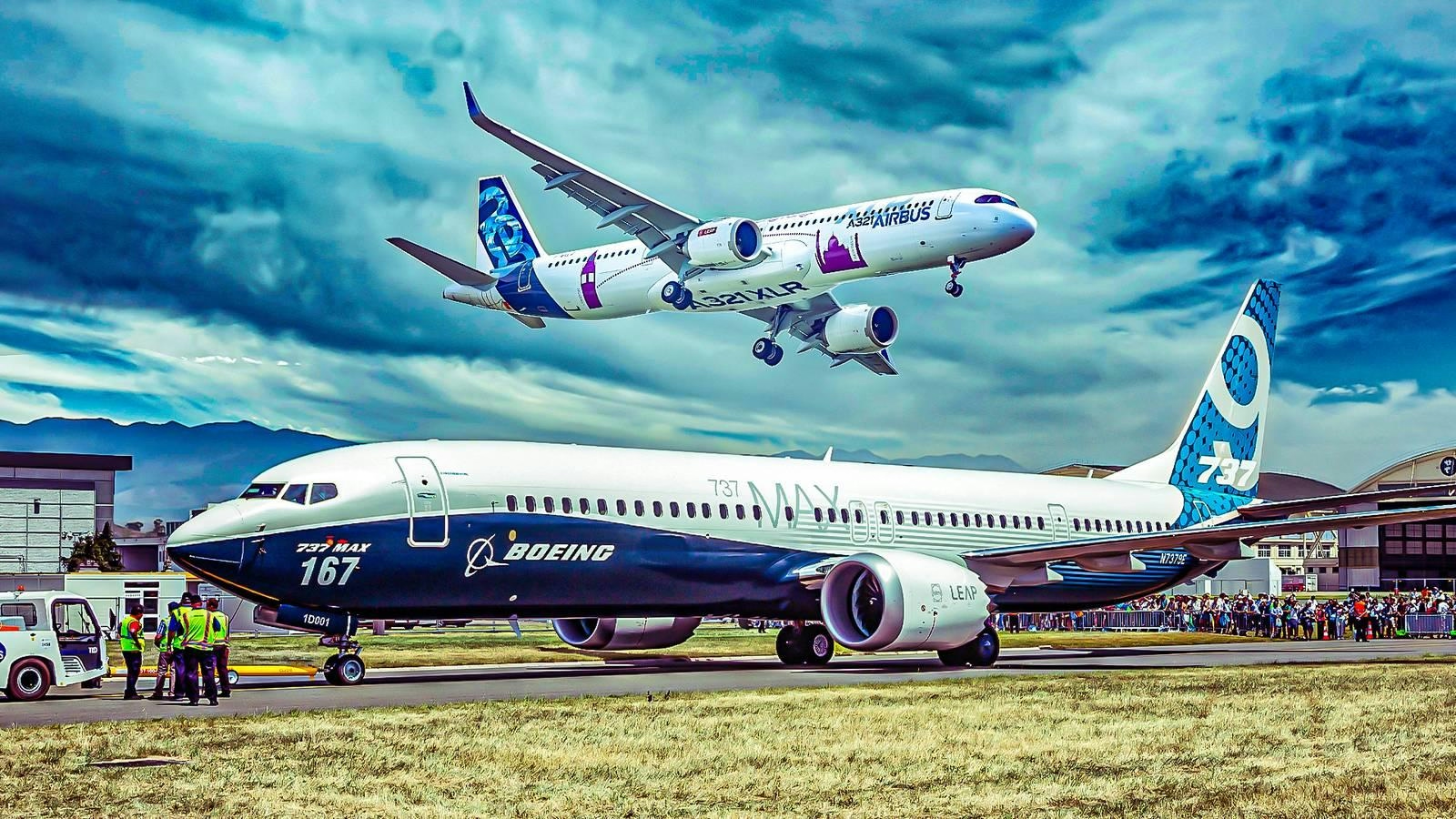
Range Comparison Between Airbus A321XLR and Boeing 737 MAX
In the increasingly competitive single-aisle aircraft market, range has emerged as a pivotal factor influencing airline fleet strategies. Carriers are seeking narrowbody jets capable of flying longer distances to open new city pairs and replace widebodies on long-thin routes. This dynamic has brought the Airbus A321XLR and Boeing 737 MAX families into sharp focus. With the A321XLR now certified and entering service, and the 737 MAX-10 still pending FAA approval, the question of how much greater range Airbus offers compared to Boeing is more pertinent than ever.
Range: The Defining Difference
Airbus markets the A321XLR with a maximum range of up to 4,700 nautical miles and an endurance of approximately 11 hours. This extended reach is achieved through increased fuel capacity and aerodynamic improvements, representing a significant advancement for the A320 family. The A321XLR now enables missions traditionally served by smaller widebodies such as the Boeing 767 or Airbus A310.
By contrast, Boeing’s largest MAX variant, the 737 MAX-10, offers a maximum range of 3,100 nautical miles. Even the longest-range MAX model, the MAX-7, reaches only 3,800 nautical miles. This results in the A321XLR having a range advantage of roughly 1,600 nautical miles over the MAX-10, equating to more than 50% greater reach. Operationally, this allows the A321XLR to connect city pairs like New York–Rome, London–Vancouver, Delhi–London, and Sydney–Kuala Lumpur—routes that exceed the capabilities of the 737 MAX-10.
Strategic and Operational Implications
The additional range of the A321XLR enables airlines to pursue hub-bypass long-haul flights, thereby opening new markets and enhancing efficiency on thinner routes. The aircraft’s 101-tonne maximum takeoff weight, permanent Rear Center Tank, and aerodynamic refinements contribute to fuel burn reductions of up to 30% compared to previous-generation competitors. This efficiency is particularly significant as airlines increasingly prioritize cost management and sustainability.
Industry Context: Challenges and Shifting Dynamics
Both Airbus and Boeing face notable challenges amid these developments. Airbus recently confronted a quality issue involving metal panels and a software recall affecting approximately 6,000 A320 family aircraft, which unsettled investors and led to a decline in its share price. Additionally, Wizz Air has reduced its commitment to the A321XLR and delayed deliveries, reflecting some market caution.
Boeing continues to manage the repercussions of safety concerns and production delays, most recently underscored by a door-plug blow-out incident on the 737 MAX. Despite these setbacks, Boeing has received positive developments: the FAA has approved an increase in MAX production to 42 aircraft per month, and TUI has acknowledged improvements at Boeing. Furthermore, Turkish Airlines’ selection of GE Aerospace engines for its new Boeing 787s signals sustained confidence in Boeing’s widebody offerings.
Conclusion
While both manufacturers navigate operational and reputational challenges, the A321XLR’s substantial range advantage positions it as a transformative option for airlines aiming to expand long-haul narrowbody operations. The 737 MAX-10, although offering high capacity, remains focused on shorter routes. As the A321XLR enters service and the MAX-10 awaits certification, the evolving landscape of single-aisle long-haul travel is poised to reshape global airline networks.

Etihad Airways Suspends Airbus A380 Flights on Key Route

Aditya Birla Group Seeks Approval for Aircraft Leasing in GIFT City

Qatar Airways Highlights Innovation and Connectivity at Arabian Travel Market 2026

Hong Kong's Five-Year Plan Includes Andrew Fan's Aircraft Parts Processing Hub Proposal

ACIA Aero Leasing Delivers ATR72-600 to Air Nostrum

RTX Appoints Jill Albertelli as Head of Pratt & Whitney

TAT Technologies Joins Beyond Aero Hydrogen Aircraft Program

AURAK Study Highlights Barriers to Air Taxi Adoption in Emerging Economies

Xiamen Air Selects Altitude for 787 Maintenance at Heathrow

Etihad and Swissport Extend Global Partnership
