
KI-Erkenntnisse in konkrete Maßnahmen überführen

Trends
Categories
Rising Interest in C919 Highlights Demand-Supply Imbalance at Comac
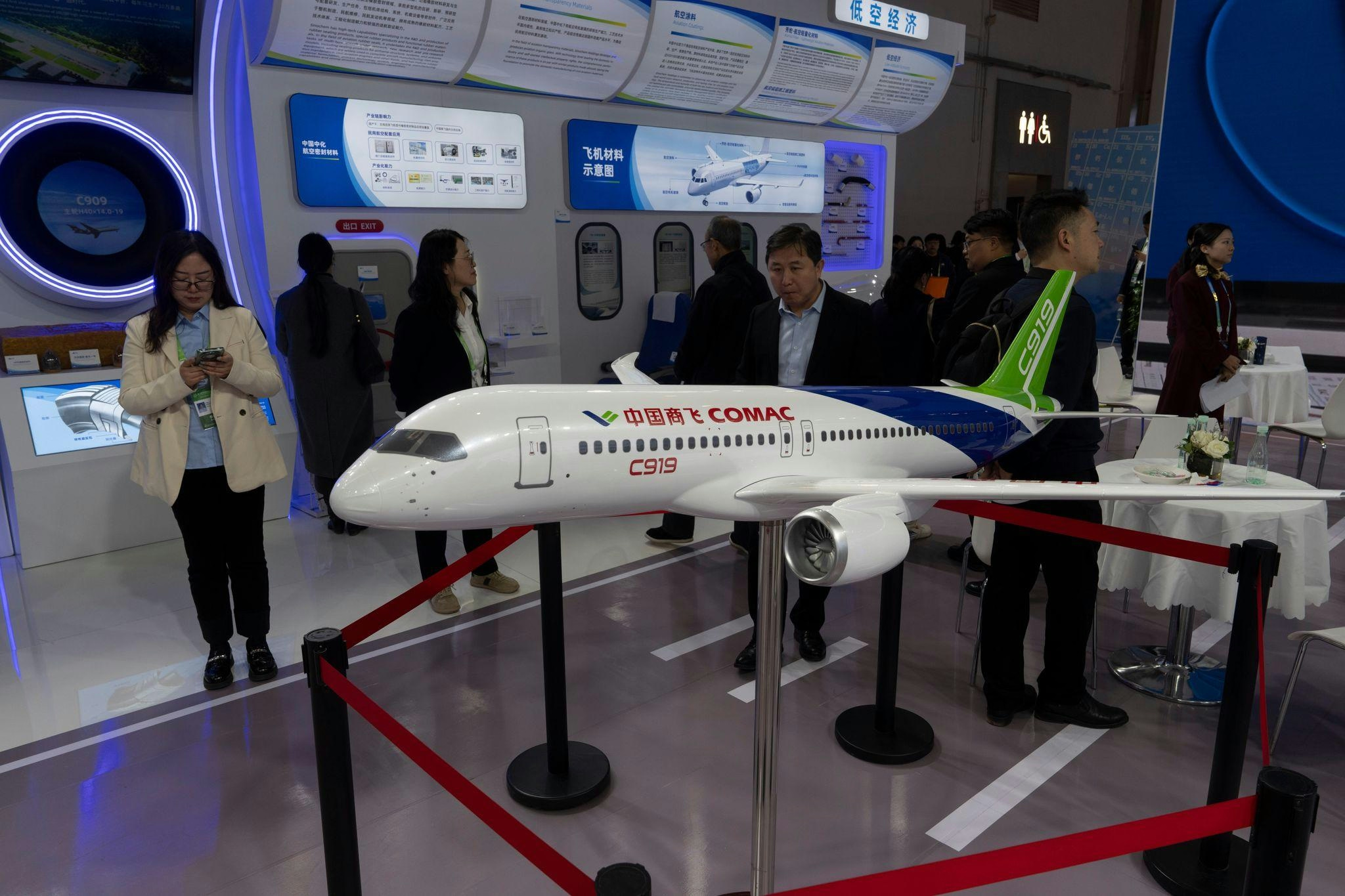
Rising Demand for C919 Exposes Supply Challenges at COMAC
A growing wave of interest from Chinese airlines in the domestically produced C919 jet has brought to light a significant demand-supply imbalance at the Commercial Aircraft Corporation of China (COMAC). While enthusiasm for the home-grown narrowbody aircraft is rising, the manufacturer continues to struggle with production bottlenecks and persistent supply chain disruptions. Industry insiders note that these challenges extend beyond aero engines, affecting the timely delivery of aircraft to carriers eager to expand their fleets.
Airline Enthusiasm Tempered by Production Constraints
At a recent aviation forum in Guangzhou, executives from several Chinese airlines expressed strong interest in incorporating the C919 into their operations. Shenzhen Airlines, China’s fifth-largest carrier by fleet size, conveyed optimism about flying the C919 in the near future but highlighted ongoing supply chain issues and slow production rates as significant obstacles. Currently, Shenzhen Airlines relies predominantly on Airbus aircraft to meet its fleet requirements.
Similarly, Loong Air, one of China’s fastest-growing airlines based in Zhejiang, indicated a keen desire to add the C919 to its expanding and diversifying fleet. However, the limited availability of the aircraft remains a major impediment for both established and emerging carriers seeking to modernize their operations with domestically produced jets.
Technical and Regulatory Hurdles
The introduction of the C919 has encountered challenges typical of new aircraft programs. China Southern Airlines, a major customer, has called for greater transparency from COMAC after engineering teams discovered defects in two recently delivered jets. These early technical issues coincide with COMAC’s ongoing efforts to scale up production and mitigate supply chain disruptions.
Despite these setbacks, the C919 recently achieved a milestone by completing its first international flight, underscoring China’s ambition to challenge the global dominance of Boeing and Airbus. Nevertheless, the aircraft has yet to secure certification from key aviation authorities in Europe and the United States, limiting its attractiveness to international customers and complicating COMAC’s expansion plans beyond the domestic market.
Production Targets and Market Realities
Production figures illustrate the magnitude of the challenge facing COMAC. By the end of last year, only 32 C919s had been delivered, with an additional eight scheduled for delivery in the first half of 2026. In stark contrast, Airbus alone delivered 100 narrowbody jets to China in 2025. COMAC’s ambitious goal of producing 200 C919s annually by 2029 remains distant, as Chinese airlines continue to depend heavily on Boeing and Airbus aircraft to fulfill their operational demands.
As demand for the C919 intensifies, COMAC faces mounting pressure to resolve supply chain bottlenecks, accelerate production, and address quality concerns. These steps are critical if China’s flagship commercial jet is to emerge as a credible competitor on the global aviation stage.

Etihad Airways Suspends Airbus A380 Flights on Key Route

Aditya Birla Group Seeks Approval for Aircraft Leasing in GIFT City

Qatar Airways Highlights Innovation and Connectivity at Arabian Travel Market 2026

Hong Kong's Five-Year Plan Includes Andrew Fan's Aircraft Parts Processing Hub Proposal

ACIA Aero Leasing Delivers ATR72-600 to Air Nostrum

RTX Appoints Jill Albertelli as Head of Pratt & Whitney

TAT Technologies Joins Beyond Aero Hydrogen Aircraft Program

AURAK Study Highlights Barriers to Air Taxi Adoption in Emerging Economies

Xiamen Air Selects Altitude for 787 Maintenance at Heathrow

Etihad and Swissport Extend Global Partnership
