
KI-Erkenntnisse in konkrete Maßnahmen überführen

Trends
Categories
Rolls-Royce Begins Engine Testing for U.S. Army MV-75 Aircraft
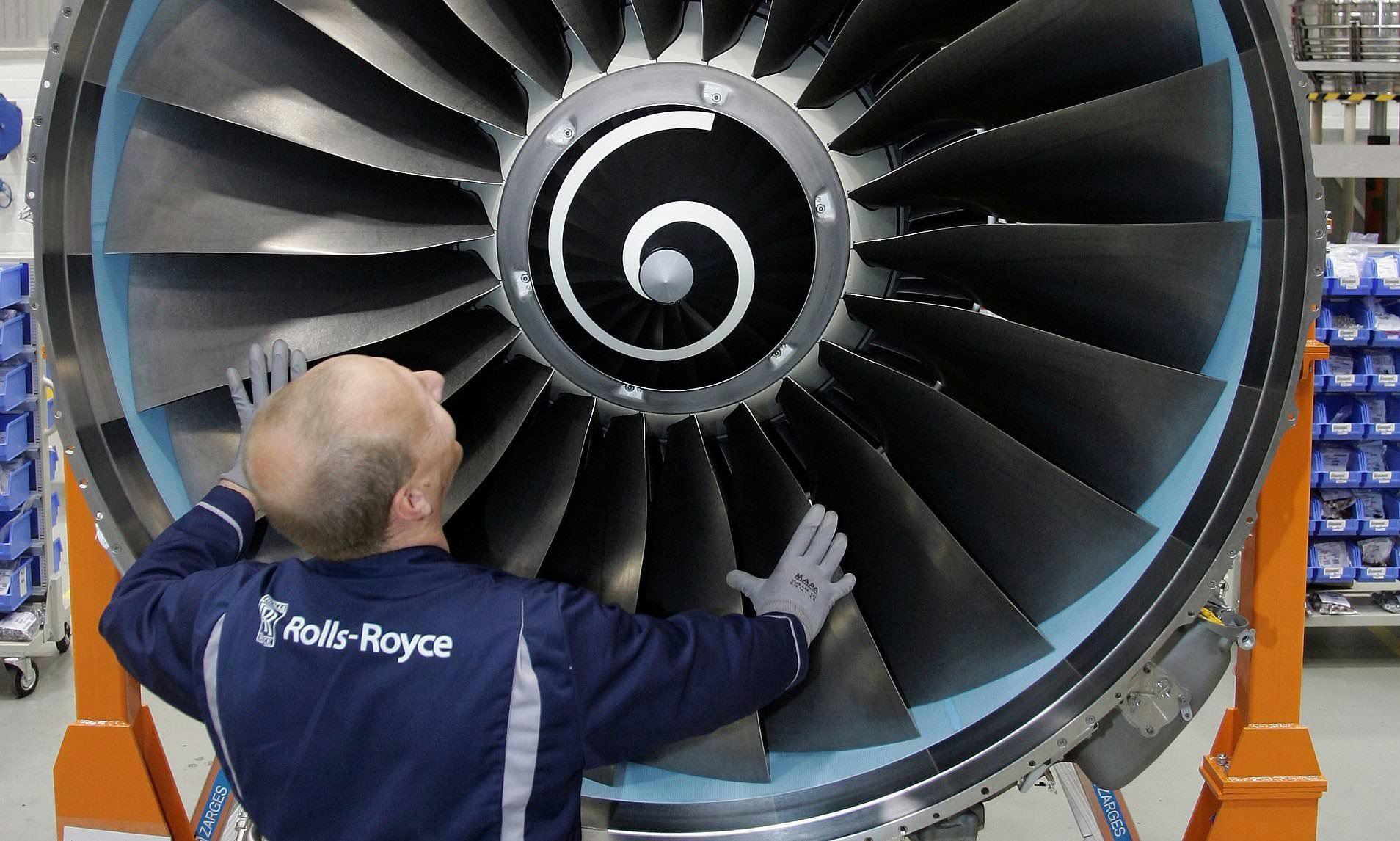
Rolls-Royce Advances Engine Testing for U.S. Army MV-75 Aircraft
Rolls-Royce has initiated testing of its AE 1107F engines at its Indianapolis facility, marking a pivotal development in the delivery of prototypes for the U.S. Army’s MV-75 Future Long Range Assault Aircraft (FLRAA) program. Each MV-75 FLRAA will be equipped with two AE 1107F engines, a next-generation propulsion system designed to significantly enhance speed, range, and combat effectiveness for Army aviation units.
The AE 1107F Engine: A Proven Powerplant for Modern Warfare
The AE 1107F represents the latest advancement in a family of engines that have reliably served the U.S. military for decades. Rolls-Royce highlights the engine’s high power density, cyber-compliant controls, and survivability features tailored to meet the demands of contemporary combat environments. The AE series has accumulated over 90 million flight hours across 16 commercial and military platforms, with approximately 80 percent of components standardized across variants. This common core architecture is intended to mitigate technical risks, accelerate development timelines, and simplify maintenance and supply chain logistics.
Candice Bineyard, director of U.S. business development and future programs for Rolls-Royce Defense, underscored the significance of the current testing phase. She stated, “We continue working closely with the U.S. Army and our industry partners to deliver an ultra-modern propulsion solution with proven, low-risk AE 1107F engines and a fully integrated system design. Engine testing represents the next critical milestone in bringing this revolutionary capability to our service members.”
Strategic Investment and Industry Implications
Testing is being conducted at Rolls-Royce’s advanced manufacturing campus in Indianapolis, the company’s largest facility in the United States. Over the past decade, Rolls-Royce has invested more than $1 billion in technology upgrades, facility enhancements, and testing capabilities at this site to support key U.S. Department of Defense programs, including the MV-75 FLRAA.
The AE 1107 engine family is already extensively deployed, powering multiple variants of the V-22 Osprey used by the U.S. Marine Corps, Navy, and Air Force. Additionally, a marinized version known as the MT7 powers the U.S. Navy’s Ship-to-Shore Connector landing craft.
While the MV-75 FLRAA program aims to replace parts of the Army’s existing rotary-wing fleet with longer-range aircraft, Rolls-Royce faces ongoing challenges. The company must ensure the successful execution of upgrades and meet durability expectations across its Trent engine family. Nevertheless, market sentiment remains optimistic, supported by a recent £200 million share buyback and steady progress in defense engine testing.
Competitors are closely monitoring Rolls-Royce’s developments, particularly as the company seeks to regain market share in the Boeing 787 segment by leveraging successful upgrades to the Trent 7000 engine. As testing of the AE 1107F advances, Rolls-Royce is positioning itself to strengthen its foothold in both military and commercial aerospace sectors.

Etihad Airways Suspends Airbus A380 Flights on Key Route

Aditya Birla Group Seeks Approval for Aircraft Leasing in GIFT City

Qatar Airways Highlights Innovation and Connectivity at Arabian Travel Market 2026

Hong Kong's Five-Year Plan Includes Andrew Fan's Aircraft Parts Processing Hub Proposal

ACIA Aero Leasing Delivers ATR72-600 to Air Nostrum

RTX Appoints Jill Albertelli as Head of Pratt & Whitney

TAT Technologies Joins Beyond Aero Hydrogen Aircraft Program

AURAK Study Highlights Barriers to Air Taxi Adoption in Emerging Economies

Xiamen Air Selects Altitude for 787 Maintenance at Heathrow

Etihad and Swissport Extend Global Partnership
