
KI-Erkenntnisse in konkrete Maßnahmen überführen

Trends
Categories
Rolls-Royce Secures Trent Engine Order from Delta Air Lines
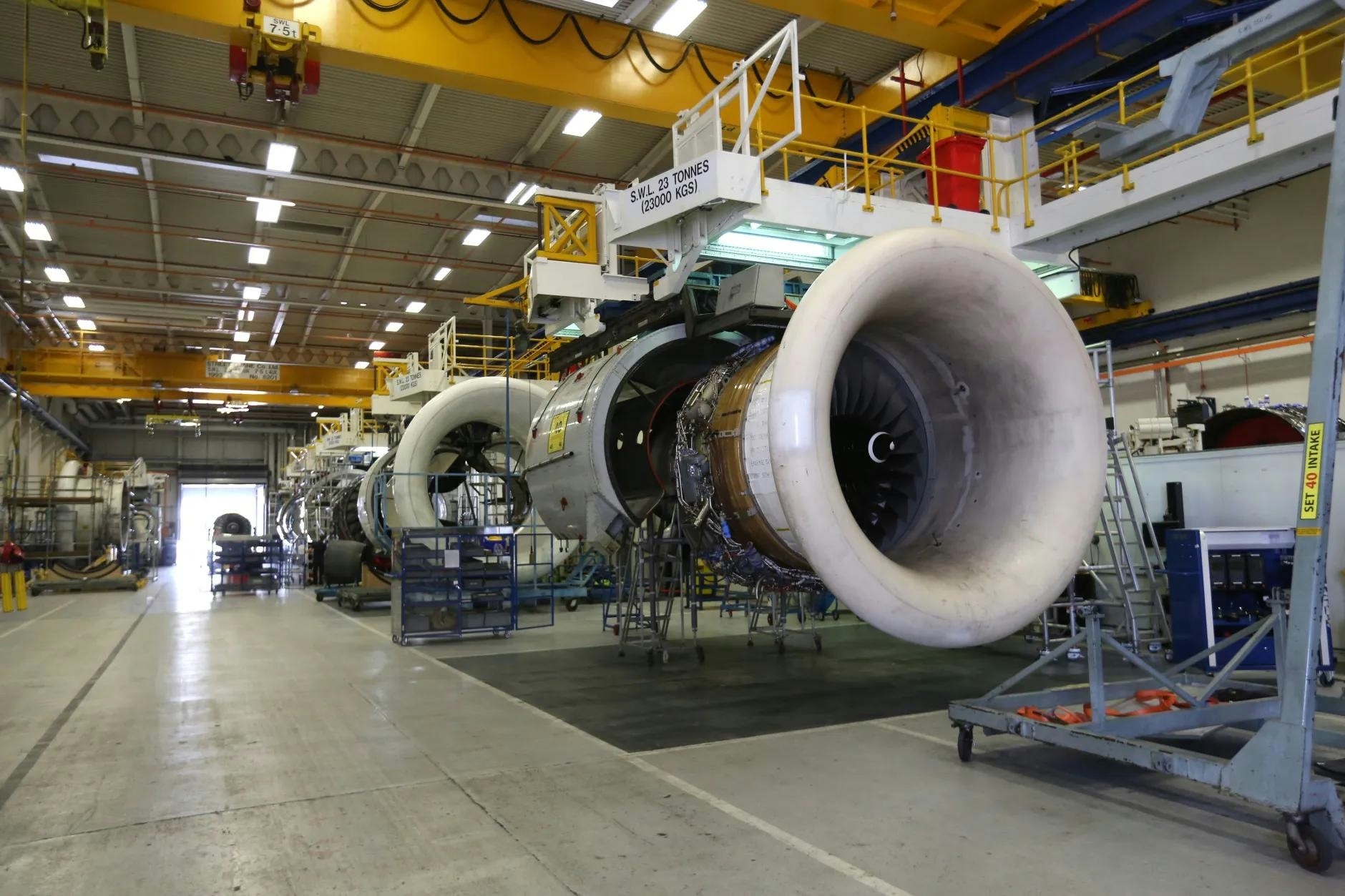
Rolls-Royce Secures Major Trent Engine Order from Delta Air Lines
Rolls-Royce has confirmed a substantial engine order from Delta Air Lines, comprising 30 Trent XWB-84 EP engines and 32 Trent 7000 engines. These powerplants will equip 15 Airbus A350-900 and 16 Airbus A330neo widebody aircraft, respectively. The engines will be maintained under Rolls-Royce’s TotalCare service agreement, which offers comprehensive maintenance and health monitoring to support Delta’s growing fleet.
Strengthening a Strategic Partnership
Delta currently operates a significant number of Rolls-Royce-powered aircraft, including 40 A350-900s fitted with Trent XWB-84 engines and 39 A330neos powered by Trent 7000 engines. This latest order highlights Delta’s continued commitment to expanding its premium cabin offerings and modernizing its widebody fleet with Airbus aircraft. The move further solidifies the longstanding partnership between Delta and Rolls-Royce, reflecting a shared focus on efficiency, reliability, and enhanced passenger experience.
Market Implications and Competitive Landscape
The agreement arrives amid a period of record performance for Rolls-Royce and a positive outlook from industry analysts regarding its power systems division. Securing a high-profile contract with a major carrier like Delta is expected to bolster investor confidence and may have a favorable impact on Rolls-Royce’s stock valuation.
Nonetheless, the order also underscores the intense competition within the aerospace engine market. Rolls-Royce faces persistent challenges from rivals such as General Electric and Pratt & Whitney, who are likely to intensify their efforts to capture future contracts from Delta and other leading airlines. This competitive environment could drive both pricing pressures and accelerated technological advancements as manufacturers strive to maintain or grow their market share.
While Delta’s choice of Airbus widebody aircraft does not directly affect Rolls-Royce’s position in the broader market—given that its engines are not offered on Boeing’s competing models—it reinforces the strategic alignment between Delta, Airbus, and Rolls-Royce. This collaboration positions Rolls-Royce advantageously as airlines increasingly prioritize fleet renewal strategies centered on operational efficiency and premium service quality.
As Rolls-Royce continues to consolidate its market presence, sustaining its competitive advantage through innovation and comprehensive support services will remain essential to its leadership in the global aerospace sector.

Etihad Airways Suspends Airbus A380 Flights on Key Route

Aditya Birla Group Seeks Approval for Aircraft Leasing in GIFT City

Qatar Airways Highlights Innovation and Connectivity at Arabian Travel Market 2026

Hong Kong's Five-Year Plan Includes Andrew Fan's Aircraft Parts Processing Hub Proposal

ACIA Aero Leasing Delivers ATR72-600 to Air Nostrum

RTX Appoints Jill Albertelli as Head of Pratt & Whitney

TAT Technologies Joins Beyond Aero Hydrogen Aircraft Program

AURAK Study Highlights Barriers to Air Taxi Adoption in Emerging Economies

Xiamen Air Selects Altitude for 787 Maintenance at Heathrow

Etihad and Swissport Extend Global Partnership
