
KI-Erkenntnisse in konkrete Maßnahmen überführen

Trends
Categories
Russia Cuts Commercial Aircraft Delivery Targets Amid Sanctions and Conflict
Russia Cuts Commercial Aircraft Delivery Targets Amid Sanctions and Conflict
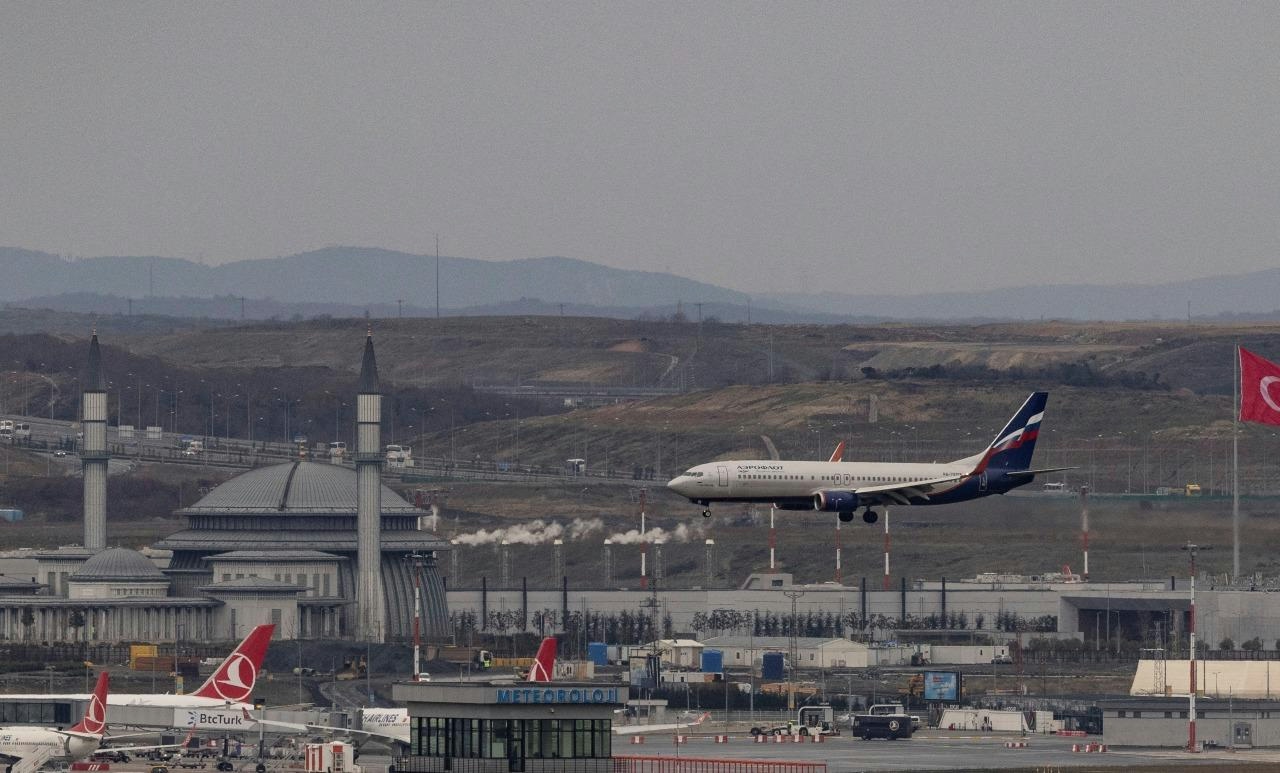
Russia has announced a substantial reduction and delay in its commercial aircraft production targets, underscoring the mounting difficulties confronting its aviation industry amid Western sanctions and the ongoing conflict in Ukraine. The United Aircraft Corporation (UAC) now aims to deliver 570 domestically produced commercial aircraft by 2035, a decrease of 36 aircraft and a five-year extension from the original 2030 deadline. This revision marks a significant departure from the initial 2022 plan, which targeted 606 aircraft by 2030, itself a reduction from over 1,000 aircraft originally planned for delivery within that period.
Revised Production Plans and Delivery Schedule
The updated production plan includes 90 Russified MC-21 aircraft for Aeroflot, supplementing the 18 already contracted, alongside 100 modernized Tu-214s for S7 Airlines and 20 Il-114-300s for Aurora. Notably, the previous intention to produce 14 widebody Il-96-300s has been abandoned. The first delivery batch is expected to consist of 18 MC-21s, 42 SJ-100s, 11 Tu-214s, and three Il-114-300s, with Aeroflot scheduled to receive its MC-21s between 2026 and 2027. UAC also plans to deliver at least 100 import-substituted SJ-100s in the coming years, as older Superjets—originally built with now-sanctioned Western components—are gradually phased out.
Russia’s commercial fleet is at a critical juncture, with many Soviet-era aircraft approaching the end of their operational lifespan and requiring urgent replacement. To address this gap, the Ural Civil Aviation Plant (UCAP) is developing new models, including the nine-seat Baikal, the 44-seat Ladoga, and the 15-19-seat Osvey.
Challenges in Domestic Aircraft Production
Despite these efforts, producing fully Russian-made aircraft remains a formidable challenge. Prior to the conflict, models such as the MC-21 and Superjet depended on 60 to 80 percent imported Western components, including engines. Even the Soviet-era Tu-214 incorporated approximately 13 percent Western parts. The domestically re-engineered MC-21 is heavier, has a reduced range, and its Russian engines are less powerful, less fuel-efficient, and more costly to operate and maintain.
These technical difficulties are compounded by competition for limited industrial resources between the commercial aviation sector and the military, as the war in Ukraine continues to demand significant capacity.
Market and Geopolitical Implications
Broader market dynamics further complicate Russia’s aviation outlook. A potential slowdown in travel demand could alleviate aircraft shortages but may also prompt airlines to reduce capacity, resulting in decreased maintenance, repair, and overhaul (MRO) expenditures and accelerated aircraft retirements. The insurance sector is responding with policy cancellations and rising premiums, adding another layer of complexity.
On the global stage, geopolitical tensions are reshaping the competitive environment. Persistent friction between the United States and China threatens Boeing’s delivery schedules and order books in the Asia-Pacific region, potentially altering market opportunities and challenges for all major aircraft manufacturers.
As Russia navigates these multifaceted pressures, its capacity to modernize and sustain its commercial aviation sector remains uncertain, with sanctions, resource constraints, and shifting global dynamics all exerting significant influence.

Etihad Airways Suspends Airbus A380 Flights on Key Route

Aditya Birla Group Seeks Approval for Aircraft Leasing in GIFT City

Qatar Airways Highlights Innovation and Connectivity at Arabian Travel Market 2026

Hong Kong's Five-Year Plan Includes Andrew Fan's Aircraft Parts Processing Hub Proposal

ACIA Aero Leasing Delivers ATR72-600 to Air Nostrum

RTX Appoints Jill Albertelli as Head of Pratt & Whitney

TAT Technologies Joins Beyond Aero Hydrogen Aircraft Program

AURAK Study Highlights Barriers to Air Taxi Adoption in Emerging Economies

Xiamen Air Selects Altitude for 787 Maintenance at Heathrow

Etihad and Swissport Extend Global Partnership
