
KI-Erkenntnisse in konkrete Maßnahmen überführen

Trends
Categories
Safran Leads Launch of European Clean Aviation TAKE OFF Project
Safran Leads Launch of European Clean Aviation TAKE OFF Project
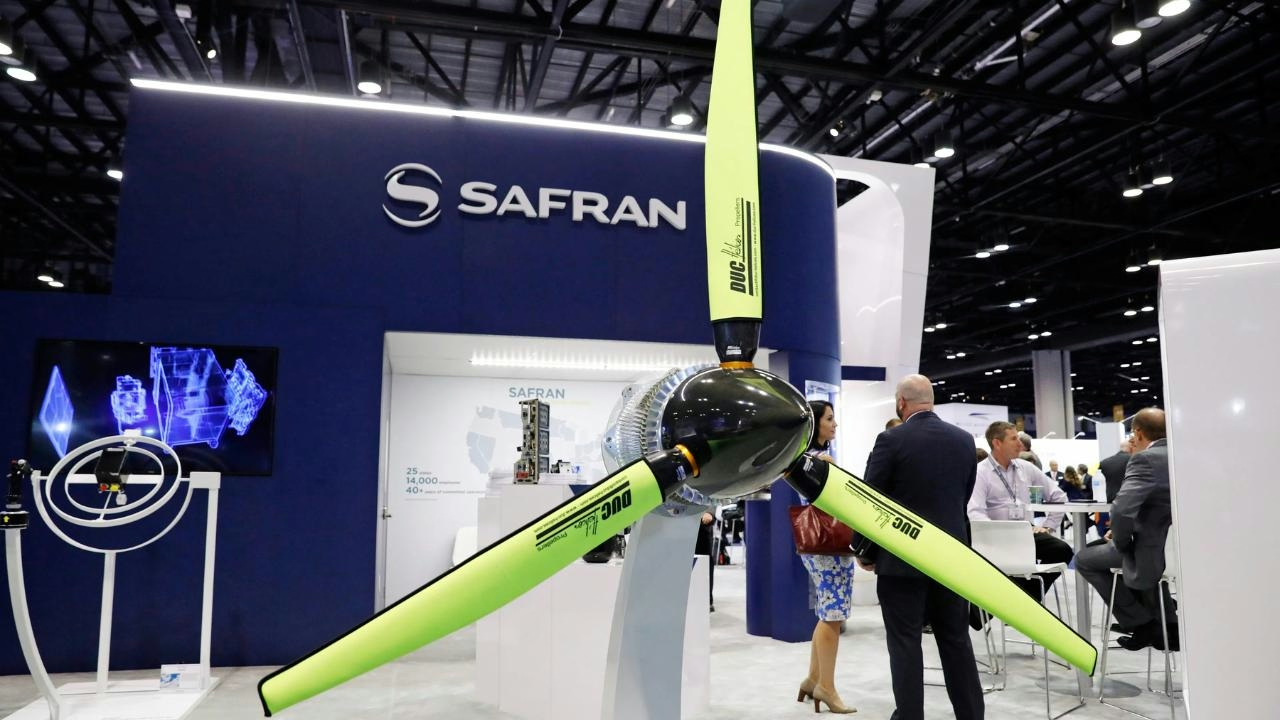
The European Union’s Clean Aviation programme has officially inaugurated the TAKE OFF (Technology And Knowledge for European Open Fan Flight) project, with Safran Aircraft Engines assuming leadership. This ambitious initiative aims to achieve the first flight of an Open Fan engine, representing a pivotal advancement toward more sustainable aviation.
Consortium and Funding
Safran, as the consortium leader, will coordinate a network of 25 partners, including prominent industry players such as Airbus, Avio Aero, and GKN Aerospace, alongside leading universities and research institutions across Europe. The project has secured €100 million in funding from the Clean Aviation public-private partnership, with the objective of delivering a full-scale flight demonstration of the Open Fan engine architecture by the end of the decade.
Building upon the progress made in the Clean Aviation OFELIA (Open Fan for Environmental Low Impact of Aviation) project, TAKE OFF aims to further develop Open Fan technologies. First introduced in 2021 as part of the CFM RISE technology demonstration programme, the Open Fan architecture is designed to achieve a 20% improvement in fuel efficiency for next-generation engines anticipated to enter service in the mid-2030s.
Technological Ambitions and Challenges
Pierre Cottenceau, Vice President of Engineering, Research & Technology at Safran Aircraft Engines, emphasized the project’s significance, stating, “TAKE OFF embodies the European Union and aerospace industry’s shared ambition to make aviation more sustainable. We’re proud to partner with leading industry players on this pivotal project shaping our sector’s future. Project synergies will pave the way for a full-scale Open Fan engine flight demonstration, showcasing the competitive benefits of such architecture in terms of energy efficiency and acoustic performances.”
Despite its promise, the TAKE OFF project faces considerable challenges. The development and testing of the Open Fan engine involve significant technological hurdles, particularly in ensuring reliability, safety, and compliance with evolving regulatory standards. Additionally, securing sufficient funding for the later stages of the project and scaling up production remain critical concerns.
Industry Impact and Market Response
Market reaction to Safran’s leadership has been positive, with investor confidence bolstered by strong aftermarket demand for the company’s jet engines and optimism regarding future profitability. The initiative has also attracted attention from competitors, with industry leaders such as GE Aviation and Rolls-Royce expected to accelerate their own sustainable engine technology programmes in response.
As the TAKE OFF project progresses, its outcome will be closely monitored as an indicator of Europe’s capacity to lead in next-generation, environmentally responsible aviation technologies.

Etihad Airways Suspends Airbus A380 Flights on Key Route

Aditya Birla Group Seeks Approval for Aircraft Leasing in GIFT City

Qatar Airways Highlights Innovation and Connectivity at Arabian Travel Market 2026

Hong Kong's Five-Year Plan Includes Andrew Fan's Aircraft Parts Processing Hub Proposal

ACIA Aero Leasing Delivers ATR72-600 to Air Nostrum

RTX Appoints Jill Albertelli as Head of Pratt & Whitney

TAT Technologies Joins Beyond Aero Hydrogen Aircraft Program

AURAK Study Highlights Barriers to Air Taxi Adoption in Emerging Economies

Xiamen Air Selects Altitude for 787 Maintenance at Heathrow

Etihad and Swissport Extend Global Partnership
