
KI-Erkenntnisse in konkrete Maßnahmen überführen

Trends
Categories
Salaries of Commercial Widebody Captains at Major U.S. Airlines
Salaries of Commercial Widebody Captains at Major U.S. Airlines
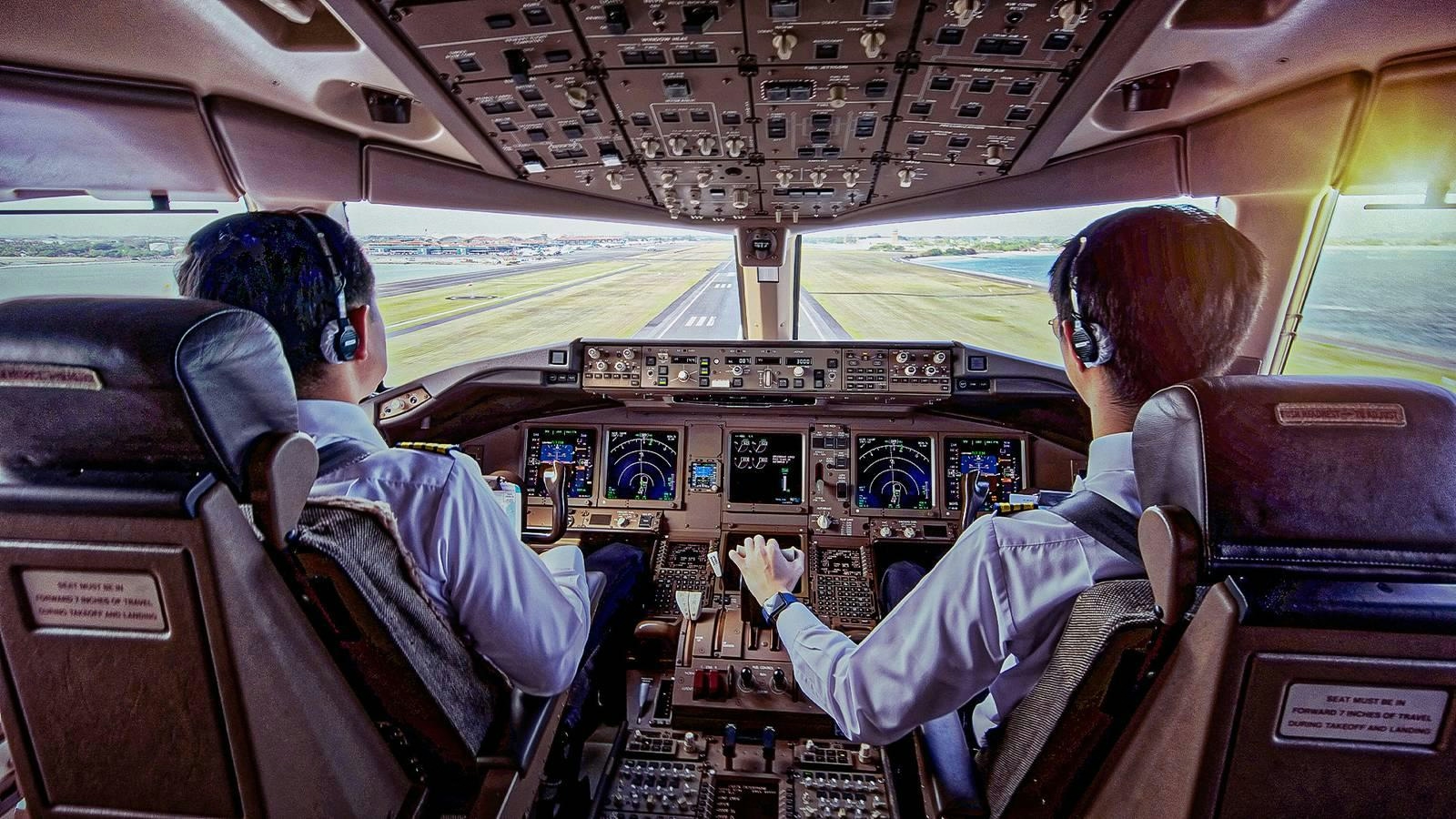
In the United States, pilot compensation is predominantly influenced by seniority, with the most experienced aviators typically occupying the cockpit of widebody aircraft. The conventional career trajectory for commercial pilots is a progressive ascent: beginning with smaller regional aircraft, advancing to narrowbody jets, and ultimately achieving the prestigious role of widebody Captain. This position is widely regarded as the pinnacle of a commercial pilot’s career, although some pilots choose alternative paths, such as flying private jets for a less demanding lifestyle. While this progression is standard, exceptions have emerged, particularly as the industry grapples with pilot shortages that have accelerated promotion timelines.
Career Progression and Pay Structure
The journey of a commercial pilot generally starts with two to three years of rigorous training and initial flight experience. Following this, most pilots spend between two and five years operating regional aircraft before moving on to narrowbody jets for an additional five to twelve years. Some pilots transition directly from regional carriers to major airlines, while others gain experience at low-cost or ultra-low-cost carriers like Frontier, which are characterized by lower pay and higher turnover rates. These carriers often serve as stepping stones for pilots seeking to accumulate flight hours before advancing to major airlines.
Regional carriers offer comparatively lower salaries, a structure that benefits both young pilots aiming to build experience and airlines managing flights with fewer passengers. The majority of commercial aircraft in the U.S. fleet are narrowbody or regional jets, with single-aisle aircraft now comprising approximately 80% of new deliveries. Boeing projects that by 2044, the global fleet will include 1,545 regional jets, 33,285 narrowbody aircraft, and 7,815 widebody aircraft. Within the U.S., only a select group of airlines—namely Delta, United, American, Hawaiian, and Alaska—operate widebody passenger jets.
Seniority and Widebody Captain Salaries
Widebody aircraft assignments are typically reserved for senior pilots, a practice driven not only by the complexity of the aircraft but also by the seniority-based pay system prevalent in the industry. To obtain an Airline Transport Pilot certificate in the U.S., a pilot must accumulate at least 1,500 flight hours. First Officers on widebody jets often possess between 4,000 and 8,000 flight hours and have accrued eight to fifteen years of aviation experience.
Salaries for widebody Captains at major U.S. airlines reflect this extensive expertise. The median base salary for pilots stands at $226,000, significantly exceeding the national median income and underscoring the strong demand for highly skilled aviators. However, these substantial salaries can be tempered by the high cost of living in major airline hubs such as San Francisco and New York, which can place considerable financial strain on pilots despite their earnings.
Industry Challenges and Competitive Responses
The aviation industry continues to confront persistent pilot shortages and escalating operational costs, compelling airlines to reevaluate compensation packages to attract and retain top talent. In response, competitors may enhance pilot training programs, adjust recruitment strategies, or redistribute operational expenses to maintain a competitive advantage. Striking a balance between profitability and employee satisfaction remains a critical challenge, as airlines endeavor to offer attractive salaries while ensuring financial sustainability.
While attaining the role of widebody Captain at a major U.S. airline represents the zenith of a pilot’s career and offers considerable financial rewards, it also entails unique challenges shaped by evolving industry dynamics, cost-of-living pressures, and shifting market demands.
Comments

Etihad Airways Suspends Airbus A380 Flights on Key Route

Aditya Birla Group Seeks Approval for Aircraft Leasing in GIFT City

Qatar Airways Highlights Innovation and Connectivity at Arabian Travel Market 2026

Hong Kong's Five-Year Plan Includes Andrew Fan's Aircraft Parts Processing Hub Proposal

ACIA Aero Leasing Delivers ATR72-600 to Air Nostrum

RTX Appoints Jill Albertelli as Head of Pratt & Whitney

TAT Technologies Joins Beyond Aero Hydrogen Aircraft Program

AURAK Study Highlights Barriers to Air Taxi Adoption in Emerging Economies

Xiamen Air Selects Altitude for 787 Maintenance at Heathrow

Etihad and Swissport Extend Global Partnership
