
KI-Erkenntnisse in konkrete Maßnahmen überführen

Trends
Categories
SAS CEO to Leave for Air Canada in 2027
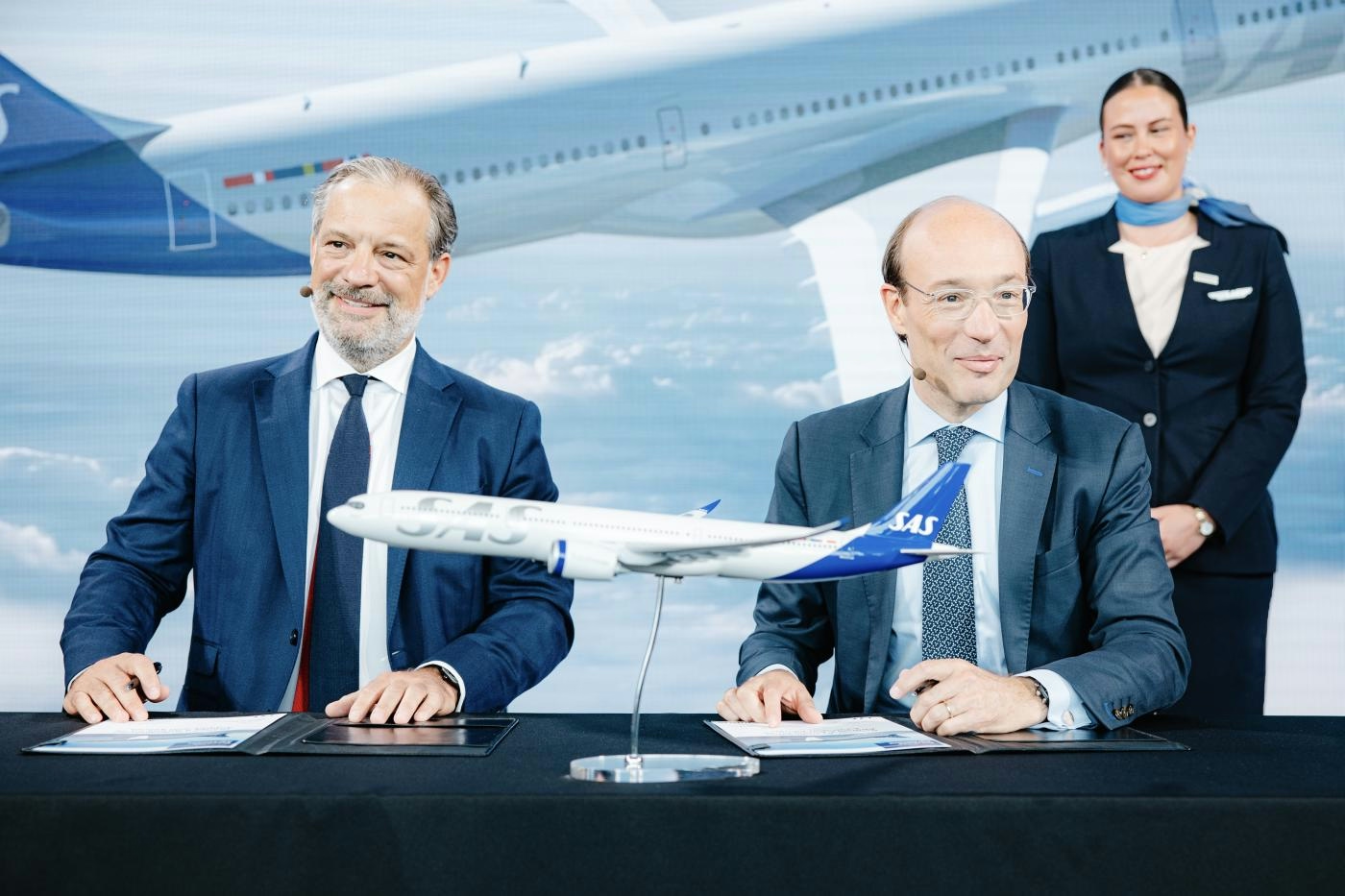
SAS CEO Anko van der Werff to Depart for Air Canada in 2027
SAS has announced that its President and CEO, Anko van der Werff, will step down at the beginning of 2027 to assume the role of CEO at Air Canada. Van der Werff, who joined SAS in 2021, will continue in his current position until his departure, ensuring leadership continuity as the airline advances its strategic objectives.
Leadership and Achievements at SAS
During his tenure, van der Werff led SAS through a significant transformation, overseeing a comprehensive restructuring program that bolstered the airline’s financial stability and enhanced operational performance. Under his guidance, SAS earned recognition as the world’s most punctual airline and made substantial investments to improve the customer experience. Notably, the airline placed a record order for up to 40 Airbus wide-body aircraft, marking the largest fleet investment in its history. Additionally, SAS joined the SkyTeam alliance, expanding its global network and strengthening partnerships with international carriers.
The SAS Board of Directors has commenced the search for van der Werff’s successor, emphasizing that the airline’s current strategy will continue without disruption. The company reaffirmed its commitment to operational excellence, reliability, and delivering a high-quality travel experience as it prepares for a smooth leadership transition.
Challenges and Expectations at Air Canada
Van der Werff’s move to Air Canada arrives at a critical juncture for the Montreal-based carrier. He will face the challenge of adapting to Air Canada’s distinct corporate culture and meeting French-language expectations, which are central to the company’s identity. Furthermore, he will need to navigate the repercussions of the LaGuardia accident that affected the previous CEO’s tenure, a factor likely to influence both internal dynamics and public perception.
Market reactions to van der Werff’s appointment at Air Canada are expected to be initially mixed, with some skepticism regarding his transition from a European to a North American airline. Nevertheless, his strong track record at SAS and reputation for effective leadership have generated optimism about his capacity to guide Air Canada through its next phase. Industry competitors are anticipated to closely observe any strategic shifts under his leadership, potentially adjusting their own approaches should significant changes occur.
SAS’s Continued Strategic Focus
Looking ahead, SAS has affirmed that its priorities remain unchanged. The airline will continue to deepen cooperation with SkyTeam partners, maintain its focus on operational excellence, and invest in product development, digital connectivity, and fleet renewal. Building on the progress achieved in recent years, SAS remains fully committed to executing its long-term strategy and ensuring a seamless leadership transition in early 2027.

Etihad Airways Suspends Airbus A380 Flights on Key Route

Aditya Birla Group Seeks Approval for Aircraft Leasing in GIFT City

Qatar Airways Highlights Innovation and Connectivity at Arabian Travel Market 2026

Hong Kong's Five-Year Plan Includes Andrew Fan's Aircraft Parts Processing Hub Proposal

ACIA Aero Leasing Delivers ATR72-600 to Air Nostrum

RTX Appoints Jill Albertelli as Head of Pratt & Whitney

TAT Technologies Joins Beyond Aero Hydrogen Aircraft Program

AURAK Study Highlights Barriers to Air Taxi Adoption in Emerging Economies

Xiamen Air Selects Altitude for 787 Maintenance at Heathrow

Etihad and Swissport Extend Global Partnership
