Bild

KI-Erkenntnisse in konkrete Maßnahmen überführen

Trage dich noch heute in die AeroGenie-Warteliste ein!

Trends

Categories

Smart Catering Uses AI to Reduce Airline Food Waste
April 21, 2026By ePlane AI
Smart Catering Uses AI to Reduce Airline Food Waste
0
0
Airline Food Waste
Artificial Intelligence
Aviation Sustainability

Smart Catering Uses AI to Reduce Airline Food Waste

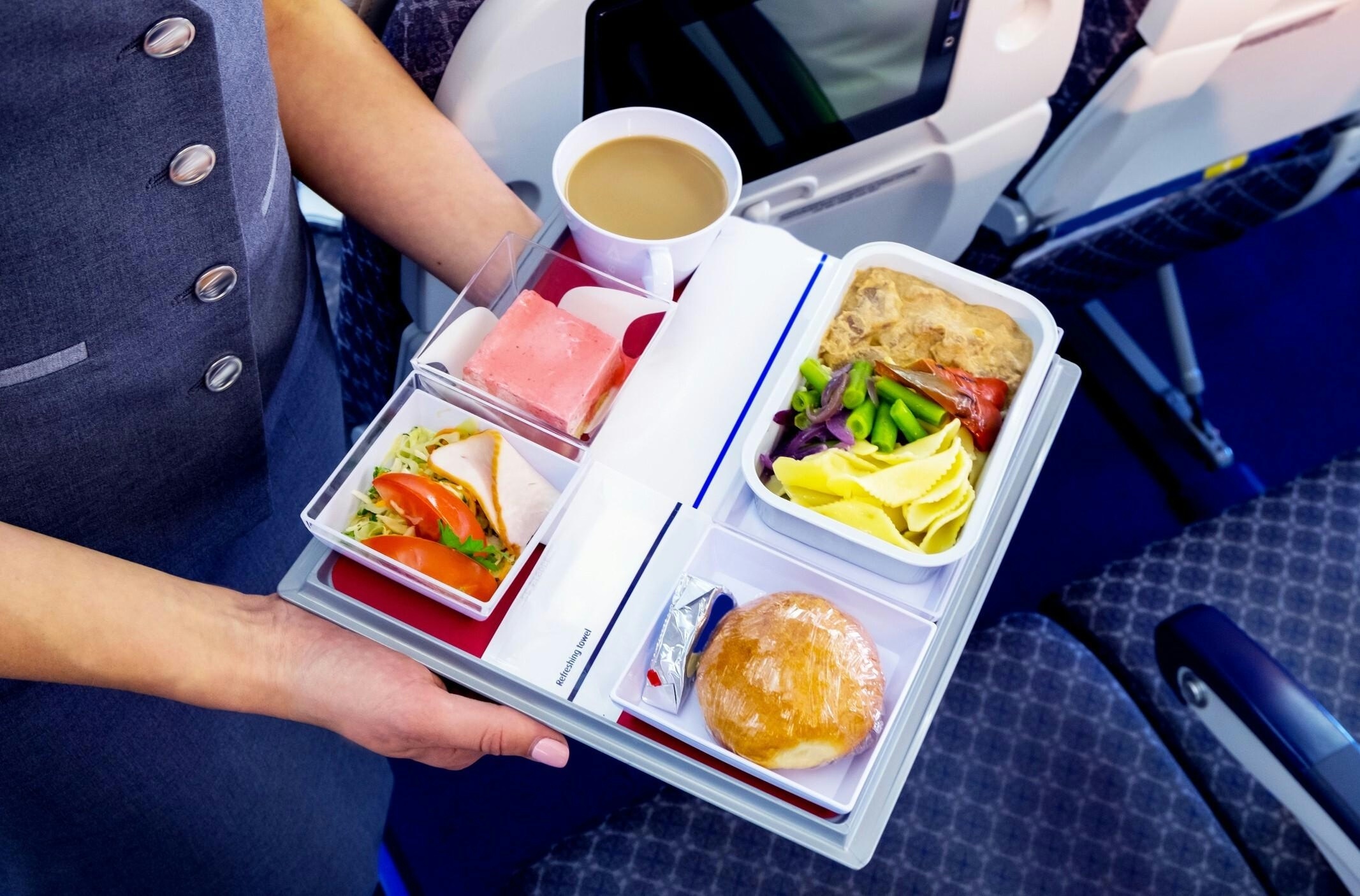
Airlines around the world are increasingly adopting artificial intelligence (AI) to address a significant environmental challenge: the vast quantities of cabin and catering waste produced annually. According to the International Air Transport Association (IATA) and the Aviation Sustainability Forum (ASF), this waste amounts to approximately 3.6 million tonnes each year and is expected to rise to four million tonnes by late 2025. Experts warn that without substantial intervention, airline food waste could potentially double by 2040, driven by growing passenger numbers and outdated operational practices.

The Scale of the Problem

Cabin food waste encompasses untouched meals, partially consumed items, and discarded packaging, collectively rivaling the annual garbage output of mid-sized cities. Airlines frequently over-cater due to conservative meal planning, last-minute passenger changes, dietary restrictions, and regulatory mandates requiring the disposal of opened food, even if it remains uneaten. This issue is particularly pronounced on long-haul flights, where multiple meal services increase the likelihood of surplus food.

Industry analysts caution that if left unaddressed, food waste could become as critical a sustainability concern as aviation emissions. In response, IATA’s commitment to achieving net-zero carbon emissions by 2050 now explicitly includes waste reduction as a core objective. Organizations such as ASF have begun publishing benchmarking data to encourage the modernization of catering practices across the sector.

How AI-Powered Catering Works

AI-driven smart catering systems are revolutionizing the management of in-flight meals. These platforms employ machine learning algorithms to analyze a wide range of data, including historical consumption patterns, real-time booking information, passenger demographics, route preferences, and seasonal trends. By incorporating variables such as cabin class, special meal requests, weather conditions, and crew preferences, the systems can forecast meal requirements with unprecedented precision and continuously refine their predictions.

Integration with inventory management systems allows for real-time adjustments to production schedules, while predictive alerts enable kitchen managers to respond swiftly to unexpected changes in demand. Some solutions utilize Internet of Things (IoT) sensors installed in galley waste bins to measure actual discard volumes, creating immediate feedback loops that further optimize catering operations.

Leading technology providers, including CHOOOSE and specialized aviation tech firms, are developing tailored AI solutions that synchronize with crew management, ground handling, and passenger data systems. Airlines that have implemented these platforms report waste reductions ranging from 15 to 35 percent within the first year of adoption.

Challenges and Industry Response

Despite the promising potential of AI, several challenges remain. Established catering companies may resist changes that disrupt traditional workflows, and integrating new AI systems with existing airline infrastructure can be complex and resource-intensive. Effective waste reduction also depends on comprehensive data collection and analysis, which requires significant investment.

Some airlines have expressed skepticism about AI’s capacity to manage waste in real time, prompting competitors to develop their own AI solutions or enhance existing waste reduction strategies to maintain a competitive advantage. Pilot programs, such as one conducted by Nestlé, have demonstrated AI’s ability to significantly reduce food waste but also underscore risks, including potential digital system failures that could disrupt food supply chains.

Looking Ahead

As the aviation industry pursues ambitious sustainability targets, AI-powered smart catering is emerging as a vital tool in reducing food waste. While challenges persist, the integration of advanced analytics and real-time data offers the prospect of minimizing waste, lowering costs, and reducing the environmental footprint of airline operations.

More news
Adam Goldstein Discusses Archer’s Electric Air Taxis

Adam Goldstein Discusses Archer’s Electric Air Taxis

Adam Goldstein Discusses Archer’s Electric Air Taxis Pioneering a New Era in Urban Mobility For most, the concept of flying cars remains firmly rooted in the realm of science fiction. However, Adam Goldstein, founder and CEO of Archer, envisions a near future where electric vertical takeoff and landing (eVTOL) aircraft become a practical reality. Drawing inspiration from a childhood steeped in optimistic science fiction, Goldstein transitioned from a successful $100 million software exit at Vettery to the demanding aerospace sector. His goal is to revolutionize urban transportation by replacing lengthy, congested commutes with quiet, efficient 10-minute electric flights. Goldstein articulates a transformative vision: “Imagine what you would do with your day if, instead of being stuck bumper to bumper, you could fly over traffic.” He foresees air taxis reshaping residential patterns and daily routines, making distant suburbs and weekend retreats more accessible and fundamentally altering how people allocate their time. Navigating Regulatory and Industry Challenges The journey toward this vision is marked by significant technical and regulatory hurdles. Archer is developing a completely new category of aircraft, a feat not attempted in over six decades. Goldstein acknowledges the complexity of securing Federal Aviation Administration (FAA) certification for such an unprecedented vehicle. “We’re building the first new category of aircraft the FAA has certified in over 60 years. By definition, that’s extremely hard,” he states. Despite these challenges, the company’s optimism is grounded in steady progress through rigorous flight testing, milestone achievements, and lessons learned from setbacks. In addition to regulatory complexities, Archer contends with intense industry competition and legal disputes. Ongoing litigation with rivals such as Joby Aviation and Vertical threatens to delay certification and undermine investor confidence. This uncertainty is reflected in Archer’s sharply declining share price this year, mirroring broader skepticism about the commercial viability and timeline for electric air taxis. A recent U.S. government report further highlighted the operational, commercial, and regulatory obstacles that could postpone the deployment of electric aircraft. The competitive environment is further complicated by strategic partnerships and rivalries. For instance, Delta Air Lines has expressed concerns that an investigation into Joby Aviation’s trade practices might jeopardize its partnership with Joby, a key competitor in the eVTOL market and a significant player challenging Archer’s ambitions. A Vision Anchored in Long-Term Impact Despite these formidable challenges, Goldstein remains steadfast in his commitment to the long-term potential of electric air taxis. Drawing on his experience in software, he emphasizes the need for patience and resilience in hardware development. “Aim high. Hardware demands patience and comes with greater risk. But the impact of creating a physical product that could change the way the world moves is orders of magnitude larger,” he asserts. From funding research at his alma mater, the University of Florida, to navigating the turbulent regulatory and competitive landscape, Goldstein is betting on a future where urban mobility is not only airborne but also efficient and accessible. For Archer, the dream of electric air taxis has moved beyond science fiction into a bold, albeit uncertain, endeavor to transform how cities move.
Military Aviation Maintenance Market Expected to Reach $59.8 Billion by 2035

Military Aviation Maintenance Market Expected to Reach $59.8 Billion by 2035

Military Aviation Maintenance Market Projected to Reach $59.8 Billion by 2035 The global military aviation maintenance, repair, and overhaul (MRO) market is poised for steady expansion, with forecasts indicating it will attain a value of $59.8 billion by 2035. This growth, at a compound annual growth rate (CAGR) of 2.59% from 2026 to 2035, is driven by increasing defense budgets, ongoing fleet modernization efforts, and the imperative to maintain operational readiness amid evolving security challenges. Market Segments and Growth Drivers Fixed-wing aircraft, encompassing fighter jets, transport planes, and surveillance platforms, are expected to dominate the military aviation MRO market in 2025, accounting for approximately 67% of the sector. This predominance reflects the extensive size and maintenance demands of these fleets. Conversely, the rotary-wing segment is anticipated to experience the fastest growth through 2035, as helicopters are increasingly deployed across diverse combat and support roles. Within the MRO categories, engine overhaul remains the largest segment, representing about 36% of the market in 2025. This underscores the critical importance of engine performance in ensuring the safety and reliability of military aircraft. Meanwhile, the component repair and overhaul segment is projected to achieve the highest CAGR over the forecast period, propelled by the rising complexity of avionics, electronics, and modular systems in modern military platforms. The Air Force is expected to maintain a leading position among end-users, holding a 52% market share in 2025 due to its extensive fleet of combat, transport, and surveillance aircraft. Naval aviation, however, is forecast to register the fastest growth, supported by increased investments in aircraft carriers and maritime patrol capabilities. Industry Structure and Regional Dynamics OEM-affiliated maintenance centers are set to dominate the market with a 38% share in 2025, benefiting from direct access to proprietary technologies and certified parts. Nonetheless, independent MRO providers are projected to record the highest growth rate through 2035, as defense organizations increasingly outsource maintenance activities to achieve cost efficiencies. Regionally, North America is expected to lead the market with a 40% revenue share in 2025, driven primarily by substantial U.S. defense spending. The U.S. market alone is forecast to reach $16.44 billion by 2035. Europe follows closely, with projections indicating it will attain $14.66 billion, supported by ongoing defense modernization programs. Technological Advancements and Market Challenges The growing complexity of military aircraft and the imperative for cost-effective maintenance are accelerating the adoption of advanced technologies such as artificial intelligence-driven diagnostics, data analytics, and condition-based monitoring. Predictive maintenance and digital fleet management solutions are increasingly employed to reduce downtime and operational expenses, while third-party outsourcing continues to expand. Despite these advancements, the sector faces significant challenges. An Oliver Wyman survey highlights labor and material shortages, alongside rising costs, as key pressures on MRO providers. These constraints are driving increased expenditure to sustain operational readiness and address the demands of an extended maintenance ‘super cycle.’ In response, industry players are pursuing mergers and acquisitions to enhance capabilities and broaden market reach, exemplified by VSE’s recent $2 billion acquisition of Precision Aviation Group. As defense forces worldwide continue to upgrade legacy fleets and introduce next-generation platforms, the demand for advanced, efficient, and resilient maintenance solutions is expected to remain robust, shaping the military aviation MRO landscape through 2035.
Qatar Airways Increases Widebody Flights on Doha-Dubai Route

Qatar Airways Increases Widebody Flights on Doha-Dubai Route

Qatar Airways Expands Widebody Operations on Doha-Dubai Route Qatar Airways is set to increase its daily flights between Doha and Dubai to five this summer, significantly enhancing capacity on one of the world’s shortest international routes served by widebody aircraft. Beginning in June, the airline will gradually ramp up frequencies to as many as 35 weekly flights between Hamad International Airport and Dubai International Airport. These services will be operated by Boeing 777s and Airbus A350s, aircraft typically deployed for long-haul travel. Strategic Importance of the Doha-Dubai Corridor Despite the short distance of just 380 kilometers (205 nautical miles), the Doha-Dubai route remains highly competitive and in strong demand, largely due to the two cities’ status as major global aviation hubs. Qatar Airways uses Doha as a critical gateway connecting Europe, Asia, Africa, and Oceania, while Dubai serves a similar role for Emirates. This dynamic has made the corridor one of the most contested and busiest international air routes in the Gulf region. The increased flight frequencies are expected to improve connectivity for passengers transferring between Qatar Airways’ extensive long-haul network and destinations within the United Arab Emirates. The carrier recently resumed flights to Dubai and Sharjah in April and restored services to Abu Dhabi in May, further consolidating its regional footprint. The Doha-Dubai market is supported by a mix of business travel, tourism, and connecting passengers moving between the networks of the two flagship airlines. Operational Challenges and Competitive Landscape The expansion presents operational and strategic challenges for Qatar Airways, which must manage increased logistical complexity amid ongoing regional disruptions. The airline has demonstrated resilience in the Middle East’s volatile environment, but the intensified competition with Emirates—whose larger fleet and steady profitability provide a strong market position—adds pressure. Industry analysts expect Emirates to potentially respond by adjusting its own capacity and operations, particularly as it recently announced plans to increase services to Europe. Moreover, Qatar Airways’ broader expansion into South America, with new routes to Caracas and Bogotá, may stretch its resources and management focus. This could affect the airline’s ability to sustain growth on the Doha-Dubai corridor, despite the route’s strategic significance. As Qatar Airways increases its widebody presence on this short yet vital route, it navigates a complex environment of operational demands and competitive pressures, highlighting the critical importance of the Gulf’s busiest air corridor.
Airbus Reports 379 Orders and 81 Deliveries in May 2026

Airbus Reports 379 Orders and 81 Deliveries in May 2026

Airbus Reports Strong Order and Delivery Figures in May 2026 Airbus announced a robust performance in May 2026, securing 379 new aircraft orders and delivering 81 planes to 45 customers, according to the company’s latest monthly report. These figures underscore sustained demand for Airbus’s commercial aircraft, particularly within the A320 family, and reflect a positive market response as the manufacturer intensifies production efforts. Delivery and Order Breakdown In May, Airbus delivered a total of 81 aircraft, comprising 11 A220-300s, one A319neo, 20 A320neos, 41 A321neos, four A330-900s, three A350-900s, and one A350-1000, the latter delivered to Philippine Airlines. Year-to-date, the company has supplied 262 aircraft to 68 customers, indicating a steady increase in output to meet growing market demand. The gross orders for May reached 379 aircraft, with significant contributions from the A220-300 and A320 families. Notably, 156 A220-300s were ordered, including six for Azorra and 150 for AirAsia. The A320neo accounted for 43 orders, with 23 placed by China Southern Airlines and 20 by an undisclosed customer. The A321neo received 164 orders, including 79 from China Southern Airlines, 35 from Xiamen Airlines, and 50 from an undisclosed buyer. Additionally, Airbus secured six orders for the A350F freighter variant—two for Cathay Pacific and four for Air China—and ten A350-900s for Lufthansa. The surge in orders for the A320 family has propelled total orders for this aircraft line beyond the 20,000 mark, reaffirming its enduring appeal among global airlines. Operational Challenges and Market Dynamics Airbus’s capacity to sustain increased production and delivery rates remains a critical focus, particularly following the resolution of administrative delays that had previously affected deliveries to China. The company’s recent performance indicates progress in addressing these challenges, though maintaining elevated output levels will require continued operational diligence. The market has responded positively to Airbus’s May results, with industry analysts highlighting the strength of its order book and delivery momentum. Meanwhile, competition remains intense, as Boeing endeavors to preserve its market share. In April 2026, Boeing delivered 94 commercial narrowbody aircraft, up from 79 in the same month the previous year, reflecting its own efforts to ramp up production in response to Airbus’s advances. As Airbus works through a growing backlog of orders and expands its global customer base, its performance in the coming months will be closely monitored by industry stakeholders and investors alike.
FAI Aviation CEO Discusses Building a Mission-Critical Team

FAI Aviation CEO Discusses Building a Mission-Critical Team

FAI Aviation CEO Discusses Building a Mission-Critical Team Nuremberg Airport’s Strategic Role in Medical Aviation Albrecht Dürer Airport Nuremberg (NUE), a mid-sized German airport, has carved out a significant niche despite its proximity to two of Europe’s busiest hubs. Its unique 24/7 operational license positions it as Germany’s foremost base for medical air services, a capability that has grown increasingly vital amid rising demand for rapid, mission-critical aviation solutions. This strategic advantage was highlighted during the recent Hantavirus outbreak aboard the cruise ship MV Mobius near Tenerife, when medically equipped aircraft from across Europe were mobilized to evacuate over a hundred isolated passengers. Although it remains unclear whether any of these flights operated through Nuremberg, such high-stakes missions are routine for companies based at the airport. FAI Aviation’s Evolution and Operational Readiness Among the key players at Nuremberg is FAI Aviation Group, established in 1986 by local entrepreneur Siegfried Axtmann. What began as a single helicopter operation has expanded into one of Germany’s largest providers of air ambulance and private aviation services. Today, FAI—Flight Ambulance International—operates across three main sectors: air ambulance, executive jet charters, and maintenance, repair, and overhaul (MRO). In an interview at Nuremberg Airport, FAI’s managing director, Georg Gruber, detailed how the company has developed a team capable of managing the demands of urgent medical flights. He described the air ambulance business as “super interesting,” emphasizing its inherently ad-hoc and last-minute nature. All crew members, including pilots, flight attendants, and paramedics, remain on standby at the airport, ready to mobilize within approximately one hour of notification. Aircraft must be prepared for takeoff within two hours, often embarking on missions that span the globe. This rapid response capability requires not only operational readiness but also the expertise to navigate complex international regulations swiftly. Gruber explained that while securing landing rights in the US or Europe is relatively straightforward, missions to Africa or Asia demand more extensive preparation to obtain the necessary permits. FAI’s dedicated in-house operations team plays a critical role in managing these logistical challenges efficiently. Navigating Industry Challenges and Competitive Pressures Building and sustaining such a mission-critical team involves overcoming significant challenges. The pace of technological advancement and the logistical demands of large-scale operations are accelerating, outstripping traditional support models. This dynamic is mirrored in other sectors, such as hyperscale construction and technology services, where rapid innovation and deployment are essential. Industry experts, including Jason Ware of Albion Financial Group, caution that any slowdown in performance could introduce market volatility. Competitors are similarly racing to deploy new infrastructure swiftly, as noted by Armada CEO Dan Wright, who highlights the urgency of rapid deployment in the AI sector. Additionally, Honeywell Aerospace’s CEO Jim Currier anticipates substantial growth following the company’s recent spinoff, underscoring the competitive environment in which FAI operates. For FAI Aviation, maintaining its competitive edge requires not only the ability to respond to emergencies worldwide but also a continuous commitment to adapting its team and operations. This approach ensures the company meets the evolving demands of a high-stakes, fast-moving industry.
Airbus Outlook for May 2026 Highlights China’s Growing Influence

Airbus Outlook for May 2026 Highlights China’s Growing Influence

Airbus Outlook for May 2026 Highlights China’s Growing Influence Strong Order Momentum Driven by Chinese Market Airbus recorded its strongest month of the year in May 2026, reflecting both robust order momentum and the increasing significance of the Chinese market. A notable development was the long-anticipated A220 order from AirAsia, which finally materialized, albeit at the cost of the airline’s previous commitments to the A330neo. Given AirAsia’s historically unpredictable ordering patterns, industry analysts have expressed cautious optimism, suggesting that Airbus likely structured the deal with careful consideration to mitigate risks. China emerged as a critical factor in Airbus’s May performance, contributing 137 of the total 379 orders received during the month. This surge coincided with the resumption of deliveries to China following an administrative delay, resulting in a remarkable 59% year-on-year increase in deliveries for May. The revival of Chinese deliveries not only bolstered Airbus’s monthly figures but also underscored the strategic importance of China’s aviation market in the company’s broader global growth strategy. Despite ongoing speculation about competition from China’s COMAC, Airbus’s strong order book indicates that the duopoly with Boeing remains firmly in place for the time being. Delivery Challenges and Market Reactions While securing orders remains vital, Airbus now faces the challenge of converting these into actual deliveries. The company delivered 81 aircraft in May, a solid performance that must be maintained to meet the annual target of 870 deliveries. Year-to-date deliveries stand at 262, with May alone accounting for 31% of this total. This accelerated pace raises questions about Airbus’s ability to sustain momentum, particularly as the European summer holiday season in August traditionally slows production. Historically, August has posed a bottleneck for Airbus, and analysts warn against underestimating its potential impact on the delivery schedule. Market responses to Airbus’s May performance have been mixed. Although the resumption of deliveries to China supported the monthly figures, Airbus shares declined amid reports of potential delays in A350 deliveries later in the decade. Several analysts have highlighted that China’s market is now central to Airbus’s long-term strategy, and any disruptions—whether political or logistical—could have disproportionate effects on the company’s outlook. Geopolitical Dynamics and Strategic Implications Recent developments have also highlighted the complex geopolitical environment surrounding Airbus’s operations. A dispute with China’s aviation regulator, the Civil Aviation Administration of China (CAAC), temporarily halted Airbus deliveries as leverage to secure European Aviation Safety Agency (EASA) access in Shanghai. This episode demonstrated China’s readiness and capacity to use its market influence to shape European regulatory policy, a tactic that proved successful in this instance. With China firmly established as a key player in the global aerospace market, such strategic maneuvers may become more frequent, impacting both Airbus and its American rival, Boeing. Looking ahead, Airbus faces the dual challenge of capitalizing on strong demand—particularly from China—while managing production constraints and navigating geopolitical headwinds. The coming months will be critical in determining whether Airbus can translate its record order book into sustained delivery performance amid evolving competitive dynamics in the aerospace sector.
Airbus Delays XLR Deliveries to IndiGo Amid Supply Chain Disruptions

Airbus Delays XLR Deliveries to IndiGo Amid Supply Chain Disruptions

Airbus Delays XLR Deliveries to IndiGo Amid Supply Chain Disruptions Airbus SE is experiencing delays in delivering its A321XLR aircraft to IndiGo, Asia’s largest low-cost carrier, as ongoing global supply chain disruptions continue to affect the aviation sector. IndiGo, operated by InterGlobe Aviation Ltd., was originally scheduled to receive nine A321XLR jets this year. However, sources familiar with the matter indicate that the full delivery is unlikely to be completed within the expected timeframe. To date, IndiGo has taken delivery of two A321XLRs, which are currently deployed on routes to Athens and Istanbul, but the arrival of subsequent aircraft has been postponed by several months. Causes and Industry Impact The delivery delays are partly attributed to persistent supply chain challenges faced by Airbus, which have been further complicated by the conflict in the Middle East. IndiGo is reportedly engaged in negotiations with the France-based manufacturer to secure more favorable delivery slots amid these disruptions. While Airbus declined to comment on specific delivery schedules, IndiGo maintains that there has been no official change to its timeline and anticipates receiving its third A321XLR in the near future. The A321XLR, or “extra long range,” is engineered to allow budget carriers to operate long-haul routes using single-aisle aircraft. It offers a range comparable to larger widebody models such as the A330, while maintaining the cost efficiencies of a narrowbody jet. IndiGo has placed an order for 40 of these aircraft as part of its strategy to expand international operations. Nevertheless, the delays add to the challenges the airline faces, including rising jet fuel prices, airspace restrictions, and the operational complexities of flying extended routes on single-aisle planes. Recently, IndiGo reported an unexpected quarterly loss and suspended flights to Hong Kong, Shanghai, and Manchester, citing increased operational costs and longer flight durations. Broader Industry Ramifications The setbacks experienced by IndiGo reflect a wider trend affecting multiple airlines globally. Air Canada has also encountered delays in receiving its A321XLRs, with executive Mark Nasr emphasizing the need for greater business flexibility amid ongoing uncertainty. Similarly, Qantas has postponed its highly anticipated nonstop flights from Australia to London and New York due to supply chain issues, delaying the delivery of its first A350-1000 until April 2027. These disruptions have reverberated through financial markets, with Airbus shares declining by 2.9% following reports of A350 delivery delays. Since beginning deliveries of the A321XLR last year, Airbus has positioned the aircraft as a specialized solution for airlines aiming to expand long-haul services without the complexity and cost of widebody fleets. However, the persistent supply chain difficulties highlight the challenges manufacturers and carriers face in navigating an increasingly volatile global environment.
Air Sénégal Resumes ATR 72-600 Flights

Air Sénégal Resumes ATR 72-600 Flights

Air Sénégal Resumes ATR 72-600 Flights Amid Regional Competition Air Sénégal has reinstated one of its two ATR 72-600 turboprop aircraft into active service after several months of inactivity. The aircraft, registered 6V-ASN and approximately 8.7 years old, resumed operations on May 29, departing from Dakar Blaise Diagne International Airport. It now serves domestic routes to Cap Skirring as well as regional destinations including Banjul in The Gambia and Sal Amilcar Cabral International Airport in Cabo Verde. Prior to its return, the aircraft had been stored in Nouakchott, Mauritania, since March 2024. Fleet Management and Operational Challenges This reactivation marks a shift in Air Sénégal’s fleet strategy. Earlier in 2024, the airline announced its intention to exit the large turboprop segment, placing both of its ATR 72-600s on the market and planning to replace them with smaller Let 410 aircraft for domestic operations. However, the decision to bring 6V-ASN back into service in October 2025 reflects a reassessment aimed at strengthening the domestic network. Meanwhile, the airline’s second ATR 72-600, registered 6V-AMS, remains out of service undergoing maintenance in Ben Slimane, Morocco, since December 2023. Currently, these two ATR aircraft constitute Air Sénégal’s only owned fleet. The remainder of its operational capacity relies on wet-leased aircraft, including two Airbus A320-200s and two Boeing 737-800s from GetJet Airlines, as well as a Boeing 777-200ER from MyWay Airlines. Navigating a Competitive Regional Market Air Sénégal’s decision to resume ATR 72-600 operations occurs against a backdrop of intensifying competition in the West African regional aviation sector. Several carriers, such as AirBorneo, have recently placed substantial orders for ATR aircraft, underscoring a growing industry preference for efficient regional turboprop services. Additionally, market dynamics are evolving as airlines like Berjaya Air introduce premium products, including all-business-class ATR 72-600 flights, which have garnered increased passenger interest in regional travel. These developments present both opportunities and challenges for Air Sénégal. The airline must uphold stringent operational efficiency and safety standards to remain competitive while anticipating potential strategic moves by rivals, including pricing adjustments and regional fleet expansions aimed at safeguarding market share. Efforts to obtain further comment from Air Sénégal regarding its fleet strategy and future plans remain ongoing.
ExecuJet Expands Falcon 7X Maintenance Services in Sydney

ExecuJet Expands Falcon 7X Maintenance Services in Sydney

ExecuJet Expands Falcon 7X Maintenance Services in Sydney Enhancing Capabilities for Heavy Maintenance ExecuJet MRO Services Australasia is significantly expanding its maintenance capabilities at its Sydney facility to accommodate heavy maintenance for the Dassault Falcon 7X. The company plans to commence C-check operations for the Falcon 7X in October 2026, a critical maintenance event required every eight years or after 4,000 flight cycles. To support these complex procedures, ExecuJet is investing in specialized tooling, advanced technical training, and enhanced ground support equipment tailored specifically for the Falcon 7X. As part of this strategic development, two Sydney-based engineers will undergo comprehensive airframe and systems training at FlightSafety International in Paris. Additionally, ExecuJet is recruiting an experienced Falcon 7X engineer from the Middle East to bolster its local technical expertise. Grant Ingall, regional vice president Australasia at ExecuJet MRO Services, emphasized the growing demand for Falcon support in the region, particularly for larger aircraft types, noting that these investments will enable the company to offer more comprehensive and locally accessible maintenance services. Building on Established Falcon Maintenance Operations This expansion complements ExecuJet’s existing Falcon maintenance operations in Australia. The company recently completed a Falcon 2000 C-check, which included a full repaint in collaboration with Douglas Aerospace, and has secured a second Falcon 2000 C-check scheduled for later this year. As a subsidiary of Dassault Aviation, ExecuJet MRO Services Australasia provides both line and base maintenance services to operators across Australia, New Zealand, and the broader Asia-Pacific region. Navigating a Competitive Market Landscape ExecuJet’s expansion occurs amid intensifying competition within the Australian business aviation maintenance sector. Competitors such as Altus Aerospace and West Star Aviation are also investing in expanding their maintenance facilities in the region. This increased competition is expected to drive higher demand for maintenance services but may also lead to more aggressive pricing strategies as companies compete for market share. Industry analysts anticipate that rival firms will respond by enhancing their service offerings or extending their geographic reach to maintain client relationships. In this evolving market environment, ExecuJet’s focused investment in Falcon 7X maintenance positions the company to meet the growing needs of operators seeking comprehensive, locally available support, while addressing the challenges posed by a more competitive landscape.
The Cost of a Lufthansa First-Class Ticket on the Boeing 747-8 in 2026

The Cost of a Lufthansa First-Class Ticket on the Boeing 747-8 in 2026

The Cost of a Lufthansa First-Class Ticket on the Boeing 747-8 in 2026 Lufthansa continues to be one of the few global carriers operating the Boeing 747-8, deploying this iconic aircraft exclusively from its Frankfurt hub. The airline serves 11 long-haul routes to destinations across North America, South America, Africa, and Asia with the 747-8. The first-class experience aboard this aircraft is distinguished by an intimate eight-seat cabin located in the nose of the plane, just below the cockpit—a signature feature that epitomizes luxury travel and commands a premium price. First-Class Pricing Across Lufthansa’s 747-8 Network The cost of a round-trip first-class ticket on Lufthansa’s 747-8 varies significantly depending on the destination. For June 2026, fares listed on Lufthansa’s official website reveal a price range exceeding $4,600 between the most and least expensive routes. The highest fares are found on the longest flights to the US West Coast and Asia, with tickets to Los Angeles priced at $14,842, San Francisco at $14,749, and Tokyo at $14,831. Other major North American destinations include Chicago at $14,091, Mexico City at $13,962, Newark at $13,900, Miami at $13,789, and Washington Dulles, which offers the lowest US fare at $13,382. South American and African routes tend to be less costly, with Johannesburg priced at $12,820, São Paulo at $12,728, and Buenos Aires, despite being one of the longest flights, offering the lowest overall fare at $10,100. Overall, first-class fares on the 747-8 range from approximately $10,090 to $14,842, with most US routes clustered between $12,819 and $14,112. These prices include not only a seat in the exclusive nose cabin but also chauffeur transfers and access to Lufthansa’s standalone First Class Terminal in Frankfurt—a comprehensive package that often undercuts comparable offerings from Gulf and Asian carriers. Factors Influencing Pricing Contrary to expectations that distance would be the primary determinant of ticket prices, Lufthansa’s fare structure reveals a more complex dynamic. For instance, Buenos Aires, one of the longest routes, is the cheapest, while Tokyo and Los Angeles command the highest fares despite shorter distances. Pricing is therefore influenced more by factors such as demand, competition, and the strength of the premium travel market on each route rather than purely by flight length. Market Challenges and Future Outlook Looking ahead to 2026, Lufthansa faces considerable challenges that may affect first-class pricing. The airline anticipates a €1.7 billion increase in fuel costs, largely driven by ongoing conflict in the Middle East. This significant rise in operational expenses could compel Lufthansa to revise its pricing strategy, potentially resulting in higher first-class fares. Industry observers and travelers alike will be closely monitoring how the airline manages these rising costs while striving to maintain competitive pricing. Competition is also intensifying, with carriers such as Condor positioning themselves as network airlines to challenge Lufthansa’s market dominance. This evolving competitive landscape is likely to influence fare structures and market dynamics further. Additionally, Lufthansa’s continued investment in both Airbus and Boeing widebody aircraft reflects a strategic effort to diversify its fleet, a move that may impact operational flexibility and ticket pricing in the coming years. While Lufthansa’s 747-8 first-class fares in 2026 are shaped by a complex interplay of market forces, operational costs, and competitive pressures, the airline’s commitment to delivering a premium service experience remains evident amid an uncertain industry environment.
line









