
KI-Erkenntnisse in konkrete Maßnahmen überführen

Trends
Categories
SR-71 Blackbird Loses Both Engines at 83,000 Feet Over Russia, Crew Faces Near-Death Escape
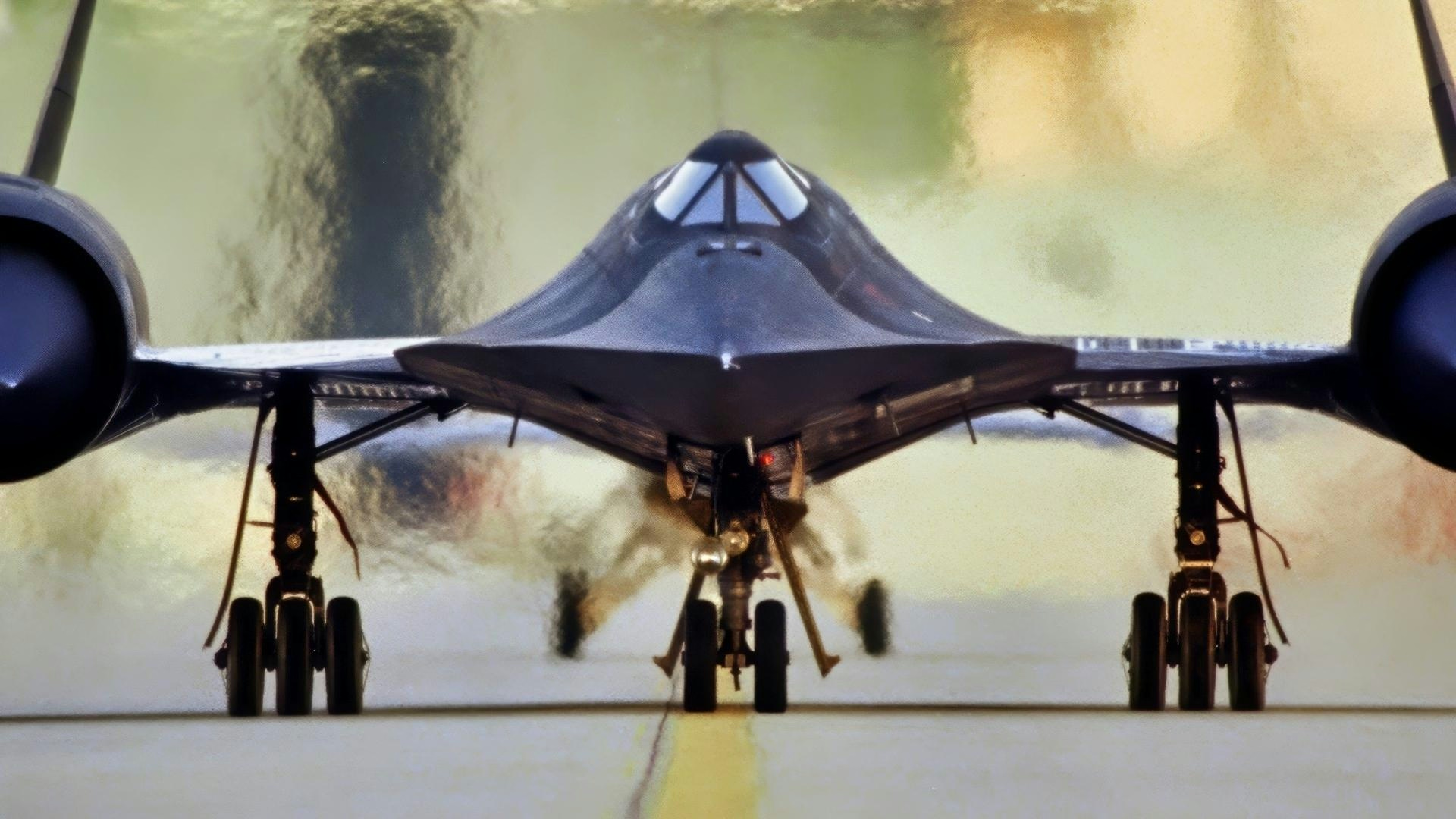
SR-71 Blackbird Loses Both Engines at 83,000 Feet Over Russia, Crew Faces Near-Death Escape
At an altitude of 83,000 feet above Soviet territory, the SR-71 Blackbird experienced a catastrophic failure when both of its engines shut down while flying at Mach 3. This critical malfunction forced the crew into a dire predicament: either eject over hostile airspace or attempt to restart the engines while descending rapidly toward the Barents Sea. First revealed in the May 2013 issue of Aviation History, this incident highlights the extraordinary capabilities of the Cold War reconnaissance aircraft as well as the extreme risks faced by its pilots.
The SR-71: Engineering for Speed and Survival
Conceived in the 1960s by Lockheed’s Skunk Works under the leadership of Kelly Johnson, the SR-71 Blackbird was purpose-built for intelligence gathering over denied airspace, particularly that of the Soviet Union. Entering operational service in 1966, the aircraft was equipped with cutting-edge sensors designed to monitor missile installations and naval bases in near real time. Its primary defense was not stealth technology but unmatched speed and altitude. Capable of cruising at Mach 3.2—exceeding 2,000 miles per hour—and flying above 80,000 feet, the SR-71 could outrun virtually any threat, including surface-to-air missiles.
This extraordinary performance, however, came with significant engineering challenges. The aircraft’s titanium airframe endured skin temperatures surpassing 500 degrees Fahrenheit, expanding during flight due to intense heat. The Pratt & Whitney J58 engines operated partially as ramjets at high speeds, demanding flawless functionality from every component. Any failure in this complex system risked catastrophic consequences.
The Dangers of High-Altitude Flight
Operating at such extreme altitudes and speeds exposed the SR-71 to unique hazards. One of the most perilous technical issues was the “unstart,” a sudden collapse of the supersonic shockwave within the engine intake that instantly disrupted airflow and caused a rapid loss of thrust. In the incident over Russia, both engines failed simultaneously, leaving the crew with only seconds to respond.
This emergency underscored the critical importance of advanced ejection systems and rapid response protocols. At such altitudes and velocities, the margin for error was virtually nonexistent. The crew’s successful escape not only demonstrated their exceptional training and composure under pressure but also emphasized the necessity of robust emergency procedures in high-performance military aircraft.
Broader Implications and Industry Impact
The event also brought attention to the essential role of anti-icing systems and the specific risks associated with high-altitude operations. Engine failures at these heights can be triggered by factors such as ice accumulation or disruptions in engine intake airflow, making reliable anti-icing technology indispensable.
Incidents of this nature often prompt increased focus on aircraft safety systems across the aerospace industry. Competitors and manufacturers may accelerate efforts to enhance reliability and emergency capabilities, fostering innovation in both military and civilian aviation sectors.
Legacy of the Blackbird
Despite the inherent dangers and technical challenges, the SR-71’s operational record remains unparalleled. Throughout decades of service, not a single aircraft was ever shot down. Nevertheless, episodes like the engine failure over Soviet airspace serve as stark reminders that even the most advanced machines are vulnerable. The safety of their crews depends on a delicate balance of cutting-edge technology, rigorous training, and split-second decision-making under extreme conditions.

Etihad Airways Suspends Airbus A380 Flights on Key Route

Aditya Birla Group Seeks Approval for Aircraft Leasing in GIFT City

Qatar Airways Highlights Innovation and Connectivity at Arabian Travel Market 2026

Hong Kong's Five-Year Plan Includes Andrew Fan's Aircraft Parts Processing Hub Proposal

ACIA Aero Leasing Delivers ATR72-600 to Air Nostrum

RTX Appoints Jill Albertelli as Head of Pratt & Whitney

TAT Technologies Joins Beyond Aero Hydrogen Aircraft Program

AURAK Study Highlights Barriers to Air Taxi Adoption in Emerging Economies

Xiamen Air Selects Altitude for 787 Maintenance at Heathrow

Etihad and Swissport Extend Global Partnership
