
KI-Erkenntnisse in konkrete Maßnahmen überführen

Trends
Categories
SR-71 Pilot Recalls Single-Engine Emergency While Flying the U-2 and Blackbird
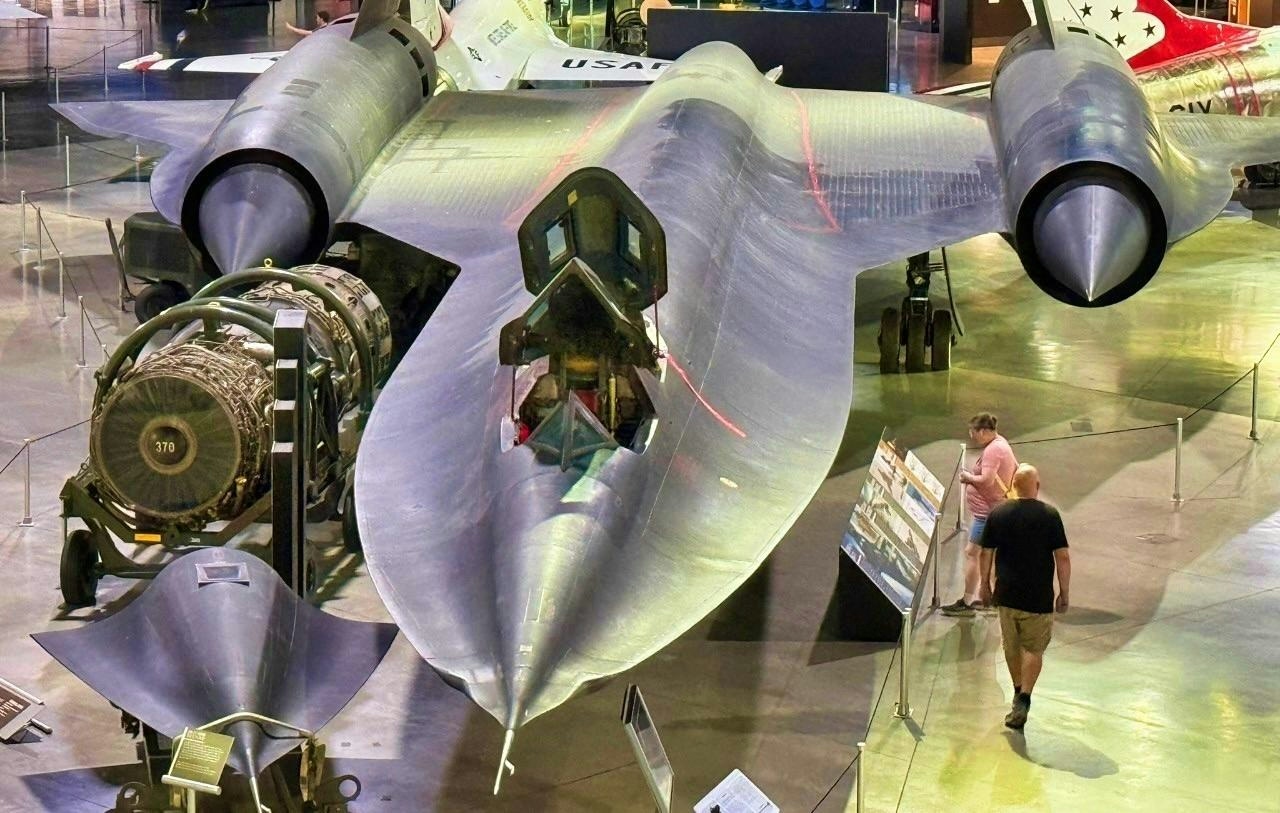
SR-71 Pilot Reflects on Single-Engine Emergency Experience in U-2 and Blackbird
Lionel “Stormy” Boudreaux, among a select group of pilots who flew operational missions in both the U-2 and the SR-71 Blackbird, recently provided a detailed account of a critical aspect of Cold War aviation. In an in-depth interview, Boudreaux recounted the complexities of managing single-engine emergencies in the world’s fastest reconnaissance aircraft, offering a rare and insightful perspective on the technical challenges and human factors involved in operating these legendary spy planes.
Managing Single-Engine Emergencies in the SR-71
Boudreaux described a well-known photograph depicting an SR-71 climbing out with one engine in full afterburner while the other remained at idle. This image, he explained, captures a practice single-engine go-around maneuver, which requires exceptional precision and control. “In this photo, the left engine is at idle, the right engine is in full afterburner. The pilot has applied full left rudder and is beginning a right bank, all to keep the aircraft straight,” Boudreaux said. He emphasized that the landing gear was already retracted, a crucial factor in controlling the aircraft’s yaw during such emergencies.
The SR-71’s design featured a unique dual hydraulic system—left and right—that allowed either system to retract the landing gear, a capability uncommon in most aircraft. Boudreaux highlighted the importance of this feature during single-engine failures, especially at low speeds. “With the nose gear down and the aircraft in a significant yaw, the nose gear acted like a fin in the airflow, worsening the yaw and making recovery nearly impossible,” he explained. The dual hydraulic setup ensured that the landing gear could be raised even if one engine failed, underscoring the advanced engineering that characterized the Blackbird.
The SR-71’s Role in Cold War Aviation
Boudreaux’s reflections come amid the broader context of Cold War tensions, during which the SR-71’s extraordinary capabilities were frequently tested. He recalled an incident in which the Blackbird successfully evaded a missile launched by a Soviet MiG-25, highlighting both the threat posed by advanced Soviet interceptors and the imperative for the United States to maintain technological superiority. The SR-71’s sophisticated defensive electronic systems were instrumental in such encounters, enabling it to outpace and outmaneuver threats that few other aircraft could withstand.
The Blackbird’s record-breaking coast-to-coast flights and its critical role in reconnaissance missions solidified its place in aviation history. Its technological innovations not only shaped U.S. intelligence-gathering efforts during the Cold War but also spurred advancements in reconnaissance and interceptor programs worldwide. The legacy of the SR-71 continues to influence modern aviation and defense strategies as nations strive to meet or exceed the standards set by this iconic aircraft.
For Boudreaux, the choice between flying the U-2 or the SR-71 was straightforward: “Whichever one I was in—I love to fly!” His recollections stand as a testament to the skill, innovation, and high-stakes environment that defined an era of aerial espionage.

Etihad Airways Suspends Airbus A380 Flights on Key Route

Aditya Birla Group Seeks Approval for Aircraft Leasing in GIFT City

Qatar Airways Highlights Innovation and Connectivity at Arabian Travel Market 2026

Hong Kong's Five-Year Plan Includes Andrew Fan's Aircraft Parts Processing Hub Proposal

ACIA Aero Leasing Delivers ATR72-600 to Air Nostrum

RTX Appoints Jill Albertelli as Head of Pratt & Whitney

TAT Technologies Joins Beyond Aero Hydrogen Aircraft Program

AURAK Study Highlights Barriers to Air Taxi Adoption in Emerging Economies

Xiamen Air Selects Altitude for 787 Maintenance at Heathrow

Etihad and Swissport Extend Global Partnership
