
KI-Erkenntnisse in konkrete Maßnahmen überführen

Trends
Categories
STARLUX Unveils Second A350-1000 Featuring Gold Sorayama Livery
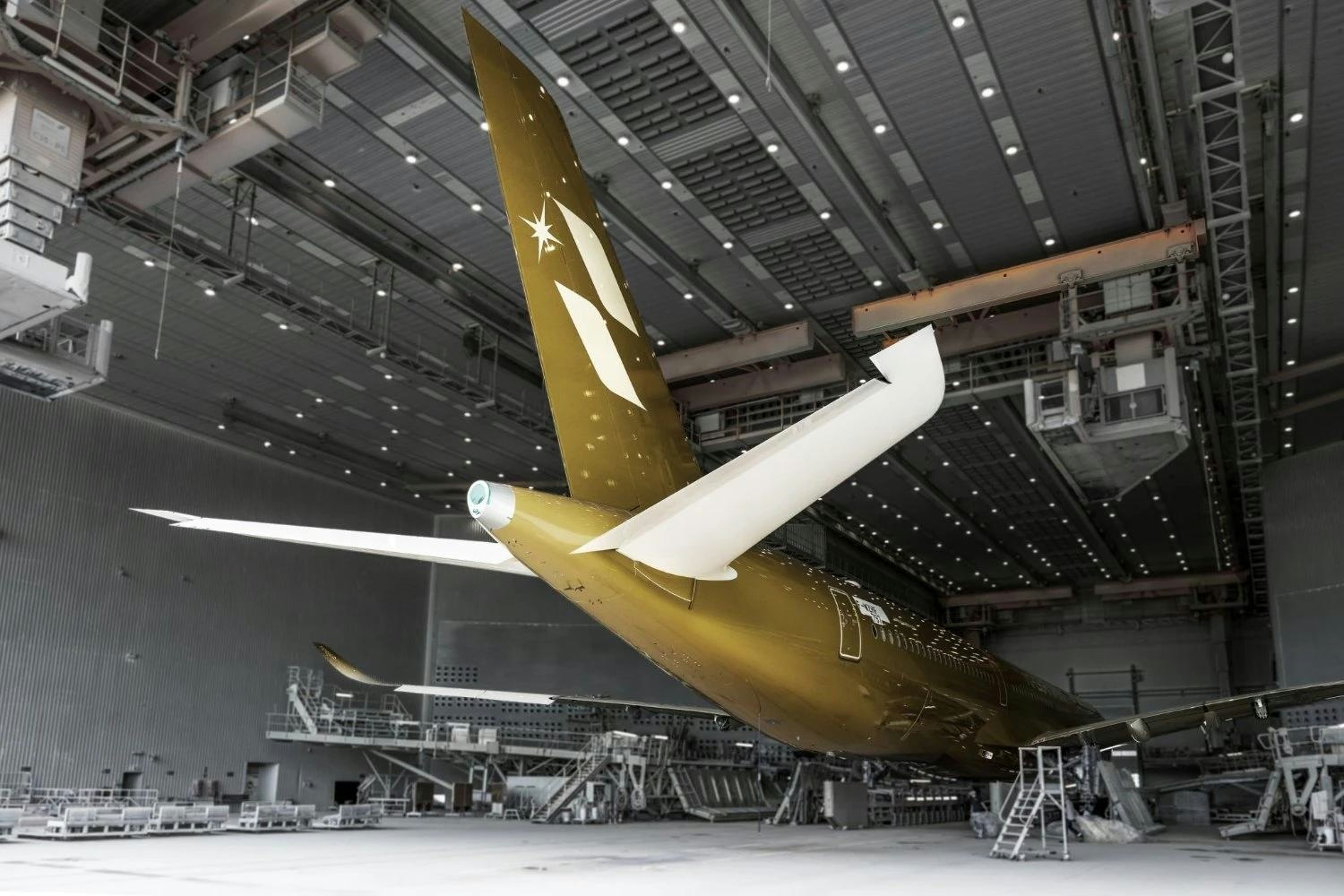
STARLUX Unveils Second A350-1000 Featuring Gold Sorayama Livery
STARLUX Airlines has unveiled its second Airbus A350-1000, distinguished by a striking gold metallic livery crafted by acclaimed Japanese artist Hajime Sorayama. Registered as B-58554, the aircraft recently emerged from the paint shop in Toulouse, showcasing a reflective gold finish that envelops both the fuselage and engines. This latest addition continues the airline’s AIRSORAYAMA series, following the debut of a silver-painted A350-1000 earlier this year in March.
Artistic Collaboration and Technical Innovation
The partnership between STARLUX and Sorayama aims to evoke a “liquid metal” aesthetic, achieved through a meticulous application of multiple layers of specialized paint. This innovative coating process was developed in collaboration with Airbus and German manufacturer Mankiewicz. Utilizing high-concentration mica pigments, the technique produces the aircraft’s distinctive reflective effect while meeting rigorous aviation safety and durability standards.
Both the gold and silver AIRSORAYAMA A350-1000s are slated for delivery and entry into service in the third quarter of 2026. These aircraft form a key component of STARLUX’s strategic expansion of its long-haul operations from its Taipei hub. The airline currently operates a diverse fleet of 30 Airbus aircraft, including A321neo, A330-900, and A350-900 models, alongside one A350-1000 already in service. Additional orders are in place to support the airline’s growth trajectory.
Strategic Challenges Amid Expansion
Despite the visual and technological appeal of the new A350-1000s, STARLUX faces considerable challenges. The substantial initial investment and ongoing maintenance costs associated with these advanced aircraft could exert pressure on the airline’s financial performance. Moreover, as STARLUX broadens its long-haul network, it confronts intensifying competition from other Asia-Pacific carriers, many of which are simultaneously upgrading their fleets and enhancing service offerings.
Competitors may respond to STARLUX’s fleet expansion and distinctive branding by accelerating their own aircraft acquisitions, implementing cabin upgrades, or launching new marketing campaigns to differentiate themselves. This evolving competitive environment highlights the critical importance of innovation and operational efficiency as STARLUX endeavors to establish itself as a leading premium carrier in the region.
With its bold new livery and continued investment in next-generation aircraft, STARLUX seeks to capture the attention of discerning travelers and distinguish itself in a crowded market, while managing the operational and financial complexities inherent in rapid expansion.

Etihad Airways Suspends Airbus A380 Flights on Key Route

Aditya Birla Group Seeks Approval for Aircraft Leasing in GIFT City

Qatar Airways Highlights Innovation and Connectivity at Arabian Travel Market 2026

Hong Kong's Five-Year Plan Includes Andrew Fan's Aircraft Parts Processing Hub Proposal

ACIA Aero Leasing Delivers ATR72-600 to Air Nostrum

RTX Appoints Jill Albertelli as Head of Pratt & Whitney

TAT Technologies Joins Beyond Aero Hydrogen Aircraft Program

AURAK Study Highlights Barriers to Air Taxi Adoption in Emerging Economies

Xiamen Air Selects Altitude for 787 Maintenance at Heathrow

Etihad and Swissport Extend Global Partnership
