Bild

AeroGenie — Ihr intelligenter Copilot.

Fragen Sie alles. Analysieren Sie alles. Handeln Sie sofort.

Trends

Categories

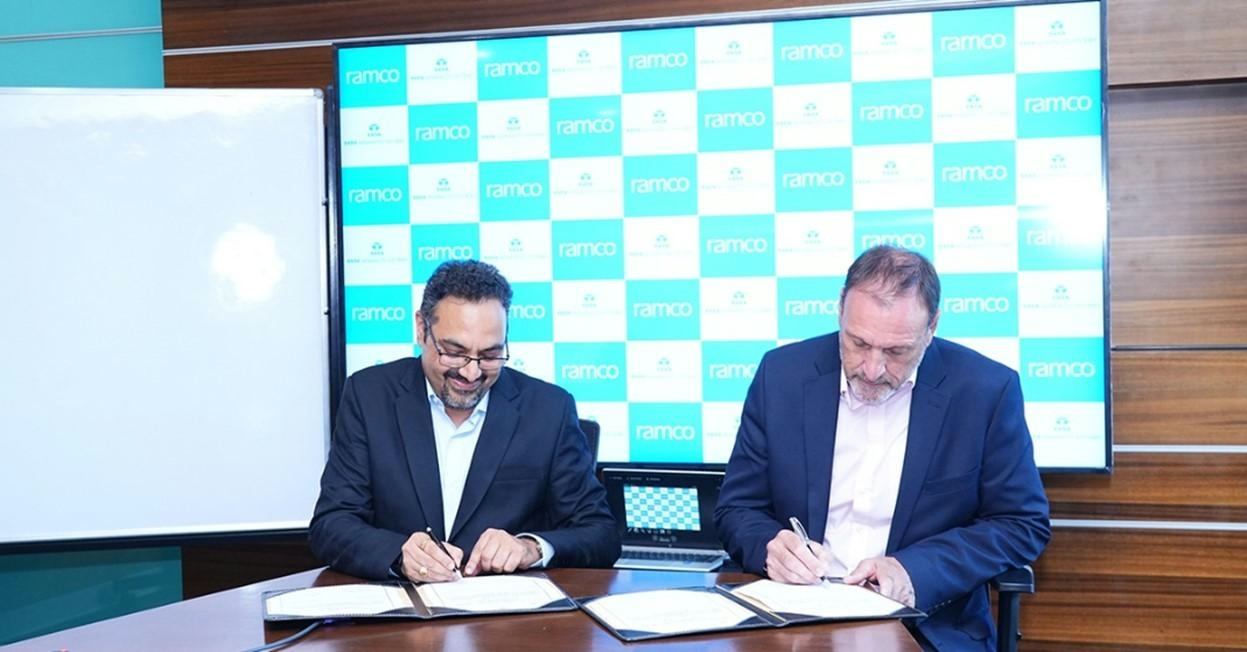
Tata Advanced Systems and Ramco Systems Collaborate on Defence MRO Digital Platform
March 10, 2026By ePlane AI
Tata Advanced Systems and Ramco Systems Collaborate on Defence MRO Digital Platform
0
0
Tata Advanced Systems
Defence MRO
Indian Air Force

Tata Advanced Systems and Ramco Systems Collaborate on Defence MRO Digital Platform

Strategic Partnership to Enhance Defence Aviation Maintenance

Tata Advanced Systems Limited (TASL) has selected Ramco Systems’ aviation software to power a new digital Maintenance, Repair, and Overhaul (MRO) facility dedicated to supporting the Indian Air Force. This collaboration represents a significant advancement in establishing a technology-driven MRO ecosystem for defence aviation in India. The facility will primarily focus on maintenance operations for the Indian Air Force’s Lockheed Martin C130J Super Hercules fleet.

Ramco Systems’ integrated Aviation MRO platform is designed to streamline TASL’s operational workflows comprehensively. It encompasses contract and quotation management, maintenance planning, component maintenance, engineering and quality management, supply chain operations, and customer billing. The platform also incorporates Ramco’s mobile applications, digital task cards, and resource optimisation tools, offering real-time operational visibility across maintenance shop floors and support functions. Sandesh Bilagi, President and Chief Operating Officer of Ramco Systems, emphasized that this collaboration will enable TASL to deploy a regulatory-compliant technology platform aimed at enhancing operational readiness and maintenance efficiency for the C130J fleet.

Market Response and Industry Context

Following the announcement, Ramco Systems’ shares experienced a notable surge, rising 6.49% to close at ₹429 on March 10, 2026. The stock opened at ₹405.15, reached an intraday high of ₹445.00, and closed with a market capitalisation of approximately ₹1,610 crore. Although trading below its 52-week high of ₹682.35, the share price remained well above the 52-week low of ₹288.05, reflecting increased investor confidence in the company’s growth prospects.

This partnership emerges amid a period of rapid digital transformation within the defence MRO sector. Both TASL and Ramco Systems face considerable challenges in implementing the digital platform, including navigating India’s complex regulatory framework for defence procurement, ensuring stringent cybersecurity measures to safeguard sensitive military data, and integrating advanced digital solutions with existing legacy systems. Furthermore, the initiative may encounter skepticism from traditional defence sector stakeholders who are cautious about rapid technological change. The move is also expected to prompt competitors to accelerate their own digitalisation efforts, potentially intensifying competition and fostering further innovation in the defence MRO market.

Company Profiles and Sector Implications

Ramco Systems is a global enterprise software provider specialising in cloud-based platforms for aviation, payroll, and enterprise resource planning. Its aviation suite supports over 24,000 users managing more than 4,000 aircraft worldwide, including airlines, defence organisations, and third-party maintenance operators. Tata Advanced Systems Limited operates as a strategic aerospace and defence company, focusing on advanced technology solutions tailored to India’s defence sector.

The collaboration between TASL and Ramco Systems underscores a broader shift towards digitalisation in India’s defence maintenance sector. This partnership has the potential to establish new benchmarks for operational efficiency and technological integration, reflecting the evolving landscape of defence aviation support services.
More news
Avianca to Expand Fleet with Two A330-900 Aircraft
Avianca to Expand Fleet with Two A330-900 Aircraft

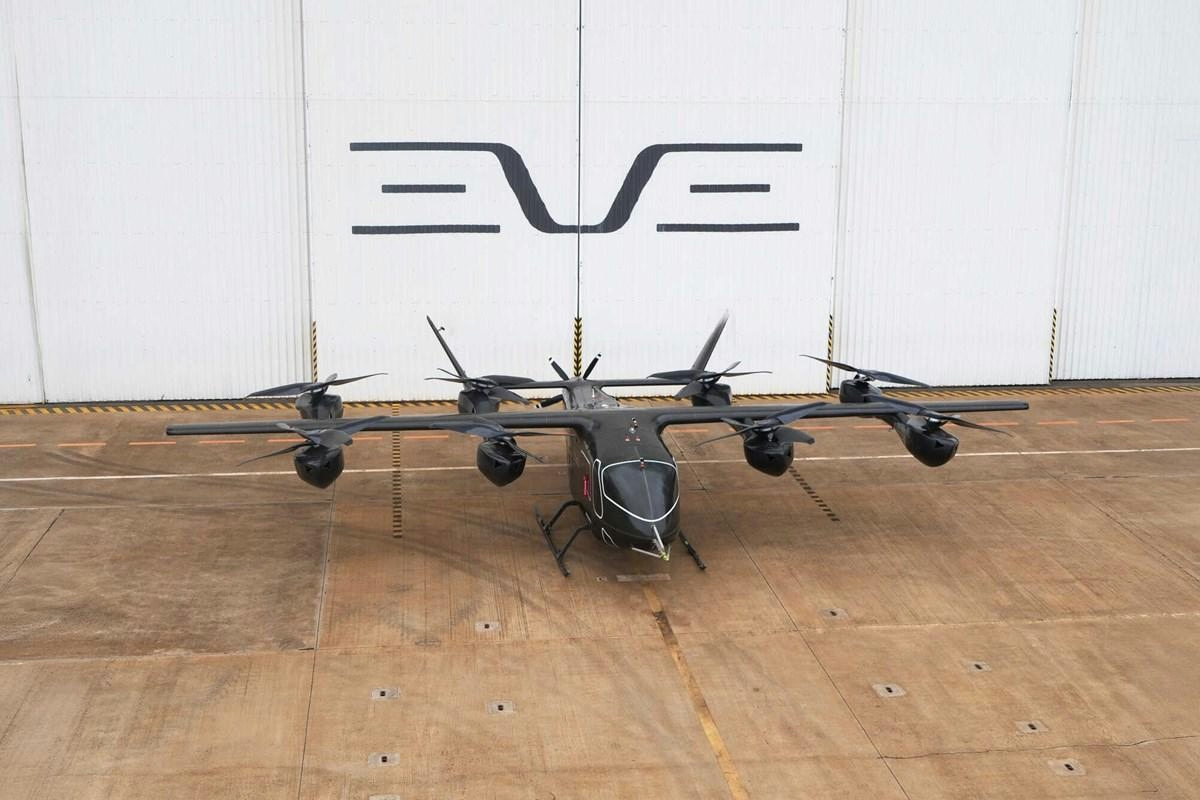
Avianca to Expand Fleet with Two Airbus A330-900 Aircraft MIAMI — Avianca has announced plans to enhance its long-haul operations by adding two Airbus A330-900 aircraft to its existing fleet of more than 15 widebody jets serving international routes. These new aircraft will be based in Colombia, underscoring the airline’s commitment to improving connectivity and promoting tourism within the country. Fleet Expansion and Operational Impact Each A330-900 will be configured with 377 seats and will feature the Business Class Americas experience. The aircraft are scheduled to enter service in the second half of 2026, operating on routes throughout the Americas. This expansion will also support the Abra Group’s growing medium- and long-haul operations, further strengthening the group’s network and operational capabilities. Gabriel Oliva, President of Avianca Group, described the acquisition as a significant milestone in the airline’s long-haul growth strategy. He emphasized that the new aircraft would reinforce Avianca’s investment in Colombia while expanding connectivity between the Americas and the rest of the world. However, integrating these advanced widebody jets presents operational challenges. The airline will need to invest in additional crew training and adapt maintenance procedures to accommodate the latest aircraft technology. These measures are critical to ensuring a seamless transition and maintaining service reliability as Avianca scales up its long-haul services. Competitive and Economic Context Avianca’s fleet expansion intensifies competition within the Latin American aviation market. Competitors such as LATAM Airlines Group and Gol are also increasing their widebody fleets, which may prompt strategic responses including network enhancements and competitive pricing to retain market share. The airline’s growth ambitions unfold amid a complex economic and regulatory environment in Latin America. Industry leaders, including Azul’s CEO, have highlighted structural challenges such as regulatory barriers, economic volatility, and infrastructure constraints that could influence the pace and success of expansion efforts. Despite these hurdles, Avianca’s investment in the A330-900 aircraft signals a strong commitment to consolidating its regional presence and connecting more destinations across the Americas. The introduction of these aircraft is expected to improve the passenger experience and support the airline’s long-term growth objectives.
FAA Selects Utah to Lead Five-State Electric Flight Pilot Program

FAA Selects Utah to Lead Five-State Electric Flight Pilot Program

FAA Selects Utah to Lead Five-State Electric Flight Pilot Program Utah at the Forefront of Electric Aviation Innovation The Federal Aviation Administration (FAA) has designated Utah to spearhead a significant pilot program aimed at advancing electric flight technology. The three-year Electric Vertical Takeoff and Landing (eVTOL) Integration Pilot Program will focus on the safe integration of Advanced Air Mobility (AAM) aircraft into the national airspace. These electric aircraft, capable of vertical takeoff and landing, are envisioned to enhance the transportation of people and goods, particularly in regions with limited accessibility. Utah’s leadership role involves coordinating efforts across five states as part of a larger initiative encompassing eight projects in 26 states. The program brings together nearly three dozen public and private partners, including government agencies and industry leaders. Testing will occur in diverse environments ranging from urban centers and rural corridors to mountainous terrain and wildfire-prone areas, reflecting the broad potential applications of eVTOL technology. Potential Impact and Challenges AAM aircraft are expected to play a transformative role in connecting communities, supporting emergency response operations such as wildfire management, and eventually providing passenger transportation services. The Utah Department of Transportation highlights the program’s potential to stimulate economic growth, foster research, and develop a skilled workforce within the state. Governor Spencer Cox emphasized Utah’s reputation as a hub of innovation, stating that the partnership positions the state at the cutting edge of aviation technology while creating new economic and educational opportunities. Despite this optimism, the program faces considerable challenges. FAA Administrator Bryan Bedford identified regulatory complexities, technological integration, and safety concerns as significant obstacles that must be addressed to enable the widespread adoption of electric aviation. Industry Response and Future Prospects The market reaction to the FAA’s initiative has been cautiously optimistic. Leading companies in the electric aviation sector, including Archer Aviation, Beta Technologies, Joby Aviation, and Wisk, regard the program as a vital platform for developing scalable electric air taxi models. While competition among these firms may intensify, there is also an expectation of collaboration to overcome shared challenges in this emerging industry. The success of the pilot program will hinge on navigating regulatory and technical barriers while leveraging opportunities for innovation and economic development. Should Utah’s leadership prove effective, it could play a pivotal role in shaping the future landscape of electric aviation across the United States.
Singapore Airlines and Amadeus Renew Partnership to Enhance Aviation Innovation
Singapore Airlines and Amadeus Renew Partnership to Enhance Aviation Innovation

Singapore Airlines and Amadeus Renew Partnership to Enhance Aviation Innovation Singapore Airlines (SIA) and Amadeus have reaffirmed their commitment to advancing innovation and improving traveler experiences through the renewal of their multiyear strategic partnership. This agreement encompasses both EDIFACT and New Distribution Capability (NDC) channels, ensuring continued collaboration as the two companies navigate the evolving landscape of the aviation industry and its technological progress. Strengthening Global Access and Distribution The renewed partnership guarantees that Amadeus will retain uninterrupted access to Singapore Airlines’ comprehensive range of fares, products, and services for all travel sellers connected to the Amadeus Travel Platform. This arrangement supports SIA’s extensive indirect sales network, which remains a cornerstone of its commercial strategy and growth objectives. By leveraging Amadeus’ advanced distribution capabilities, the collaboration aims to streamline transaction processes, strengthen relationships with travel agents, and provide travelers with a more seamless and comprehensive booking experience. This renewal comes amid a complex market environment for Singapore Airlines. Although the carrier continues to report robust revenue figures, its net profit has recently declined, prompting scrutiny over how ongoing investments in innovation might affect short-term financial performance. Market responses have been mixed, with some investors recognizing the long-term benefits of digital transformation, while others express concern about immediate costs and potential operational challenges. Accelerating NDC Adoption and Retailing Transformation A key element of the partnership is the accelerated adoption of NDC, a technology that enables airlines to offer real-time, data-driven pricing and richer product differentiation. For travel agencies, this translates into access to a wider array of personalized offers, including fares, ancillary services, and branded experiences. The deeper integration of NDC is expected to improve transparency and consistency for travelers, while also supporting revenue optimization for both Singapore Airlines and its distribution partners. As the aviation sector adapts to new retailing standards, Singapore Airlines and Amadeus face the challenge of seamlessly integrating emerging technologies while ensuring compliance with evolving regulatory frameworks. Competitors may respond with their own innovation initiatives, either through collaborative efforts to elevate industry standards or by pursuing aggressive strategies to surpass the advancements made by this partnership. Enhancing Personalization and Customer Experience Beyond technological enhancements, the renewed alliance underscores a shared vision of delivering hyper-personalized travel experiences. By expanding NDC content and capabilities, Singapore Airlines and Amadeus aim to meet the growing expectations of modern travelers by offering tailored services that reflect individual preferences and needs. As the aviation industry continues its transformation, the strengthened partnership positions both companies to lead in digital retailing and customer-centric innovation. The ultimate success of this collaboration will depend on their ability to balance long-term strategic ambitions with the immediate demands of a competitive and dynamic market.
Sogeclair Announces New Leadership and Technological Advances

Sogeclair Announces New Leadership and Technological Advances

Sogeclair Announces New Leadership and Strategic Innovations Amid Market Challenges Sogeclair, a prominent supplier to the commercial and VIP aviation sectors specializing in aircraft cabin interiors, has announced key leadership appointments alongside forthcoming technological advancements as part of its strategy to reinforce its presence in North America. Leadership Appointments to Drive Growth and Innovation Billy Darveau, a mechanical engineer with over 15 years of experience within Sogeclair’s North American operations, has been appointed Vice President for Digital Engineering in North America. In this capacity, Darveau will oversee engineering activities across Canada and the United States, with a focus on enhancing the group’s competitive edge, fostering strategic partnerships, and providing robust support to customers. Joining Darveau is Romain Dusan, who has been named Vice President for Cabin Interiors in North America. Bringing more than 20 years of aerospace and technology expertise, Dusan will prioritize strengthening relationships with clients and partners, facilitating the deployment of advanced cabin interior solutions, and expanding Sogeclair’s market footprint throughout the region. These leadership changes arrive at a critical juncture as Sogeclair contends with intensifying competition from established industry players such as Omron Healthcare, Withings, and Abbott Laboratories, particularly within the health self-monitoring segment. The competitive environment is expected to grow fiercer, with rivals likely to increase investments in research and development and pursue new strategic alliances to maintain their market dominance. While the new appointments and technological initiatives may generate investor interest, questions remain regarding Sogeclair’s capacity to effectively challenge these entrenched competitors. Technological Innovations Unveiled for Aircraft Interiors Expo 2026 Looking ahead, Sogeclair has announced plans to showcase three innovative cabin interior solutions at the Aircraft Interiors Expo 2026, scheduled for April 14-16 in Hamburg, Germany. These designs aim to elevate the business and first-class passenger experience through enhanced comfort and functionality. The Minisuite Front-Row Monument represents a redesigned front-row configuration that offers an open, premium space for one or two passengers, maximizing cabin area and redefining traditional seating arrangements. Complementing this is an upgraded Privacy Door, which improves personal space, acoustic comfort, and cabin aesthetics, responding to the growing demand for individualized passenger environments. Additionally, Sogeclair will introduce two new meal table designs: a single-piece business-class table integrated into the seat console and a bifold table embedded within the sideledge, both intended to facilitate companion dining in front-row minisuite settings. These innovations will be presented within the Vista demonstrator at AIX 2026 (booth 6D70L, Hall B6), underscoring Sogeclair’s commitment to advancing cabin interior technology despite the challenges posed by a highly competitive market. As Sogeclair advances with its leadership transition and product development initiatives, industry observers and investors alike will closely monitor the company’s progress in achieving its strategic objectives.
Impact of Middle East Conflict on Airbus and Boeing
Impact of Middle East Conflict on Airbus and Boeing

Impact of Middle East Conflict on Airbus and Boeing The ongoing conflict in the Middle East continues to generate significant uncertainty across the region, with no immediate resolution in sight. This instability is profoundly affecting the global aviation industry, particularly major manufacturers Airbus and Boeing, both of which have substantial exposure to Middle Eastern markets. Exposure and Operational Disruptions Middle Eastern airlines and aircraft lessors currently hold orders for 1,710 aircraft, accounting for approximately 9% of Airbus’ backlog and 14% of Boeing’s. Airbus commands a 43% share of these orders, while Boeing accounts for 57%, with Embraer playing a comparatively minor role in the region. The conflict has already resulted in the cancellation of over 37,000 flights to and from the Middle East, severely disrupting airline operations and grounding more aircraft than are currently in service. The repercussions extend beyond flight cancellations. Escalating oil prices and rising freight rates have introduced unprecedented challenges for airlines, with volatility in the jet fuel market threatening to ground additional aircraft and strain fragile supply chains. Global air cargo capacity has contracted by more than 20%, complicating the transport of critical aircraft parts and components necessary for production and maintenance. Financial and Production Challenges For aircraft lessors, many of whom have placements with Middle Eastern carriers or operate within the region, the ongoing conflict raises concerns about outstanding orders with Airbus and Boeing. There is growing apprehension that lenders may soon face requests to restructure debt payments if the crisis persists, adding further financial strain to an already pressured sector. Production and delivery schedules for both manufacturers are increasingly at risk. Deliveries planned over the next 18 months are particularly vulnerable, and a prolonged conflict could jeopardize even those scheduled for 2028. Aircraft production typically begins 12 to 18 months before delivery—a process known in the industry as “cutting metal.” While most aircraft slated for delivery this year are already in production, delays are anticipated as airlines and lessors reassess their fleet requirements. Although formal requests for production delays have yet to materialize, such discussions may become inevitable if the situation does not improve. It is expected that production will continue, but deliveries could be postponed until regional stability is restored. Market Response and Industry Outlook The market has reacted sharply to these developments. Airline stocks have experienced significant declines, and insurance premiums have risen due to increased war risk. Competitors are adjusting flight routes and operational strategies in an effort to mitigate the impact of ongoing disruptions. Upcoming first-quarter earnings calls, beginning in April, are expected to address the conflict’s ramifications. Boeing’s Chief Financial Officer, Jay Malave, is scheduled to speak at a Bank of America investors’ conference on March 17, where the company’s exposure and strategic response to the crisis are likely to be key topics. As the conflict endures, Airbus, Boeing, and the broader aviation industry face mounting operational and financial challenges, with the outlook remaining highly uncertain.
Oklahoma Chosen as Base for New Electric Air Taxi Program
Oklahoma Chosen as Base for New Electric Air Taxi Program

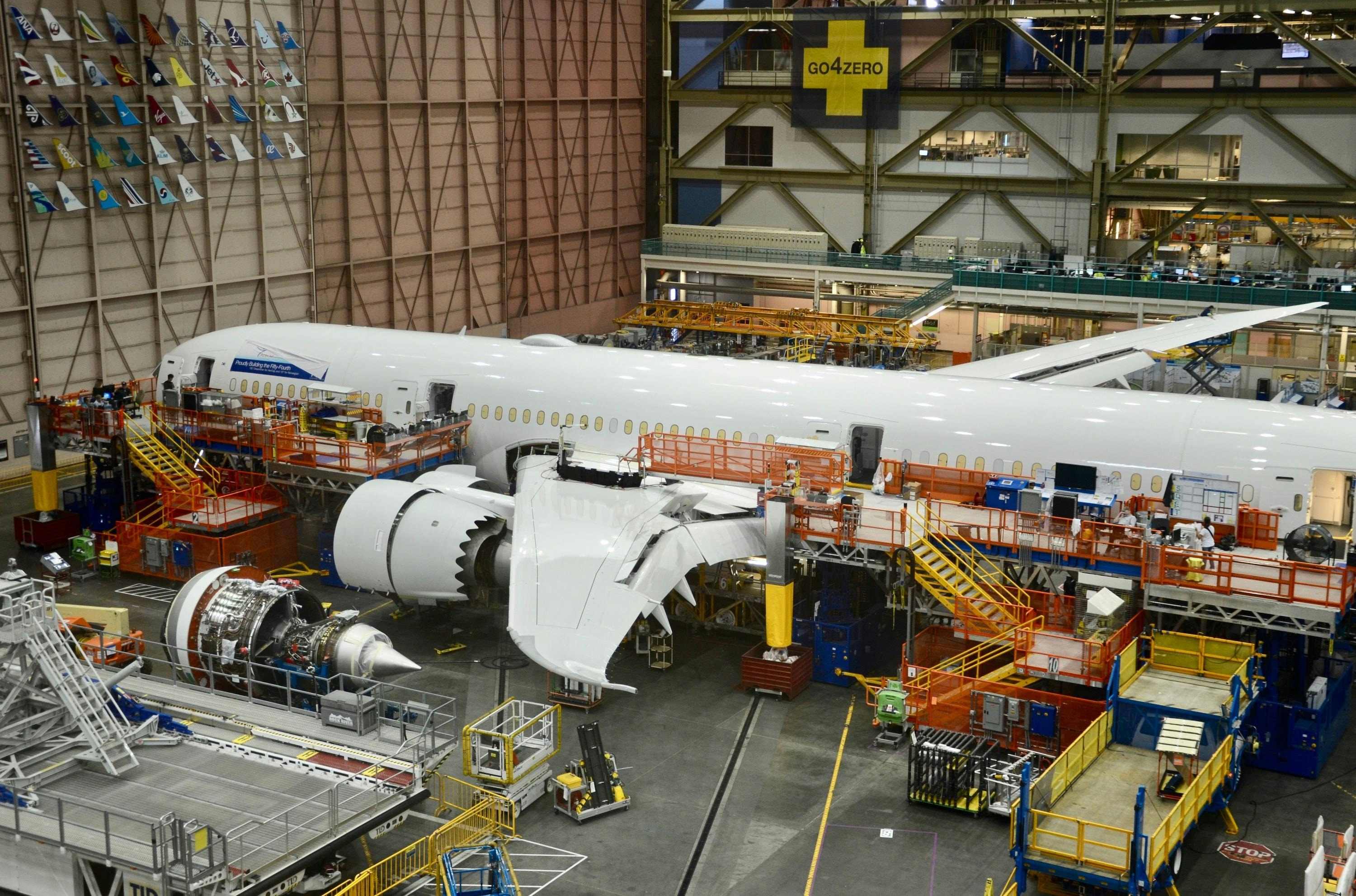
Oklahoma Designated as Central Hub for Electric Air Taxi Program Oklahoma has been selected as a primary hub for a pioneering electric air taxi initiative, marking a significant step forward in the advancement of next-generation aviation technology. Supported by the White House, the Electric Vertical Takeoff and Landing (eVTOL) Integration Pilot Program seeks to test electric air taxis capable of transporting passengers and cargo using aircraft that take off and land vertically. This initiative places Oklahoma at the forefront of efforts to integrate electric aircraft into the United States’ transportation infrastructure. California-based Joby Aviation, a prominent company in the rapidly developing eVTOL sector, anticipates that early operations in Oklahoma could commence as soon as this year, contingent upon the finalization of federal agreements. The program aims to explore a variety of applications, ranging from regional passenger flights to medical deliveries, as part of a broader strategy to incorporate electric aviation into everyday use. Program Structure and Strategic Importance The pilot program is designed to facilitate real-world testing of eVTOL aircraft prior to full federal certification. It involves coordination among federal agencies, including the Department of Transportation (DOT) and the Federal Aviation Administration (FAA), alongside state and local authorities. The objective is to assess how these aircraft can safely operate within U.S. airspace and to develop the necessary infrastructure to support future commercial services. Officials emphasize that the initiative is intended to accelerate regulatory approvals and prepare communities for the arrival of advanced aviation technologies. JoeBen Bevirt, CEO of Joby Aviation, described the program as “a defining moment for American innovation,” highlighting that communities across the country will soon witness the future of flight in their own skies. Oklahoma’s selection is part of a multi-state application led by the Utah Department of Transportation, encompassing regions from the Pacific Northwest to the Plains. The program will test various operational scenarios and explore new applications for electric aviation, including passenger transport, cargo delivery, and emergency response services. Joby’s aircraft, capable of vertical takeoff and landing as well as transitioning to winged flight, will be central to these tests. Federal officials underscore that this program forms a critical component of a broader strategy to sustain U.S. leadership in aerospace innovation. Greg Bowles, Joby’s Chief Policy Officer, noted that “America has set the pace and the standard in aerospace innovation since the Wright Brothers,” reinforcing the country’s commitment to maintaining its competitive edge. Challenges and Future Prospects Despite the promise of the program, Oklahoma’s role as a base for electric air taxis faces considerable challenges. The eVTOL market is intensely competitive, with companies such as Archer Aviation, Beta Technologies, and Wisk also striving for market dominance. The sector must navigate rapid technological advancements, evolving regulatory frameworks, and the development of robust infrastructure to support operations. Regulatory approval and integration into existing transportation systems remain complex tasks, requiring ongoing oversight from the DOT and FAA. The industry also confronts risks related to production timelines, intellectual property protection, and public acceptance. The trajectory toward operational electric air taxi services is uncertain, with growth contingent upon overcoming these technical, regulatory, and competitive obstacles. The program now advances to the next phase, where federal officials and partners will finalize agreements and operational details. Joby Aviation expects flights to begin within 90 days of completing these agreements. The company is simultaneously pursuing federal type certification for its aircraft and plans to expand manufacturing capacity to meet anticipated demand for electric air taxi technology.
Boeing’s 787 Dreamliner Production Shows Significant Recovery

Boeing’s 787 Dreamliner Production Shows Significant Recovery

Boeing’s 787 Dreamliner Production Shows Significant Recovery Boeing’s 787 Dreamliner production is experiencing a marked resurgence amid a growing global demand for widebody aircraft. This recovery positions the manufacturer to strengthen its market presence and intensify competition with Airbus. Currently, Boeing holds a backlog of 1,103 Dreamliners, with production slots fully booked for several years. This backlog underscores the ongoing shortage of widebody aircraft as international air travel continues its post-pandemic recovery. Expansion and Production Targets To address this surge in demand, Boeing has prioritized the expansion of its North Charleston facility, committing $1 billion to replicate its final assembly line capabilities. This investment aims to increase production from seven jets per month to ten by 2026, with ambitions to reach as many as 16 per month by the end of the decade. These targets are crucial for Boeing as it seeks to keep pace with Airbus’s sustained widebody production increases and leverage the current market momentum. The revival in 787 production has already generated significant market activity. In January 2026, Boeing secured 107 aircraft orders—the strongest start to a year since 2012—including a substantial 787-10 agreement with Delta Air Lines. This momentum has placed additional pressure on Airbus, which projects 870 aircraft deliveries for 2026, a figure slightly below analyst expectations. Boeing’s accelerated production schedule and positive free cash flow outlook have bolstered investor confidence, although challenges such as workforce shortages and supply chain constraints persist. The 787 Dreamliner’s Market Role and Evolution The 787 Dreamliner occupies a distinctive niche in the aviation market, replacing aging 767 models and offering airlines an ultra-fuel-efficient solution for long, thin routes. Since its maiden flight in 2009 and entry into service with ANA in 2011, the 787 has introduced several innovations, including a largely composite airframe, advanced electrical systems, and next-generation engines. These advancements have delivered notable performance improvements despite early difficulties related to globalized sourcing, technical issues, and the 2013 battery grounding incident. Production of the 787 peaked at 14 jets per month during 2018-2019 before the pandemic necessitated significant cuts and consolidation of assembly operations in Charleston in 2021. The current recovery represents a strategic shift, with Boeing rebuilding capacity to support fleet renewal and airlines’ emissions reduction goals. The 787-8 variant targets ultra-long, low-density routes, while the 787-9, now the family’s bestseller, serves a broad spectrum of long-haul markets. The 787-10, offering higher capacity but shorter range, is optimized for regional long-haul services. Although Boeing’s 787 deliveries have yet to return to pre-pandemic levels, the company’s renewed emphasis on production efficiency and market responsiveness is reshaping the competitive landscape. Should Boeing maintain its current trajectory and successfully navigate ongoing supply chain and labor challenges, the 787 Dreamliner is set to play a pivotal role in the future of global aviation.
Stratos strengthens team with three senior aviation appointments
Stratos strengthens team with three senior aviation appointments

Stratos Strengthens Leadership with Three Senior Aviation Appointments Aircraft investment specialist Stratos has bolstered its leadership team with the addition of three senior industry professionals, a move aimed at reinforcing its competitive standing amid a rapidly evolving aviation sector. Strategic Appointments to Enhance Regional and Functional Expertise Kushal Patel has been appointed Head of Asia, operating out of Stratos’s Singapore office. An aeronautical engineer by training, Patel brings a decade of experience in aviation finance, having held significant roles at Doric Partners and Bank of America, where he served as Vice President in Asset Financing. More recently, he spent three years at Boston Consulting Group as a Project Leader, advising financial institutions on enterprise strategy and transformation. At Stratos, Patel will be responsible for managing relationships with airlines and investors across Asia, excluding Japan, drawing on his combined expertise in finance, engineering, and leasing. In London, Muna Mohammad joins as Vice President, Risk & Restructuring. With over 15 years of specialised experience in aviation risk management, Mohammad has held key positions at BOCA, Castlelake, and Air BP, navigating complex operating environments. Her earlier career includes roles at Citibank, MIDF in Malaysia, and BDO in London, equipping her with a broad perspective on risk and restructuring within the aviation industry. Tuulia Rajamäki has been appointed Senior Advisor, Legal. A seasoned aviation lawyer with more than 20 years of experience, Rajamäki spent 13 years with AerCap and ILFC in Singapore, overseeing transactions ranging from aircraft trading to leasing. Prior to that, she worked at Freshfields, Stephenson Harwood, and Dentons, specialising in structured and asset finance. She is admitted to practise law by the Supreme Court of England and Wales. Navigating a Competitive and Dynamic Aviation Landscape These strategic hires come at a time when the business aviation sector faces intensifying competition and shifting market dynamics. Industry leaders have highlighted structural barriers in key markets, such as those noted by Azul’s CEO in Brazil, which present challenges for both new entrants and established operators. Concurrently, the Maintenance, Repair, and Overhaul (MRO) sector is witnessing a surge in mergers and acquisitions, as companies seek consolidation to strengthen their market positions. In this context, Stratos’s expanded leadership team is positioned to enhance the company’s expertise and agility. The new appointments are expected to support the firm in addressing emerging challenges, capitalising on new opportunities, and preparing for competitive responses as rivals adjust their strategies in a changing industry environment.
Honda’s Hybrid eVTOL Could Rewrite Air Taxi Playbook
Honda’s Hybrid eVTOL Could Rewrite Air Taxi Playbook

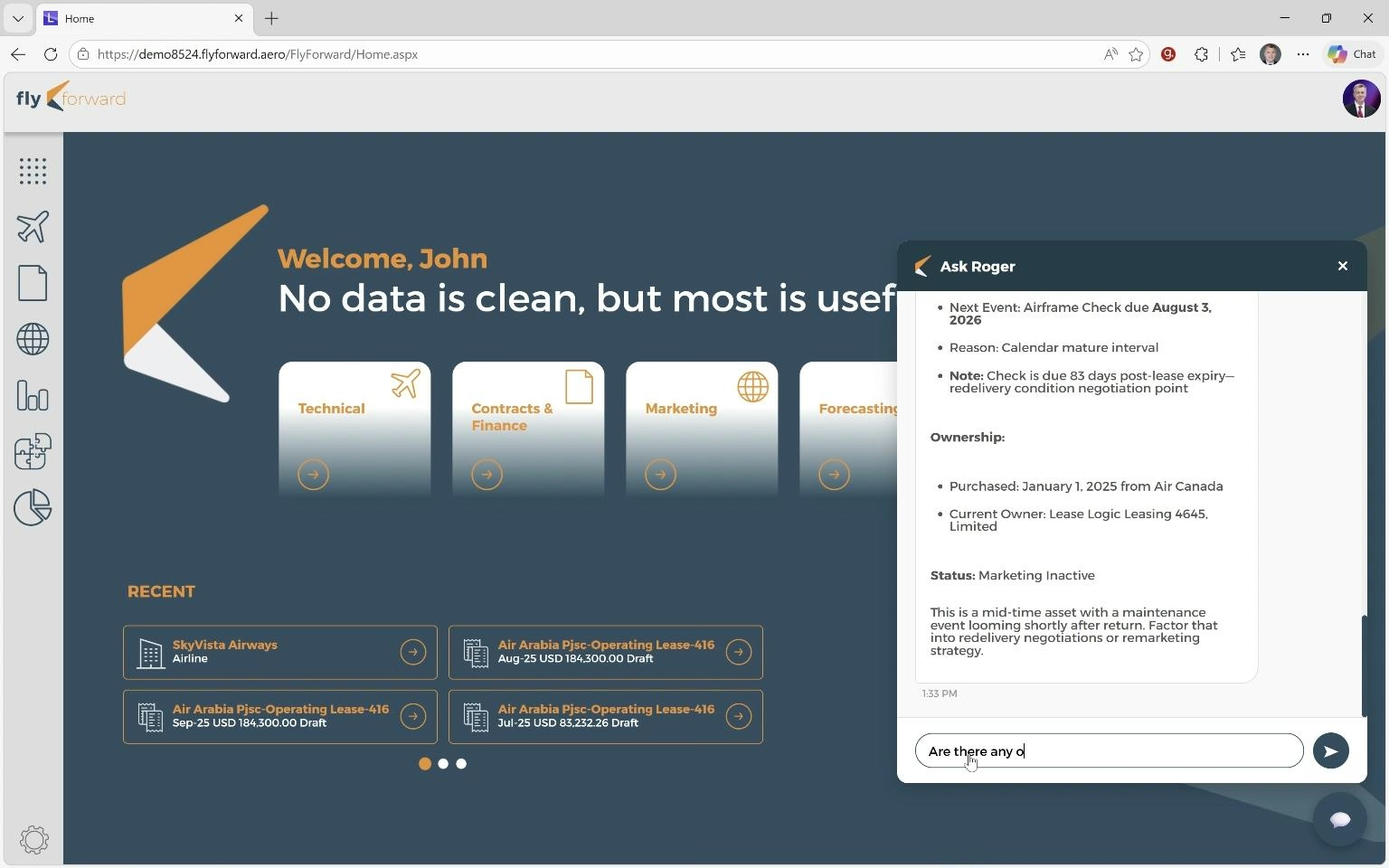
Honda’s Hybrid eVTOL Could Rewrite Air Taxi Playbook After four years of operating in stealth, Honda has revealed substantial advancements in its hybrid electric vertical takeoff and landing (eVTOL) program at the 2025 Dubai Airshow. The company disclosed that it has completed over 400 flight tests, signaling its emergence as a formidable contender in the rapidly evolving air taxi market. Advanced Design and Hybrid Powertrain Innovation Honda’s full-scale concept demonstrator measures approximately 50 feet in both length and wingspan. The aircraft’s design incorporates eight boom-mounted lifting propellers dedicated to vertical takeoff and landing, alongside two rear pusher propulsors for forward flight. Its distinctive aerodynamic configuration features forward-swept wings at the front, aft-swept wings at the rear, and vertical stabilizers positioned at the wingtips. A key differentiator in Honda’s approach is its hybrid-electric powertrain. While most competitors in the eVTOL sector rely exclusively on battery power, Honda has opted for a hybrid system, citing the current limitations in battery energy density as inadequate for achieving the targeted intercity range of 400 kilometers (249 miles). To address this challenge, Honda developed a compact turbogenerator rated between 250 and 300 kW, weighing less than 100 kilograms. This hybrid configuration enables a range nearly ten times greater than that of most battery-only eVTOLs, such as Archer’s Midnight, which offers 20 to 50 miles, and Joby, which targets approximately 100 miles. Certification Timeline and Market Positioning Honda is preparing to commence remotely piloted flight testing in the United States this month, following clearance from the Federal Aviation Administration (FAA) for demonstration flights. However, full FAA type certification is not anticipated until the early 2030s, with commercial service entry planned for the same timeframe. Although the initial flight window opened on March 10, 2026, no official confirmation of a flight has yet been announced. Unlike some competitors racing to be first to market, Honda is adopting a measured strategy. “We need to decide what kind of real benefit we can offer to potential customers,” stated Mashio, Vice President of SMG Consulting. This cautious approach distinguishes Honda amid setbacks faced by several eVTOL startups. The company’s established reputation, reinforced by its experience with the HondaJet, may provide a competitive advantage. Atsushi Ogawa of Honda R&D emphasized the challenges ahead, noting, “We have a long experience from HondaJet around the testing campaign for a type certificate, and we know that it’s very hard.” Navigating Competition and Industry Challenges Honda enters a crowded and competitive field that includes established players such as Joby, Uber, and Archer. The sector is characterized by regulatory complexity and public skepticism concerning the safety and practicality of air taxis. Certification remains a significant hurdle, particularly for hybrid-electric eVTOLs, none of which have yet secured full FAA approval. Market reactions to Honda’s announcement are mixed. Some investors are encouraged by the company’s innovation and credibility, while others remain cautious about the technology’s readiness. The industry has witnessed both aggressive legal disputes—such as Archer’s patent lawsuit against Vertical—and collaborative initiatives, including Vertical’s efforts to advance eVTOL services in South Florida. Honda’s recent appointment of CFO Eiji Fujimura signals a strategic emphasis on navigating the turbulent U.S. market, a move that could further influence investor confidence. Outlook Honda’s hybrid-first strategy challenges the prevailing “battery-only now, fix range later” paradigm that has dominated the eVTOL sector. Should the company’s first flight proceed as scheduled, it would represent a significant milestone for both Honda and the broader industry. Nonetheless, fundamental questions remain regarding the real-world problems eVTOLs will address and their potential impact on urban congestion. As the market matures, Honda’s cautious yet ambitious approach may establish a new benchmark for the next generation of air mobility.
‘Ask Roger’ AI Assistant Launched for Aviation Finance Platform

‘Ask Roger’ AI Assistant Launched for Aviation Finance Platform

‘Ask Roger’ AI Assistant Launched on Fly Forward Aviation Finance Platform The Zeevo Group and Lease Logic have introduced “Ask Roger,” an artificial intelligence assistant specifically designed for the aviation finance sector. The launch was previewed at the ISTAT Americas conference, marking a significant advancement in how aircraft lessors and asset managers access and analyze portfolio data. Integrated directly into the Fly Forward platform, Ask Roger functions as a digital analyst, streamlining the retrieval of critical information and enhancing operational efficiency. Enhancing Data Access and Analysis in Aviation Finance Ask Roger allows users to pose questions in plain English regarding live lease data, maintenance reserve balances, contract terms, and payment schedules. This eliminates the need for complex report generation, database queries, or reliance on internal analysts. John McCartney, Chief Technology Officer at Lease Logic, highlighted that aviation finance teams often spend considerable time navigating dashboards to answer routine questions about aircraft or lease structures. Ask Roger addresses this challenge by providing immediate, structured, and data-driven responses through a conversational interface. Unlike generic chatbot overlays, Ask Roger is embedded within Fly Forward’s core data architecture. It appears as a lightweight widget on the platform’s landing page, offering direct access to live portfolio insights. The assistant generates responses from up-to-date client data, ensuring accuracy and security without depending on pre-trained language models or cached data exports. The assistant’s capabilities are supported by a curated set of prompts developed by industry experts, enabling users to efficiently review lease expiries, analyze portfolio exposure, summarize lease terms, and identify assets with the highest maintenance reserve exposure. Its functionality covers four primary areas: lease structures and contractual terms, portfolio and fleet status, invoicing and payment schedules, and maintenance reserve balances. The maintenance reserve analysis logic was created in collaboration with former senior specialists from major aircraft lessors, enhancing its precision and relevance. Omar Zuluaga, Senior Aviation Finance Advisor at Zeevo Group, emphasized that Ask Roger significantly reduces the time required to locate and interpret maintenance reserve provisions within complex lease documentation, allowing advisors to retrieve key information within seconds. Context of AI Integration Amid Market Uncertainty The launch of Ask Roger occurs amid increased scrutiny of artificial intelligence’s impact on financial markets. Recent stock market volatility, driven by rapid AI advancements, has heightened investor concerns about the disruptive potential of such technologies in traditional sectors. Reports from ABC News and Bloomberg have highlighted these anxieties, with a UBS analyst warning that AI could provoke a “shock to the system” in credit markets. This environment has prompted varied responses from industry players, with some accelerating their AI initiatives while others adopt a more cautious approach, as exemplified by the gradual rollout of AI features by companies like Uber Eats. As the aviation finance industry contends with these uncertainties, Ask Roger stands as both an opportunity to enhance operational efficiency and a test case for the broader acceptance of AI-driven tools in a sector that must carefully balance innovation with risk management.
line