
KI-Erkenntnisse in konkrete Maßnahmen überführen

Trends
Categories
Thai Airways Considers Ordering 35 Boeing 787 Dreamliners to Boost U.S. Trade Relations
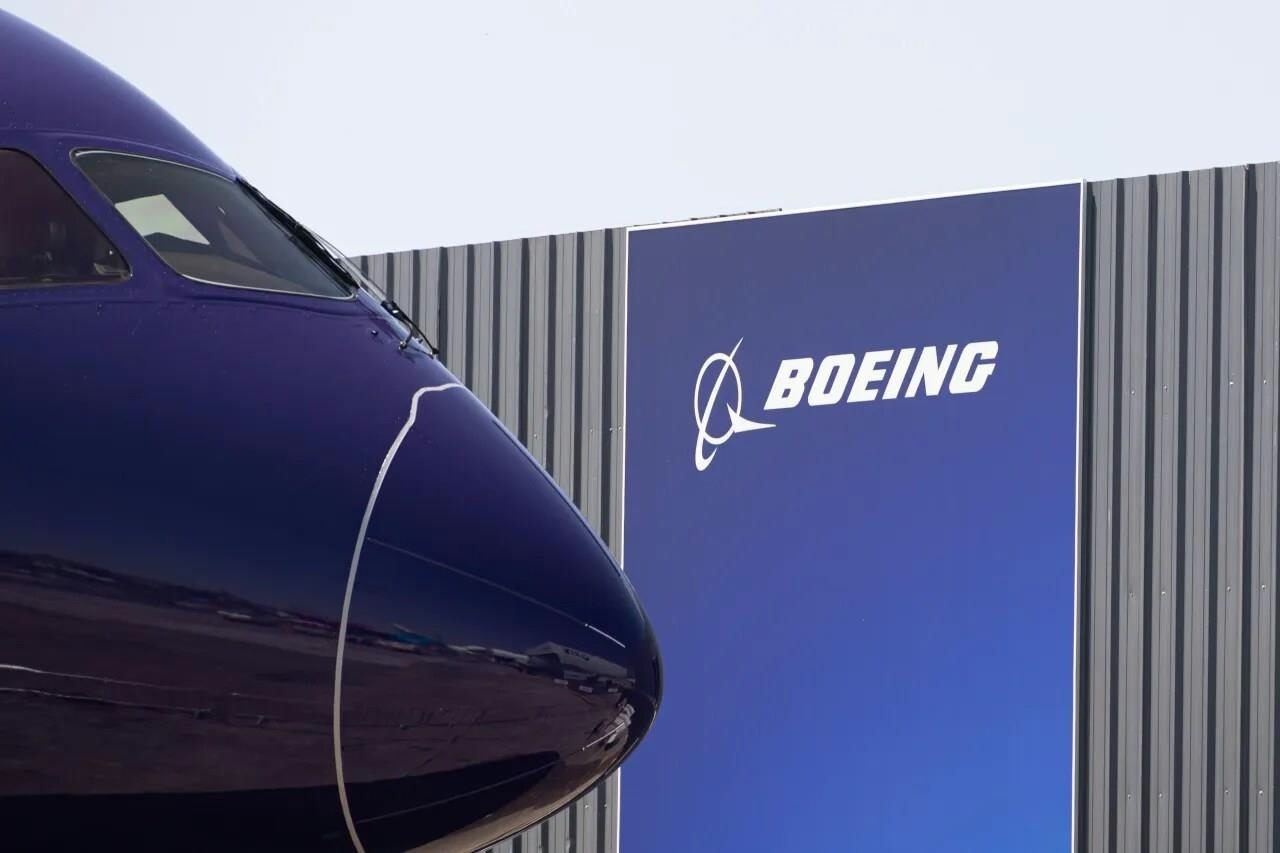
Thai Airways Considers Expanding Boeing 787 Dreamliner Fleet Amid U.S. Trade Negotiations
Thai Airways is evaluating the possibility of exercising an option to purchase 35 additional Boeing 787-9 Dreamliners, a move that aligns with Thailand’s broader efforts to strengthen trade relations with the United States and potentially circumvent new U.S. import tariffs. This prospective order would build upon a previous agreement signed in February 2024 for 45 Dreamliners and is currently under review as part of ongoing trade discussions between Thai government officials and their U.S. counterparts.
Strategic and Operational Implications
The airline’s CEO, Chai Eamsiri, confirmed to Reuters that Thai Airways is actively considering expanding its Boeing fleet. Acquiring more Dreamliners would not only enhance the airline’s long-haul operational capabilities but also serve as a strategic gesture to reinforce commercial ties between Thailand and the United States. At present, Thai Airways operates a fleet of 77 aircraft, primarily Airbus models, supplemented by 20 Boeing 777s—including 17 777-300ERs—and nine Boeing 787s. The addition of 35 new Dreamliners would mark a significant investment and a notable shift in the airline’s fleet composition, signaling a deeper commitment to Boeing aircraft.
Challenges and Market Considerations
Despite the potential benefits, the proposed order faces several challenges. Market demand for long-haul travel remains uncertain amid fluctuating global economic conditions, raising questions about the timing and scale of such a large purchase. Financially, the acquisition would represent a substantial outlay, likely attracting scrutiny from investors concerned about the airline’s capital allocation and return on investment. Industry analysts also anticipate that regional competitors may respond by adjusting their own fleet strategies or intensifying marketing efforts to protect market share. Additionally, regulatory factors and the evolving landscape of U.S.-Thailand economic policies could influence the final decision on the order.
Historical Context and Future Prospects
Thai Airways’ relationship with the U.S. aviation market has been complex in recent years. The airline was banned from flying to the United States in 2015 after the Federal Aviation Administration downgraded Thailand’s safety rating to Category 2. Although this ban was lifted recently, CEO Eamsiri indicated that there are no immediate plans to resume direct flights to North American destinations. As a founding member of the Star Alliance, Thai Airways continues to provide U.S. connectivity through partnerships with carriers such as United Airlines.
As Thai Airways deliberates on the Dreamliner order, the outcome of ongoing trade negotiations and prevailing market conditions will be critical factors. The decision will be closely monitored by industry observers, competitors, and investors, given its potential implications for regional competition and the broader context of U.S.-Thailand trade relations.

Etihad Airways Suspends Airbus A380 Flights on Key Route

Aditya Birla Group Seeks Approval for Aircraft Leasing in GIFT City

Qatar Airways Highlights Innovation and Connectivity at Arabian Travel Market 2026

Hong Kong's Five-Year Plan Includes Andrew Fan's Aircraft Parts Processing Hub Proposal

ACIA Aero Leasing Delivers ATR72-600 to Air Nostrum

RTX Appoints Jill Albertelli as Head of Pratt & Whitney

TAT Technologies Joins Beyond Aero Hydrogen Aircraft Program

AURAK Study Highlights Barriers to Air Taxi Adoption in Emerging Economies

Xiamen Air Selects Altitude for 787 Maintenance at Heathrow

Etihad and Swissport Extend Global Partnership
