
KI-Erkenntnisse in konkrete Maßnahmen überführen

Trends
Categories
The Boeing 747-8: Why It’s Rare on U.S. Routes and How to Experience It Abroad
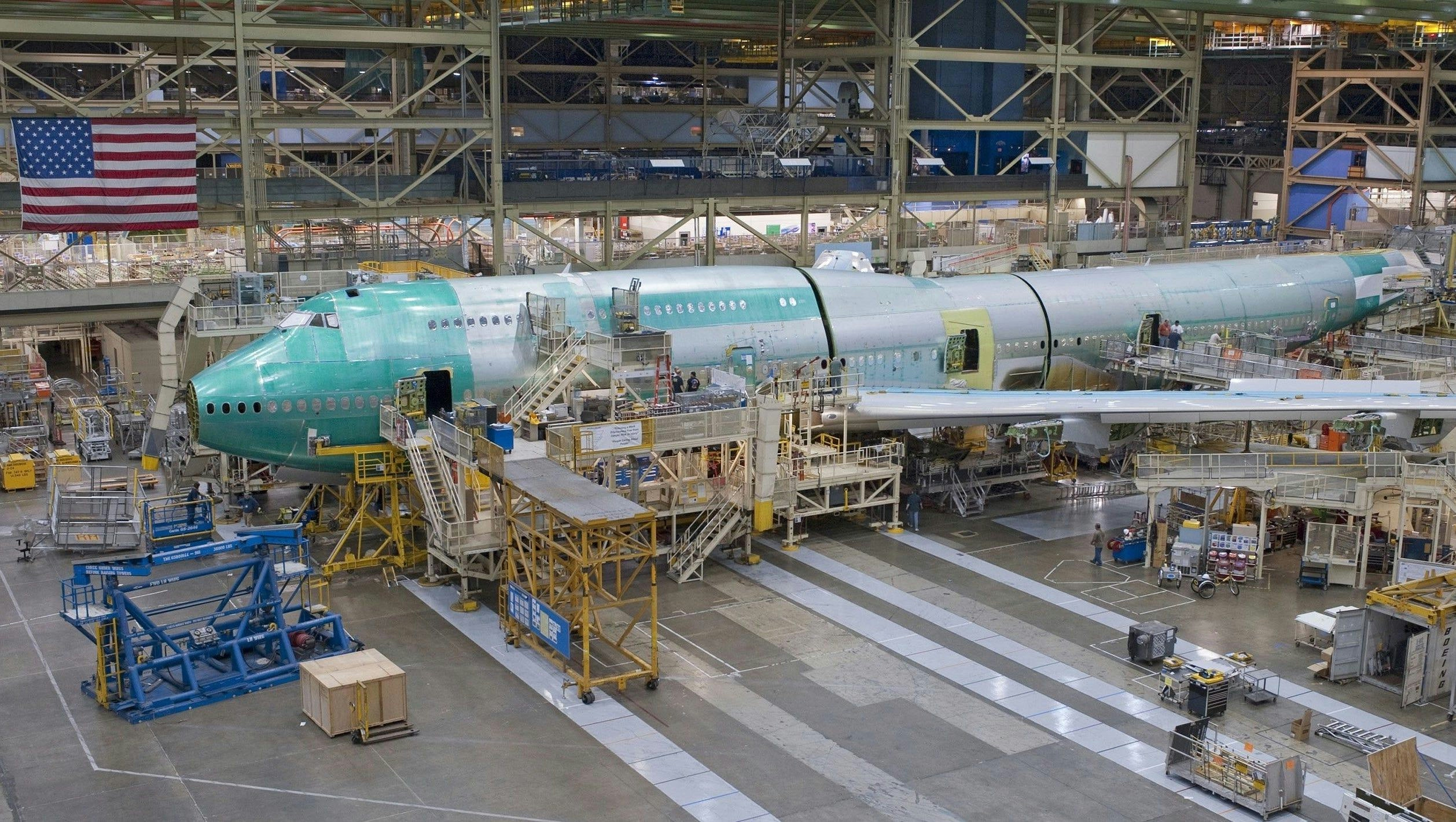
The Boeing 747-8: Why It’s Rare on U.S. Routes and How to Experience It Abroad
The Boeing 747-8, often hailed as the “Queen of the Skies,” stands as one of aviation’s most iconic aircraft, renowned for its distinctive upper deck and spacious long-haul comfort. Despite its legendary status, the 747-8 has become increasingly rare on domestic routes within the United States. Understanding the factors behind its diminished presence can assist aviation enthusiasts in planning journeys to experience this jumbo jet beyond American borders.
Decline of the 747-8 in U.S. Commercial Aviation
U.S. airlines have largely retired the 747-8 in favor of more economical and versatile aircraft. The four-engine design of the 747-8 results in significantly higher fuel consumption compared to modern twin-engine jets, rendering it less competitive on shorter domestic flights where operational efficiency is critical. Additionally, regulatory agencies such as the Federal Aviation Administration (FAA) have intensified their focus on reducing emissions and promoting sustainable aviation practices. This regulatory environment has encouraged carriers to transition to newer, more environmentally friendly models like the Boeing 787 and Airbus A350.
Market reception to the 747-8 has been mixed. While some international airlines, notably Lufthansa, continue to operate the aircraft on select long-haul routes, many carriers have opted to phase out their 747-8 fleets. The emergence of more fuel-efficient widebody jets from competitors has accelerated the decline of large, four-engine aircraft in commercial service.
Operational Challenges and Airport Constraints
The considerable size of the 747-8 imposes logistical limitations. Not all airports possess the infrastructure—such as specialized gates and extended runways—necessary to accommodate the aircraft, restricting the number of viable routes for U.S. airlines. Furthermore, airlines prioritize operational flexibility, favoring aircraft that can be easily redeployed during schedule disruptions or peak travel periods, a factor that disadvantages the 747-8.
Experiencing the 747-8 Today
Although the 747-8 is scarce on U.S. domestic flights, it remains in service on select international routes, particularly with carriers in Europe, Asia, and the Middle East. Travelers interested in flying aboard this iconic jet should consult airline schedules and utilize flight tracking tools to identify active 747-8 routes. These flights often provide premium amenities, including spacious seating and access to the upper deck, which is typically reserved for business or first-class passengers.
The onboard experience of the 747-8 combines nostalgia with comfort. The upper deck offers a quieter, more private environment, while the aircraft’s double-aisle configuration provides generous space for relaxation. For many passengers, the journey itself becomes a memorable highlight due to the aircraft’s impressive scale and thoughtful design.
Environmental Considerations and the 747-8’s Future
Environmental concerns increasingly influence airline fleet decisions. Modern twin-engine jets emit fewer carbon emissions per passenger, aligning with global sustainability objectives. Consequently, eco-conscious travelers may prefer these newer aircraft, which balance comfort with a reduced environmental footprint.
Despite its diminishing role in commercial aviation, the 747-8 is poised to maintain a significant presence in U.S. government service. The U.S. Air Force plans to acquire two 747-8 aircraft from Lufthansa to serve as the next generation of Air Force One. However, this program has encountered delays, with the first delivery now anticipated in mid-2028.
Alternatives and Recommendations for Travelers
For those unable to secure a flight on the 747-8, modern widebody jets such as the Boeing 787, Airbus A350, and Boeing 777 offer comparable comfort and advanced features. To increase the likelihood of flying on a 747-8, travelers are advised to book early due to limited route availability and to verify the aircraft type before purchasing tickets. Additionally, aviation museums and airshows often display retired 747s, providing opportunities for public tours and close-up experiences.
While the 747-8’s presence on U.S. routes continues to wane, it remains a sought-after experience for global travelers willing to seek it out on international flights.

America’s Last Piston-Engine Propeller Plane

Oklahoma Approves $520 Million for Airport Upgrades

NTSB Finds UPS Cockpit Voice Recordings Were Fabricated Using AI

MTU Aero Engines Reaches PW800 Repair Milestone, Enhancing MRO Profile
NASA’s 12-Foot Aircraft Reached Mach 9.6, Surpassing Modern Engines, but Faster Speeds Remain Elusive
Thailand Orders Two Airbus C295 Tactical Transport Aircraft
GE Wins UK Contract for Apache Helicopter Engine Support

Horizon Seeks Dual-Use Certification for Cavorite X7 Aircraft

Middle East Conflict Challenges Recovery of Leasing Industry

Embraer Signals Potential Greek Order for C-390 with MRO Deal
