Bild

KI-Erkenntnisse in konkrete Maßnahmen überführen

Trage dich noch heute in die AeroGenie-Warteliste ein!

Trends

Categories

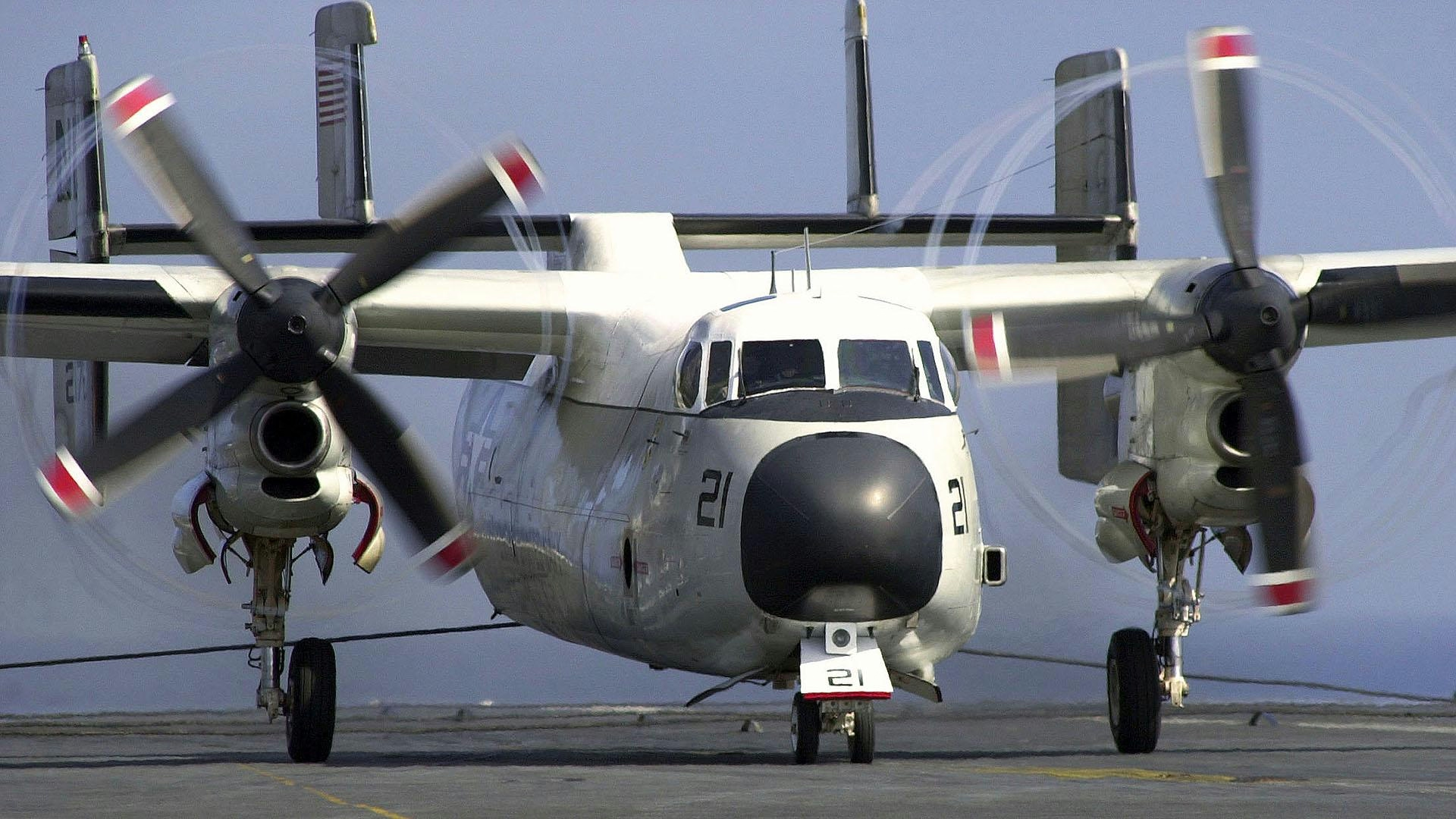
The C-2 Greyhound Quickly Stops on Aircraft Carriers While Transporting Jet Engines and Parts
May 28, 2026By ePlane AI
The C-2 Greyhound Quickly Stops on Aircraft Carriers While Transporting Jet Engines and Parts
0
0
C-2 Greyhound
Carrier Onboard Delivery
Naval Aviation

The C-2 Greyhound: Essential Logistics on Aircraft Carriers

Landing a fully loaded cargo aircraft on a moving aircraft carrier represents one of the most demanding challenges in naval aviation. The C-2A Greyhound has met this challenge for over fifty years, serving as the U.S. Navy’s primary Carrier Onboard Delivery (COD) aircraft. Tasked with transporting cargo, mail, spare parts, medical supplies, and personnel between shore bases and carriers at sea, the Greyhound has been a critical component in sustaining carrier strike groups operating far from home ports.

Though it lacks the high-profile status of fighter jets, the Greyhound’s role is indispensable. According to the Naval Air Systems Command (NAVAIR), the aircraft is a high-wing, twin-engine turboprop powered by two Allison T56-A-425 engines. Its mission is straightforward yet demanding: to deliver urgent cargo—including jet engines, critical components, and even medical evacuation patients—between ship and shore within hours. This rapid logistical support ensures that carriers remain operational without the need to return to port. Even routine mail deliveries contribute significantly to crew morale, highlighting the importance of dependable supply lines at sea.

Precision Landings and Specialized Design

The most dramatic phase of the Greyhound’s mission occurs during landing. Approaching the carrier deck at approximately 240 km/h (150 mph), the aircraft must come to a complete stop within seconds. This is achieved through a combination of reinforced landing gear, a tailhook, and a robust airframe engineered to withstand the intense stresses of carrier operations. The arresting gear system halts the plane in just 340 feet, a process comparable to catching a speeding truck with a cable rather than a conventional civilian landing.

The Greyhound’s design reflects its specialized role. Derived from the E-2C Hawkeye, it features a widened fuselage and a rear loading ramp that facilitate the handling of bulky cargo such as jet engines—items that have recently become more valuable than entire aircraft due to shifting market conditions. A cargo cage system secures loads during the rigors of launch and recovery, while folding wings conserve vital deck space aboard carriers.

These capabilities have gained heightened importance amid global supply chain disruptions, intensified by the ongoing conflict in Iran. Delays affecting aerospace manufacturers like Bombardier and General Dynamics have led to shortages that drive up demand and prices for jet engines and parts. Some airlines, including Spirit, now regard their engines as more valuable than their aircraft. This dynamic has forced competitors across the civil aviation sector to adapt strategies to secure essential components and maintain fleet readiness.

As the Navy prepares to replace the Greyhound with the CMV-22B Osprey—a tiltrotor aircraft offering vertical takeoff and extended range—the C-2A’s legacy remains a testament to the logistical ingenuity and resilience necessary to sustain carrier operations amid evolving global challenges.

More news
AI Startup stratosX Brings Together Former Southwest Airlines Leaders to Develop Airline Recovery Technology

AI Startup stratosX Brings Together Former Southwest Airlines Leaders to Develop Airline Recovery Technology

AI Startup stratosX Unites Former Southwest Airlines Executives to Innovate Airline Recovery Technology Montreal-based artificial intelligence startup stratosX has announced significant leadership appointments, assembling a team of former Southwest Airlines executives to drive the development of advanced airline operational recovery solutions. Matt Hafner, who previously served as Vice President of Network and Ground Operations at Southwest, has joined stratosX as Strategic Advisor. Charles Cunningham, a key architect behind Southwest’s day-of-operations and analytics systems, assumes the role of Chief Product Officer. Alongside co-founder and Chief Operating Officer Kaitlin Guarino, formerly head of Southwest’s Network Operations Control (NOC), this leadership trio brings extensive operational expertise to the company’s mission of transforming airline recovery processes. Addressing Growing Challenges in Airline Operations The aviation industry is confronting escalating challenges in operational recovery. In 2024, European Air Traffic Flow Management (ATFM) delays reached their highest level in 23 years, revealing critical weaknesses in existing legacy systems. Regulatory uncertainty remains a pressing issue, with reforms to the EU261 passenger rights regulation stalled in Brussels. Recent irregular operations (IROPS) incidents, such as the disruption of over 150 flights at Nashville International Airport, further highlight the urgent need for innovative and effective recovery solutions. stratosX aims to become a catalyst for resilience and operational efficiency by leveraging AI-driven, integrated recovery technology. The company’s approach emphasizes proactive disruption anticipation, optimized decision-making, and accelerated recovery processes. This represents a significant shift away from the traditional reactive crisis management model that has long characterized Operations Control Center (OCC) systems, which have struggled to keep pace with the increasing complexity of airline operations. Leadership Experience Meets Startup Agility Hafner and Cunningham were instrumental in Southwest Airlines’ operational modernization efforts, overseeing investments exceeding $1 billion since 2023 to enhance analytics capabilities, real-time situational awareness, and agile operational frameworks. stratosX intends to apply these proven principles within a nimble startup environment, focusing on delivering recovery-centric solutions designed to improve operational reliability, reduce cascading disruptions, and enhance the passenger experience. Despite this strong foundation, stratosX faces considerable challenges in a competitive and rapidly evolving market. Established AI-first companies such as Scout AI and Cowboy Space are expected to respond by advancing their own offerings. Moreover, integrating sophisticated recovery technology into entrenched airline operations may encounter resistance from traditional carriers, which often remain skeptical of new and unproven systems. The startup must also navigate a more cautious venture capital landscape, where securing funding is increasingly difficult amid a crowded field of AI-focused enterprises. Navigating a Competitive AI Ecosystem The broader startup ecosystem is increasingly centered on AI innovation, as underscored by events like TechCrunch Disrupt 2026. While this trend may enhance stratosX’s visibility, it simultaneously intensifies competition and raises expectations for differentiation. The company’s success will depend on its ability to demonstrate measurable operational improvements and to build trust with airline partners. Looking Ahead stratosX plans to showcase its technology and strategic vision at the Aviation Festival Americas in Miami this June, aiming to engage industry leaders and potential collaborators. As the aviation sector contends with unprecedented operational complexity, stratosX’s leadership team is betting that their combination of deep airline experience and AI-driven innovation can establish a new benchmark for operational recovery—provided they can overcome the inherent challenges of disrupting a legacy industry.
787 Instability Delays Program Ramp-Up and Affects Boeing’s Commercial Deliveries

787 Instability Delays Program Ramp-Up and Affects Boeing’s Commercial Deliveries

787 Instability Delays Program Ramp-Up and Affects Boeing’s Commercial Deliveries Production Challenges and Supply Chain Bottlenecks Boeing’s 787 Dreamliner program, once praised for its recovery and stabilization at a production rate of eight aircraft per month, is encountering renewed difficulties as supply chain disruptions continue to affect both manufacturing and delivery schedules. After a difficult start to 2025, the program gained momentum in the latter half of the year. However, production rates began to decline below the targeted level in early 2026, primarily due to delays in the GEnx engine program. Despite these engine-related setbacks, Boeing managed to maintain delivery targets by utilizing its stored inventory. As engine supply constraints have started to ease and production rates have approached the eight-per-month goal once again, a new challenge has arisen. Delivery rates are now falling behind production because of persistent shortages in premium business class seating. Unlike previous years, Boeing no longer has sufficient inventory to compensate for this bottleneck, resulting in a growing disconnect between assembly line output and actual deliveries. This ongoing issue is expected to continue, contributing to instability within the 787 program. Implications for Boeing and Market Response The 787 Dreamliner remains a critical component of Boeing’s commercial aircraft portfolio, projected to be the company’s second-most delivered model in 2026, representing 15.4% of total annual commercial deliveries, just behind the 737 MAX. Consequently, the performance of the 787 program is central to Boeing’s ability to meet its corporate objectives and revenue forecasts for the commercial airplanes segment. Market reactions to the program’s instability have been mixed. Some investors have voiced concerns regarding the potential impact on Boeing’s revenue and the company’s capacity to resolve these issues promptly, a sentiment reflected in recent stock price fluctuations. Conversely, other investors maintain a positive outlook on the long-term prospects of the 787 program, highlighting the easing of engine delays and Boeing’s ongoing efforts to address supply chain challenges. Competitors have seized upon Boeing’s difficulties by intensifying their focus on their own product lines, seeking to capture market share amid the Dreamliner’s delays. Meanwhile, the persistent supply chain headwinds may discourage suppliers from expanding capacity, potentially hindering Boeing’s ambitions to stabilize production at ten aircraft per month. As Boeing continues to tackle these bottlenecks, the health of the 787 program will remain a vital indicator of the company’s broader commercial performance and its ability to fulfill both investor expectations and customer commitments.
Why Airlines Are Adding Lie-Flat Beds to Narrowbody Jets

Why Airlines Are Adding Lie-Flat Beds to Narrowbody Jets

Why Airlines Are Adding Lie-Flat Beds to Narrowbody Jets The traditional perception of narrowbody aircraft as cramped and uncomfortable for international travel is rapidly changing. Once associated with basic reclining seats and limited amenities, these single-aisle jets are now being outfitted with high-end lie-flat suites, a feature previously exclusive to widebody aircraft. This transformation reflects more than a commitment to passenger comfort; it represents a strategic effort by airlines to unlock new revenue opportunities and redefine the economics of long-haul flights. The Revenue Dynamics of Lie-Flat Seating Long-haul routes have historically depended on widebody aircraft, whose large cabins allow airlines to distribute operating costs across hundreds of seats. Narrowbody jets, with their smaller cabins, compel carriers to optimize revenue per square foot. Installing lie-flat beds in business class is central to this strategy. A single premium passenger paying between $3,000 and $6,000 for a transatlantic ticket can generate more net revenue than an entire economy cabin filled with $400 seats. By dedicating the forward section of a narrowbody to premium seating, airlines significantly enhance their revenue potential. This model enables carriers to charge fares comparable to those on widebody services while benefiting from the lower operating costs inherent to single-aisle jets. Without the ability to attract high-spending corporate travelers through lie-flat beds, operating narrowbodies on extended international routes would be financially unsustainable. The presence of these premium seats is thus essential to justifying and maintaining such routes. Operational Challenges and Competitive Pressures Retrofitting narrowbody aircraft with lie-flat beds presents several challenges. The high costs of installation and the limited cabin space necessitate careful compromises in seat count and layout. Despite these obstacles, competition among airlines to enhance in-flight comfort has intensified. For instance, Air New Zealand is pushing the envelope with innovations like the Skynest bunk beds, aiming to redefine passenger rest on long-haul flights. Technological amenities have also become a critical factor in the competitive landscape. American Airlines’ choice to equip its Airbus fleet with Starlink Wi-Fi, while excluding its Boeing aircraft, underscores the difficulties in delivering a consistent customer experience across diverse fleets. Such inconsistencies can affect passenger perceptions and loyalty, adding complexity to the market dynamics. The Emergence of the Long-Thin Route Model The introduction of premium narrowbody fleets has given rise to what industry experts term the “long-thin” route revolution. Aircraft such as the Airbus A321XLR are designed specifically for routes connecting secondary cities—markets too small to support a 250-seat widebody but well suited to a fully equipped narrowbody. These jets, featuring lie-flat beds, enable airlines to profitably serve city pairs that previously required inconvenient connections through major hubs. In this evolving landscape, the lie-flat bed is more than a comfort enhancement; it is a critical component of a business model that maximizes revenue from limited cabin space, opens new direct routes, and intensifies competition for premium travelers. As airlines continue to innovate, the capabilities of single-aisle jets are being redefined—one flat bed at a time.
Alkagesta Joins IATA Forum on Sustainable Aviation Fuel Transition

Alkagesta Joins IATA Forum on Sustainable Aviation Fuel Transition

Alkagesta Joins IATA Forum on Sustainable Aviation Fuel Transition A Pivotal Gathering Amidst Aviation’s Energy Shift The International Air Transport Association (IATA) hosted its Aviation Energy Forum 2026 from 12 to 14 May, convening a broad spectrum of stakeholders including airlines, refiners, traders, storage operators, and policymakers. This three-day event took place against the backdrop of a profound transformation in European aviation fuel sourcing, certification, and delivery, driven by accelerating regulatory changes and mounting supply chain challenges. Among the notable participants was Alkagesta, a Malta-based commodity trading and energy logistics group, signaling its expanding role in the European aviation fuel market. Challenges in Sustainable Aviation Fuel Adoption The forum underscored the increasing regulatory emphasis on sustainable aviation fuel (SAF), particularly under the European Union’s ReFuelEU Aviation regulation. This legislation mandates progressively higher SAF blending thresholds through 2050, shifting SAF from an aspirational goal to a binding requirement. However, the transition to SAF is proving more complex than initially anticipated. Production remains concentrated in a limited number of facilities, while the infrastructure necessary for transporting, storing, blending, and delivering compliant fuel at scale is lagging behind regulatory ambitions. Participants identified immediate obstacles such as storage bottlenecks, restricted pipeline access, and fragmented cross-border transport networks. These challenges mirror findings from a joint report by Japan Airlines and All Nippon Airways, which highlighted the difficulty of meeting SAF targets given current supply rates. The report has intensified scrutiny of SAF adoption timelines and prompted calls for regulatory adjustments to better align with practical supply capabilities. Energy Security and Supply Chain Integration Beyond SAF availability, the forum addressed broader concerns surrounding energy security. Geopolitical instability, fluctuating refinery margins, and tightening emissions targets are all influencing the availability and pricing of conventional jet fuel across Europe. For airlines and fuel buyers, the critical issue is whether integrated supply chains can maintain continuity amid a fragmented and volatile energy landscape. This uncertainty has led some European carriers to advocate for modifications to the ReFuelEU rules, seeking greater regulatory flexibility that reflects actual SAF supply realities. Industry experts emphasized that companies best positioned to navigate aviation’s energy transition are those investing comprehensively across the logistics chain. This includes physical storage and blending capacity, certified supply agreements, and access to strategic distribution networks. Alkagesta exemplifies this integrated approach through its recent expansion in aviation fuel operations, supported by supply arrangements linked to NATO’s Central European Pipeline System, which serves major airports in Germany and Belgium. The company’s attainment of ISCC CORSIA certification further enables it to trade and supply CORSIA-eligible SAF in compliance with ICAO standards. Industry Perspectives on the Transition Alkagesta’s CEO, Orkhan Rustamov, highlighted the evolving priorities within the sector: “For decades, fuel procurement was primarily a question of price and volume. Today, energy security—the ability to guarantee supply continuity through certified logistics infrastructure, in compliance with evolving regulations—has become equally critical. The SAF transition cannot succeed on policy ambition alone. It requires coordinated investment in storage, blending capacity, pipeline access, and certification systems. Companies that have built depth across these segments are load-bearing parts of the energy transition.” As European aviation contends with regulatory pressures, supply constraints, and geopolitical volatility, the resilience and adaptability of market participants like Alkagesta will be central to the success of the SAF transition and the broader goal of energy security within the industry.
Atlas expands its global ACMI footprint with Air Atlanta stake

Atlas expands its global ACMI footprint with Air Atlanta stake

Atlas Expands Global ACMI Reach with Strategic Air Atlanta Stake Atlas Air Worldwide has announced the acquisition of a 49% stake in Icelandic ACMI operator Air Atlanta, marking a significant step in expanding its international presence. This move comes amid ongoing strategic evaluations by Apollo Global Management, the private equity firm that took Atlas private in 2023 and is reportedly considering various options for the US cargo airline, including a potential sale. Investor interest in aviation and logistics assets remains robust, providing a favorable backdrop for this transaction. Strengthening Global Operations Through Multi-Jurisdictional Platforms The acquisition positions Atlas to enhance its global footprint by gaining access to additional Air Operator Certificates (AOCs) and scarce widebody freighter capacity. As part of the agreement, Atlas will acquire a minority stake in Air Atlanta, while its leasing division, Titan Aviation Holdings, will purchase Air Atlanta’s aircraft and lease them back to the airline group. Air Atlanta currently operates a fleet of 14 widebody freighters, including Boeing 747s and 777s, alongside four passenger 777s. This strategic partnership grants Atlas entry to Air Atlanta’s Icelandic and Maltese operating platforms, enabling the US-based company to deploy aircraft and crews internationally through non-US structures. This approach reflects a broader industry trend where cargo operators increasingly utilize multi-jurisdiction ACMI platforms to enhance operational flexibility, particularly in areas such as crewing, traffic rights, sanctions exposure, and market access. Air Atlanta’s recent establishment of a Maltese AOC highlights Malta’s growing importance as a hub for ACMI and cargo operators seeking competitive international positioning. For Atlas, traditionally focused on US certificates, this partnership opens access to markets and operating models that are difficult to serve directly from the United States. It also deepens the company’s exposure to the shrinking global fleet of production widebody freighters, notably the B747-400F and 777F, at a time when demand for such capacity remains high. Leadership Perspectives and Industry Challenges Atlas CEO Michael Steen described the acquisition as part of a “disciplined approach to strategic growth in a structurally constrained widebody freighter aircraft market.” Air Atlanta will maintain its current leadership and organizational structure, with its management team retaining a 51% controlling interest following the expected closing in the third quarter. Baldvin M Hermannsson, CEO of Air Atlanta, expressed optimism about the partnership, stating, “We are pleased to partner with Atlas in a transaction that strengthens our long-term growth trajectory while accelerating our position as a leading European widebody ACMI operator. We strongly believe in the future growth potential of Air Atlanta, especially with the strategic partnership we are entering into with Atlas today. We will have wider market reach and be better positioned to deliver flexible, high-performing capacity solutions for our existing and future customers.” Despite the promising outlook, Atlas faces several challenges. The company must navigate complex regulatory environments across multiple jurisdictions and manage the operational complexities involved in integrating new services. Additionally, fluctuating fuel prices could affect profitability. Market reactions are expected to be mixed; while investors may welcome the growth potential, competitors might respond by expanding their own ACMI offerings or pursuing new partnerships. Industry analysts and stakeholders will likely scrutinize the sustainability of Atlas’s global growth strategy. The acquisition of Air Atlanta signals Atlas’s ambition to evolve beyond its US cargo airline origins, positioning itself as a multi-platform ACMI and widebody capacity provider on the global stage.
Airbus Collaborates with Mistral to Advance AI Integration in Aviation and Defense

Airbus Collaborates with Mistral to Advance AI Integration in Aviation and Defense

Airbus Collaborates with Mistral to Advance AI Integration in Aviation and Defense Airbus has entered into a strategic partnership with Mistral AI, a prominent European artificial intelligence innovator, to accelerate the integration of advanced AI technologies across its commercial, defense, and space operations. This collaboration highlights Airbus’s dedication to embedding ethical, secure, and high-performance AI solutions throughout the entire product lifecycle, from initial design phases to in-flight operations. The partnership seeks to broaden AI adoption across Airbus’s extensive portfolio, which includes commercial aircraft, helicopters, defense systems, and space ventures. A primary objective is to ensure that all AI applications comply with stringent security, data sovereignty, and regulatory requirements, particularly for sensitive and classified military aerospace projects. Catherine Jestin, Executive Vice President Digital at Airbus, emphasized the significance of the collaboration, stating, “This partnership paves the way for the deployment of high-impact, high-value use cases of trusted and responsible AI in aerospace. Thanks to the high-performance models and made-to-measure support of Mistral AI experts, we are building the foundations necessary to power our current and future products and services, enabling us to serve our customers better.” Timothée Lacroix, co-founder and Chief Technology Officer at Mistral AI, added, “We are proud to partner with Airbus and contribute to its critical industrial operations. Together, we will deploy Mistral’s fully integrated AI stack to accelerate innovation, contribute to improved flight safety, and deliver greater value for customers.” Transforming Industrial Operations and Engineering A key focus of the partnership is the transformation of Airbus’s industrial operations. The company is utilizing Mistral AI’s technology to automate the production and management of technical documentation for both commercial aircraft and helicopters. This automation is expected to reduce manual intervention, minimize errors, and accelerate turnaround times for documentation essential to maintenance, compliance, and operational efficiency. In the realms of engineering and design, AI-driven simulations are facilitating faster innovation cycles. Engineers are now able to optimize aircraft components with increased speed and precision, leveraging real-time data to inform decisions during design, testing, and certification processes. This integration of AI is anticipated to reduce costly iterations and enhance productivity across Airbus’s projects. Strategic and Market Implications Under the terms of the agreement, Airbus gains access to Mistral AI’s comprehensive suite of products, enabling the deployment of sophisticated AI models on-premises, in secure cloud environments, or through hybrid configurations tailored to specific operational needs. Airbus will also benefit from direct collaboration with Mistral’s research teams, influencing AI product development and fostering customized solutions for complex aerospace challenges. This collaboration emerges amid broader industry challenges. Mistral’s CEO has underscored the substantial scale of investment required to achieve AI superintelligence, a factor that may influence the pace and scope of innovation. Furthermore, the competitive landscape is heavily shaped by U.S. dominance in AI technology, prompting European firms such as Airbus to invest significantly in partnerships and internal capabilities to maintain their market position. Competitors are expected to respond with increased investment in AI and the formation of new strategic alliances. The integration of advanced AI in defense systems—exemplified by the UK’s ongoing efforts to equip the F-35 with the Spear 3 missile—highlights the critical importance of cutting-edge AI in preserving technological and strategic advantages within the sector. By partnering with Mistral, Airbus is positioning itself at the forefront of AI-driven transformation in aerospace, aiming to establish new standards for efficiency, safety, and innovation across Europe’s aviation and defense industries.
Court Disputes Stall Commercial Flights in U.S. eVTOL Industry

Court Disputes Stall Commercial Flights in U.S. eVTOL Industry

Court Disputes Stall Commercial Flights in U.S. eVTOL Industry Legal Battles Threaten Industry Progress The burgeoning U.S. electric vertical takeoff and landing (eVTOL) industry is facing significant setbacks as intense legal disputes among leading companies—including Joby Aviation, Archer Aviation, and Vertical Aerospace—threaten to impede the sector’s advancement toward commercial flight operations. These ongoing court battles have raised concerns about potential delays in regulatory approvals and the broader rollout of air taxi services, casting a shadow over the industry’s near-term prospects. These legal challenges arrive at a critical moment for the eVTOL sector, which has already encountered repeated delays in certification timelines. As companies strive to meet complex Federal Aviation Administration (FAA) requirements, the added burden of litigation risks further stalling progress. This uncertainty has had a tangible impact on financial markets, with shares of major air taxi manufacturers declining amid growing investor caution. Market and Industry Responses The market’s reaction underscores apprehensions that prolonged legal conflicts could dampen investor enthusiasm and alter competitive dynamics within the industry. In response, some companies are recalibrating their strategies, placing increased emphasis on legal compliance and public relations to reassure stakeholders and sustain operational momentum. These efforts aim to restore confidence in an environment marked by heightened regulatory scrutiny and complexity. Despite these obstacles, the industry continues to make notable advancements. Joby Aviation recently completed successful eVTOL test flights, and developments in vertiport infrastructure signal ongoing progress in supporting future commercial operations. These milestones demonstrate the sector’s resilience and determination to advance, even as legal and regulatory challenges persist. Government Support and Future Outlook Government initiatives, including pilot programs initiated during the Trump administration, remain instrumental in aiding eVTOL manufacturers as they move toward commercial readiness. Nevertheless, the resolution of current legal disputes will likely play a decisive role in shaping the pace and direction of the industry’s growth. As these legal battles unfold, the U.S. eVTOL sector stands at a pivotal crossroads that will influence how swiftly and effectively air taxi services can be introduced to American travelers.
Consultation Begins on Zurich Runway Extension for Safety Improvements

Consultation Begins on Zurich Runway Extension for Safety Improvements

Consultation Begins on Zurich Runway Extension for Safety Improvements Addressing Safety Concerns at Zurich Airport Switzerland’s Federal Office of Civil Aviation (FOCA) has initiated a public consultation on proposals to extend two runways at Zurich Airport, the country’s busiest air hub. The consultation aims to gather feedback on plans to lengthen runways 28 and 32, a measure designed to address persistent safety issues linked to the airport’s intersecting runway configuration and to enhance operational efficiency. Zurich Airport currently operates three runways: 16/34 and 10/28, which intersect, and the separate 14/32. The intersecting layout has raised safety concerns, notably following a serious incident in March 2011 when two Swiss Airbus A320 aircraft were cleared for take-off on intersecting runways within 46 seconds of each other, forcing one to abort at high speed. This event underscored the need for operational redesigns to reduce risks and improve ground movement coordination. Proposed Extensions and Operational Benefits The proposed extension of runway 32 is intended to enable most departing widebody aircraft to use this runway instead of runway 34, currently the airport’s longest. At present, widebody aircraft must taxi across runway 28 twice to reach runway 34, a process that increases the risk of runway incursions and lengthens taxi times. FOCA asserts that the extension would eliminate these crossings, streamline ground operations, and reduce delays. Similarly, extending runway 28, Zurich’s shortest runway, aims to reduce the number of approaches diverted to runway 34 during adverse weather conditions. This adjustment is expected to stabilize flight operations and decrease night-time noise disturbances. FOCA emphasizes that these changes are designed to mitigate safety risks, simplify transitions between different operating modes, and will not affect the overall volume of air traffic at the airport. Consultation Context and Stakeholder Perspectives The consultation period, which commenced on 1 June and will last for one month, reflects Zurich’s commitment to aligning with international best practices in airport safety. Other major European airports, such as London Heathrow, face comparable challenges with intersecting runways and are also exploring expansion and safety upgrades to manage increasing traffic volumes. Nonetheless, the proposed runway extensions are anticipated to encounter scrutiny from local communities concerned about environmental impacts, noise pollution, and the financial implications of the project. Aviation industry stakeholders and regulatory bodies are expected to conduct thorough evaluations of the plans, while other airports may observe Zurich’s approach as a potential model for enhancing safety at complex facilities. FOCA reiterates that the primary objective is to improve safety and operational reliability, particularly under adverse weather conditions, while minimizing disruption to surrounding communities. The feedback received during the consultation will inform the subsequent stages of the approval process for the runway extension proposals.
Platoon Aviation Invests in Citation Longitude Fleet

Platoon Aviation Invests in Citation Longitude Fleet

Platoon Aviation Expands Citation Longitude Fleet, Poised to Lead European Charter Market Textron Aviation has formalized a multi-aircraft agreement with Hamburg-based Platoon Aviation, enabling the charter operator to become the largest owner of Cessna Citation Longitude jets in Europe. Scheduled deliveries of the super-midsize aircraft will commence in 2027, marking a significant expansion for Platoon Aviation as it aims to elevate business aviation standards across the continent. Advancing Business Aviation with the Citation Longitude The Citation Longitude, Textron’s flagship business jet, is designed specifically for long-range charter operations, prioritizing efficiency, passenger comfort, and operational reliability. The aircraft can connect major European business centers nonstop, including routes such as Hamburg to Madrid and London to Athens. It accommodates up to 12 passengers within a flat-floor, stand-up cabin, which Textron touts as the quietest in its class. The jet targets both business and leisure travelers seeking premium private aviation experiences. Deniz Weißenborn, CEO of Platoon Aviation, emphasized the strategic importance of the fleet expansion, stating, “Platoon Aviation is redefining what business aviation can look like in the next decade. The Citation Longitude fleet expansion reflects our commitment to building a future-proof, next-generation aviation platform that combines operational efficiency, sustainability, and uncompromising comfort. The aircraft position us to meet the evolving expectations of modern travellers while giving our clients greater flexibility, reliability, and connectivity across Europe and beyond.” Market Dynamics and Regulatory Challenges Platoon Aviation’s substantial investment arrives amid intensifying competition among business aircraft manufacturers in Europe. As demand for charter services grows, rival original equipment manufacturers (OEMs) are expected to respond with strategic pricing, enhanced service offerings, and fleet modernization initiatives to maintain market share. These competitive pressures are likely to influence customer preferences, with aircraft performance, range, and cost-efficiency becoming critical factors in operator and client decision-making. Furthermore, the European business aviation sector faces potential regulatory changes, including possible revisions to pilot flight time limitations. Such developments could affect operational costs and alter market dynamics, adding complexity to fleet expansion strategies. Despite these challenges, Platoon Aviation’s commitment to the Citation Longitude underscores confidence in the sustained demand for premium charter services. The agreement not only consolidates Platoon Aviation’s market position but also highlights the ongoing transformation within Europe’s business aviation landscape.
AIESL CEO Urges India to Advance Beyond MRO to Become Global Aviation Manufacturing Hub

AIESL CEO Urges India to Advance Beyond MRO to Become Global Aviation Manufacturing Hub

AIESL CEO Urges India to Advance Beyond MRO to Become Global Aviation Manufacturing Hub Sharad Agarwal, CEO of AI Engineering Services Limited (AIESL), has called on India to leverage its engineering expertise to transcend its current role in maintenance, repair, and overhaul (MRO) and establish itself as a global leader in aviation manufacturing. Speaking at the ET Infra Air Summit 2026, Agarwal emphasized that India’s vast talent pool, technical experience, and industrial potential uniquely position the country to become a major player in the global aviation sector. However, he stressed that this transformation requires a concerted effort to align regulatory frameworks, infrastructure development, and human capital with long-term manufacturing ambitions. Engineering Excellence and the Path Forward Agarwal highlighted that Indian engineers are already deeply embedded in the global aviation ecosystem, contributing to complex technical areas such as engine and electronics overhauls, landing gear systems, flight control actuators, and thrust reversal mechanisms. “Engineering is our DNA. The country is producing millions of engineers every year,” he remarked, underscoring the need to build an aviation ecosystem that supports not only MRO but also large-scale manufacturing capabilities. He identified three critical pillars essential for this transformation. First, regulatory harmonization is paramount. Currently, India’s MRO industry operates under a fragmented regulatory environment, encompassing standards from the Directorate General of Civil Aviation (DGCA), the US Federal Aviation Administration (FAA), European authorities, and defense agencies. Agarwal argued that aligning these regulations is vital for India’s aviation services and manufacturing sectors to gain global acceptance and competitiveness. Second, Agarwal warned against India remaining a mere “plug-and-play” assembly hub. He called for strategic investments to develop a robust manufacturing base capable of serving both domestic and international markets over the next two decades. “India needs to invest to become a global leader, where it not just assembles but also manufactures for global needs,” he stated. Third, the development and retention of human capital are crucial. With numerous engineering colleges and 147 approved aviation training schools producing thousands of technicians and engineers annually, India possesses the workforce necessary to support sector expansion. The challenge lies in effectively deploying and retaining this talent within the country’s aviation ecosystem. Challenges and Strategic Imperatives Agarwal also emphasized the importance of sustainability in the aviation sector’s future growth, advocating for the adoption of green energy, resource conservation, and a reduced environmental footprint as integral components of industry development. Despite these opportunities, India faces significant challenges in advancing beyond MRO. The rising demand for MRO services, driven by capacity reductions among Asia-Pacific airlines, has increased operational pressures. Additionally, escalating costs for MRO operators amid the ongoing Middle East crisis and disruptions in raw material supplies due to geopolitical tensions threaten to complicate India’s ambitions. These factors may prompt shifts in the market, with increased investment in India’s manufacturing sector. Notably, global technology companies such as Google are exploring investments in AI infrastructure, server production, and drone manufacturing within the country. Meanwhile, international competitors are likely to strengthen their own manufacturing capabilities to maintain their global positions. In response, Agarwal called for industry consolidation, stronger partnerships with global original equipment manufacturers (OEMs), and continued regulatory reforms. “India needs to become self-sustainable. India needs to be the aviation partner and aviation leader for the world,” he asserted. Ultimately, Agarwal’s message was unequivocal: India’s aviation opportunity depends not only on rising demand but on its capacity to convert its engineering strengths into globally competitive manufacturing capabilities.
line









