
KI-Erkenntnisse in konkrete Maßnahmen überführen

Trends
Categories
The Evolution of Travel Tech: Quant AI CEO Chetan Dube on Deploying Agentic AI in Aviation

The Evolution of Travel Technology: Quant AI CEO Chetan Dube on Agentic AI in Aviation
The travel industry is experiencing a significant transformation as it moves beyond the constraints of traditional automated chatbots toward the adoption of advanced Agentic AI systems. These sophisticated technologies are poised to redefine the passenger experience by serving as the vital link between disparate airline and travel networks. Unlike conventional chatbots that often redirect travelers to generic FAQs during disruptions, Agentic AI can execute complex, multi-step tasks instantaneously—ranging from rebooking delayed flights and filing baggage claims to managing sudden spikes in customer service demand. This evolution promises a seamless, white-glove service that alleviates the logistical burdens on travelers, allowing them to transition from stressed planners to effortless passengers.
Leading the Charge: Chetan Dube and Quant AI
At the forefront of this technological shift is Chetan Dube, CEO and founder of Quant AI. A former professor at New York University and recognized by Forbes as one of the “Nine Greatest AI Minds to Watch,” Dube has dedicated decades to exploring how autonomous technology can optimize complex enterprise workflows. Quant AI’s digital employee technology functions as a comprehensive operating system, integrating siloed legacy networks to enable real-time, frictionless travel experiences. The company has already established partnerships with prominent global airlines, including Lufthansa and Saudia, to pioneer these innovations.
Dube emphasizes that Agentic AI is destined to become the indispensable connector within the travel ecosystem. Unlike traditional chatbots that often frustrate passengers by merely providing links to help pages, Agentic AI systems—such as Saudia’s ‘Ahmed’—are designed to take decisive action. For instance, if a traveler’s checked luggage goes missing, the AI can locate the bag and arrange for its delivery to the passenger’s hotel, rather than simply instructing the traveler on how to file a report. Similarly, if a rental car is damaged, the AI can automatically file the claim. Missed flight connections can be resolved through instant rebooking, with lounge access credentials sent directly to the passenger’s phone. “Agentics provides you the latter, each time,” Dube asserts.
Transforming Travel Amid Disruptions and Challenges
The transformative potential of Agentic AI extends across the entire travel ecosystem, particularly in minimizing delays and reducing friction during disruptions. Dube recounts a personal experience that illustrates this point: “Last year I flew from San Francisco to New York and there was heavy fog. Dozens of flights were delayed, including mine. Weather cannot be controlled, but how airports respond to these inevitable disruptions can be.”
Despite its promise, scaling Agentic AI presents considerable challenges. The travel industry must overcome obstacles related to expanding AI solutions, addressing a persistent skills gap, and implementing robust security protocols. As AI-driven search emerges as a new distribution channel—highlighted by the fact that 82% of AI hotel recommendations originate from online travel agencies and editorial media—the market response underscores the technology’s transformative potential. Competitors such as Hilton and Air Canada are actively modernizing their core architectures and integrating AI into their business workflows to remain competitive.
However, the rapid adoption of Agentic AI also raises critical concerns regarding digital trust and security. Managing Public Key Infrastructure (PKI) and safeguarding sensitive data in an AI-driven environment will be paramount. Ensuring robust security measures and maintaining digital trust will be essential as the travel industry moves toward a future where Agentic AI is not merely an enhancement but the foundational backbone of seamless and resilient travel experiences.

Etihad and Swissport Extend Global Partnership

Sepehran Airlines B737 Returns to Mashhad After Tyre and Engine Issues

Etihad Deploys Widebody Fleet to Meet Strong Demand

Korean Air Finalizes $36.2 Billion Deal with Boeing
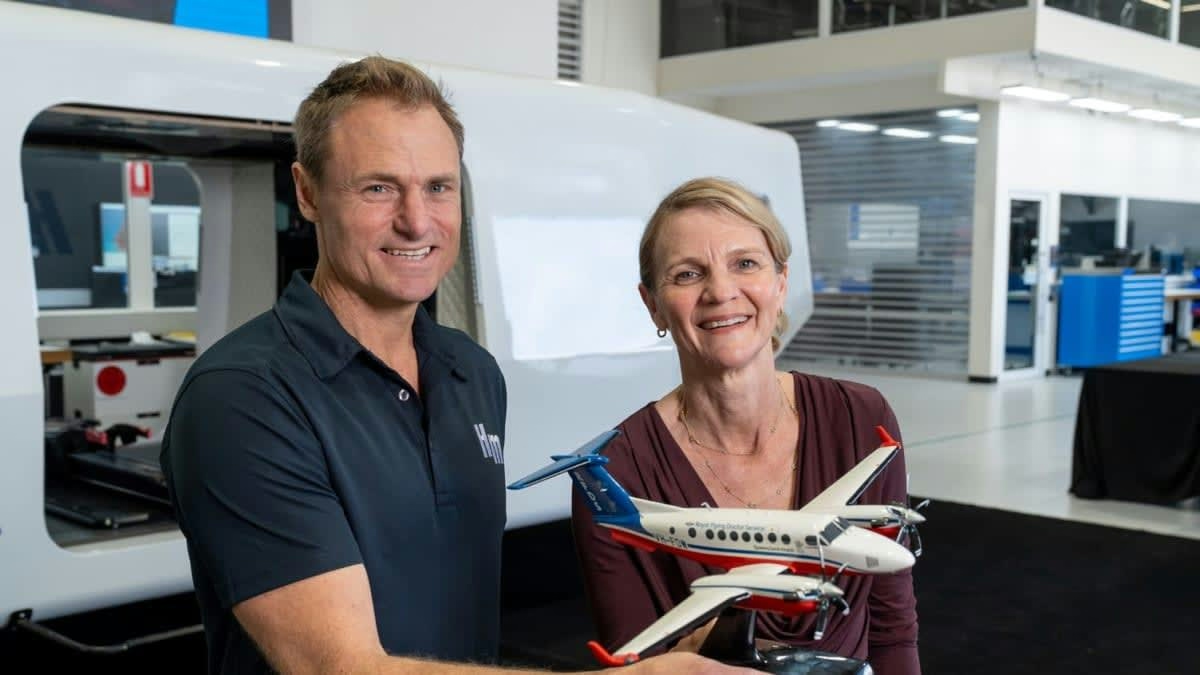
Australia’s RFDS Queensland Section Orders Six King Air 260Cs

Korean Air Finalizes Order for 103 Boeing Jets and Engines
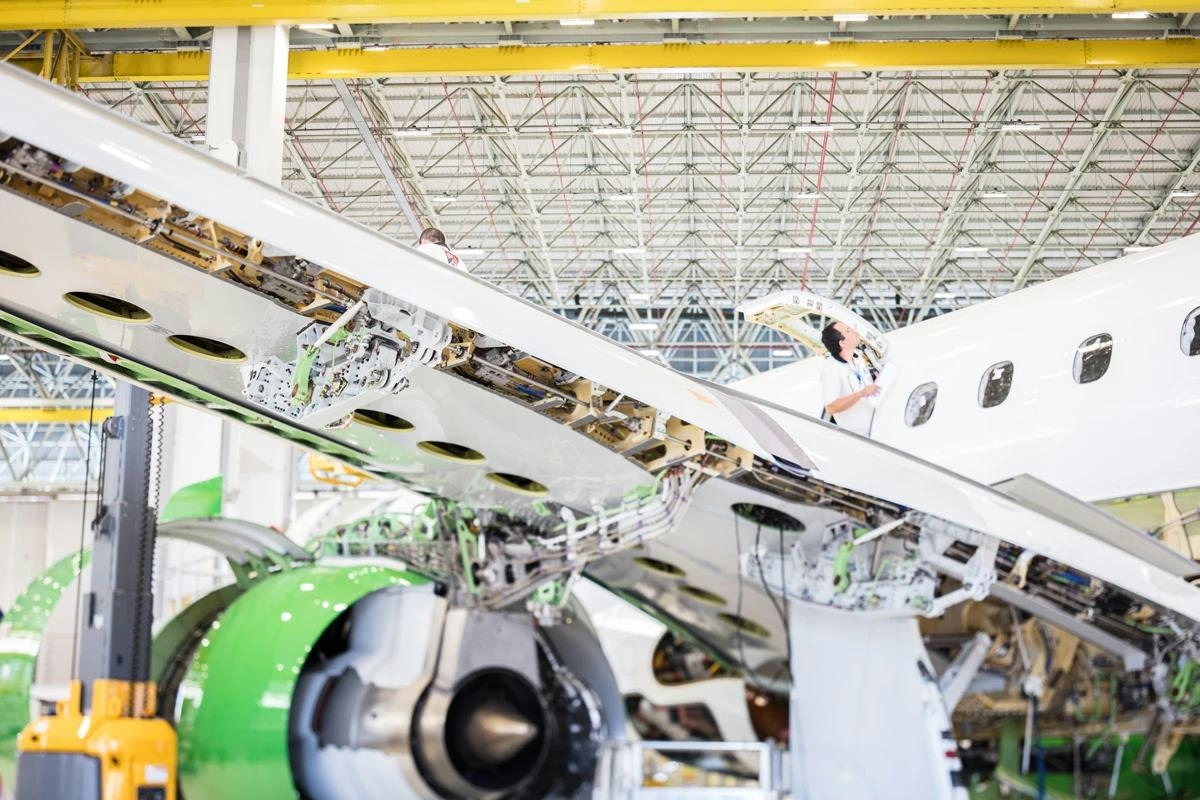
Embraer E195-E2 Features Distinctive Engine Placement Among Regional Jets
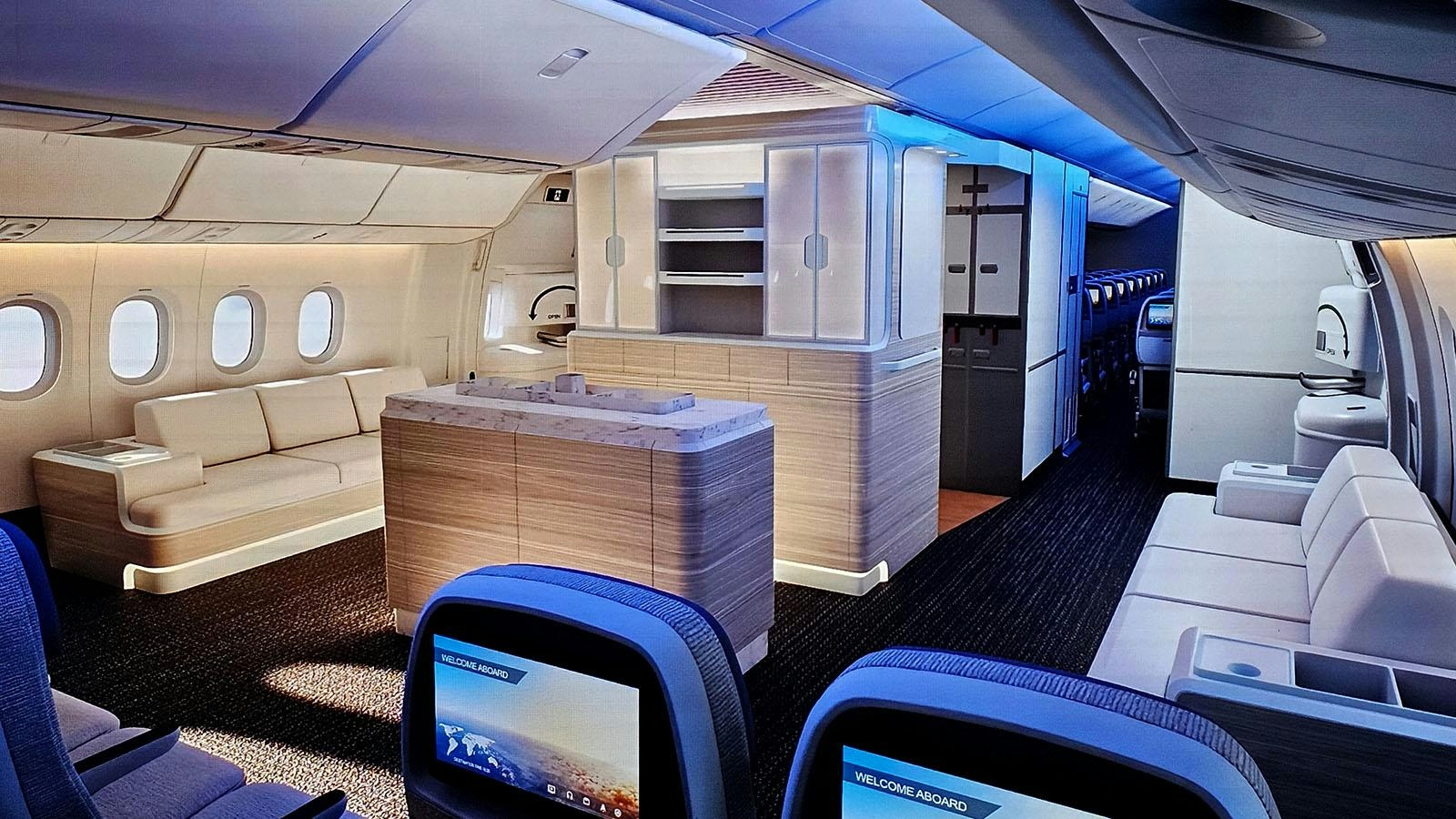
What Passengers Can Expect on Boeing’s New 777X Jet
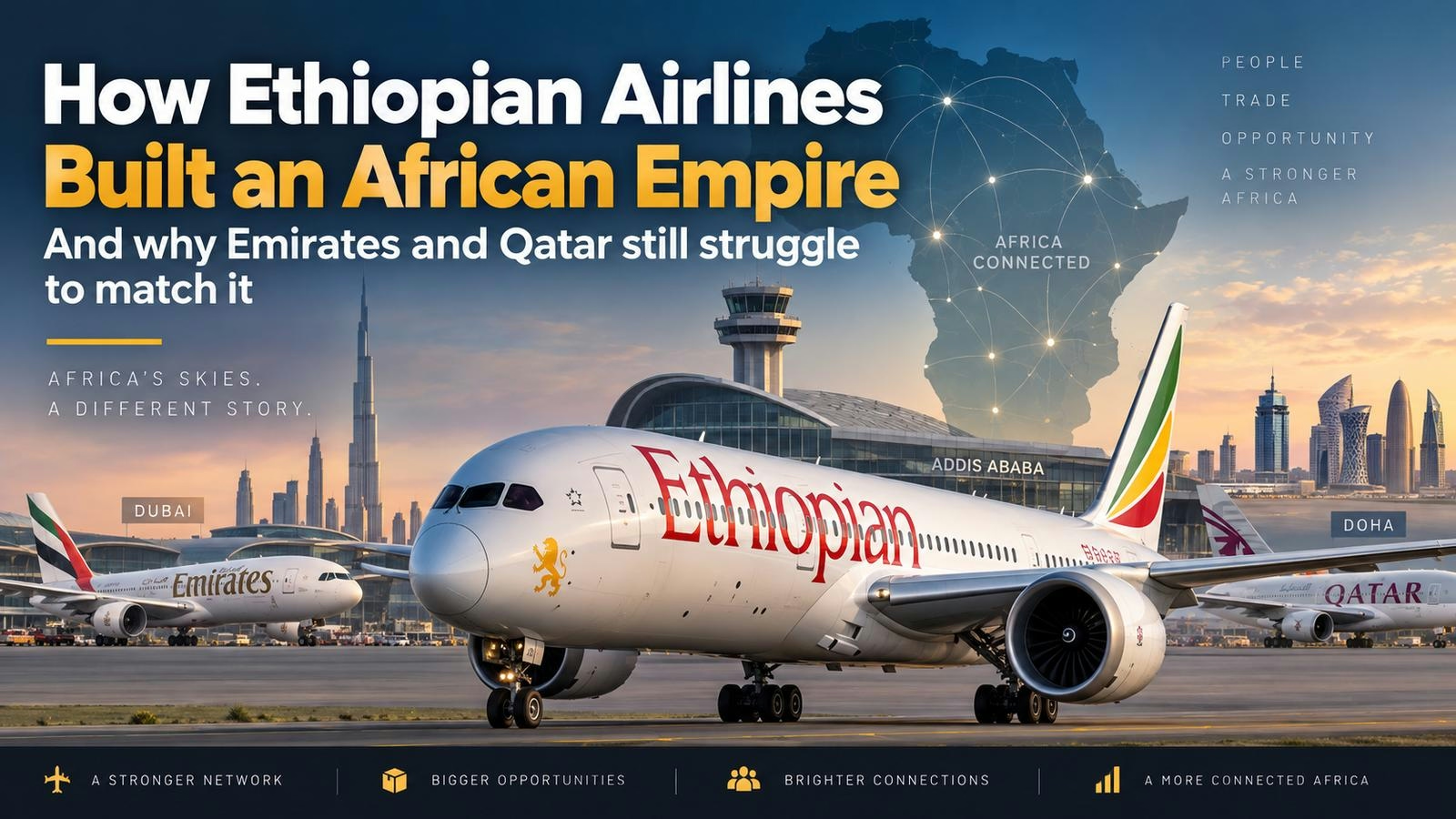
How Ethiopian Airlines Became Africa’s Leading Carrier Amid Gulf Competition
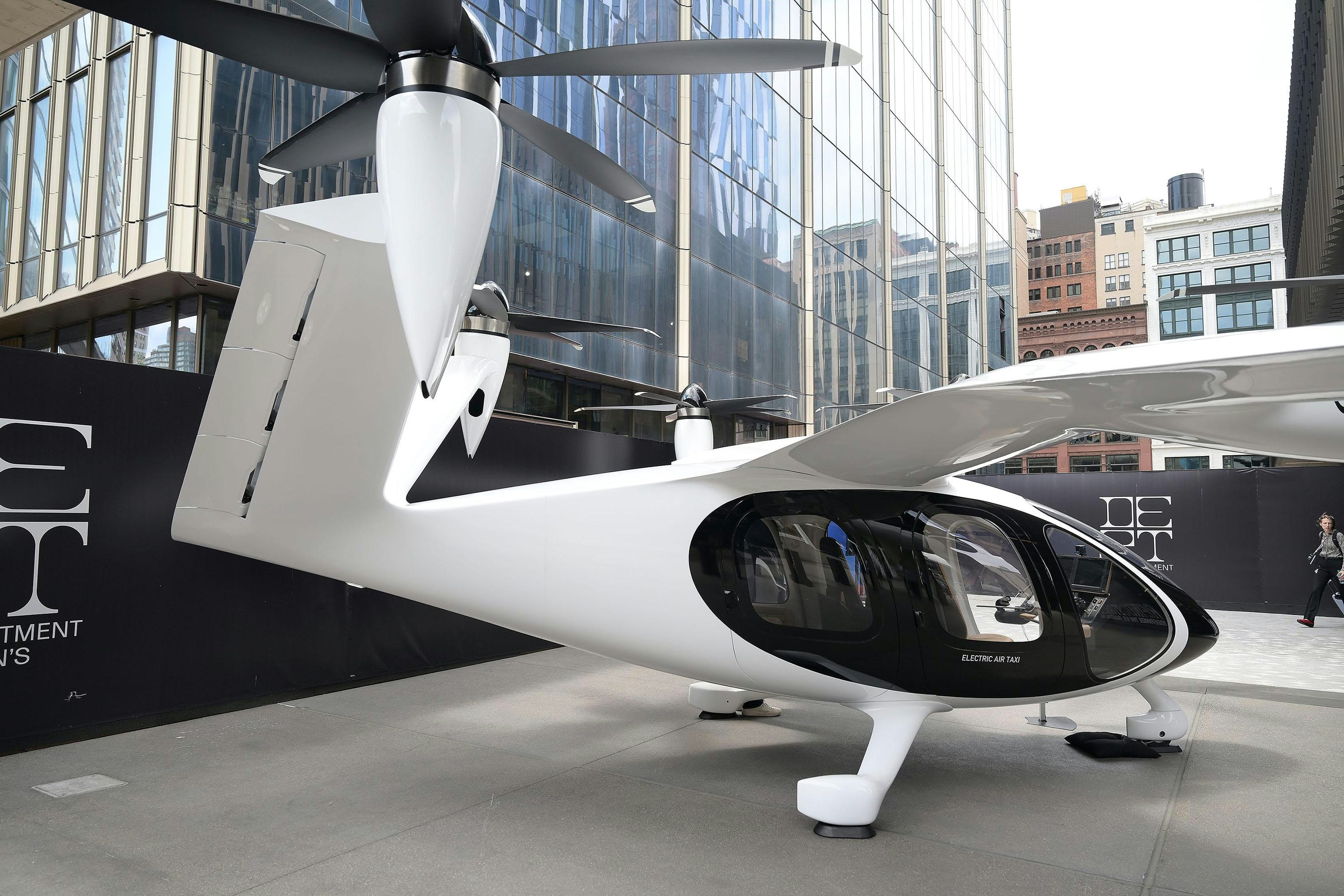
Joby Aviation Extends Autonomous Flight Capabilities with Cross-Country Tour
