
KI-Erkenntnisse in konkrete Maßnahmen überführen

Trends
Categories
The Future of Airline Distribution
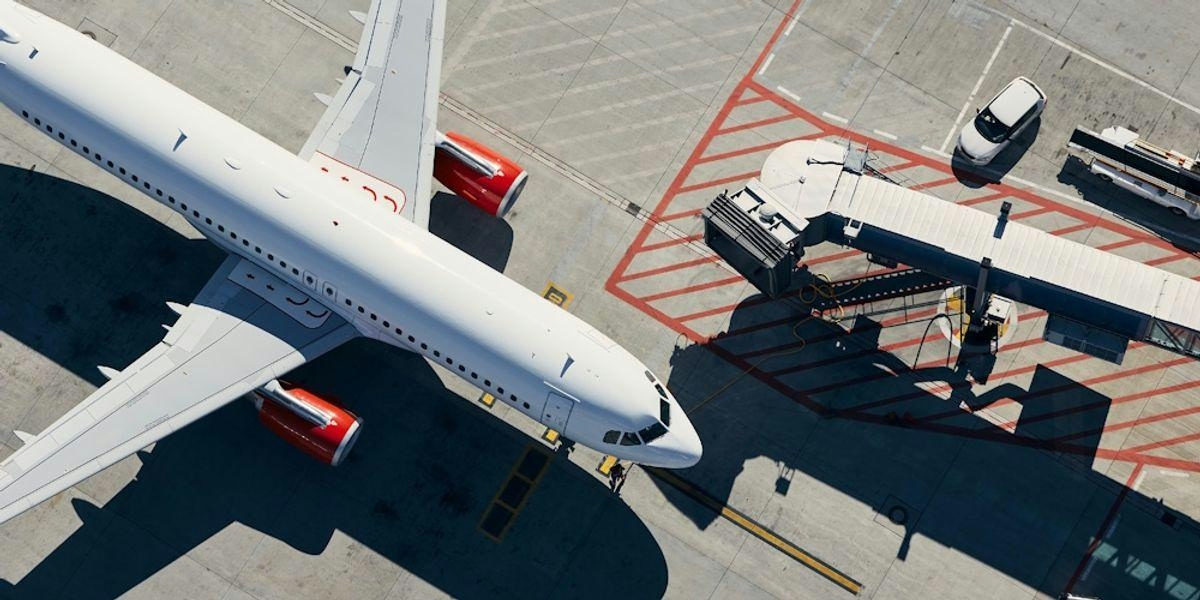
The Future of Airline Distribution
The airline distribution sector is experiencing a profound transformation driven by the accelerated adoption of New Distribution Capability (NDC) and the progression toward advanced offer and order management systems. Jeremy Jameson, Vice President of the Americas at Mystifly, identifies significant advancements in servicing and post-ticketing functionalities, which are enhancing operational efficiencies for travel agencies utilizing direct connections. He observes that the integration of data is facilitating the evolution of offer and order management, signaling a convergence of technologies that are increasingly ready for widespread deployment. While the pace of change varies among airlines and agencies, the underlying technological framework is proving effective and scalable.
Global Adoption and Industry Challenges
Jesus Monzo Faubel, Senior Director of Flights (West) at Pkfare, highlights the uneven global adoption of NDC. He notes that airlines primarily in Europe and the United States are leading the charge, not only by deploying the technology but also by implementing differentiated content and distribution strategies that accelerate adoption. Conversely, travel sellers continue to face challenges, particularly with post-ticketing processes and the need for substantial technology investments. Faubel emphasizes the pivotal role of intermediaries in bridging these gaps, facilitating easier access to content and smoother integration for agencies.
Despite these technological strides, the airline distribution landscape confronts significant challenges. Competition is intensifying, especially from ultra-low-cost carriers such as Spirit Airlines, which are under financial strain and may be compelled to consider mergers or liquidation. Airlines also face delays in aircraft deliveries, constraining their capacity to meet growing demand. Geopolitical instability and economic uncertainties, notably in Latin America and the Caribbean, further complicate operational and profitability prospects. Korean Air and other carriers have cited increased competition and geopolitical volatility as major obstacles.
Market dynamics are shifting as well, with heightened competition for premium services contrasting with struggles among lower-cost carriers amid reduced travel spending by lower-income consumers. This evolving environment is prompting airlines to reassess their distribution and retailing strategies, placing greater emphasis on customer centricity and data-driven personalization.
Embracing Customer Centricity and Artificial Intelligence
Jameson stresses the critical importance of robust customer data platforms in this new landscape. He explains that true customer centricity involves developing data architectures capable of tracking customer shopping and booking behaviors both on the airline’s own channels and within its broader ecosystem. Both Jameson and Faubel highlight the growing influence of artificial intelligence in enhancing retailing capabilities and personalizing the customer experience.
As airlines and travel agencies navigate these technological advancements and market pressures, their capacity to adapt will be instrumental in shaping the future trajectory of airline distribution.

Bangladesh Launches Initiative to Become Regional Aviation Hub
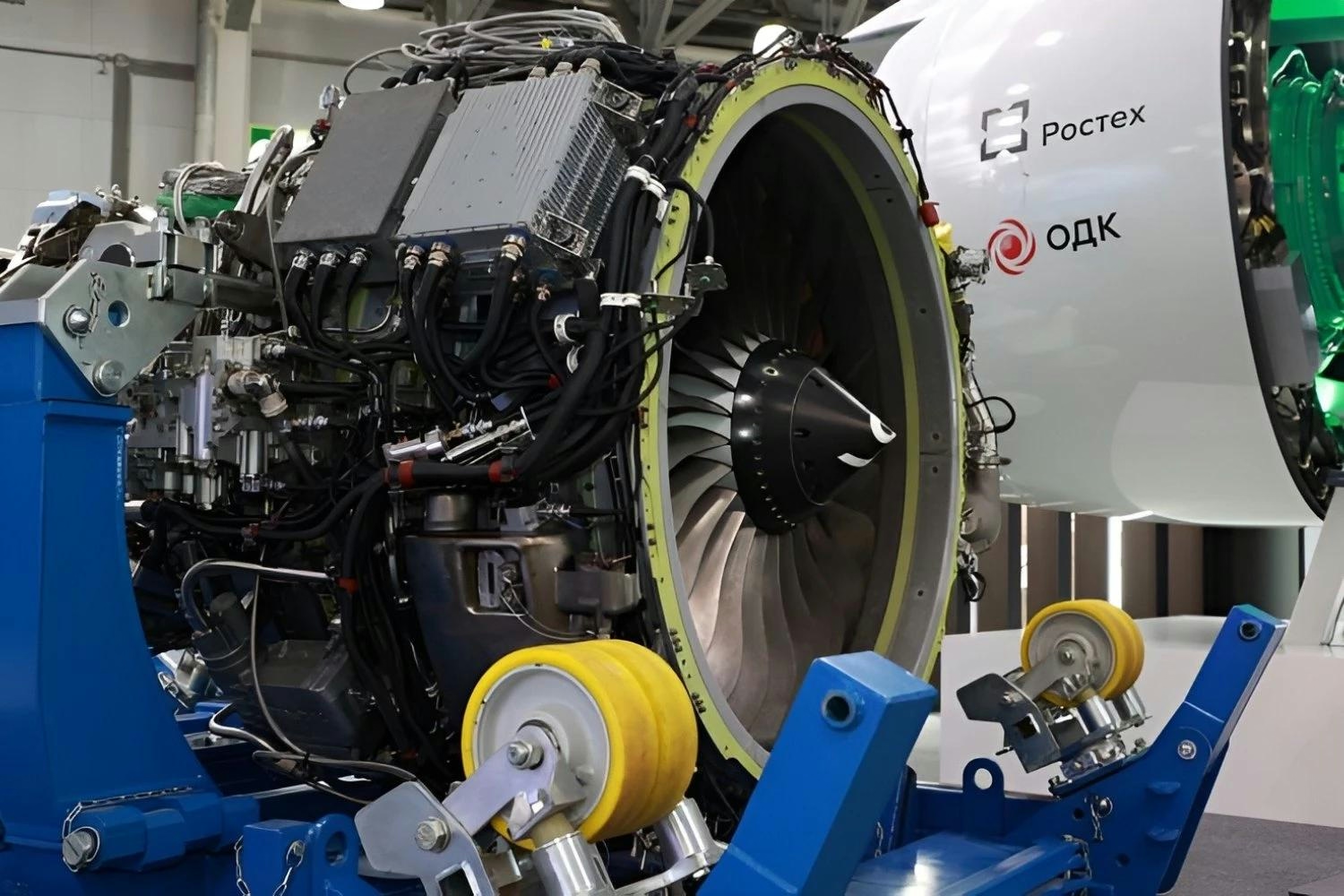
Russia Transports PD-8 Engine to India for International Certification

Kyrgyzstan to Adopt EMPIC GmbH Software for Flight Safety Oversight

Why Hawaiian Airlines Is Waiting Until 2028 To Add A Premium Economy Cabin To Its Airbus A330 Fleet

Engine Fault Causes Royal Navy Helicopter Crash Fatality

Joby Aviation Begins Texas Air Taxi Test Flights Amid Stock Decline

Iberia Receives Full Approval for Airbus A350 Heavy Maintenance

NetJets to Construct Terminal and Hangar at Dallas Love Field

Using AI in Aircraft Purchases

CIAM Unveils RPD-150T Engine to Replace Rotax 150 hp Model
