
KI-Erkenntnisse in konkrete Maßnahmen überführen

Trends
Categories
The Most Fuel-Efficient Widebody Aircraft in Commercial Service in 2026
The Most Fuel-Efficient Widebody Aircraft in Commercial Service in 2026
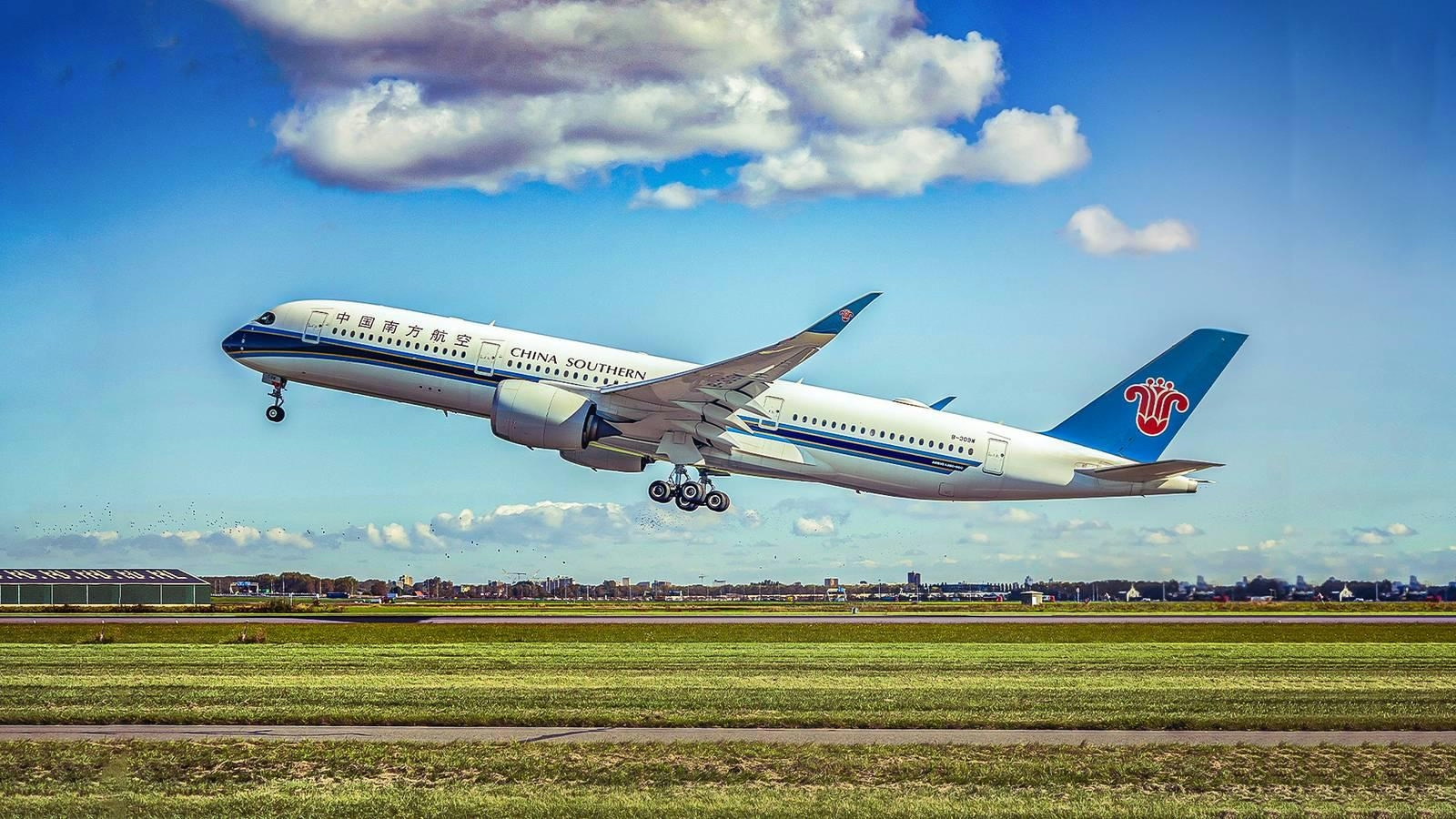
Aircraft manufacturers continue to advance fuel efficiency through the integration of lightweight composite materials, refined aerodynamics, and next-generation high-bypass turbofan engines. Over the past twenty years, models such as the Boeing 787 Dreamliner and Airbus A350 have redefined long-haul efficiency, achieving up to 25% reductions in fuel consumption compared to earlier aircraft. Given that fuel remains one of the largest operational costs for airlines, these technological improvements are vital for enhancing both profitability and environmental sustainability.
The competitive landscape for fuel efficiency in 2026 is influenced not only by technological progress but also by evolving market conditions and geopolitical tensions. Persistent friction between the United States and China poses challenges to Boeing’s delivery schedules and its long-term order pipeline in the Asia-Pacific region, a critical market for widebody aircraft. Meanwhile, American Airlines trails behind Delta and United in expanding its widebody fleet, potentially constraining its growth in lucrative long-haul markets. Conversely, GE Aerospace has reported a significant increase in engine deliveries, signaling strong demand for the latest fuel-efficient aircraft. North America alone is projected to receive over 4,500 commercial aircraft in the coming decade, with Boeing maintaining a dominant position in the widebody segment.
Measuring Fuel Efficiency
In aviation, fuel efficiency is commonly expressed as liters of fuel consumed per passenger per 100 kilometers, a metric comparable to miles per gallon in the automotive industry. These figures vary considerably depending on factors such as seating density, route length, and payload. The following assessment reflects typical multi-class cabin configurations on long-haul routes.
Airbus A330-900neo: A Notable Contender
The Airbus A330-900neo, or "New Engine Option," represents the second generation of the widely used A330 family. Introduced in 2014 as a direct competitor to the Boeing 787, the A330neo features Rolls-Royce Trent 7000 engines, an extended wingspan, and redesigned composite sharklets to improve aerodynamic performance. These enhancements enable the aircraft to reduce fuel consumption by approximately 14% per seat compared to its predecessor, according to Airbus.
The Trent 7000 engines boast a bypass ratio of 10:1, the highest within the Trent engine family, contributing to both improved fuel efficiency and a quieter cabin environment. The A330neo is available in two variants: the A330-800neo and the more commercially successful A330-900neo, which has secured over 450 outstanding orders.
Among the largest operators of the A330-900neo as of March 2026 are Delta Air Lines with 39 aircraft in service since 2019, TAP Air Portugal with 19 units as the launch customer since 2018, Condor with 18 aircraft since 2022, ITA Airways with 15 since 2023, and Cebu Pacific with 14 since 2021.
Despite its technical strengths, the A330-900neo’s market appeal is somewhat constrained. Its economic advantages are most pronounced under specific operating conditions, and it faces intense competition from the Airbus A350 and Boeing 787. In high-density seating configurations, the aircraft can achieve fuel consumption as low as 2.1 liters per passenger per 100 kilometers, while typical three-class layouts see this figure rise to approximately 2.48 liters.
As airlines confront rising fuel costs, shifting fleet strategies, and geopolitical uncertainties, the role of the most fuel-efficient widebody aircraft in 2026 will be critical in shaping the future of long-haul air travel.

Etihad Airways Suspends Airbus A380 Flights on Key Route

Aditya Birla Group Seeks Approval for Aircraft Leasing in GIFT City

Qatar Airways Highlights Innovation and Connectivity at Arabian Travel Market 2026

Hong Kong's Five-Year Plan Includes Andrew Fan's Aircraft Parts Processing Hub Proposal

ACIA Aero Leasing Delivers ATR72-600 to Air Nostrum

RTX Appoints Jill Albertelli as Head of Pratt & Whitney

TAT Technologies Joins Beyond Aero Hydrogen Aircraft Program

AURAK Study Highlights Barriers to Air Taxi Adoption in Emerging Economies

Xiamen Air Selects Altitude for 787 Maintenance at Heathrow

Etihad and Swissport Extend Global Partnership
