
KI-Erkenntnisse in konkrete Maßnahmen überführen

Trends
Categories
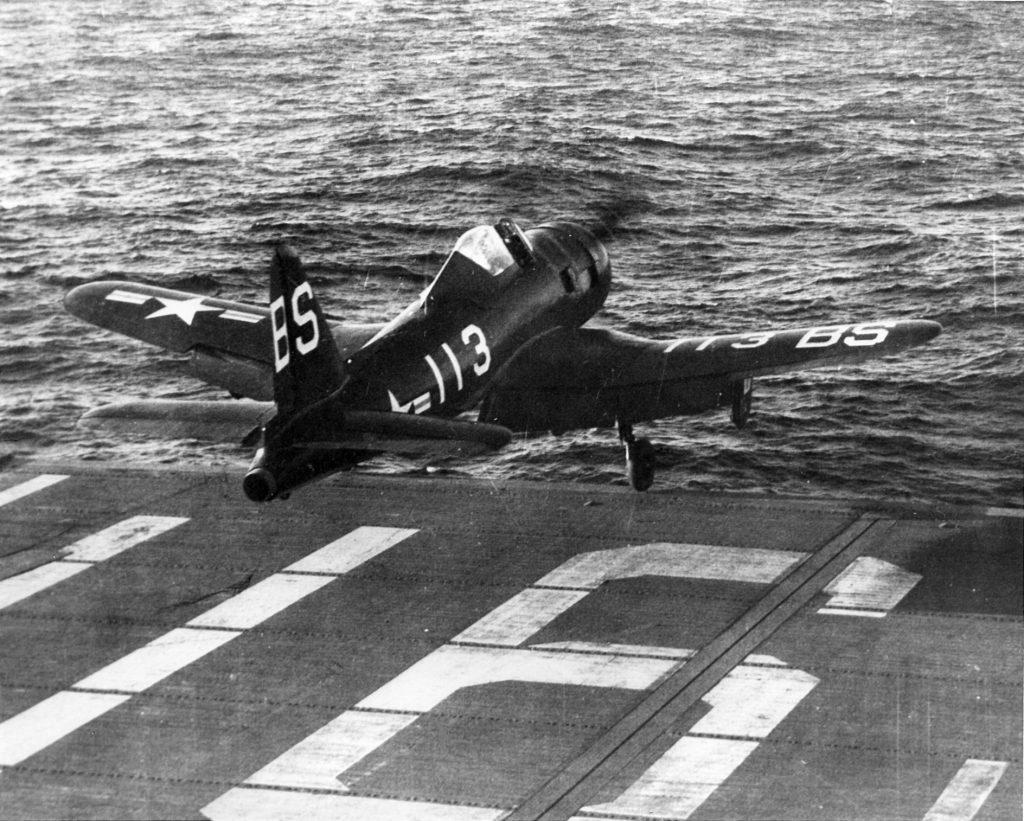
The Ryan FR-1 Fireball: The Navy’s First Jet Fighter
The Ryan FR-1 Fireball: The Navy’s First Jet Fighter
On November 6, 1945, a significant milestone in naval aviation was achieved off the coast of California. An American fighter approaching a small escort carrier experienced engine failure. Instead of ejecting, the pilot persevered and successfully landed by catching an arresting wire, marking the first jet-powered landing on an aircraft carrier. This historic event was unplanned and stemmed from the unique hybrid design of the Ryan FR-1 Fireball, the U.S. Navy’s inaugural jet-powered fighter.
A Fighter Between Eras
The Ryan FR-1 Fireball embodied a transitional phase in aviation, bridging the gap between propeller-driven and jet-powered aircraft. Its design incorporated a 1,350-horsepower Wright R-1820 radial engine mounted in the nose for takeoff and landing, complemented by a General Electric J31 turbojet installed in the tail to provide additional speed during combat. This mixed-power configuration was a direct response to the early jet engines’ limitations, which included high fuel consumption, limited range, and sluggish throttle response—challenges that were particularly problematic for the demanding environment of carrier operations.
The Accidental First Jet-Powered Carrier Landing
The Fireball was introduced into service with squadron VF-66 in March 1945, but the conclusion of World War II prevented it from seeing combat. Its place in history was secured by an emergency incident involving Ensign Jake West. While approaching the USS Wake Island, West’s radial engine failed on final approach. Forced to rely solely on the jet engine, he managed to land safely, inadvertently demonstrating the feasibility of jet-powered carrier landings.
Challenges and Legacy
Despite its innovative approach, the Fireball faced considerable operational challenges. The combination of jet and propeller propulsion, though inventive, proved impractical for routine carrier use. The aircraft’s high fuel consumption and limited range curtailed its effectiveness in naval operations. While the Fireball represented a bold attempt to integrate jet technology into naval aviation, it also highlighted the shortcomings of early jet engines in maritime contexts.
Contemporary fighters such as the F4U Corsair encountered their own difficulties adapting to carrier service but ultimately became reliable and iconic. In contrast, the Fireball’s struggles underscored the urgent need for advancements in jet engine technology tailored to naval requirements.
By 1947, fewer than 70 Fireballs had been produced, and the aircraft was retired. Nevertheless, its brief operational history marked a critical evolutionary step, bridging the era of propeller-driven fighters and the emergence of all-jet aircraft that would soon dominate carrier decks. The Ryan FR-1 Fireball remains a testament to the ingenuity and challenges of early jet-powered naval aviation.

Etihad and Swissport Extend Global Partnership

Sepehran Airlines B737 Returns to Mashhad After Tyre and Engine Issues

Etihad Deploys Widebody Fleet to Meet Strong Demand

Korean Air Finalizes $36.2 Billion Deal with Boeing

Australia’s RFDS Queensland Section Orders Six King Air 260Cs

Korean Air Finalizes Order for 103 Boeing Jets and Engines

Embraer E195-E2 Features Distinctive Engine Placement Among Regional Jets
What Passengers Can Expect on Boeing’s New 777X Jet

How Ethiopian Airlines Became Africa’s Leading Carrier Amid Gulf Competition
Joby Aviation Extends Autonomous Flight Capabilities with Cross-Country Tour
