
KI-Erkenntnisse in konkrete Maßnahmen überführen

Trends
Categories
The Shift from Aluminum to Carbon Fiber in Modern Airliners
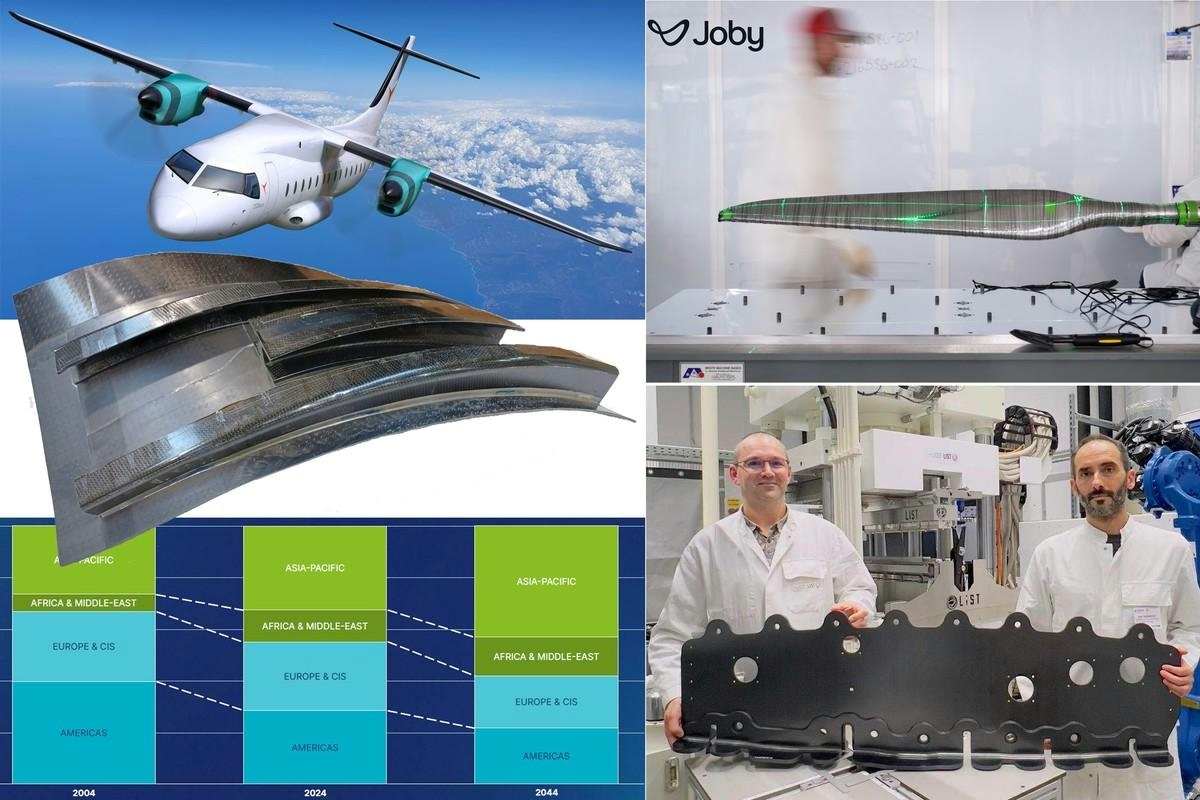
The Shift from Aluminum to Carbon Fiber in Modern Airliners
For nearly a century, commercial airliners were constructed predominantly from aluminum, with thousands of sheets, frames, and rivets forming the familiar metallic fuselage. This paradigm shifted dramatically with Boeing’s introduction of the 787 Dreamliner, which heralded a new era in aircraft manufacturing. Today’s most advanced airliners are primarily built from carbon fiber-reinforced polymer (CFRP), a composite material composed of woven carbon fibers embedded in resin. While this may seem like a departure from traditional materials, it represents a significant technological advancement in aviation.
From Metal to Composite: A Fundamental Transformation
The transition from aluminum to CFRP involves several critical differences. Carbon fiber composites are approximately 40% lighter than aluminum for the same volume, offering substantial weight savings. This reduction translates directly into improved fuel efficiency and lower emissions. Additionally, CFRP exhibits a fatigue life five to ten times longer than aluminum when subjected to repeated stress cycles, a crucial factor given the pressurization cycles aircraft endure during flight. Unlike aluminum, composites are also impervious to corrosion, which further extends the lifespan of aircraft components and reduces maintenance requirements.
Boeing’s 787 Dreamliner exemplifies this shift, with its fuselage constructed as large, seamless composite barrels that constitute about 50% of the aircraft’s weight. This design minimizes the need for thousands of rivets and joints, streamlining assembly and enhancing structural integrity. Airbus followed suit with the A350 XWB, a clean-sheet design that similarly emphasizes composite construction to achieve weight reduction and durability.
Advantages of Carbon Fiber Over Aluminum
Carbon fiber composites consist of ultra-thin, high-strength carbon filaments embedded within a hardened resin matrix. This composition allows CFRP to deliver exceptional strength-to-weight ratios, saving hundreds of metric tons across an airline’s fleet over its operational lifetime. Every kilogram saved reduces fuel consumption, which not only lowers operating costs but also diminishes environmental impact.
Boeing highlights that the 787’s composite structure results in a weight reduction of approximately 20% compared to conventional aluminum construction. Beyond weight savings, the superior resistance of CFRP to metal fatigue and corrosion extends the service life of aircraft and reduces the frequency and cost of maintenance. Aerospace materials engineers emphasize that these properties make carbon fiber composites a more durable and reliable choice for modern airliners.
Manufacturing Challenges and Industry Implications
Despite its advantages, the adoption of carbon fiber composites presents significant manufacturing challenges. Producing large CFRP structures demands advanced techniques such as automated fiber placement and additive manufacturing to improve production efficiency and reduce cycle times. Selecting appropriate carbon fiber types and developing thermoplastic resin matrices are essential to ensure the performance and durability of these materials, particularly as the industry explores electric propulsion and motor applications.
Simultaneously, the aviation sector faces increasing pressure to decarbonize. The integration of Sustainable Aviation Fuel (SAF) and compliance with evolving regulatory frameworks add layers of complexity to aircraft operations. Airlines and manufacturers must adapt their strategies and schedules to manage costs effectively while maintaining financial viability in this rapidly changing environment.
Market Impact and Future Outlook
The market response to the shift from aluminum to carbon fiber has been varied. Certain sectors benefit from the enhanced efficiency and operational advantages offered by lighter, composite-based aircraft. However, others confront regulatory challenges and increased costs associated with new materials and technologies. As the industry continues to navigate these complexities, the transition to carbon fiber is reshaping not only aircraft design and manufacturing but also operational and maintenance practices. This evolution is setting the foundation for the next generation of sustainable aviation.

Etihad Airways Suspends Airbus A380 Flights on Key Route

Aditya Birla Group Seeks Approval for Aircraft Leasing in GIFT City

Qatar Airways Highlights Innovation and Connectivity at Arabian Travel Market 2026

Hong Kong's Five-Year Plan Includes Andrew Fan's Aircraft Parts Processing Hub Proposal

ACIA Aero Leasing Delivers ATR72-600 to Air Nostrum

RTX Appoints Jill Albertelli as Head of Pratt & Whitney

TAT Technologies Joins Beyond Aero Hydrogen Aircraft Program

AURAK Study Highlights Barriers to Air Taxi Adoption in Emerging Economies

Xiamen Air Selects Altitude for 787 Maintenance at Heathrow

Etihad and Swissport Extend Global Partnership
